


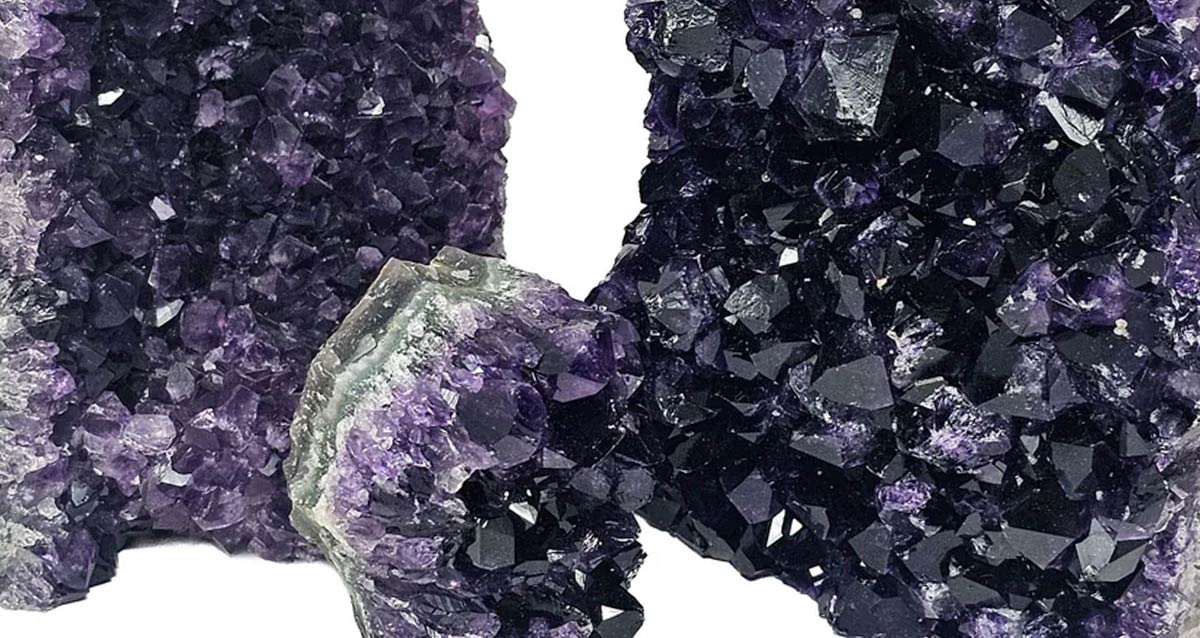

A lot of people come into rock shops looking for stones with ethereal, spiritual, or metaphysical power. They want black tourmaline for protection, rose quartz for love, amethyst for peace, citrine for abundance, or selenite for cleansing. Eventually, many of them ask the honest question:
Do these stones actually work?
As the owner of a rock shop, my answer is both simple and complicated.
They do.
And they don’t.
They do not work in the way many people imagine. The power is not sitting inside the stone like a battery waiting to discharge protection, love, wealth, or healing into your life. A crystal is not a remote control for the universe. It does not override your habits, your decisions, your relationships, your discipline, or your circumstances.
But that does not mean stones are meaningless.
The power of a stone is not intrinsic to the stone. The power is intrinsic to you — the bearer, the believer, the user, the person assigning meaning to it.
That distinction matters.
The Power Is Not in the Object Alone
Human beings are not machines. We are made of willpower, memory, belief, desire, fear, imagination, habit, ambition, grief, identity, and hope. We need symbols. We need reminders. We need objects that help us locate ourselves in the chaos of life.
A child clutches a blanket and feels safe. Does the blanket actually create safety? Not literally. The blanket does not lock the doors, pay the bills, or defeat danger. But in the child’s world, it becomes a powerful emotional anchor. It helps regulate fear. It becomes a physical object tied to an internal state.
A man buys a sports car at fifty because he wants to feel younger, freer, or more alive. Is he actually younger? No. But does the car change how he feels, how he carries himself, how he imagines the next chapter of his life? Possibly. In his world, it may genuinely work.
This is not unique to crystals. We do this with everything.
We do it with wedding rings, family heirlooms, tattoos, uniforms, religious objects, lucky coins, graduation certificates, luxury watches, childhood toys, photographs, books, and tools. The object becomes more than the material it is made of because we superimpose meaning onto it.
That does not make the meaning fake. It makes the meaning human.

A Crystal as a Wand
Think of a wizard with a wand.
Some wizards need one. Some do not. But the wand is not the source of the wizard’s entire power. It is a focusing device. It translates intention into action. It gives shape to something internal.
That is how I think crystals work at their best.
A stone can be a wand. A reminder. A physical symbol of a decision you have made. A marker of an intention. A beautiful object that helps you return to a thought, a promise, a boundary, or a goal.
When someone buys black tourmaline for protection from negative energy, the real question is not whether the stone has an invisible forcefield inside it.
The better question is:
What negative energy are you trying to remove from your life?
Is it a toxic relationship? A bad habit? A workplace that drains you? A lack of boundaries? A pattern of saying yes when you mean no? A tendency to absorb everyone else’s emotions until you have nothing left for yourself?
If holding that stone reminds you to protect your peace, to leave the conversation, to turn your phone off, to stop people-pleasing, or to respect your own limits, then yes — the stone is working.
But it is working because you are working.
Objects Become What We Use Them For
A table is just a table until someone stands on it and dances. Then it becomes a stage.
If danger enters the room and someone flips that same table over for cover, it becomes a shield.
For practical purposes, yes, a table is a table. Common sense matters. Language matters. We need shared reality to coexist. But objects are not limited to their basic definitions. Their meaning changes when we use them, depend on them, inherit them, modify them, display them, or attach memory to them.
A rock does not need to be “just silicon dioxide.” It can be quartz, but it can also be a personal treasure. It can be a souvenir from a meaningful trip. It can be an heirloom. It can be a reminder of someone you lost. It can be the first specimen that made you fall in love with geology. It can be a gift from someone who saw you clearly.
That does not require pretending the stone is supernatural.
It only requires admitting that humans are symbolic creatures.
Purity, Technology, and the Minerals Around Us
There is also something funny about the way people separate “spiritual stones” from the rest of the material world.
Someone may say selenite is cleansing because it is a pure mineral. But gypsum — the same mineral family — is in the drywall all around us. Copper runs through the walls, conducting electricity. Refined minerals and ores are inside our phones, laptops, plumbing, vehicles, tools, and medical equipment.
I am using a computer right now to write this. What is a laptop, really, except minerals, metals, plastics, glass, engineering, and human intention transformed into technology?
Holding a rock and imagining it changing your life is one kind of imagination.
Mining, milling, refining, designing, and fabricating minerals into tools that change civilization is another kind of imagination.
One is personal. One is technological. Both are deeply human.
This is where the conversation becomes more interesting. Stones have always had power in our lives — not always because they are mystical, but because we turn the material world into extensions of ourselves. We make knives, rings, temples, pigments, statues, circuits, lenses, roads, monuments, and machines. We turn earth into meaning.
That is real power.
The Question Is Not “Does It Work?” The Question Is “How Are You Using It?”
When someone asks whether a crystal works, I think the more useful question is:
What are you trying to make it do?
If you buy a crystal expecting it to fix your life while you avoid making decisions, it will probably disappoint you.
If you buy a crystal as a physical reminder of a decision you are already committed to making, it may become useful.
If rose quartz reminds you to soften your heart after a difficult relationship, good.
If citrine reminds you to build confidence, take action, and stop shrinking yourself, good.
If amethyst helps you create a calmer evening ritual, good.
If black tourmaline reminds you to stop entertaining people and environments that damage your peace, good.
But the stone is not doing the work instead of you.
It is helping you remember the work.
Possessions Can Be Assets or Liabilities
Unless you choose monkhood and renounce worldly possessions entirely, you have to interact with objects. We all do. We use clothing, phones, vehicles, homes, tools, furniture, jewelry, books, money, medicine, machines, and art to move through the world.
Possessions are inevitable.
The point is not to pretend objects do not matter. The point is to use them consciously.
A possession can be an asset or a liability.
A laptop can help someone get a job, complete school, build a business, or communicate an idea. It can also become a distraction machine.
A bed can support proper sleep and a healthier life. It can also become a place where someone hides from responsibility.
A crystal can be a meaningful reminder of growth, protection, love, grief, beauty, discipline, or transformation. It can also become an excuse to avoid action.
The object is not the whole answer. The relationship you create with the object is what matters.
Crystals and Personal Responsibility
This is where I think metaphysical crystal culture sometimes gets confused.
If you believe the power is entirely inside the crystal, you may accidentally give your agency away. You may start waiting for the stone to change your life instead of using it as a symbol that helps you change your life.
That is backwards.
The crystal should not make you weaker. It should not make you dependent. It should not convince you that your future is controlled by an object outside yourself.
A good tool should return you to your own responsibility.
A good symbol should sharpen your intention.
A good crystal should remind you that you are not powerless.
The danger is not believing in crystals. The danger is forgetting that belief itself is one of the most powerful forces in your life — and that belief must eventually become action.
Use the Stone, But Do Not Worship the Stone
I am not here to mock people who believe in metaphysical properties. I understand the appeal. I understand why people want protection, healing, clarity, love, prosperity, grounding, and peace. Those are not foolish desires. They are deeply human desires.
But I also think people deserve a more empowering explanation.
Use crystals. Use technology. Use friendship. Use stable housing. Use proper sleep. Use a good pillow. Use books, therapy, exercise, sunlight, art, prayer, meditation, discipline, and beautiful objects. Use whatever helps you become more honest, more capable, more focused, and more alive.
But know what you are doing.
You are not outsourcing your power.
You are organizing it.
You are choosing tools, reminders, and symbols that help you move toward the life you want.
The Real Kicker: What Do You Actually Want?
Before asking which crystal you need, ask yourself what you are trying to achieve.
What do you want more of?
What do you want less of?
What are you avoiding?
What are you trying to protect?
What habit are you trying to break?
What kind of person are you trying to become?
If you do not know your goal, the object you choose as your “wand” becomes less effective. It has nothing clear to focus. It becomes decoration, which is fine, but it should not be mistaken for transformation.
A crystal can help you remember your intention. It can mark a promise. It can beautify your space. It can comfort you. It can inspire you. It can represent a version of yourself you are trying to grow into.
But it cannot decide your life for you.
That part is yours.
Final Thought
Stones only have power because we give them power.
There is nothing wrong with that. We do it with everything. We do it with rings, flags, photographs, clothing, tools, homes, books, cars, and heirlooms. Meaning is one of the ways human beings survive and orient themselves in the world.
But the source of the power matters.
If you believe the power is only in the crystal, you may never become empowered.
If you understand that the power is within you — and that the crystal is a tool, symbol, reminder, or wand for focusing that power — then the stone can become part of something real.
Not because it replaces your will.
Because it helps you remember it.
By Adam Kelliher