


By Adam Kelliher
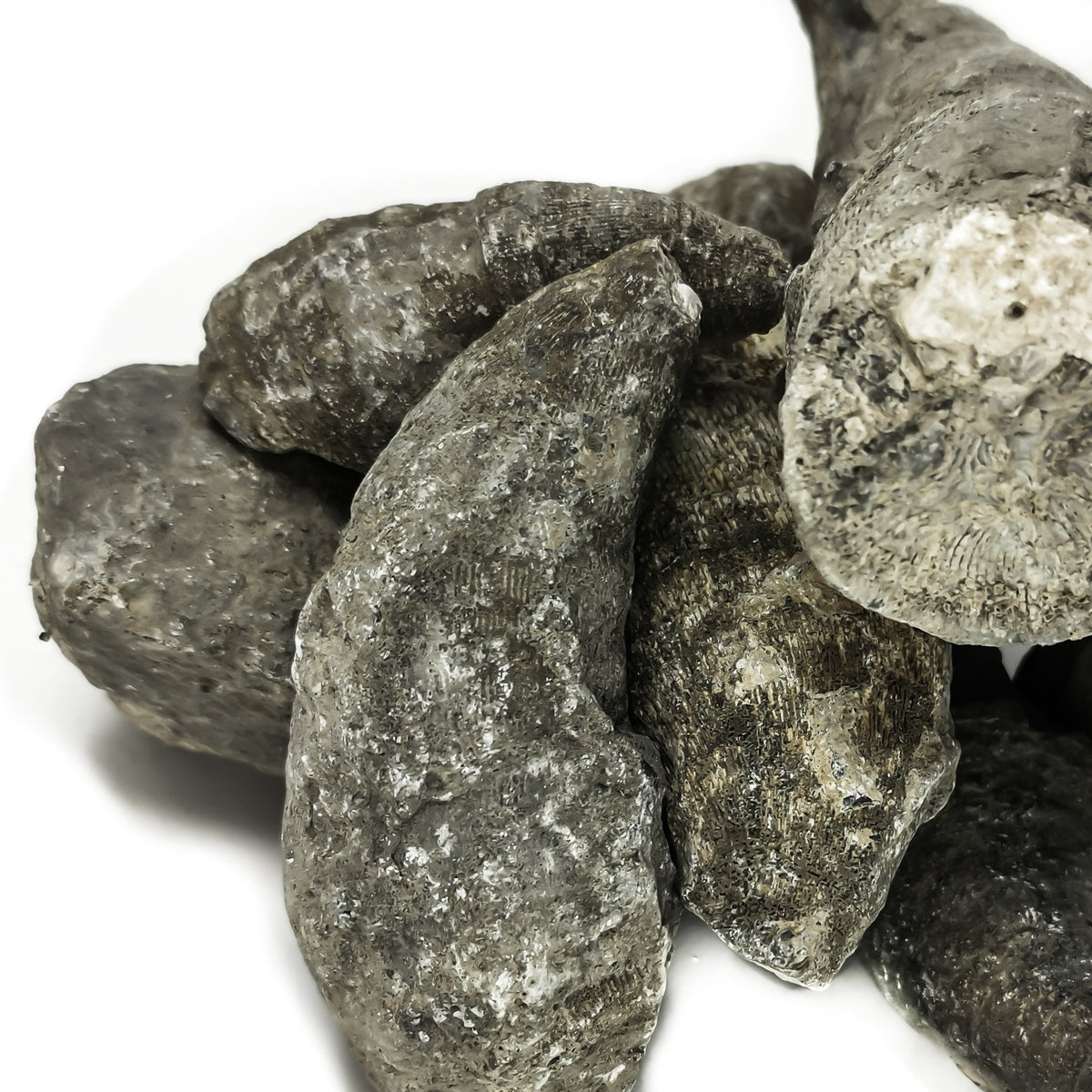
Horn corals look like little stone ice cream cones, and Petoskey stones look like a honeycomb that's been through a dishwasher. They're both from the same extinct group of corals, and neither one is related very closely to the corals on reefs today.
Rugose corals
Rugose corals lived from the Middle Ordovician to the Late Permian and didn't survive the end-Permian extinction. Solitary ones grew as single horn-shaped polyps with wrinkled outer walls, which is where the name "rugose" comes from.[1][2]

Petoskey stones
A Petoskey stone is a colonial rugose coral, Hexagonaria percarinata, from the Middle Devonian. The name Hexagonaria means six-sided, after the star-like corallites.[3] The species that gives Petoskey stones comes from Michigan's Gravel Point Formation, and glaciers plucked them out of bedrock and dropped them along the lakeshore.[3] Michigan made it the official state stone in 1965.[4]

How to tell
Michigan's geological survey office suggests looking for repeating, sometimes geometric structures. In Petoskey stones that means hexagonal openings with thin lines radiating from a centre, like bike spokes.[5] A tip from the counter: rough Petoskey can look like plain grey limestone until you wet it.
We stock horn corals, rough Petoskey stone for polishing, and red horn coral rough from Utah.
See what's new: browse our newest arrivals for the latest pieces added to the shop.
Sources
- University of California Museum of Paleontology. Introduction to the Rugosa.
- Digital Atlas of Ancient Life. Rugose corals (Rugosa).
- University of Michigan Museum of Paleontology. Hexagonaria percarinatum.
- Michigan Legislature. MCL 2.16, State stone.
- Michigan EGLE. Michigan fossils and how to find them.