


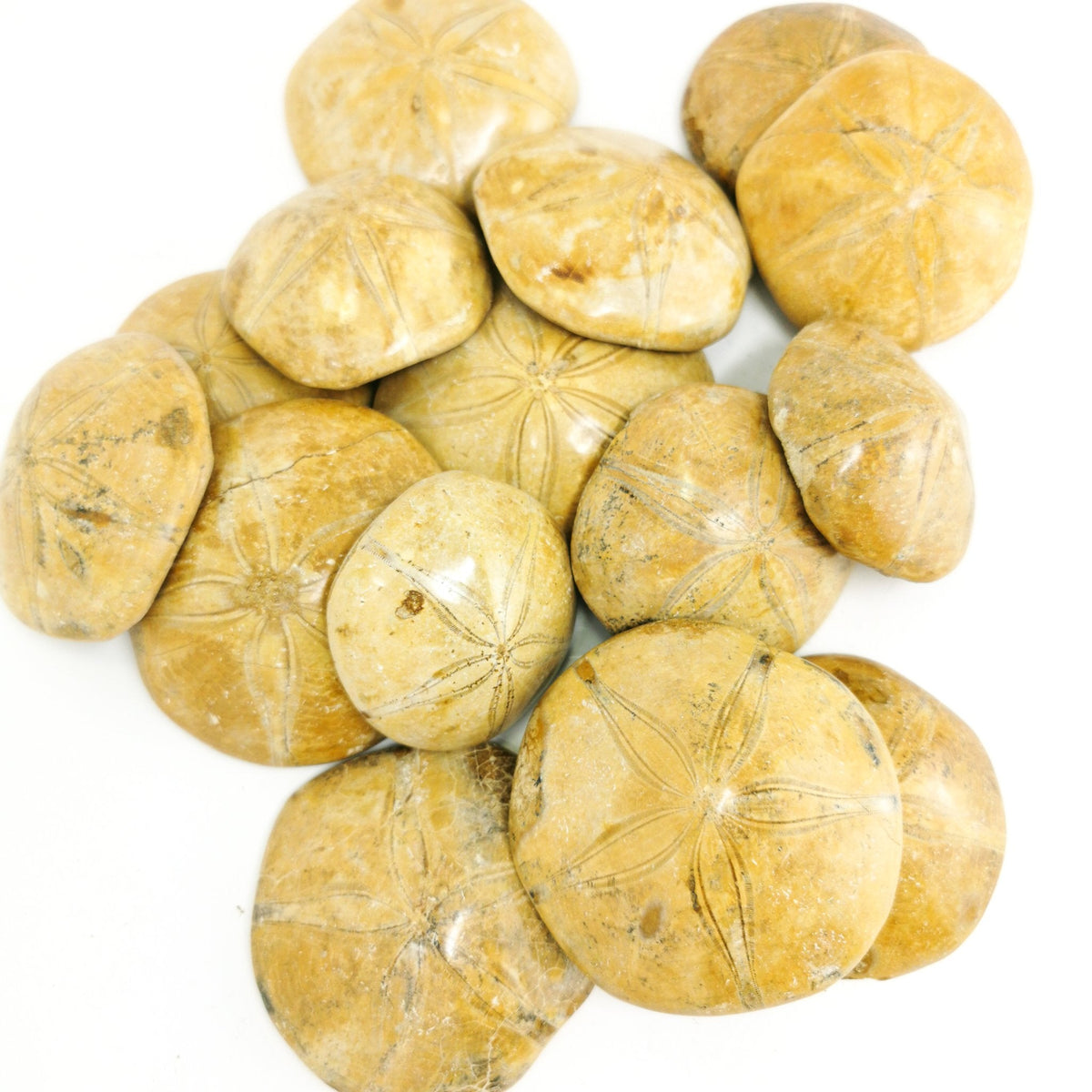
By Adam Kelliher
Fossil sea urchins are tidy little things. They fit in your palm, they have a pattern you can trace with your finger, and they've been around longer than dinosaurs by a long way.
Echinoids 101
The British Geological Survey says echinoids have lived in the seas since the Late Ordovician, about 450 million years ago. Their hard shell is called a test, covered in small knobs called tubercles where spines attached.[1]

What to look for
- Calcite plates. The test is hundreds of calcite plates, loosely joined in Paleozoic species and fused in most since the Mesozoic.[1]
- Pore bands. Narrow bands of tiny holes radiate across the test. Tube feet poked through them in life.[1]
- Spines. Usually separate. Spines and test are found together only when burial was quick.[1]
Round ones and flat ones
Echinoid tests can be globular, flattened, rounded or heart-shaped. In the Mesozoic many evolved into burrowers that hid under the sea floor.[1] Sand dollars are one of those flattened burrowing forms.
Why geologists love them
Fossil echinoids reliably tell you a rock formed in the sea, and in the Late Cretaceous Chalk, the White Cliffs of Dover, different echinoids are used to split the rock into zones of different ages.[1]
We have fossil echinoids from Madagascar in stock, and they're one of our most popular small fossils.
See what's new: browse our newest arrivals for the latest pieces added to the shop.
Sources
- British Geological Survey. Echinoids.
- Sedgwick Museum, University of Cambridge. Echinoids.