


By Adam Kelliher
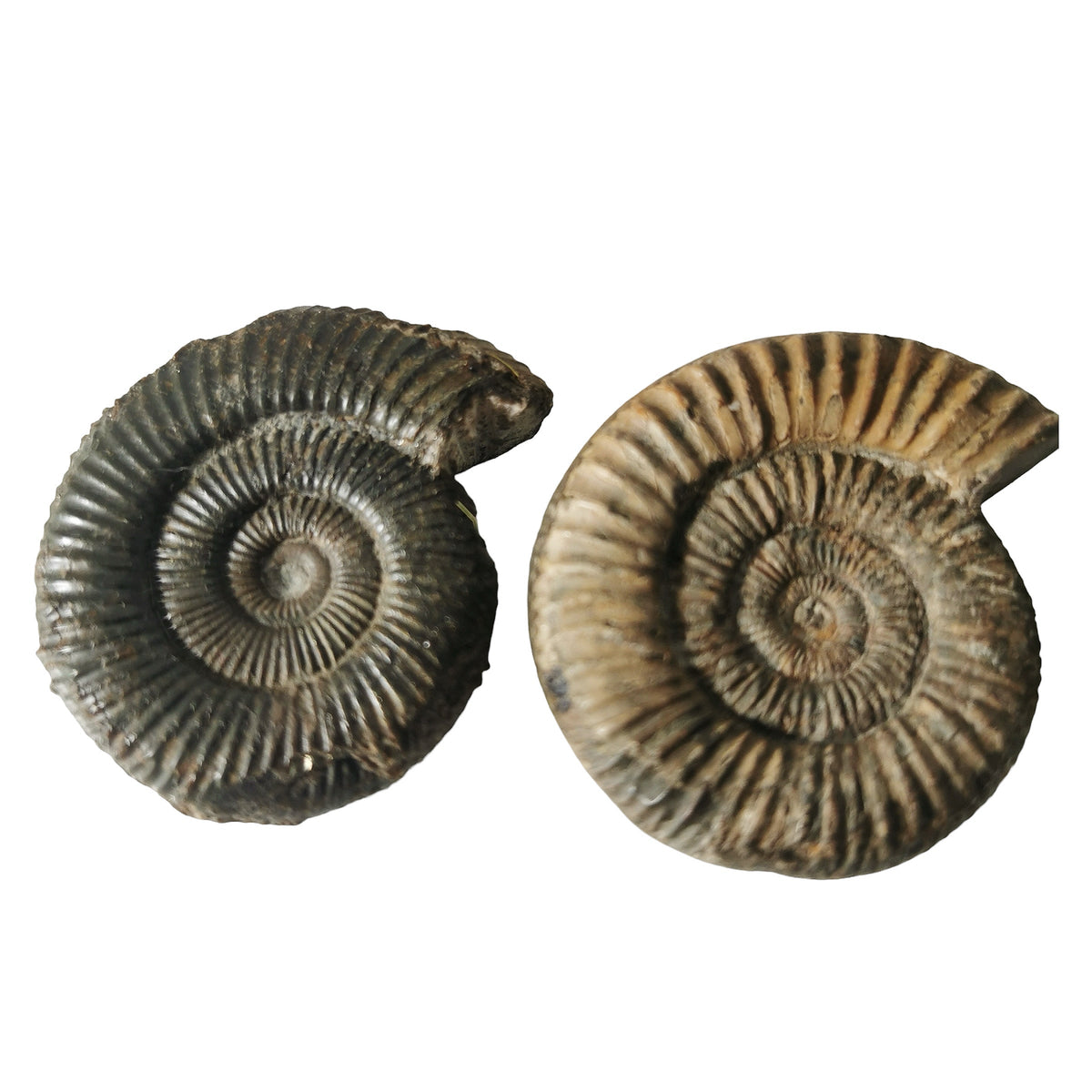
The short answer: ammonites were sea animals with coiled, chambered shells. They were cephalopods, relatives of today's squid, octopus and nautilus. Their shells look most like a nautilus, but the Natural History Museum says they were probably closer to octopus and squid.[1] The wider ammonite group first appeared about 450 million years ago. Most died out about 66 million years ago, alongside the non-bird dinosaurs.[1]
Ammonites are one of the most recognisable fossils there is, and one of the best for a beginner's collection: common enough to be affordable, and varied enough that you never run out of new ones.
What the animal was
An ammonite started life with a tiny shell and added new chambers as it grew. It moved its body into each new chamber and sealed off the old one with a wall called a septum. The chambered shell was used for buoyancy.[1] Species are told apart by shell shape and size, the number and spacing of ribs, spines and other ornament. Estimates run to more than 10,000 species.[1]
For how they fit alongside the straight-shelled Orthoceras and modern cephalopods, see our shell evolution post.
Why they matter to geologists
Ammonites were common and evolved quickly, so a given species marks a narrow slice of time. Much of Europe's Mesozoic rock is divided into "ammonite zones" for matching layers from place to place.[1] More on that in how fossils are dated.

Ways ammonites are preserved
- Pyritised: the shell or chambers replaced by pyrite, giving a metallic gold look.
- Agatised or calcite-filled: the chambers filled with silica or calcite. Cut and polished, these show the chamber walls beautifully.
- Ammolite: in southern Alberta, some ammonite shell keeps its original layered aragonite and flashes colour. See our ammolite post.

Looking after pyritised ammonites
Pyrite in fossils can break down in damp air. It reacts with oxygen and moisture to form acid and sulphate minerals, which can crack a specimen apart over time. Museums fight this with dry, low-oxygen storage.[2] At home, keep pyritised fossils somewhere dry, away from bathrooms and basements, and don't wash them.

Have a look through ammonite, ammolite and mollusc fossils to see how much variety there is.
See what's new: browse our newest arrivals for the latest pieces added to the shop.
Sources
- Natural History Museum, London: What Is an Ammonite?
- NatSCA (Natural Sciences Collections Association): Project Airless, on pyrite decay in museum fossils.