


By Adam Kelliher
The short answer: blue amber is fossil tree resin that can look brown or golden in the hand and turn blue in sunlight or under ultraviolet light. The polished Indonesian pieces in our shop start at $50. It is amber, not a mineral, and it is not the same thing as young copal; I covered that distinction in Amber vs Copal.[1][2]
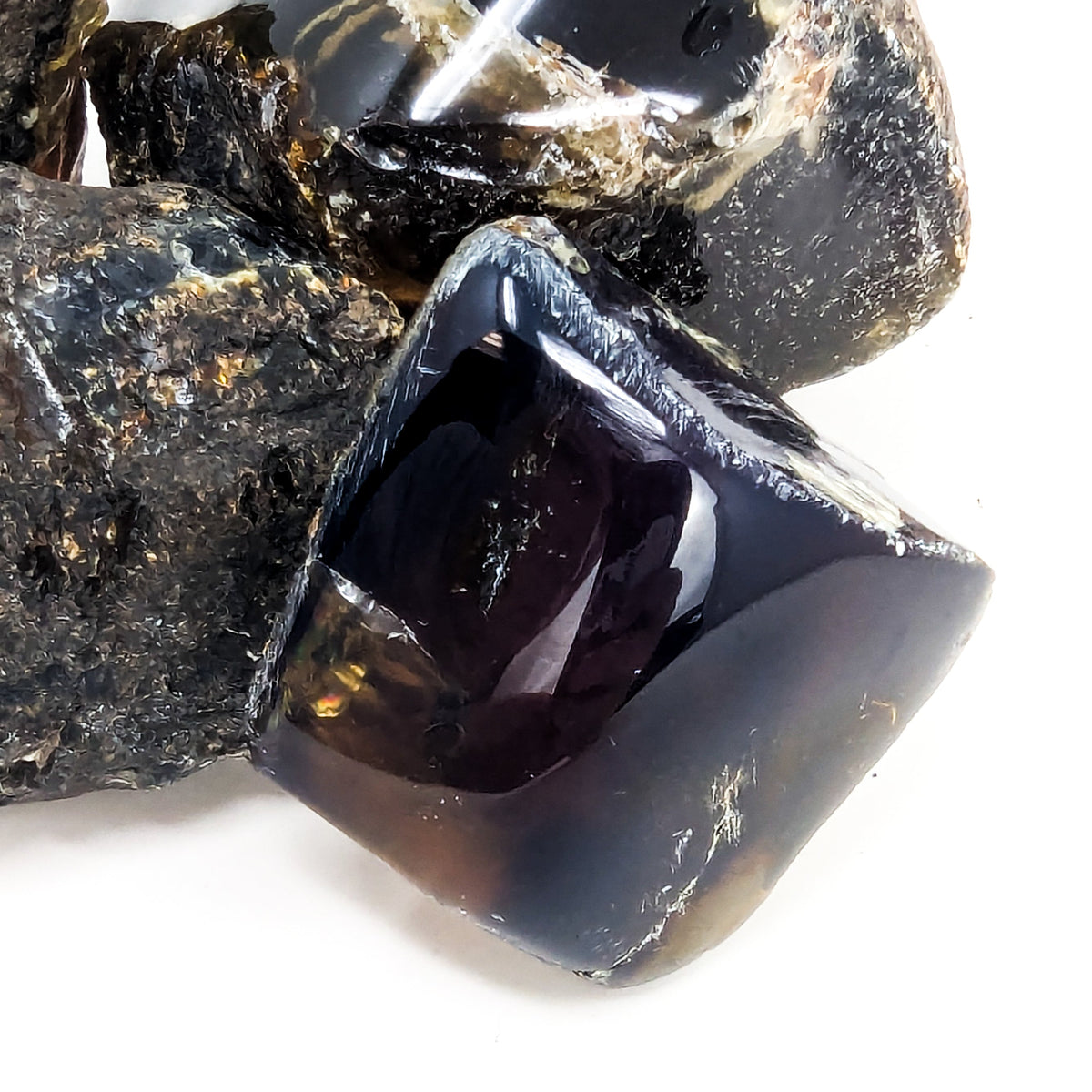
Amber is fossilized plant resin. GIA describes it as a gem organic, softer than most stones (around Mohs 2 to 2.5), that can be cut and polished but should be kept away from heat, solvents and hard knocks.[1] Some amber, especially well-known material from the Dominican Republic and from Indonesia (including Sumatra), shows a blue appearance in sunlight or UV. The polished faces we sell as blue amber from Indonesia are that kind of resin, already cut so you can see the colour change without putting a saw to it.

What to look for in a gift piece
Look at the piece in daylight, not only under a shop lamp. The blue is often strongest when light comes through or off the polished face at an angle. Under a UV torch the fluorescence can be obvious; natural light is the more honest test for a gift, because that's how it will be seen at home. The polish should be clean, without a cloudy film, and the resin should be free of fresh, sticky surfaces that would suggest copal rather than amber.[1][2]
Our polished Indonesian specimens run from $50 for a medium piece up through larger sizes. That's a more considered gift than a $7 fossil tooth, and it's one you should pick in person if you can: colour and clarity vary piece to piece. You can compare them in our 6,000 sq ft rock shop in Vancouver. We also have ordinary rough amber from Sumatra if someone wants unpolished material to look at, and I wouldn't sell that as "blue amber" unless the piece actually shows the effect.
A few practical notes
Amber is soft. A gift box is better than a pocket. Don't leave it on a hot dashboard, and don't clean it with solvents or an ultrasonic cleaner.[1] If you're unsure whether a cheap "blue amber" online is resin or plastic, the copal test and the feel of the polish are the first checks; when in doubt, buy from a tray you can hold. For a smaller gift in the same family of fossil organics, amber and copal are easy to confuse, which is why I keep them on separate listings.
If you want a wider list of rock and fossil presents, see our Holiday Gift Guide for gifts under $50 and $100.
See what's new: browse our newest arrivals for the latest pieces added to the shop.
Sources
- GIA. Amber: Description (hardness, care, and identification of amber as fossil resin).
- McCoy, V.E. et al. 2020. A revised definition for copal and its significance for palaeontological and Anthropocene biodiversity-loss studies. Scientific Reports 10.
- Shop identifications of Indonesian blue amber follow the product locality (Indonesia) and the visible colour in daylight and UV; I am not attaching an unsourced age in millions of years to these particular pieces.