


By Adam Kelliher
The short answer: the most common "fake crystals" aren't fake minerals. They're man-made glass sold under a stone-sounding name, such as opalite. Others are real stones changed by dye or coatings, such as dyed howlite, dyed agate and aura quartz. Most can be spotted with a loupe and a few questions.[1][2][3]
There's nothing wrong with buying any of these, as long as it's labelled honestly. The problem is when it isn't. Here are the ones beginners run into most.
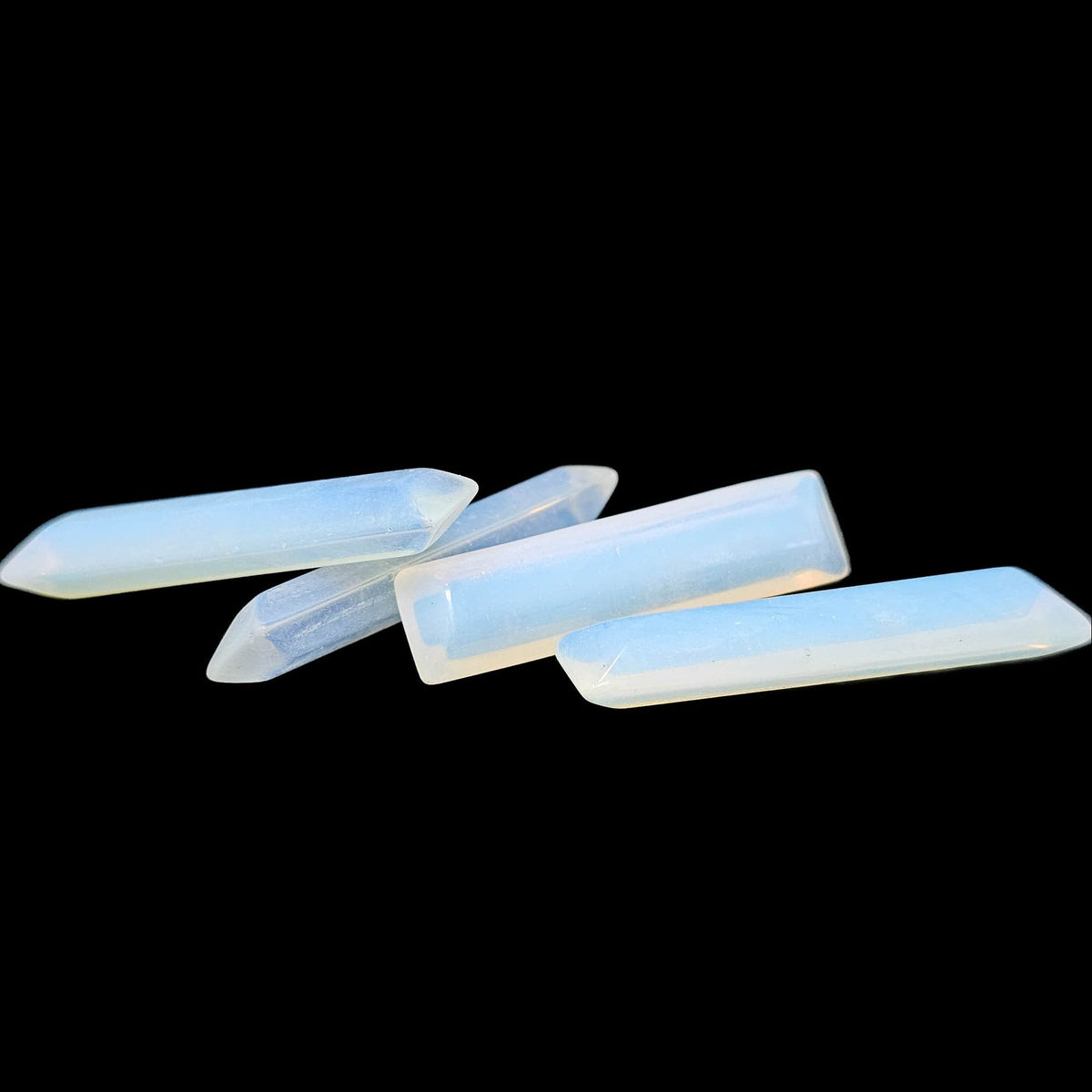
Glass: opalite
"Opalite" usually means a man-made glass or plastic imitation of opal.[1] The name was used in the late 1980s for a plastic opal imitation, and GIA documented that material in 1989.[4] The International Gem Society suggests avoiding the word for natural opal because it's so tied to imitations.[1] Under a loupe, glass often shows round bubbles and swirl marks.[1]

Dyed stones
- Howlite as turquoise. Howlite is white and porous, and it's often dyed blue to imitate turquoise. It makes a convincing copy.[2]
- Agate. Agate is porous and takes dye well. Very intense pink, blue or green agate is often dyed.[5] Colours that don't occur naturally prove dye on their own.[3]
GIA notes that dye usually shows under magnification, concentrated along cracks or in porous areas.[3] Look closely at the fractures.

Coated quartz
Aura and other rainbow quartz is real quartz with a very thin metal oxide coating, applied by vapour deposition, that gives colours rarely seen in natural quartz.[6] Coatings sit on the surface, so look for wear at edges and points.
Heated stones
GIA notes that much of the citrine on the market is heat-treated amethyst.[7] That's a standard treatment, not a fake, but it's worth knowing. We covered it in Does Amethyst Fade in the Sun?.

Lab-made
Lab-created stones have the same chemistry and structure as the natural mineral, which makes them a different thing from glass imitations. See Natural Gemstones vs Lab-Created Stones.
Questions to ask
- Is it natural, treated or man-made?
- If treated, how: dyed, heated or coated?
- Does the colour exist in nature for this stone?
Browse all crystals.
See what's new: browse our newest arrivals for the latest pieces added to the shop.
Sources
- International Gem Society: Opal Gems: Value, Price, and Jewelry Information (natural opalite and imitation opal).
- International Gem Society: Howlite Value, Price, and Jewelry Information.
- GIA: Chart of Commercially Available Gem Treatments (dyeing and detection).
- Gems & Gemology (GIA), Spring 1989: "Opalite": Plastic Imitation Opal with True Play-of-Color.
- GIA: Gem Cutters Reveal the Beauty of Chalcedony.
- GIA: An Introduction to Gem Treatments (coatings and dyes).
- GIA: Citrine Buyer's Guide and Quality Factors.