


By Adam Kelliher
Amber is the one fossil people wear as jewellery without thinking of it as a fossil. It's tree resin, hardened over a very long time. Its younger cousin, copal, gets sold as amber more often than it should.
What amber is
GIA describes amber as an organic gem: sap from ancient trees that hardened and fossilised, often tens of millions of years ago. Some contains plant or insect bits, and gas bubbles are a very common inclusion.[1]

Where the line is
GIA's rule: amber must be over a million years old, while copal is younger, often around a hundred thousand years.[1] Not everyone uses that cut-off. A 2020 paper in Scientific Reports proposed redefining the boundary, arguing for clearer, age-based terms.[2] So if someone tells you there's one universal number, they're overselling it.
Why it matters to you
A rule of thumb from the shop counter: copal usually sells for less than amber, so the label matters. If a piece is sold as amber, ask where it's from and how old the deposit is. A reputable seller can tell you. I'd be wary of insect-filled "amber" at a bargain price.
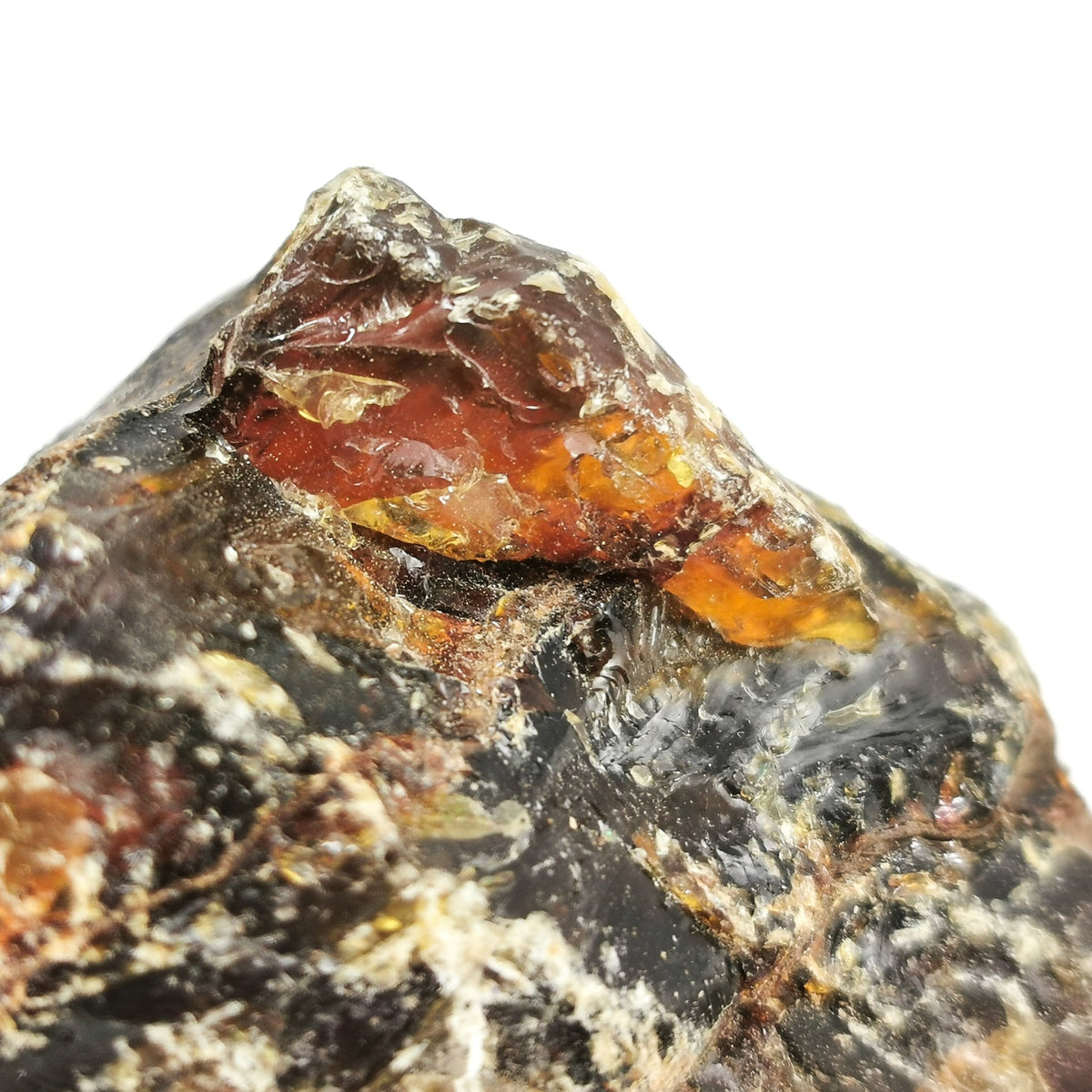
Our rough amber from Sumatra is a good way to see natural amber before it's cut or polished. For more on how a living thing becomes a fossil, read The Intricate Journey from Life to Fossil.
See what's new: browse our newest arrivals for the latest pieces added to the shop.
Sources
- GIA. Amber Description.
- 2020. A revised definition for copal and its significance for palaeontological and Anthropocene biodiversity-loss studies. Scientific Reports 10.