


By Adam Kelliher
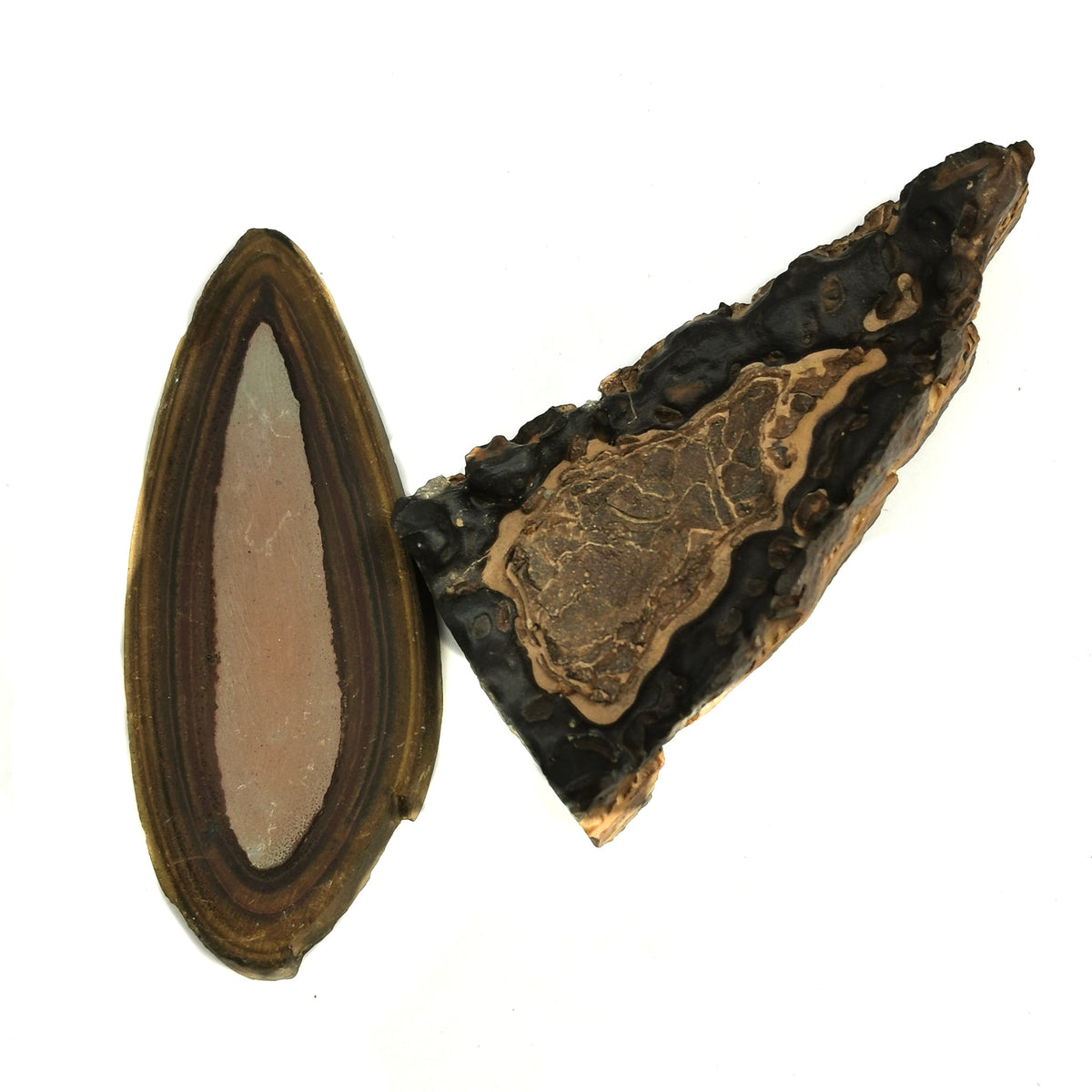
Stromatolites don't look like much at first. No shell, no tooth, no bones. Just wavy layers in a rock. But some of them are among the oldest signs of life we have, and that's hard to top.
What they are
Stromatolites form when sticky mats of microbes trap and bind sediment in layers. Minerals precipitate inside those layers and build a durable structure even as the microbes die off. The Smithsonian dates the oldest to about 3.5 billion years.[1]

Where the oldest ones are
In 1980 a paper in Nature described stromatolites 3.4 to 3.5 billion years old from the Pilbara of Western Australia, then the oldest firmly established biogenic deposits known.[3] The Western Australian Museum holds a specimen a little under 3.5 billion years old.[2]
The part people get wrong
Stromatolites are often credited to cyanobacteria, the microbes that later filled the air with oxygen. That's true for many younger ones. But the WA Museum notes that the very earliest may not have been built mostly by photosynthesising cyanobacteria, since there's little evidence of dissolved oxygen in the oceans then.[2] The Smithsonian puts cyanobacteria at least 2.4 billion years ago.[1] Scientists are still working this out, so I won't pretend otherwise.
Still alive today
Living stromatolite reefs are rare, and scientists study them to understand early life.[1]
We carry stromatolite slices from Morocco and polished stromatolite tumbles. Ages vary by locality, so check the listing before quoting a number to anyone.
See what's new: browse our newest arrivals for the latest pieces added to the shop.
Sources
- Smithsonian National Museum of Natural History. History of Life on Earth.
- Western Australian Museum. Stromatolites.
- Walter, M.R., Buick, R. and Dunlop, J.S.R. 1980. Stromatolites 3,400–3,500 Myr old from the North Pole area, Western Australia. Nature 284:443–445.