




Science: Crystal & Formation
- Formula
- CaCO3
- Family
- Carbonates
- Crystal System
- Trigonal
- Habit
- Scalenohedral
- Cleavage
- Perfect {10-11} (rhombohedral)
- Named After
- From the Latin calx, "burnt lime".
- Locality
- Morocco
More Specs
Description
Locality: Touissit mining district, Oriental Region, Morocco
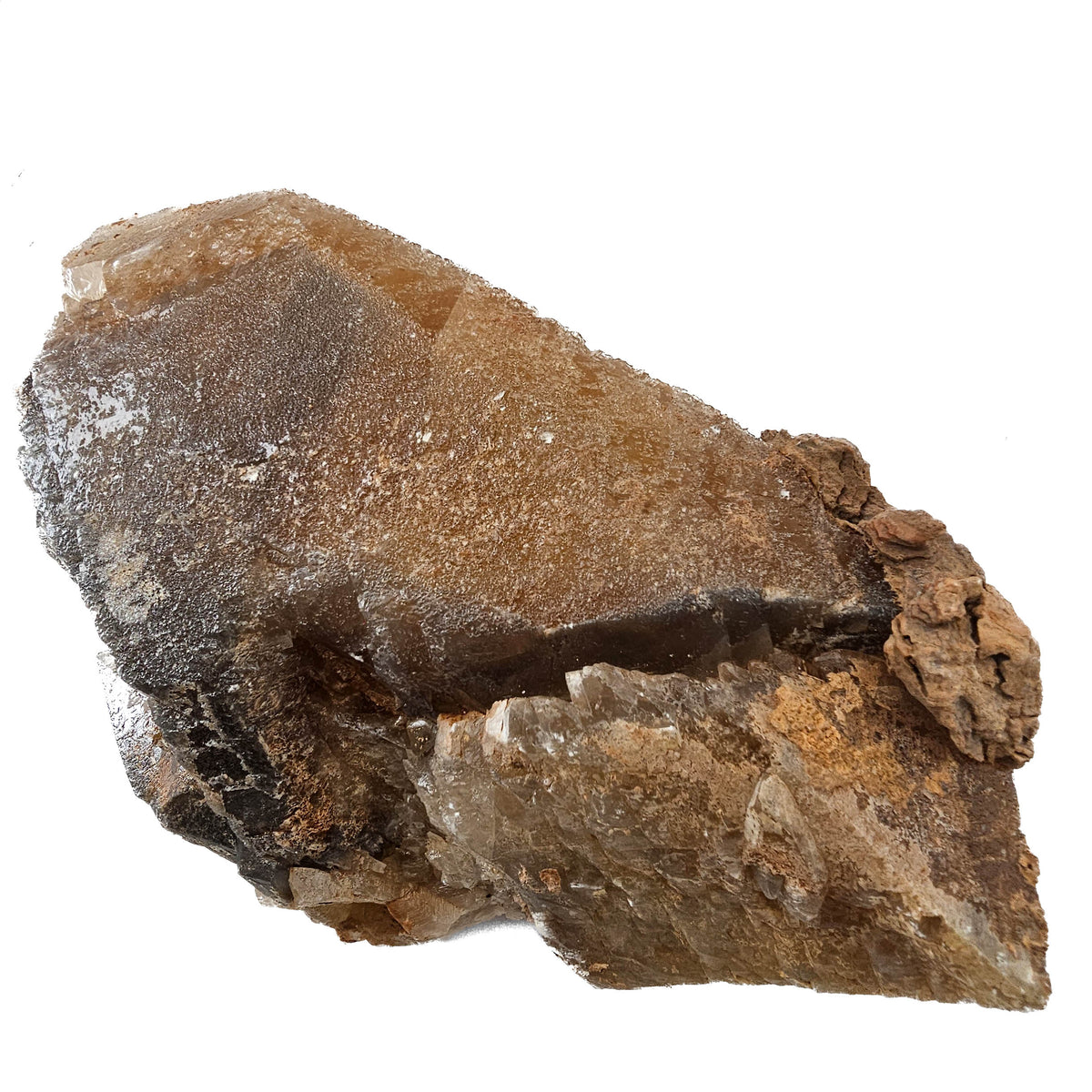
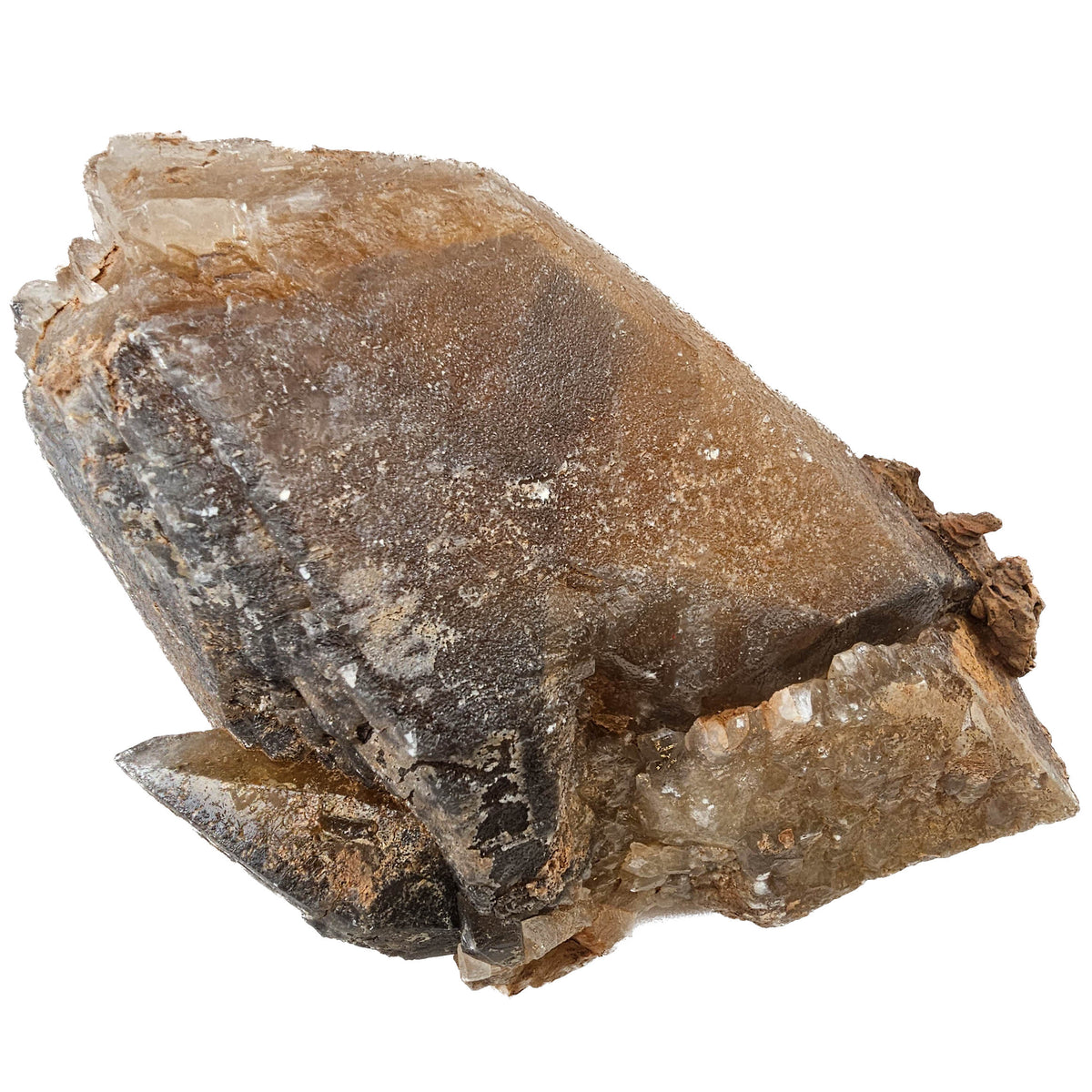
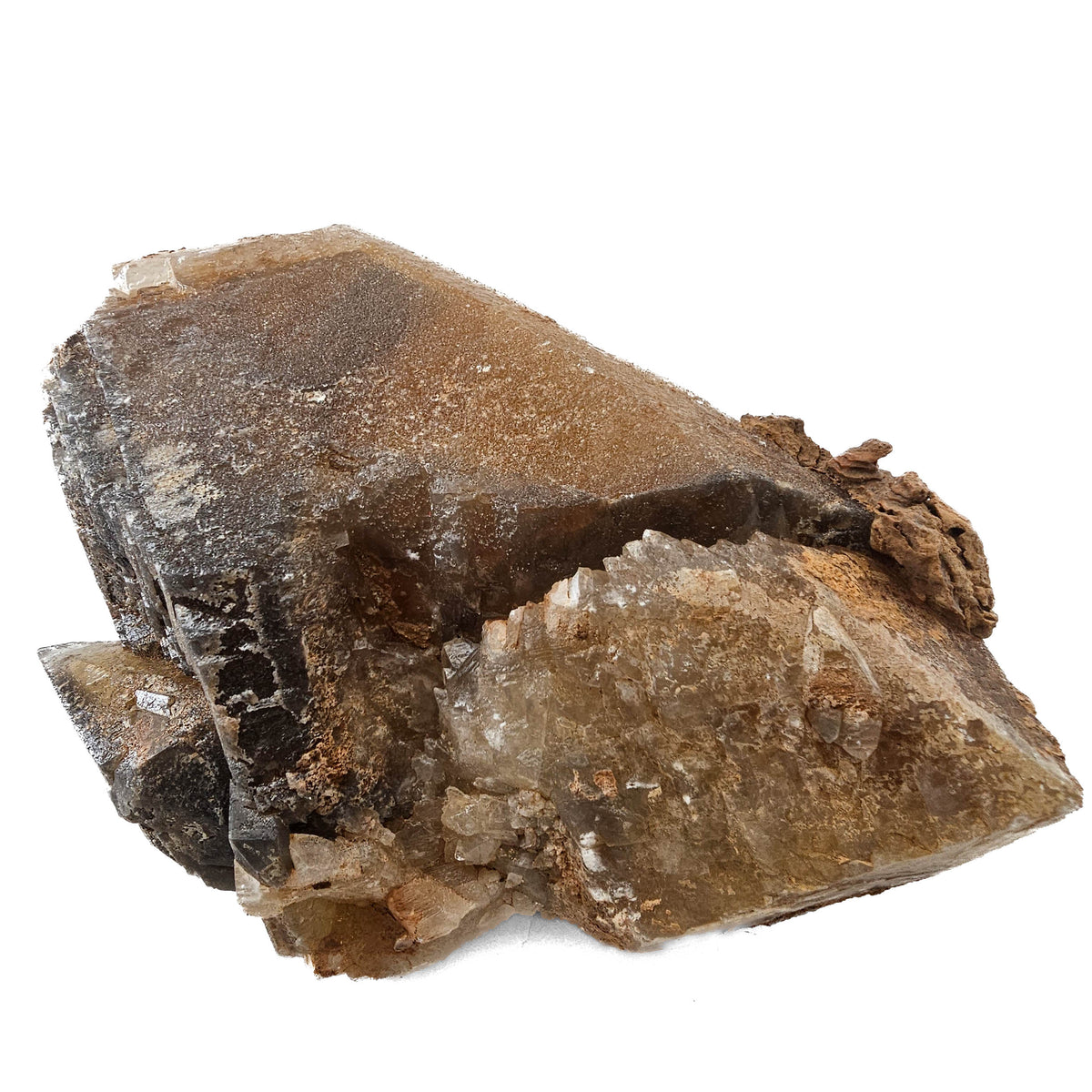
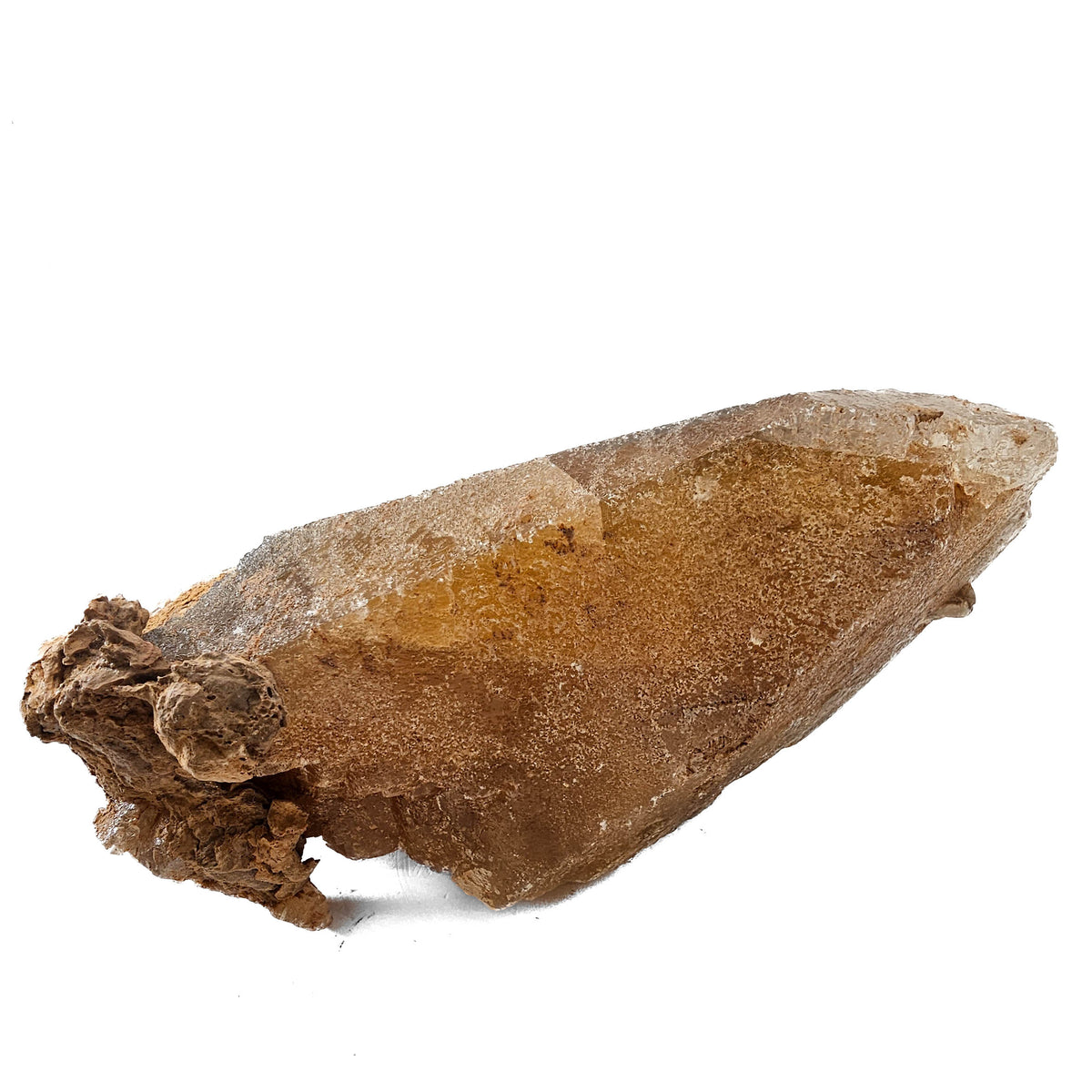
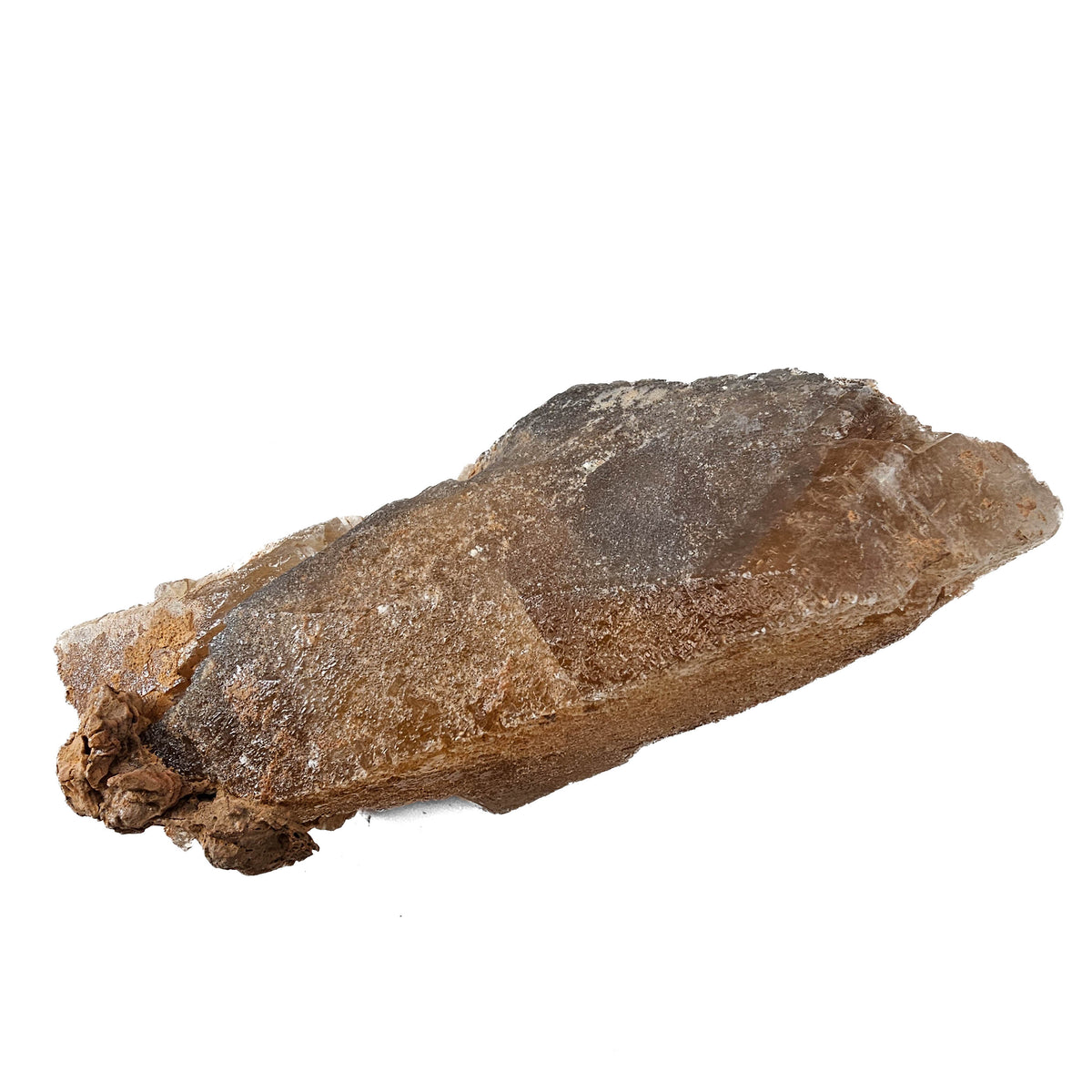
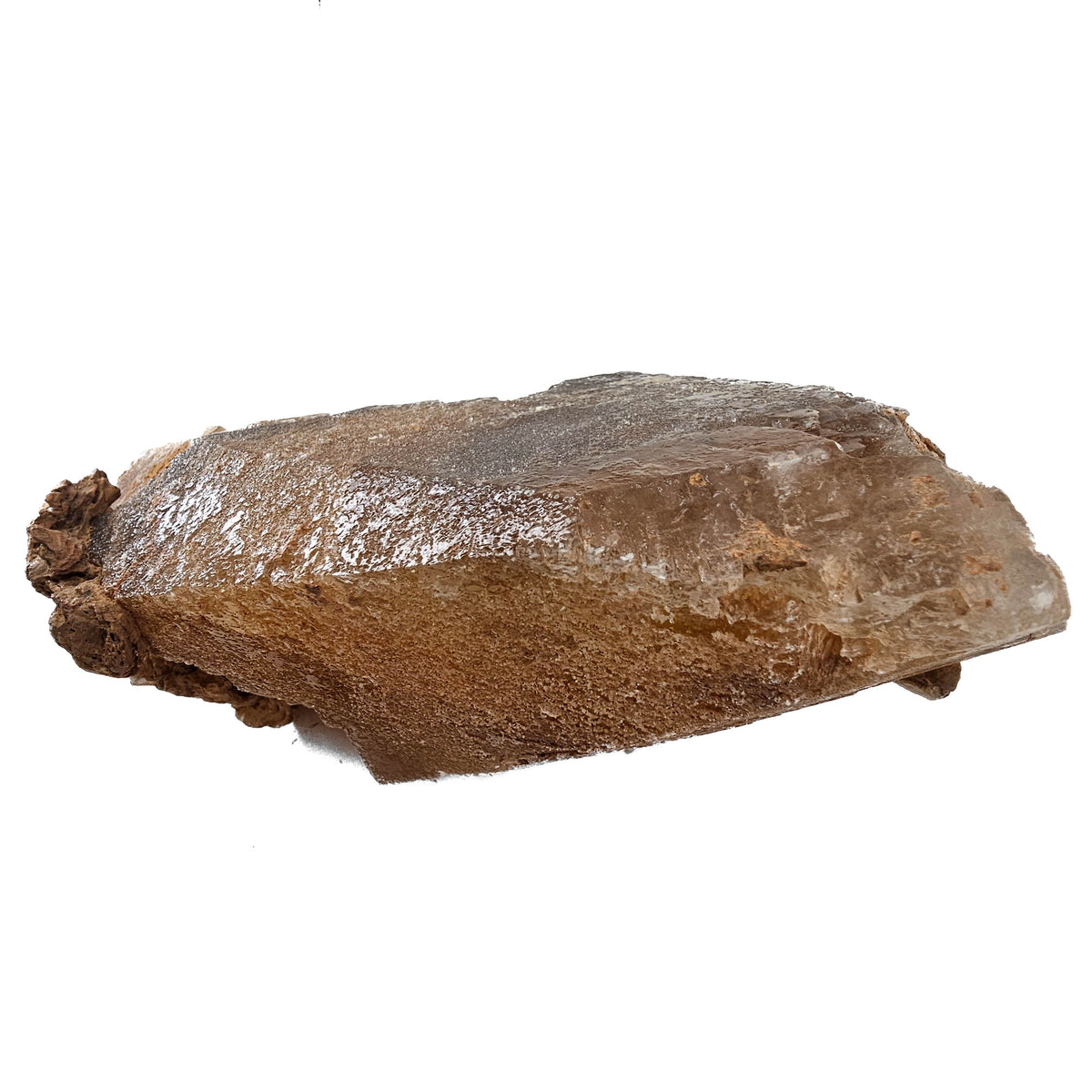
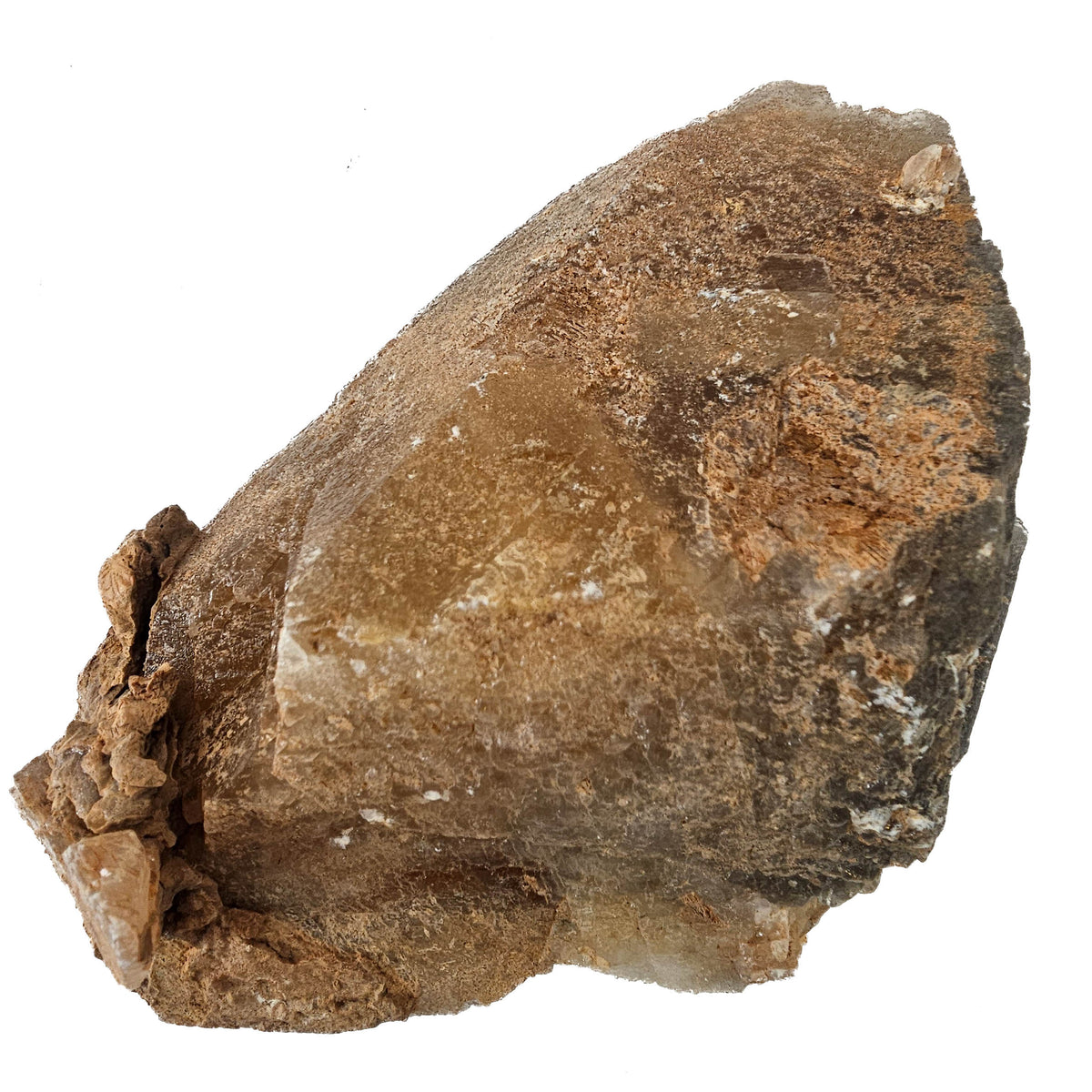
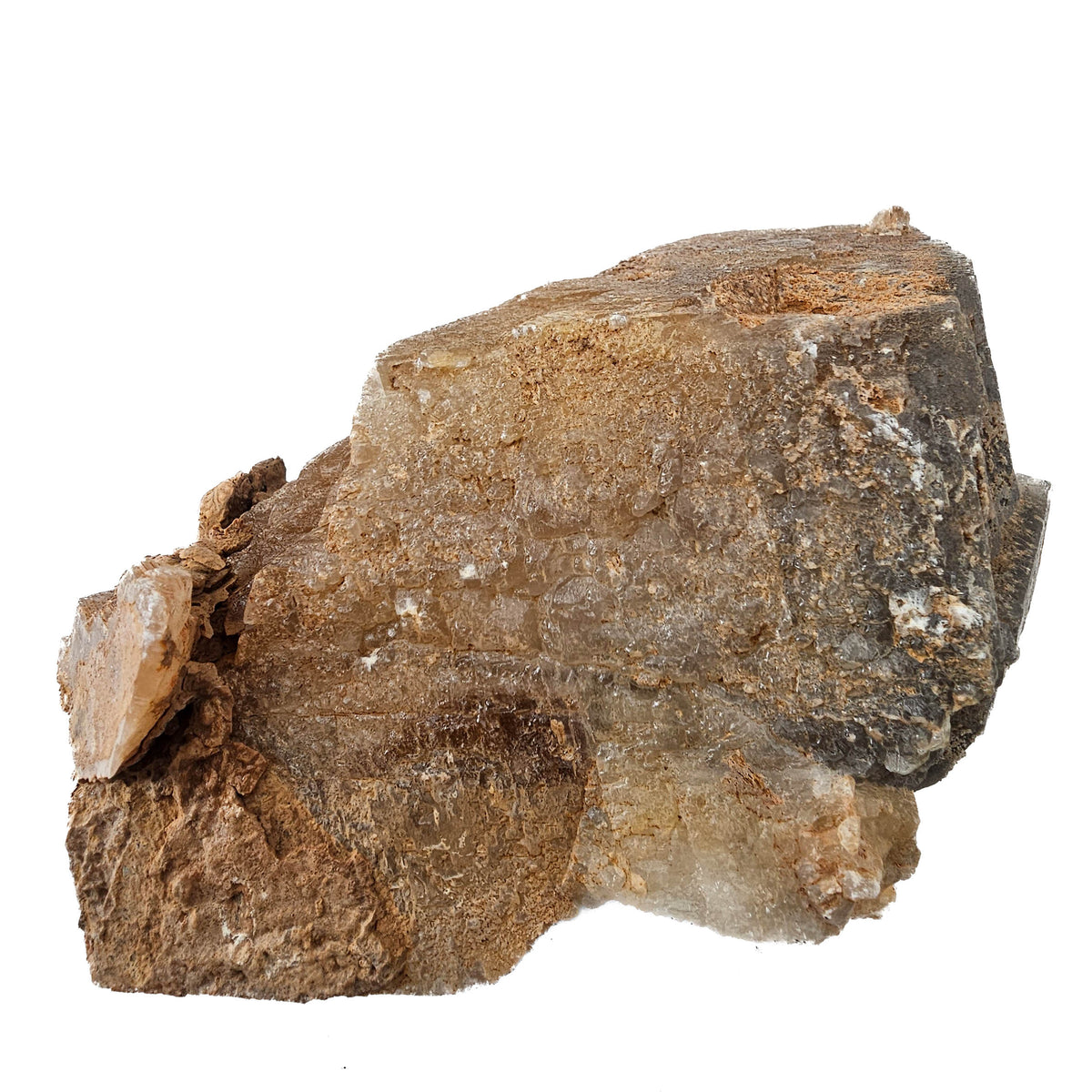
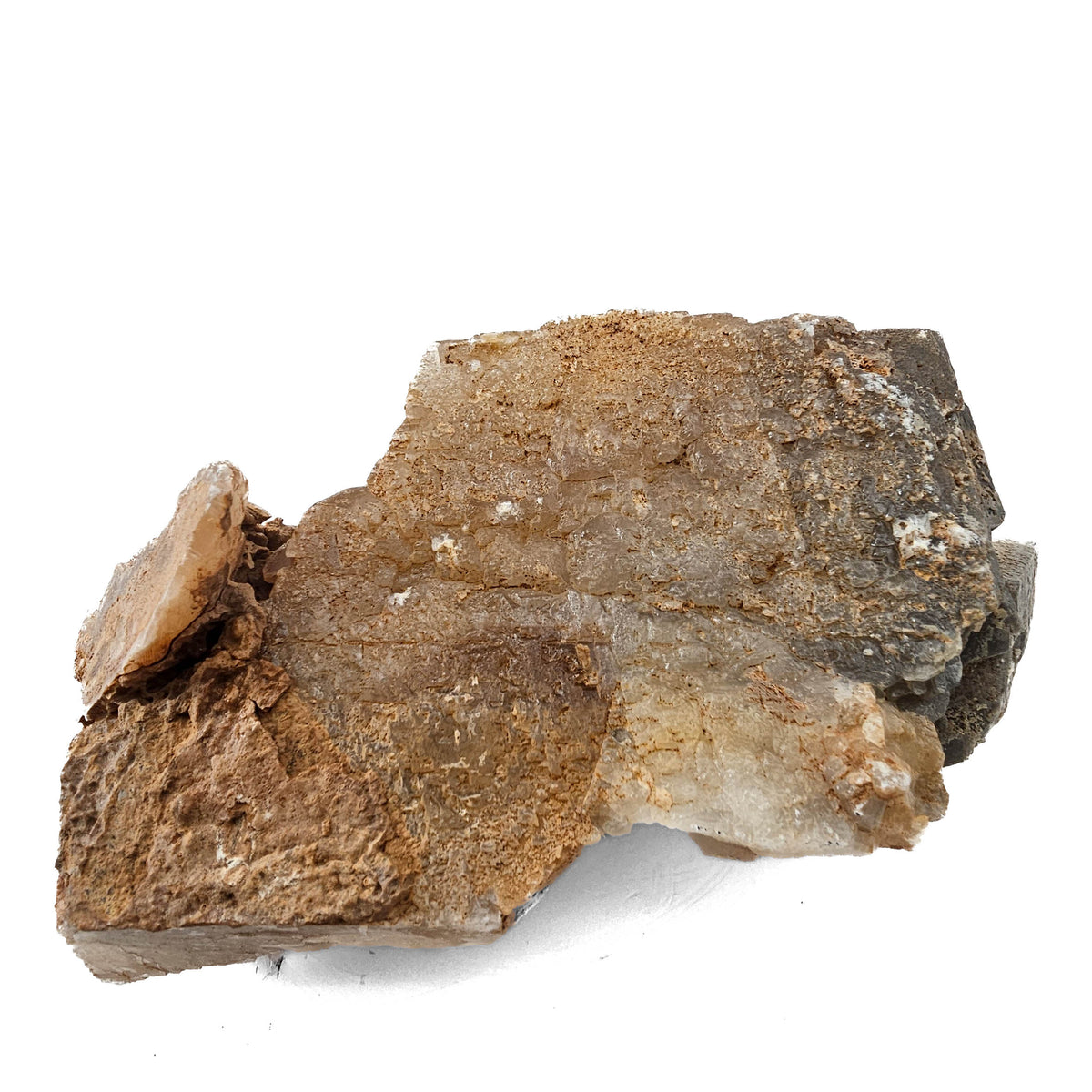
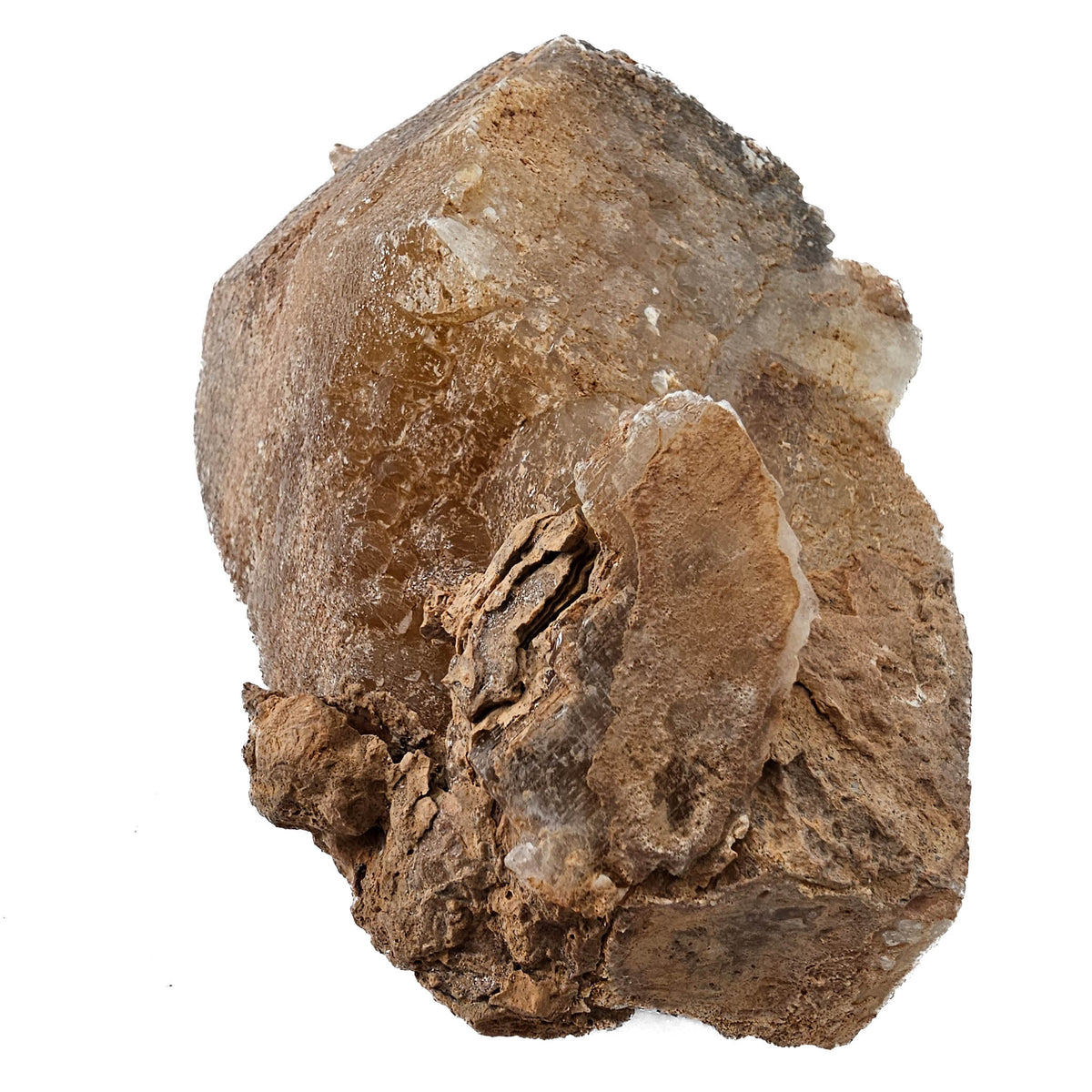
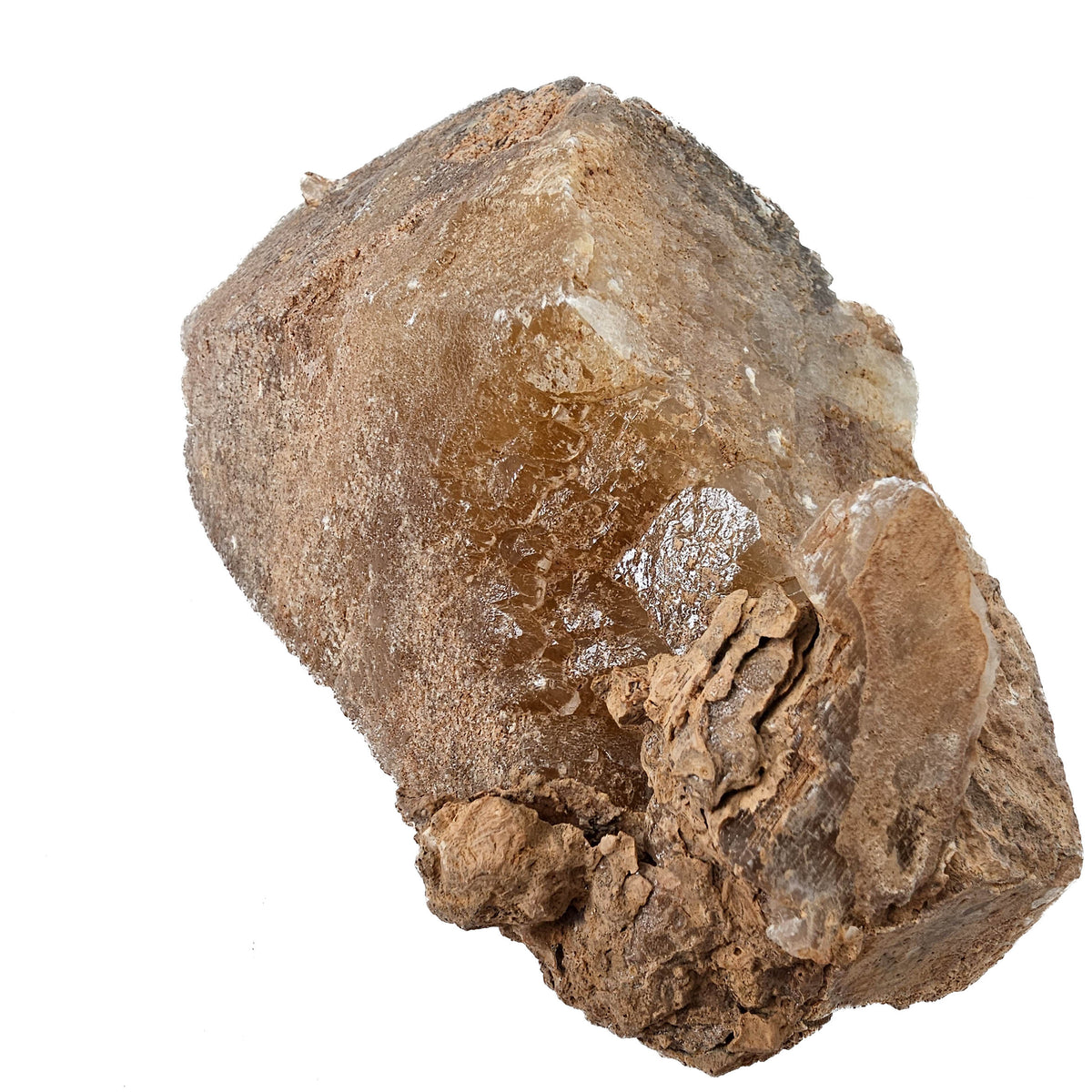
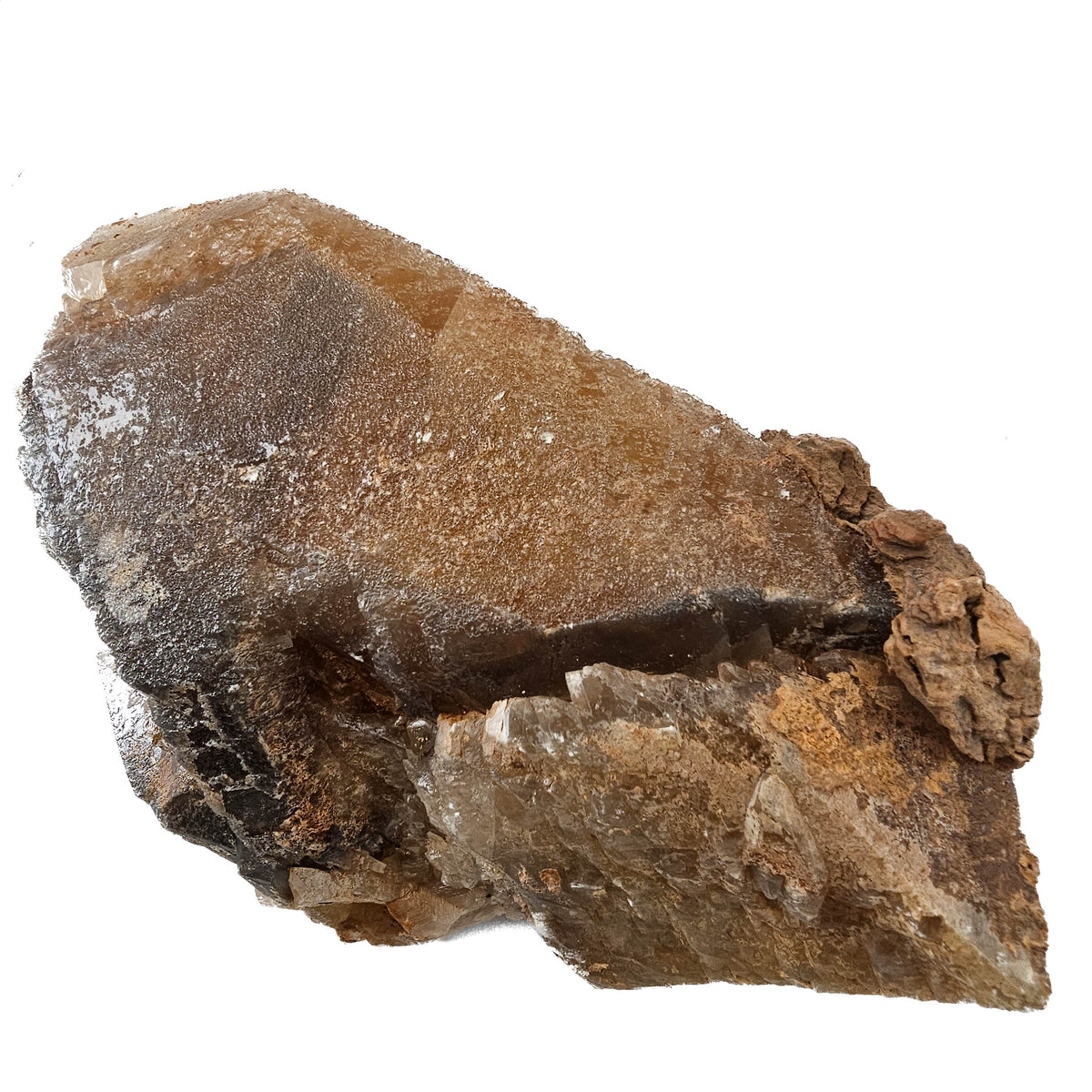
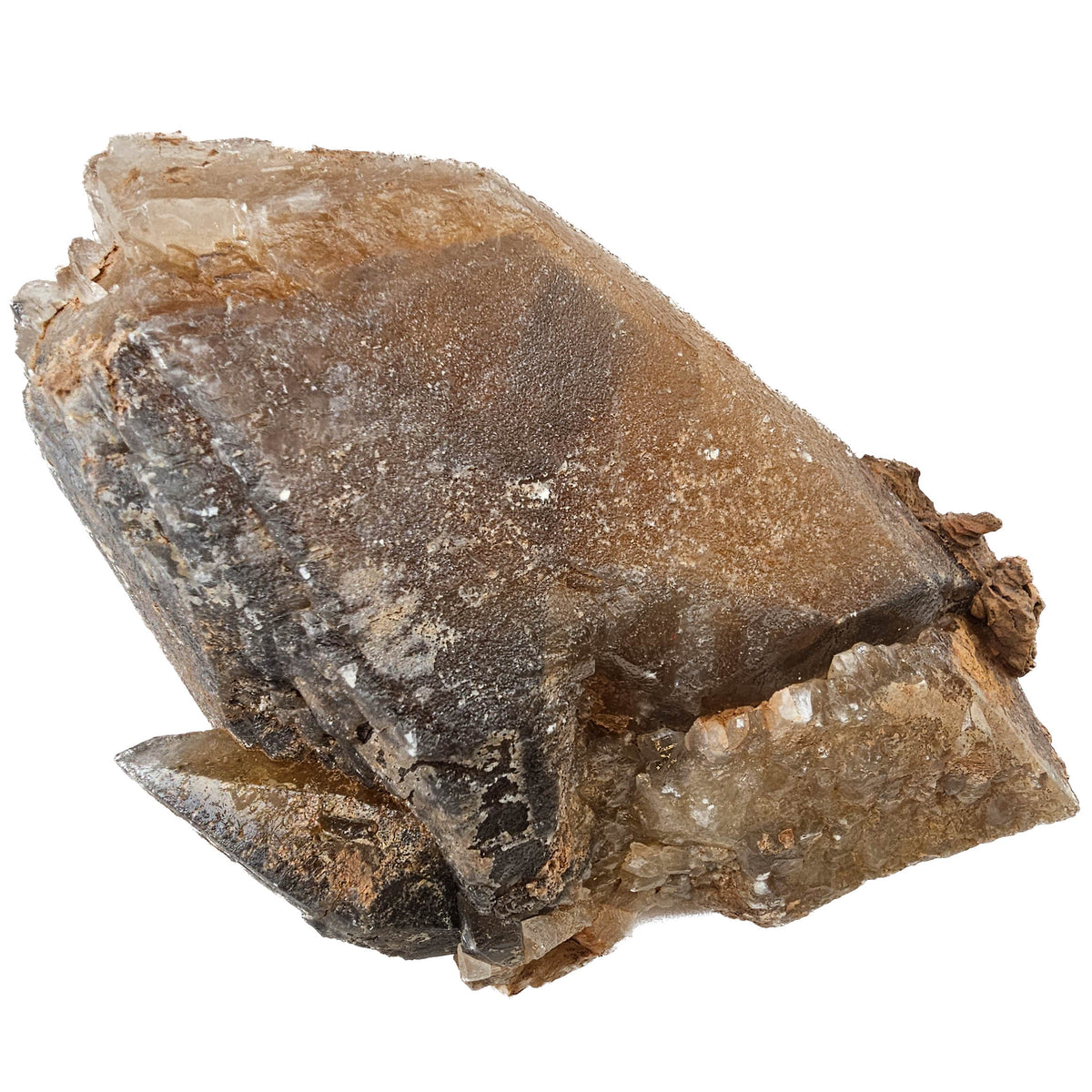
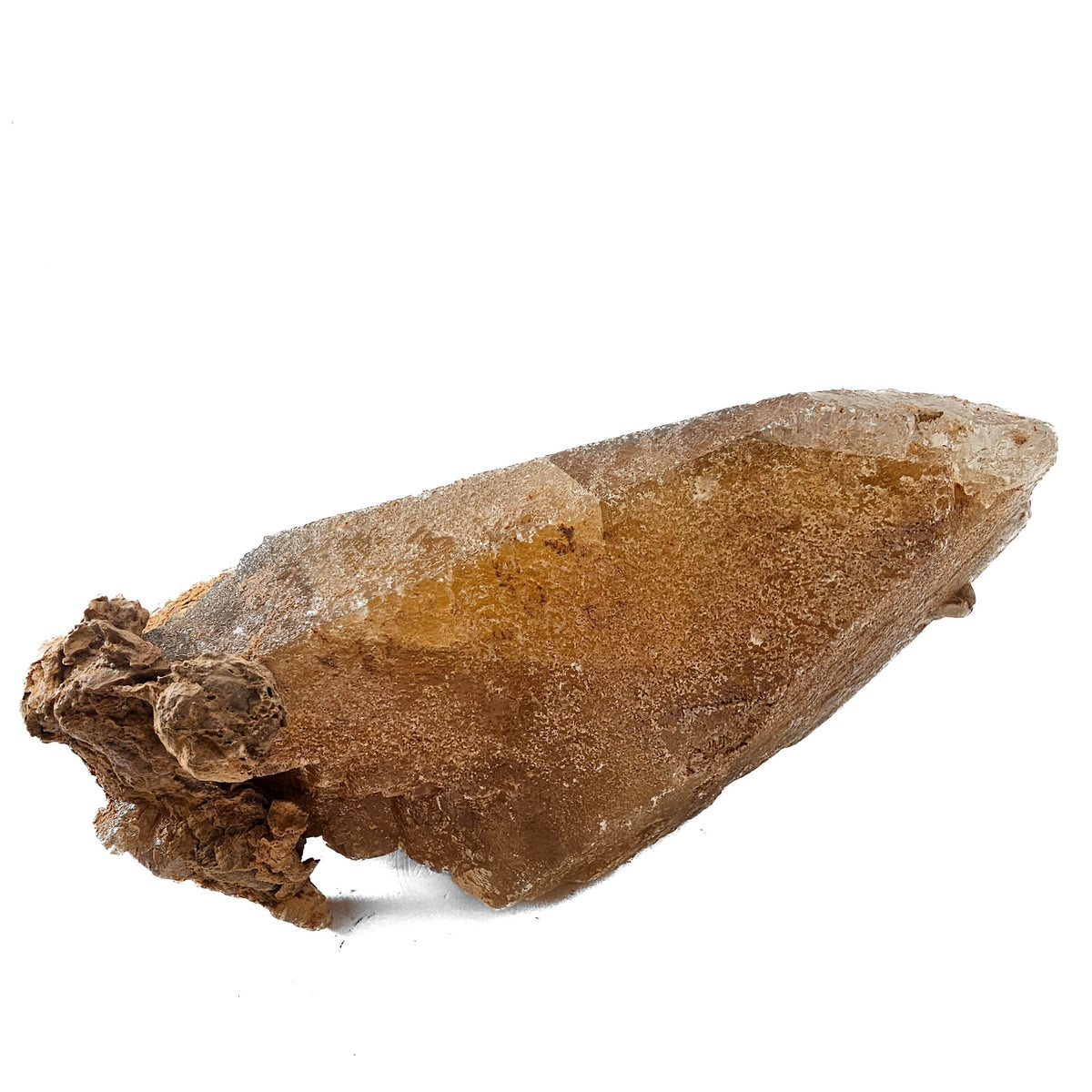
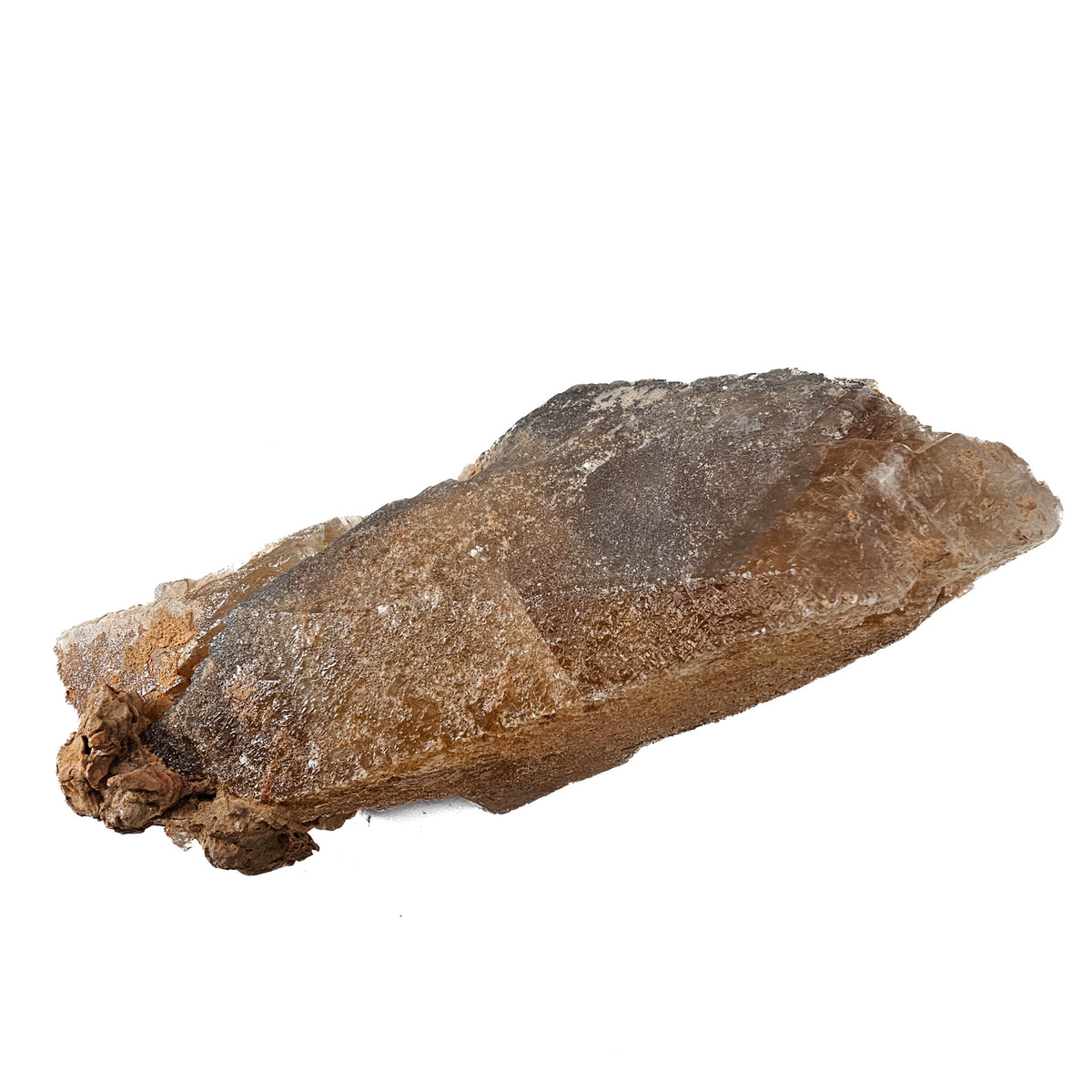
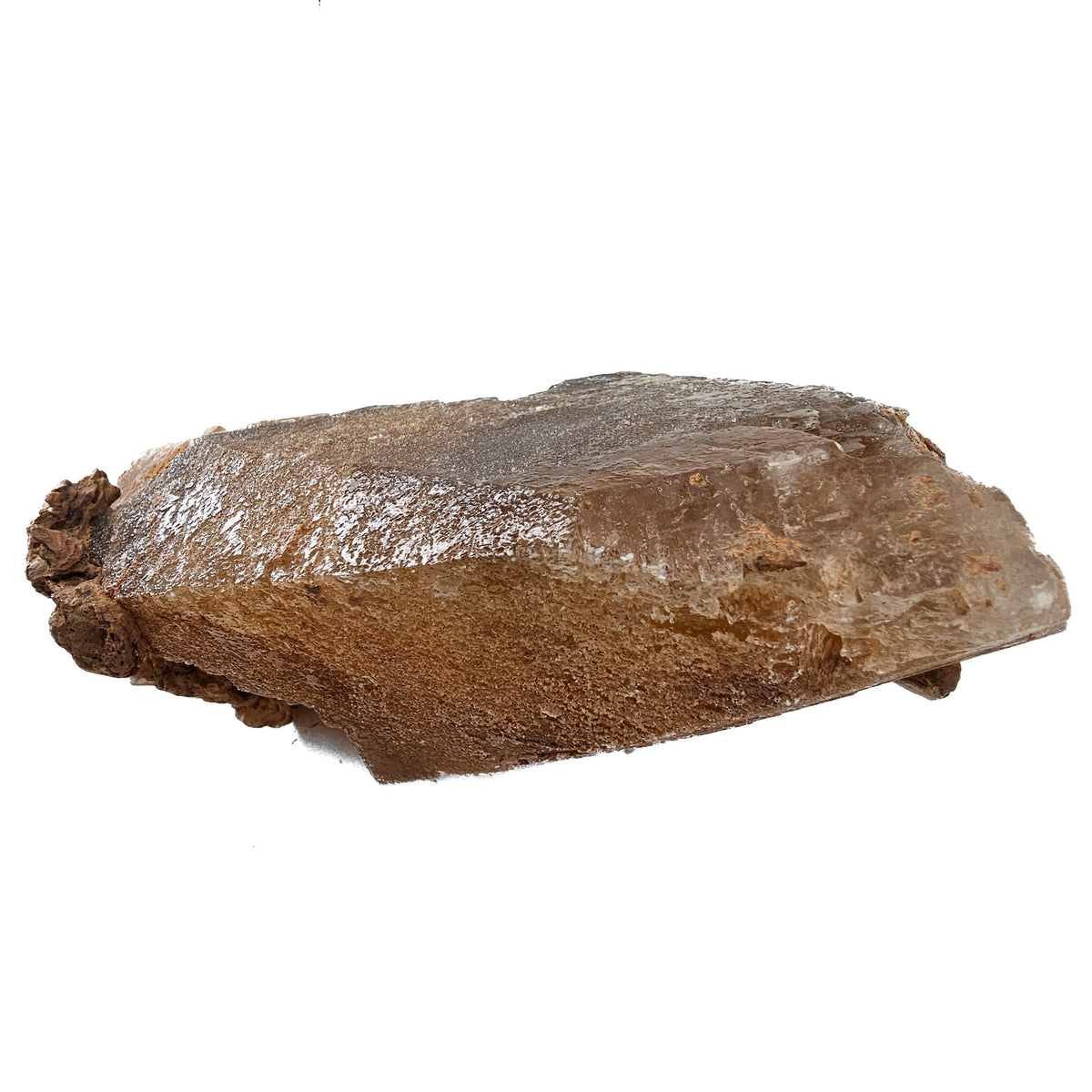
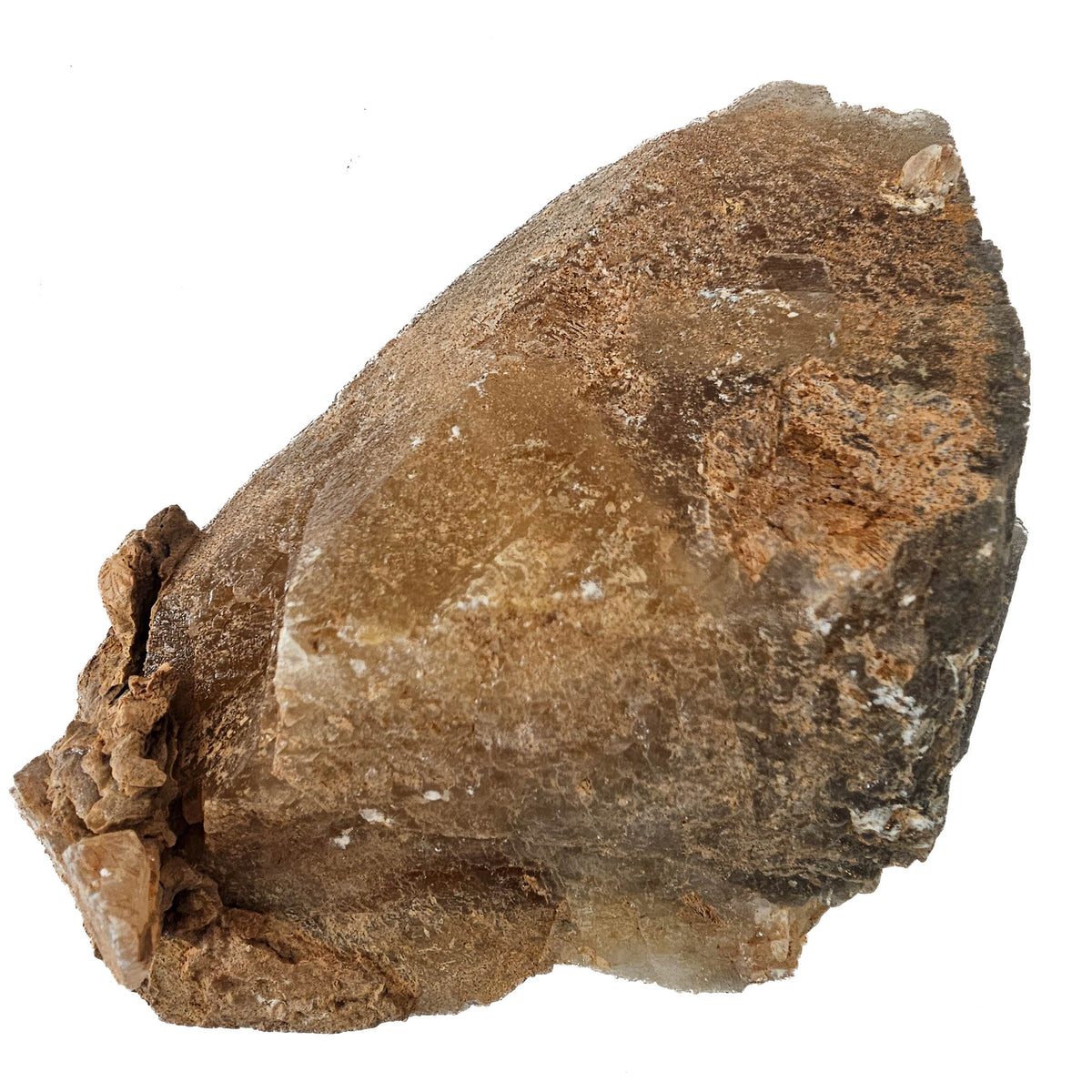
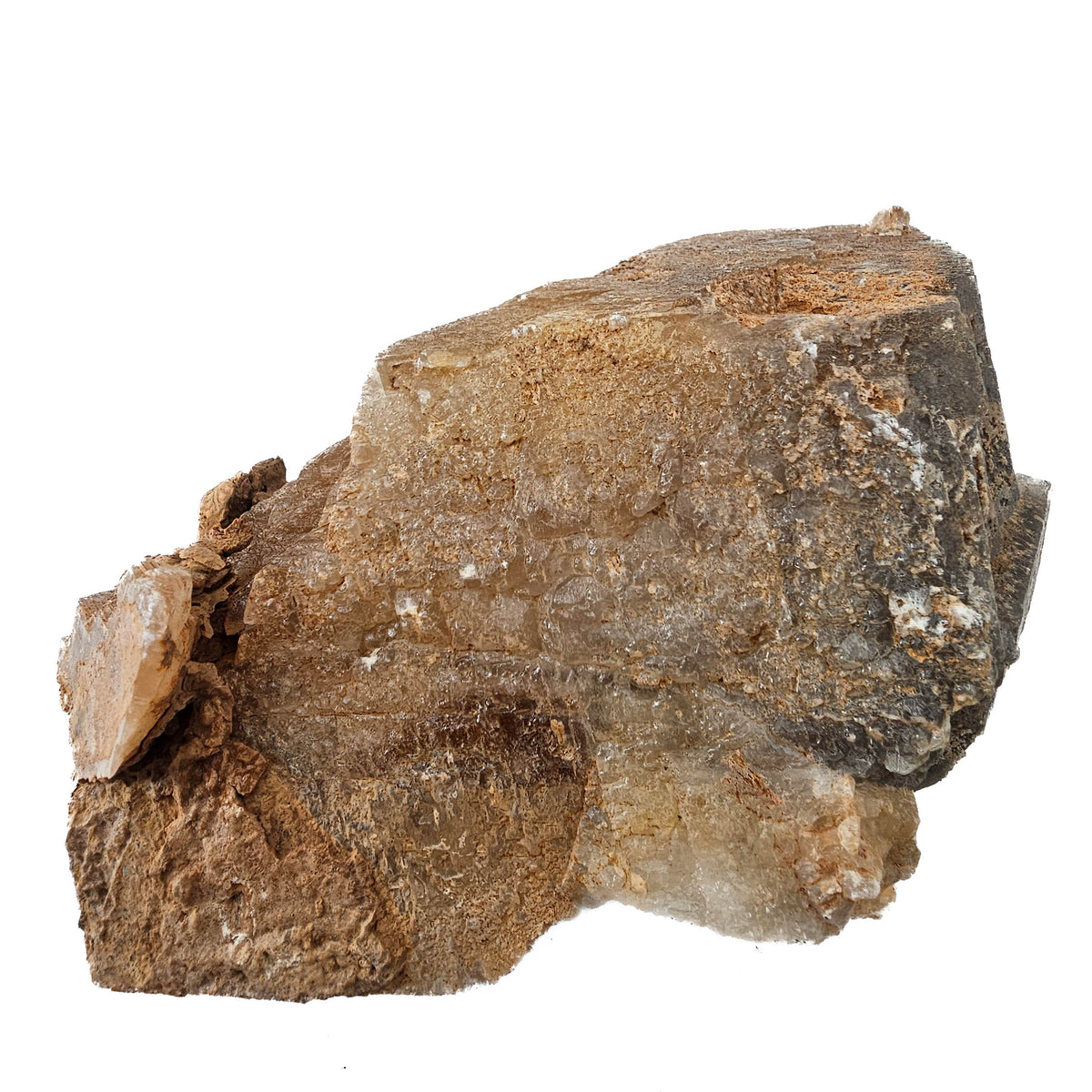
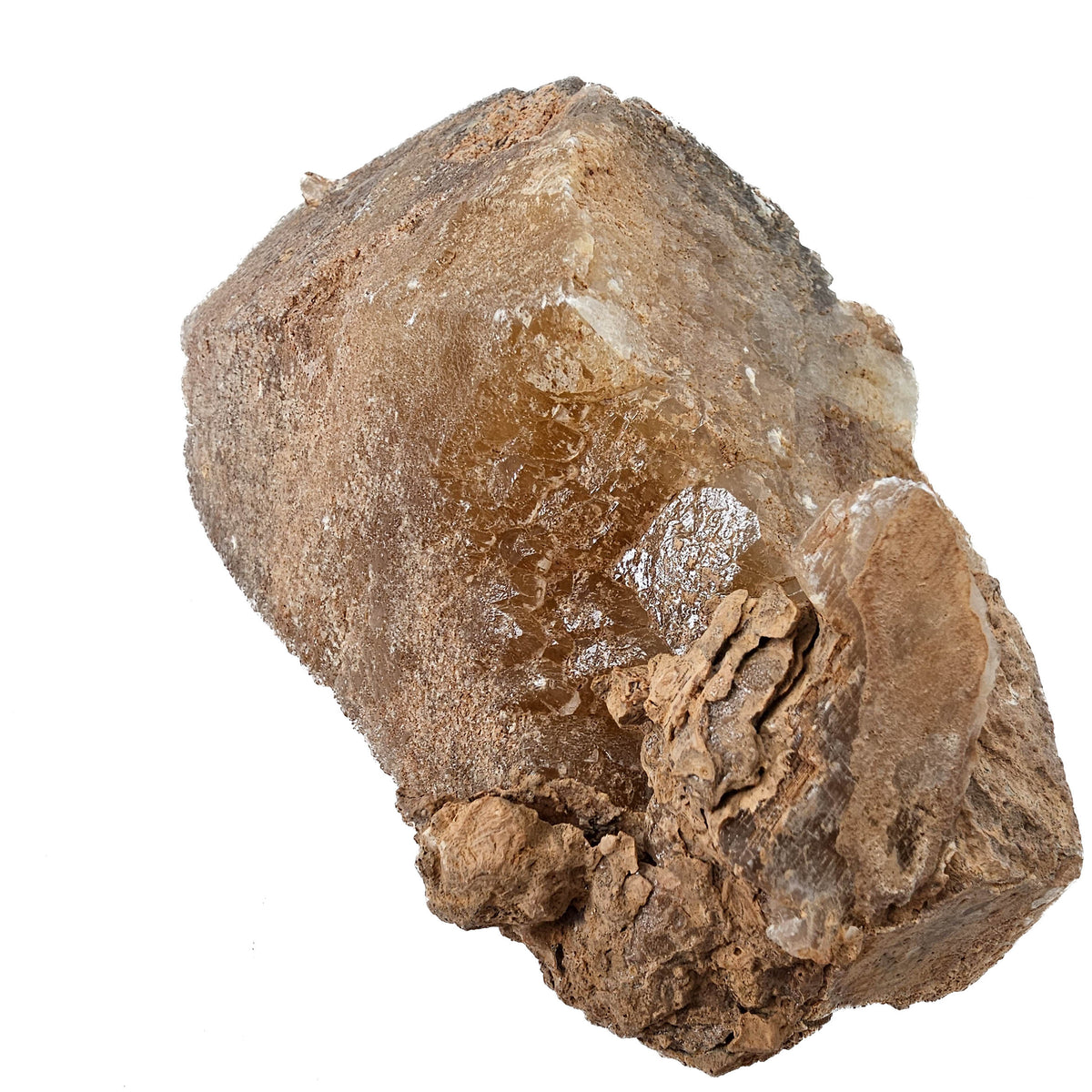
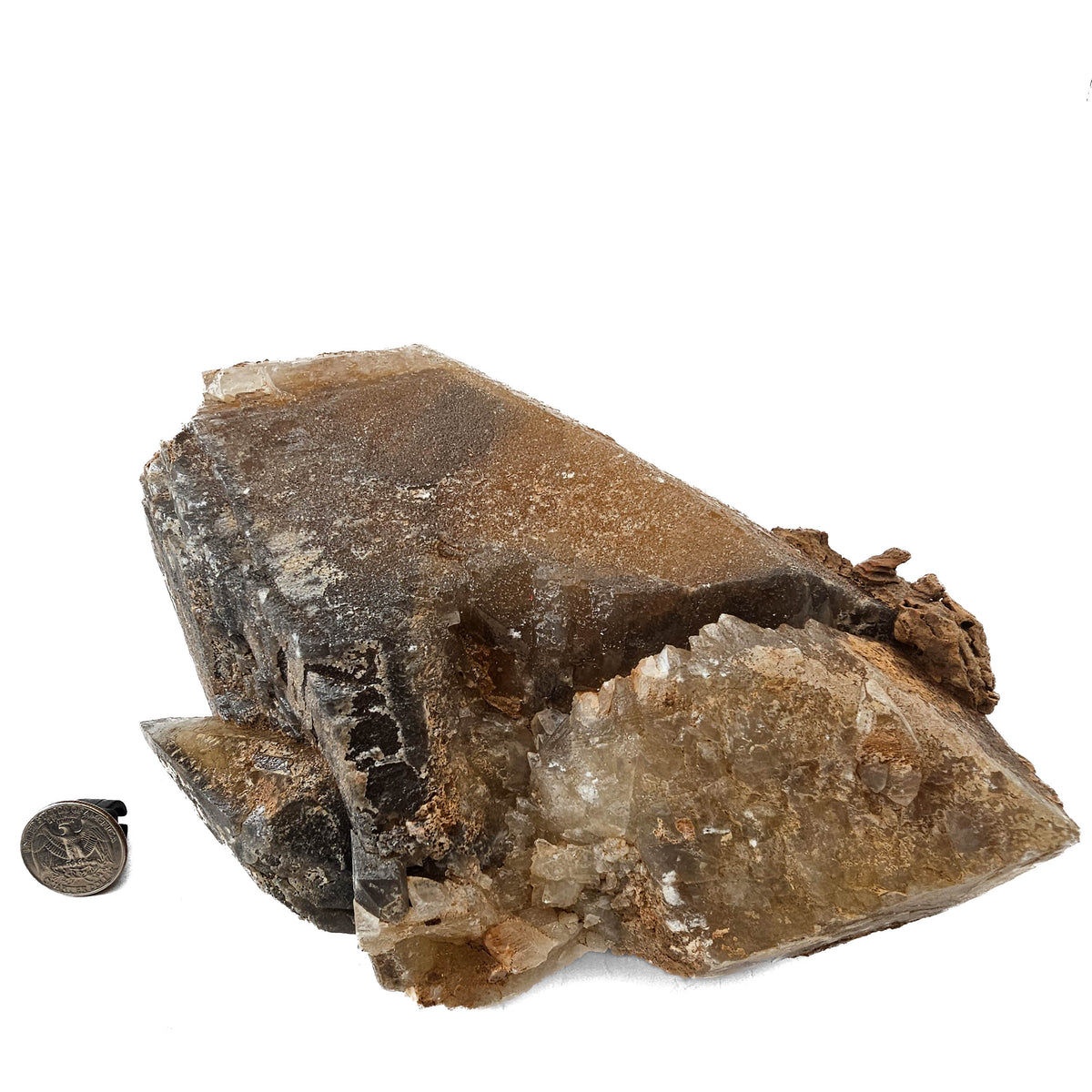
Description: This one-of-a-kind calcite specimen has exceptionally large, broad crystals in warm honey-brown to smoky amber tones. The dominant crystals show thick scalenohedral to rhombohedral forms with translucent interiors, naturally frosted surfaces and darker zoning across parts of their faces, while smaller calcite crystals and earthy matrix surround them for a rugged, sculptural piece.
It comes from the Touissit mining district in Morocco's Oriental Region, near the Algerian border. Touissit is a lead-zinc district hosted in dolomite and limestone, where warm, mineral-rich fluids moved through fractures and cavities and deposited calcite in successive stages, with slight colour zoning that records changes in the fluids as these large crystals grew. It splits along perfect rhombohedral cleavage, fizzes in dilute acid and shows strong double refraction in clear areas. The pointed scalenohedral and blockier rhombohedral forms on this piece are two of its most typical crystal shapes.
The name calcite comes from the Latin calx, meaning lime, and calcite has been burned for lime and quarried as limestone and marble for building since ancient times.
Chemical Composition: CaCO₃
Approximate size of 1 piece: 23.8 x 14.5 cm (9.4 x 5.7 in)
Quantity: 1pc
With this product, you will get the actual stone in the photograph.