




Specifications
Beschreibung
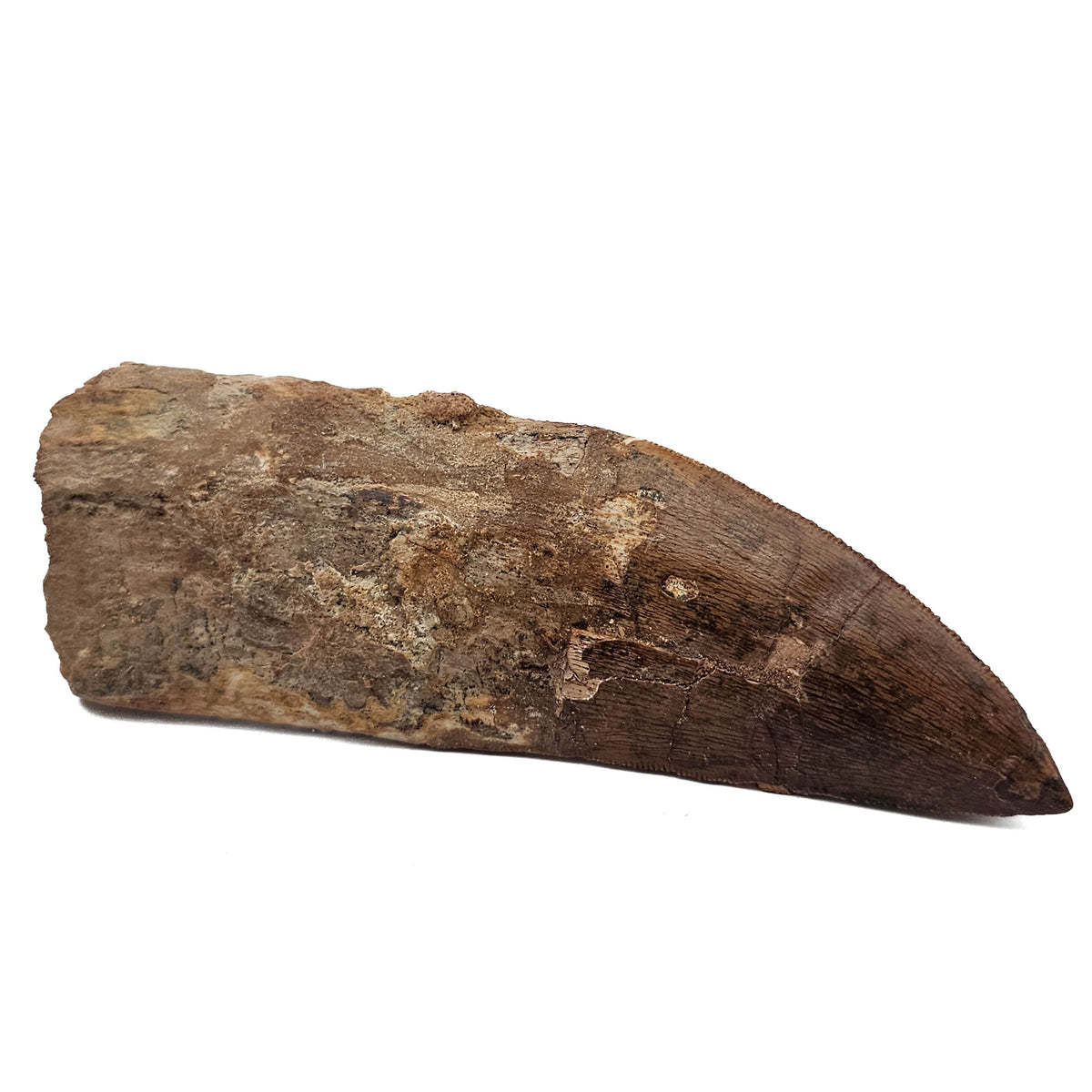
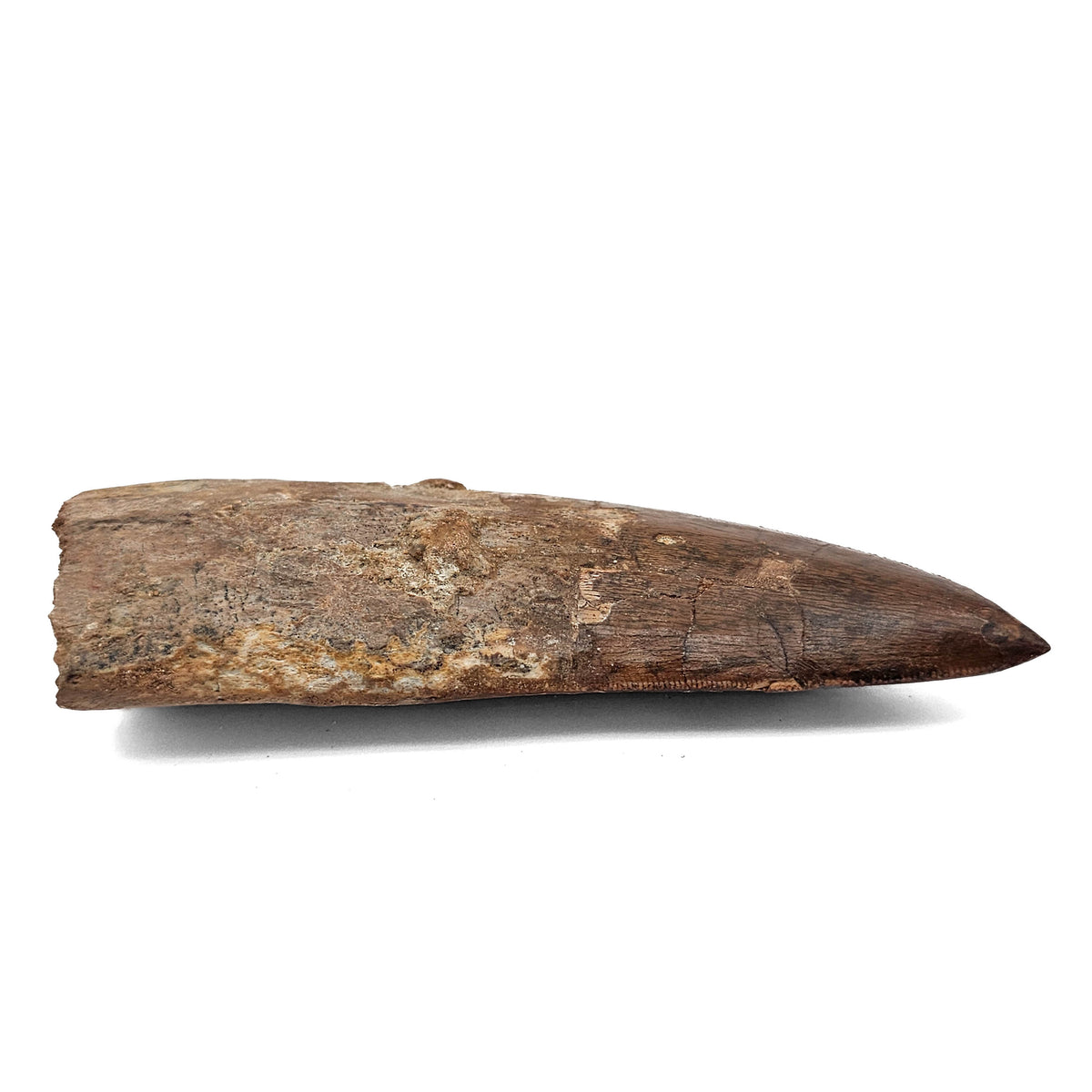
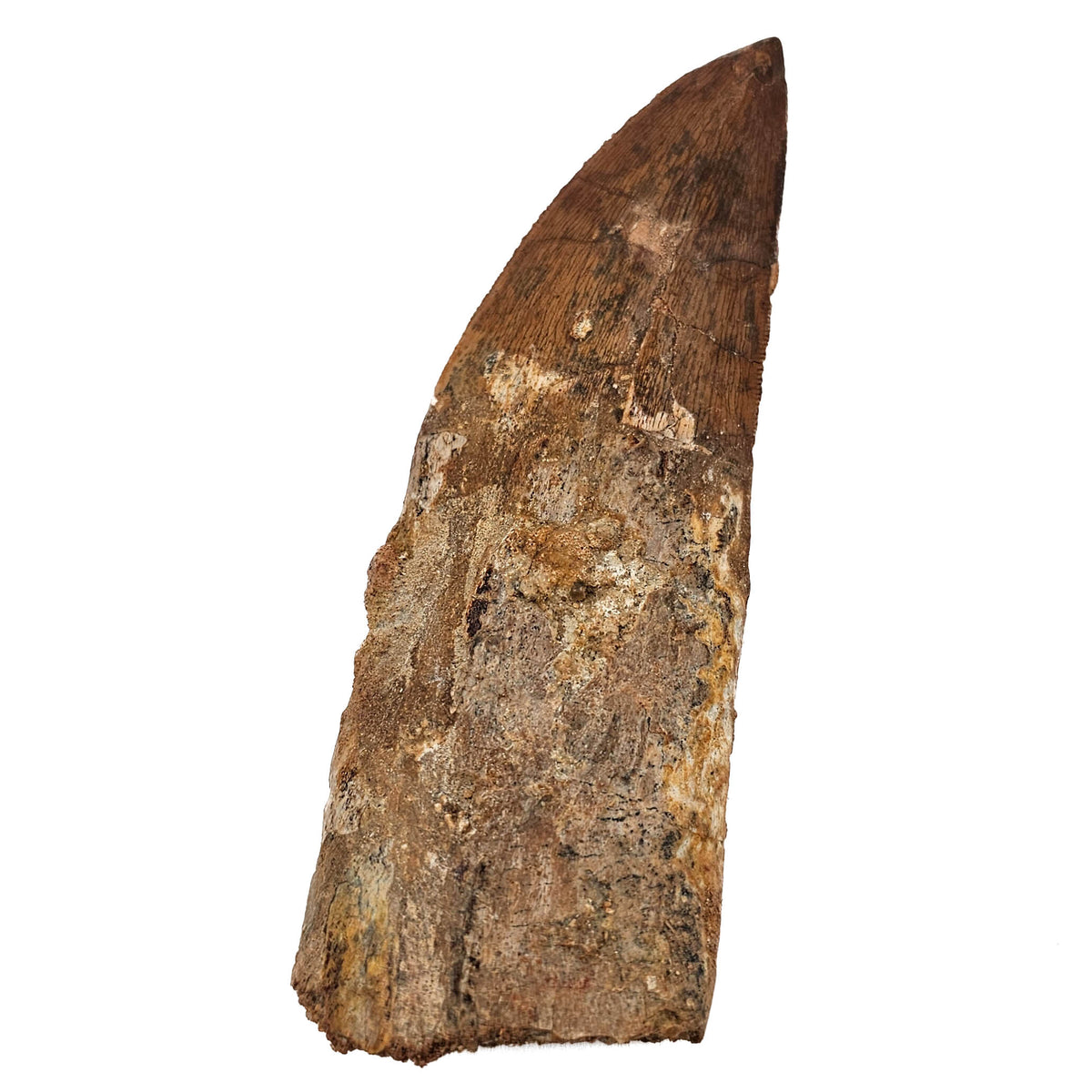
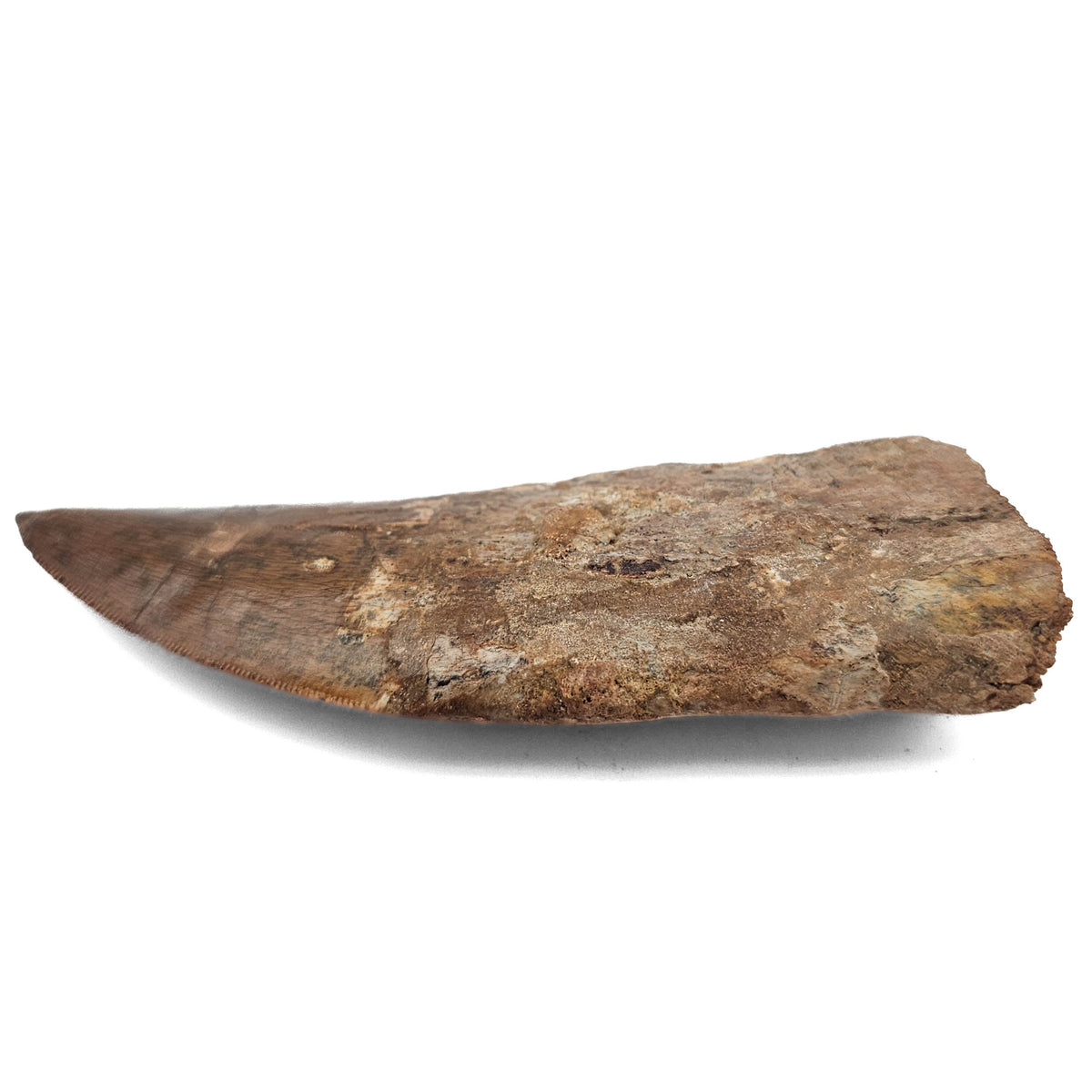
Fossil Carcharodontosaurus Tooth, Cretaceous period.
Locality: Kem Kem Beds, southeastern Morocco
Era: Late Cretaceous
Geological Age: 100-94 mya
Carcharodontosaurus began as a name for two teeth. In 1925, the French paleontologists Charles Depéret and Justin Savornin described a pair of isolated teeth from Late Cretaceous rocks in western Algeria. In 1931, the German paleontologist Ernst Stromer referred a partial skull and skeleton from Egypt to the same species and gave it the genus name Carcharodontosaurus. The Egyptian bones were destroyed in World War II, and the original Algerian teeth were also lost.
For decades the animal was known mostly from isolated teeth. Then, in 1996, a team led by Paul Sereno of the University of Chicago described a well-preserved skull from the Kem Kem beds of eastern Morocco. In 2007 that Moroccan skull was made the new reference specimen (neotype) for Carcharodontosaurus saharicus.
About 100 million years ago, the Kem Kem area was a vast river system flowing north to a delta. A major 2020 review in the journal ZooKeys found that its fossils are biased toward large meat-eaters, including Spinosaurus, Carcharodontosaurus and Deltadromeus, along with large pterosaurs and crocodile-like hunters. The review's lead author, Nizar Ibrahim, called it "arguably the most dangerous place in the history of planet Earth."
This one of a kind Carcharodontosaurus tooth fossil specimen from Morocco features a long, blade-like theropod tooth with a pronounced curved profile, reddish-brown enamel near the tip, and a lighter, more weathered root section. The tooth shows visible serrations along the cutting edge, natural surface wear, mineral staining, and repaired or stabilized fossil texture typical of many large Moroccan dinosaur teeth. Its size, shape, and preserved edge detail make it a strong display piece with an unmistakably prehistoric presence.
Carcharodontosaurus was one of the great predatory dinosaurs of the Cretaceous Period, living roughly 100 to 94 million years ago. Its name means “shark-toothed lizard,” a reference to its sharp, serrated teeth, which were built for slicing. Fossils of this dinosaur are famously recovered from the Kem Kem Beds of southeastern Morocco, a fossil-rich region that once contained river systems, floodplains, fish, crocodilians, pterosaurs, and several large predatory dinosaurs.
Spiritually, dinosaur tooth fossils are often associated with ancient strength, survival, protection, and endurance. Carcharodontosaurus teeth in particular are commonly connected with confidence, primal energy, courage, and resilience. This specimen carries a grounded, powerful presence, making it appealing both as a natural history collectible and as a symbolic piece representing persistence through time.
Quantity: 1pc
With this product, you will get the actual stone in the photograph. We do what we can to buy good quality products and price them honestly. The rocks may differ from the photos, but we hope we do them justice.