




Specifications
Beschreibung
Mined from: Renéville Mine, Pool Department, Republic of the Congo
Description: Congo's dioptase has a long history in European collections. The mineral was first noted from "Gabon" in 1874. In 1890, crystals brought back by the explorer Thollon from the Mindouli mine, between Bouenza and Brazzaville, went on display at the Paris natural history museum, where they were said to rival the classic dioptase of Siberia.
Renéville, in the Pool Department of the Republic of the Congo, takes its name from René Petit-Jean, who directed the first mining work there for the Compagnie du Djoué around 1913. Its copper and lead ores are also the type locality of a rare mineral, fornacite.
Dioptase is a hydrated copper silicate. It forms near the surface, where weathering copper ores release copper that combines with silica, and the copper gives it its intense green colour.
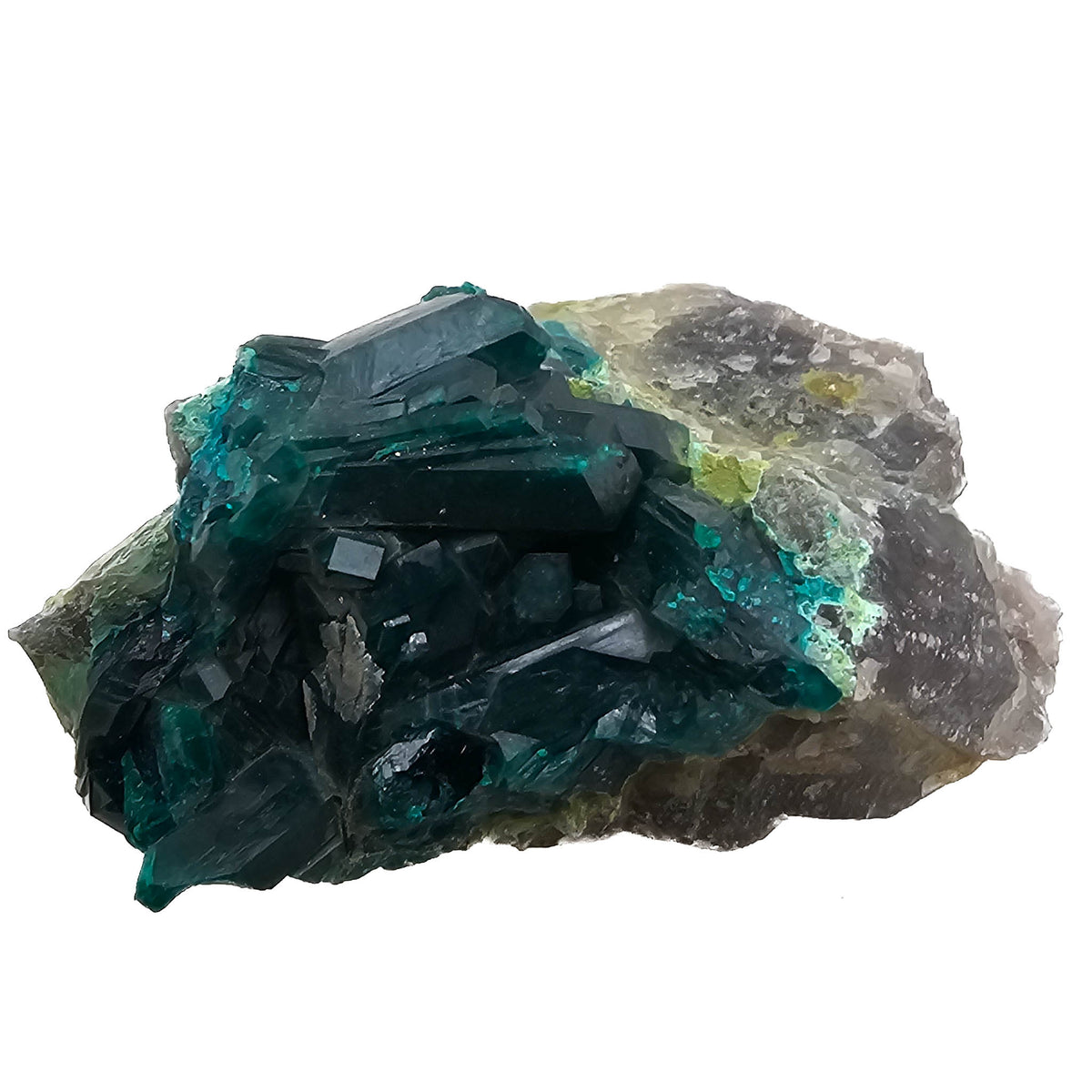
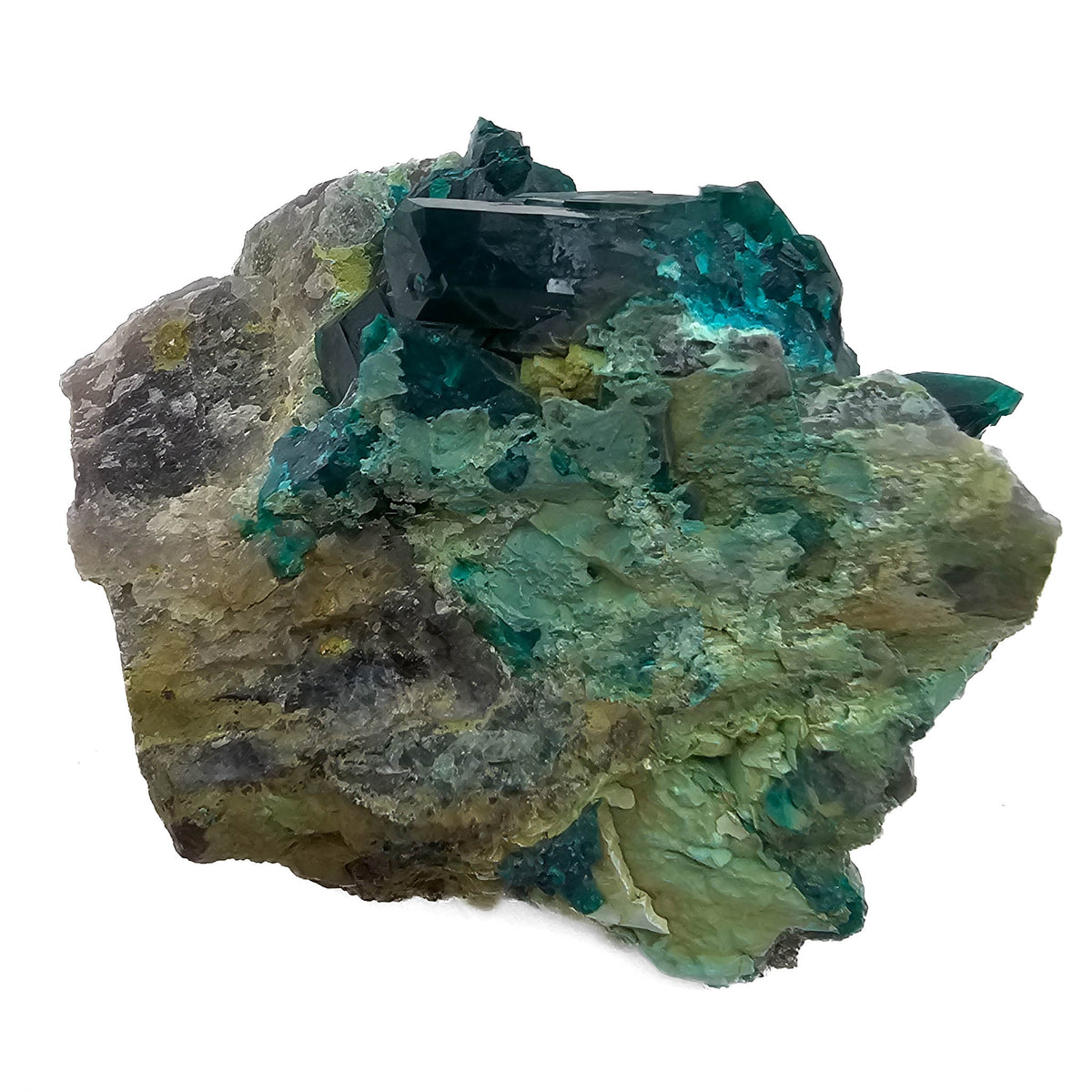
This dioptase specimen shows a tight cluster of deep teal-green crystals growing out of a pale, weathered matrix. The crystals are more elongated and blade-like than typical blocky forms, with sharp terminations and a strong vitreous luster. The color leans toward a darker, almost inky green, especially in the thicker crystals, while thinner edges show more transparency. The surrounding matrix has a mix of grey, cream, and faint yellow tones, with secondary copper mineral staining adding contrast around the crystal pockets.
Dioptase is often associated with clarity, emotional release, and gaining perspective. Many people are drawn to it during periods of transition, using it as a reminder to let go of what no longer serves them and to approach situations with a clearer mindset.
Quantity: 1pc
With this product, you will get the actual stone in the photograph.