





Science: Crystal & Formation
- Formula
- K(Li,Al)3(Al,Si)4O10(F,OH)2
- Family
- Silicates
- Crystal System
- Monoclinic
- Habit
- Massive
- Locality
- Madagascar
Lore & Tradition
Chakra (Modern Lore)


Zodiac, birthstone and chakra associations are cultural traditions and modern crystal lore, shared for interest only; they are not health, medical or scientific claims.
Beschreibung
Locality: Madagascar
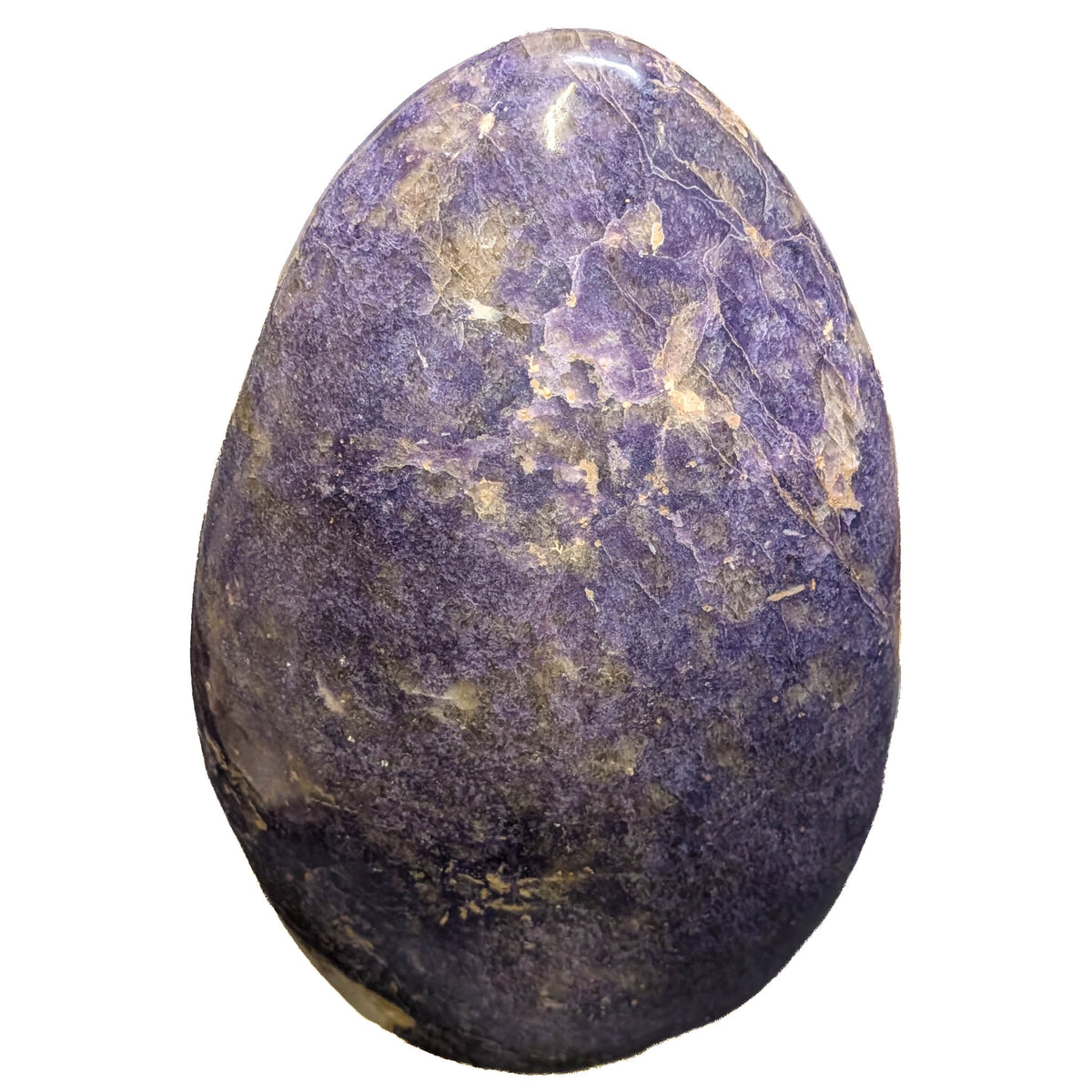
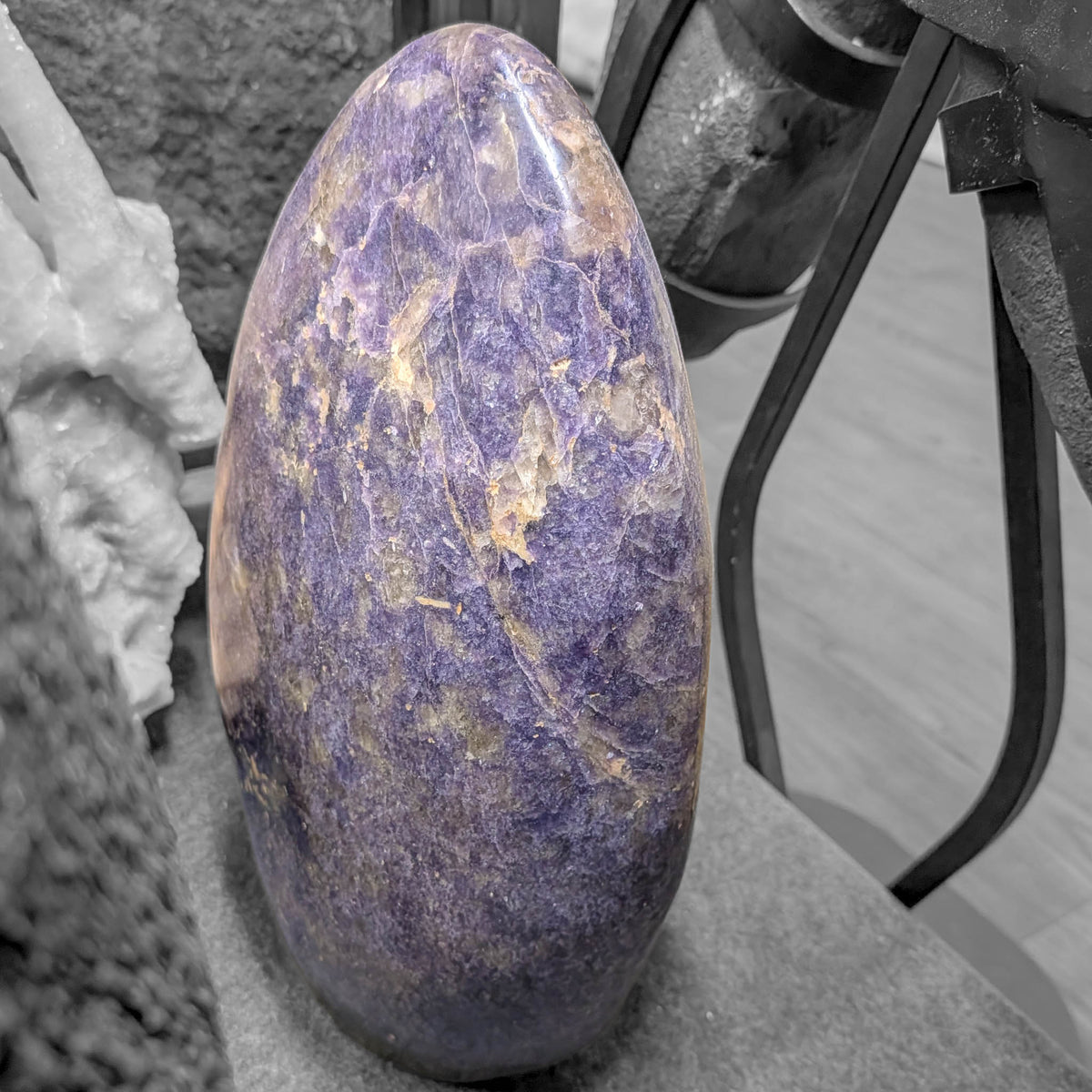
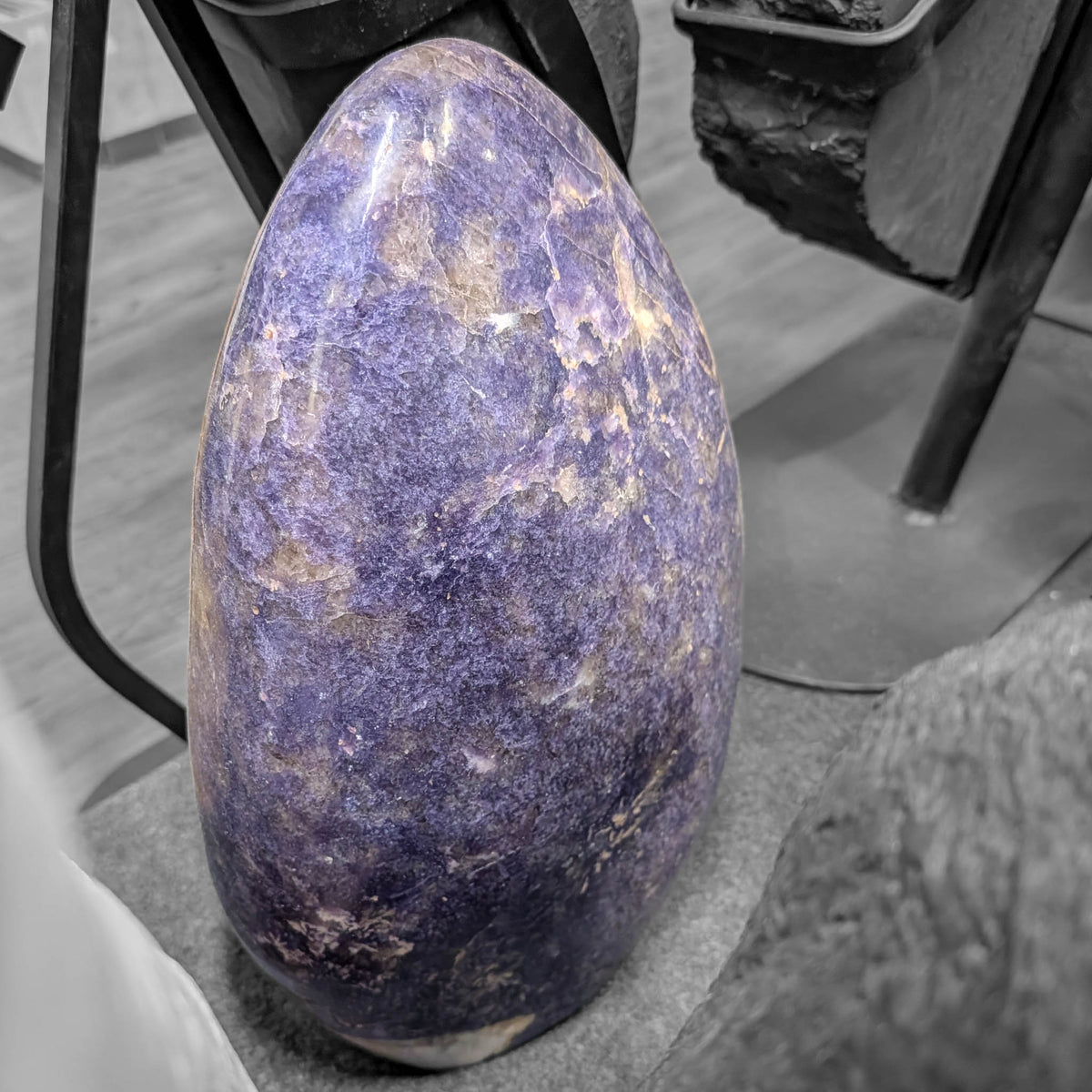
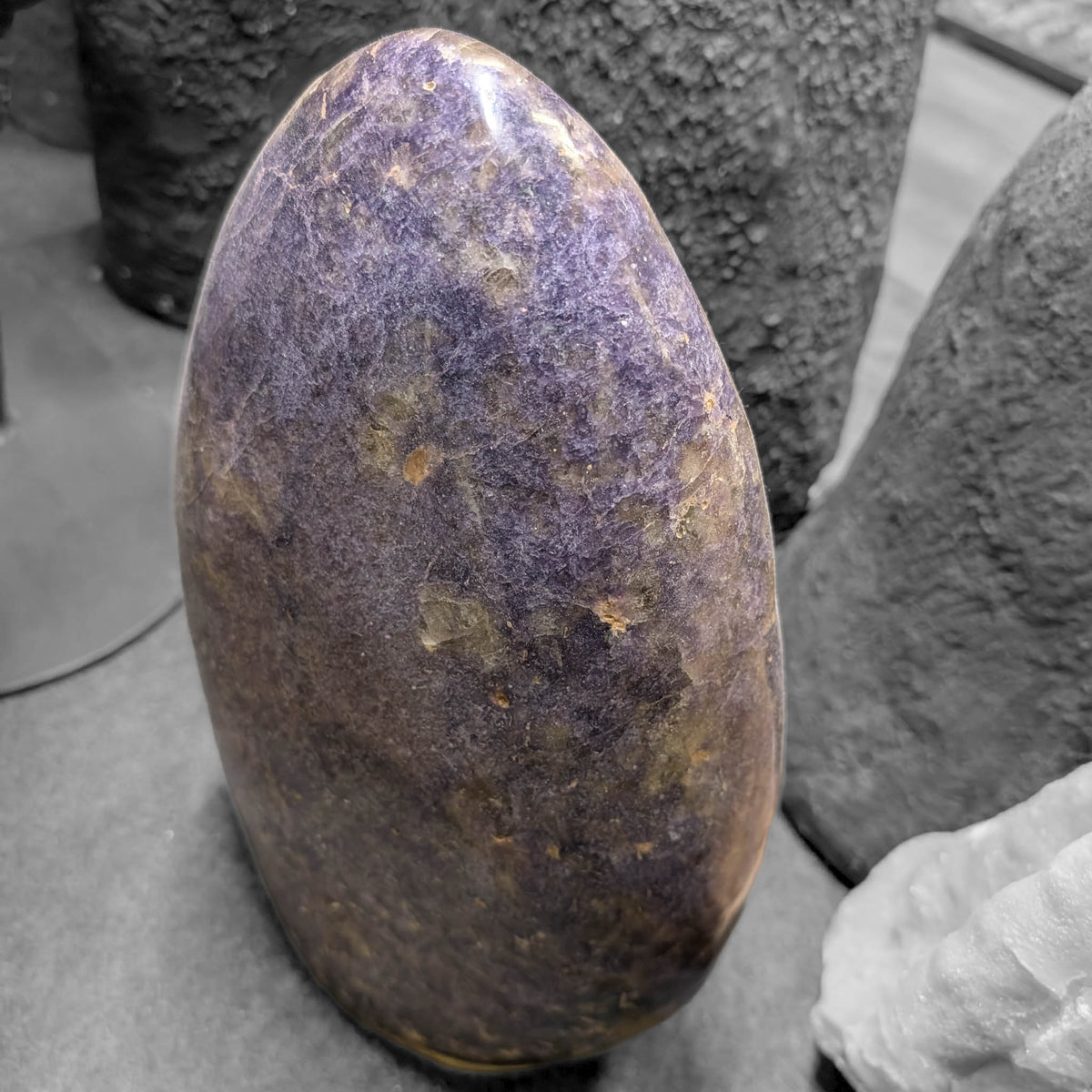
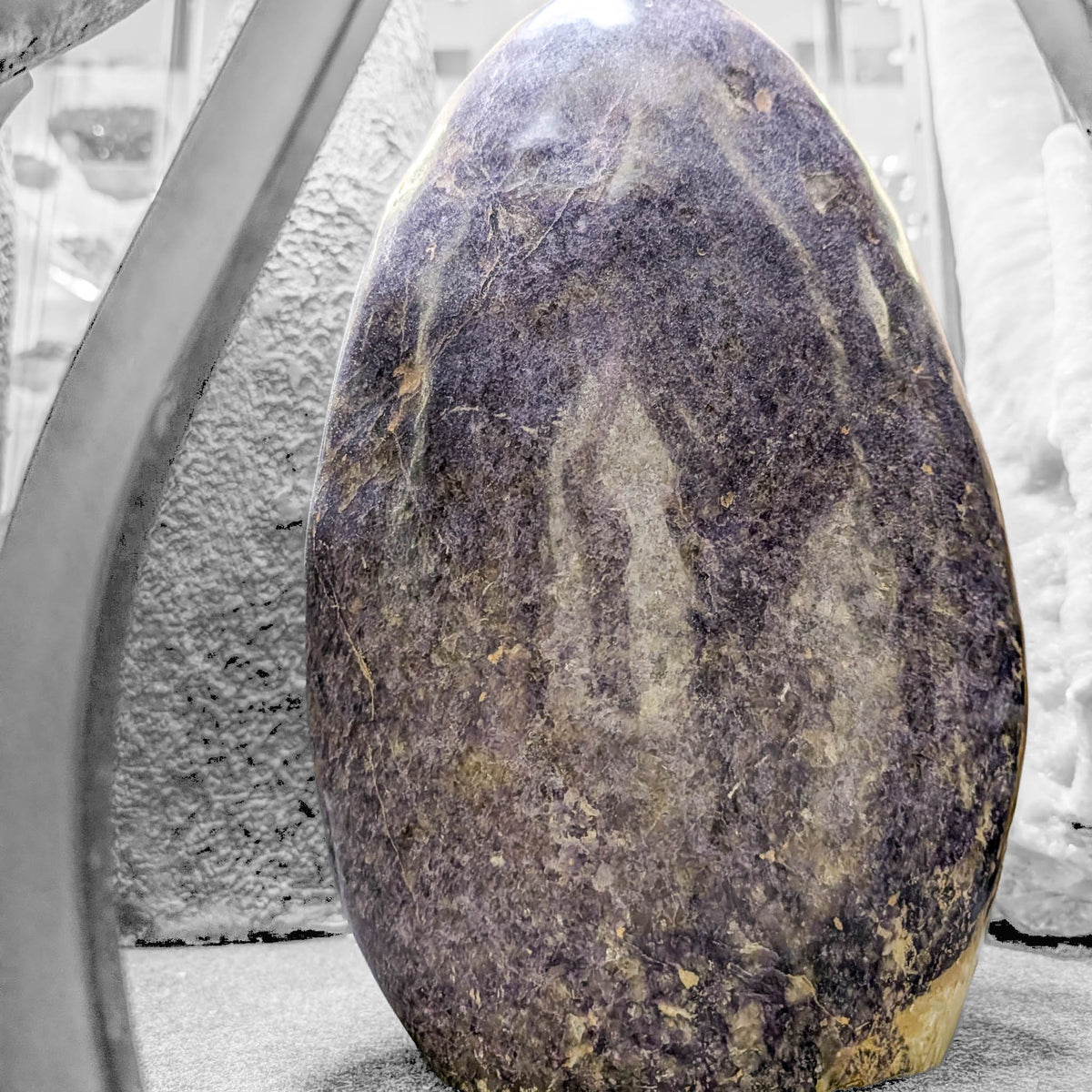
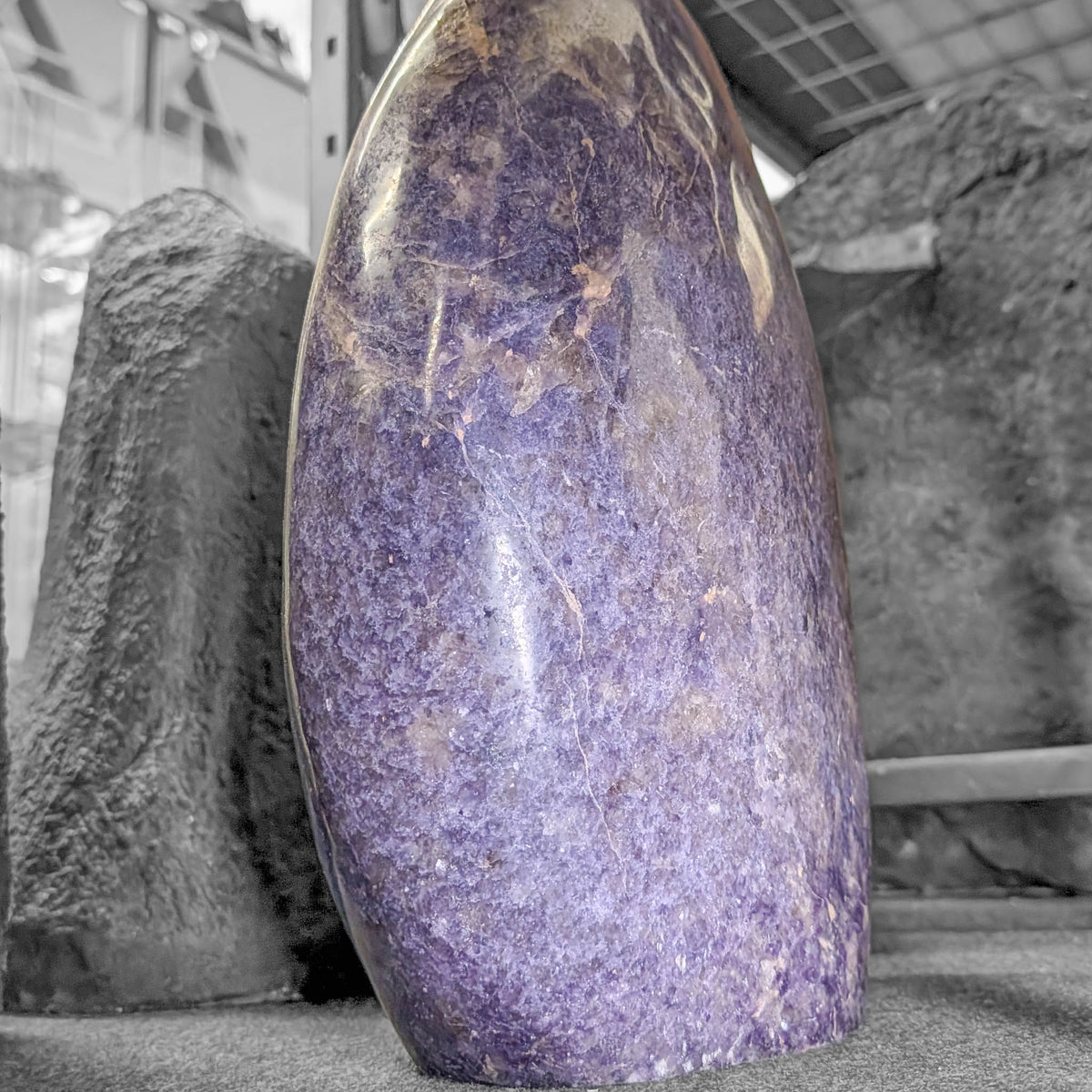
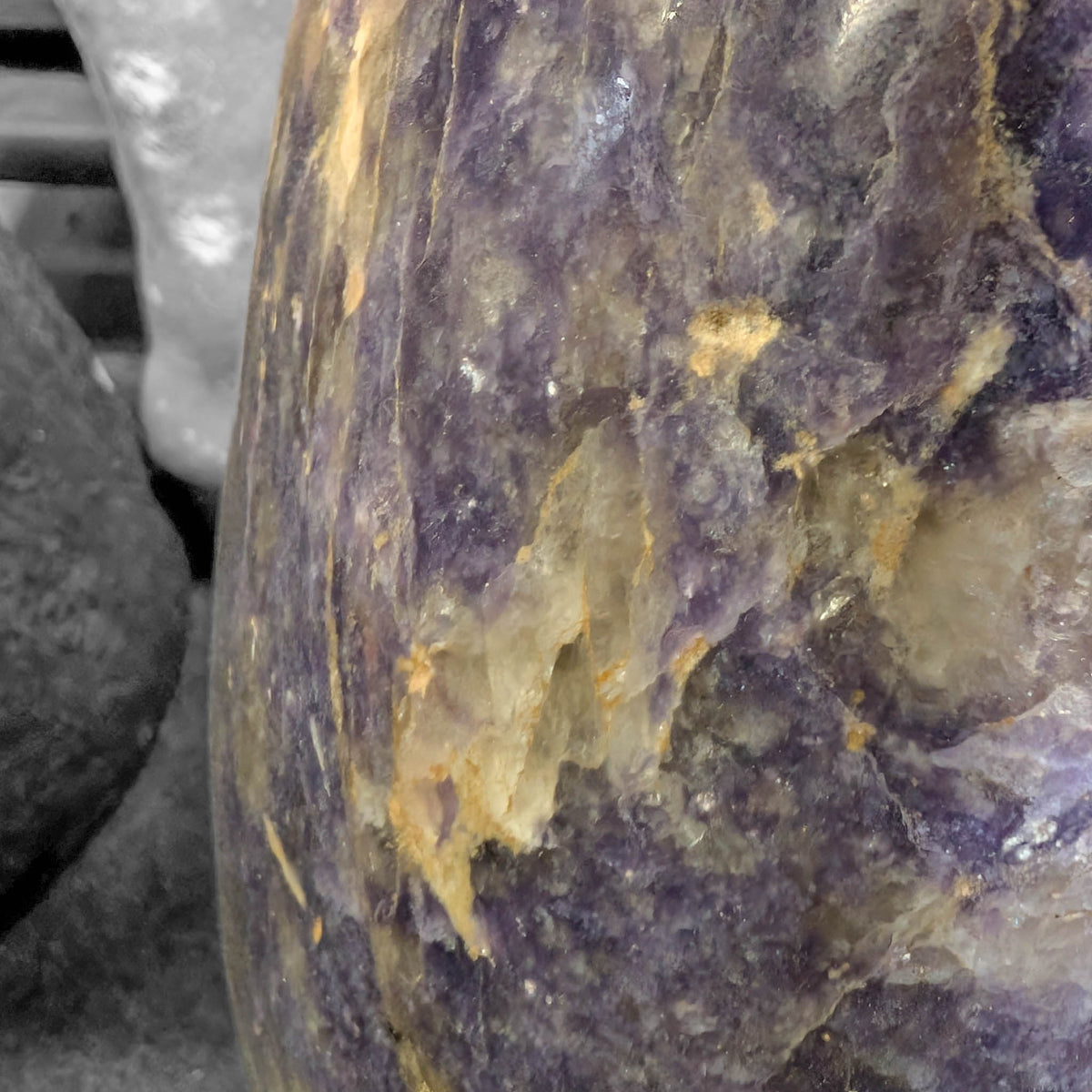
Description: This large polished freeform is solid lepidolite from Madagascar, the violet lithium mica of granite pegmatites. Fine flakes of mica give the polished surface a soft shimmer, broken by paler patches of the other minerals that grew alongside it.
Lepidolite forms in pegmatites, the coarse-grained last stage of a cooling granite body. When most of the granite has crystallised, the leftover fluid is rich in rare elements such as lithium, and minerals that hold those elements grow in the final pockets and veins. Lepidolite is one of them. Its violet colour is usually put down to small amounts of manganese.
Madagascar's pegmatite fields are among the most famous in the world. The same kind of rock on the island has produced tourmaline, pink beryl and kunzite, and lithium-bearing micas like this one are part of that family. Lepidolite was once mined as an ore of lithium, though most lithium now comes from other sources.
The name was given by the German chemist Martin Heinrich Klaproth in 1792, from the Greek lepidos, a scale, after the way the mineral splits into thin flakes. Mineralogists now use lepidolite as a name for a series of lithium micas rather than a single species.
In crystal traditions, lepidolite is associated with calm and is linked with the heart, third eye and crown chakras.
Chemical Composition: K(Li,Al)₃(Al,Si)₄O₁₀(F,OH)₂
Approximate size: 30 x 20 cm (11.8 x 7.9 in)
Quantity: 1pc
With this product, you will get the actual stone in the photograph.