




Specifications
Beschreibung
Locality: Badlands region / White River Badlands, Brule Formation (within the White River Group), Pennington County area, South Dakota, U.S.A.
Era: Cenozoic
Geological Age: 28-34 mya
The White River Badlands of southwestern South Dakota are a landscape of spires, buttes and mesas carved by erosion, and the same weathering keeps exposing fossils. The National Park Service describes Badlands National Park, at the heart of the region, as home to the world's richest collection of Oligocene vertebrate fossils. More than 50 species of plant-eaters and 14 of meat-eaters have been found in the White River Group, mostly in the Oligocene Brule Formation.
Oreodonts are one of the most common fossils in the Badlands. They were even-toed hoofed mammals that lived from about 40 million to 5 million years ago, and in life they probably looked like a mix of camel, sheep and pig. They are most common in the Brule Formation, which records a savannah-like landscape of open grazing land with occasional river channels. Paleontologists estimate that oreodonts were about as abundant there as zebras are on the Serengeti today.
Their name means "mountain tooth", because their molars look like miniature mountain ranges. The flat, low teeth were built for chewing and grinding leaves and shoots.
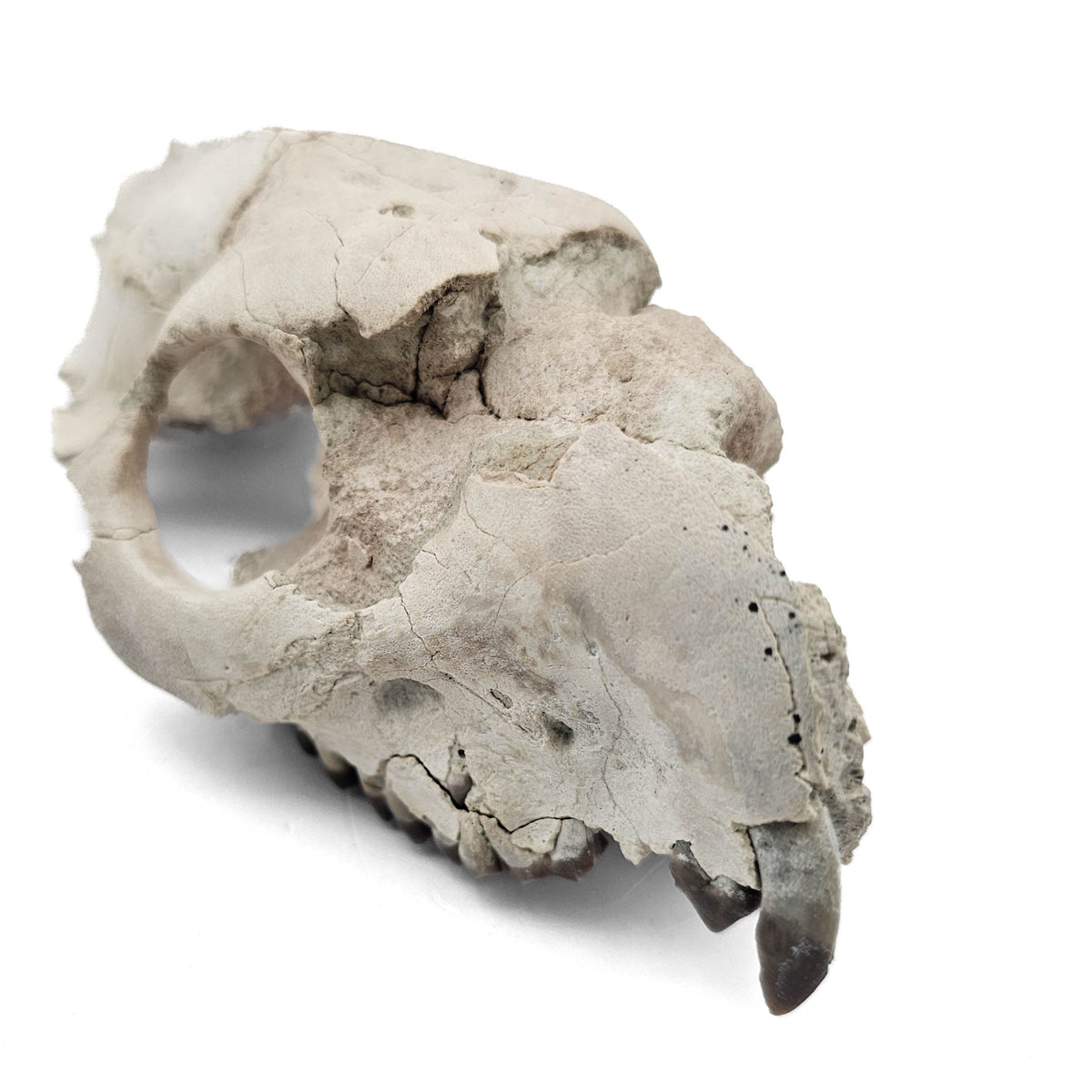
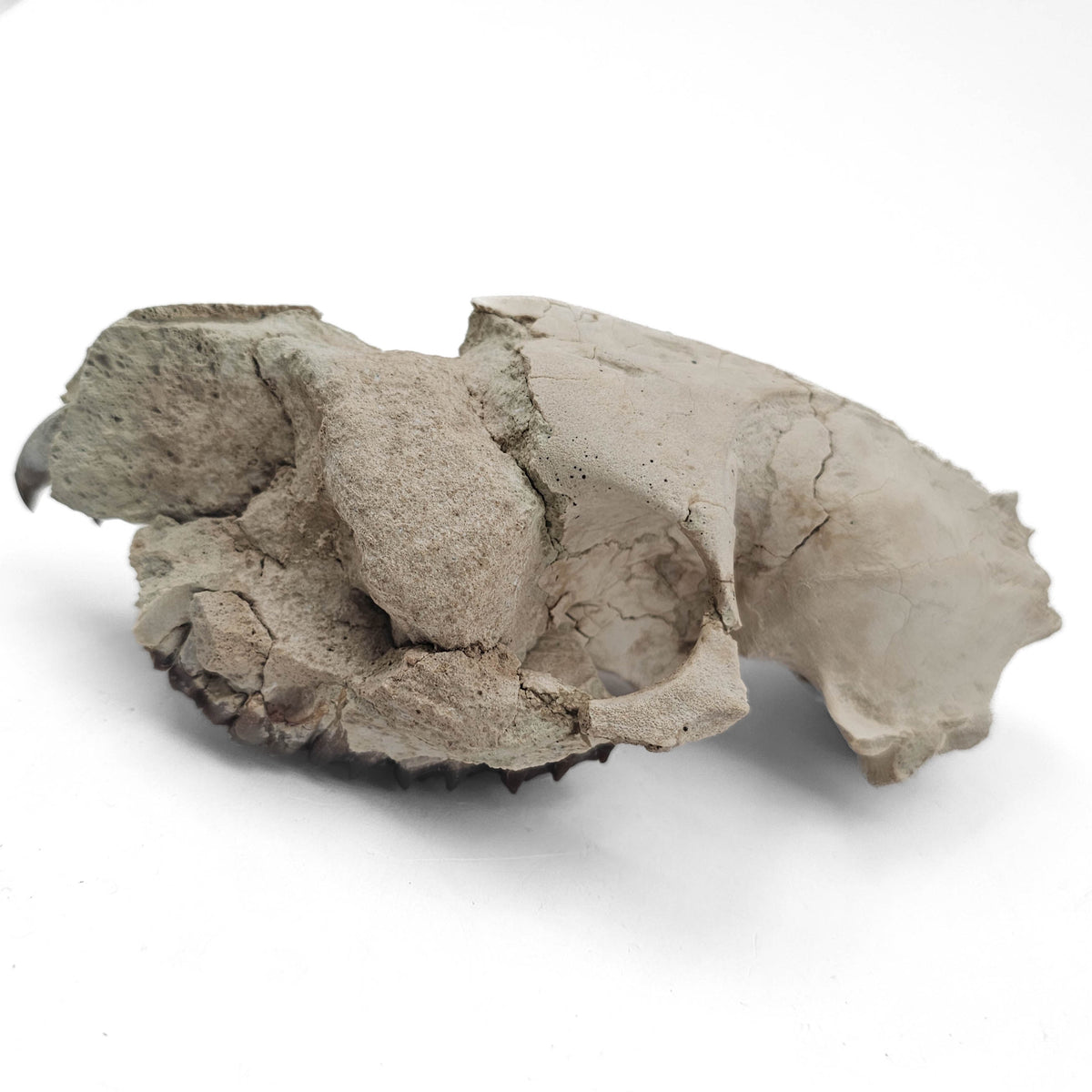
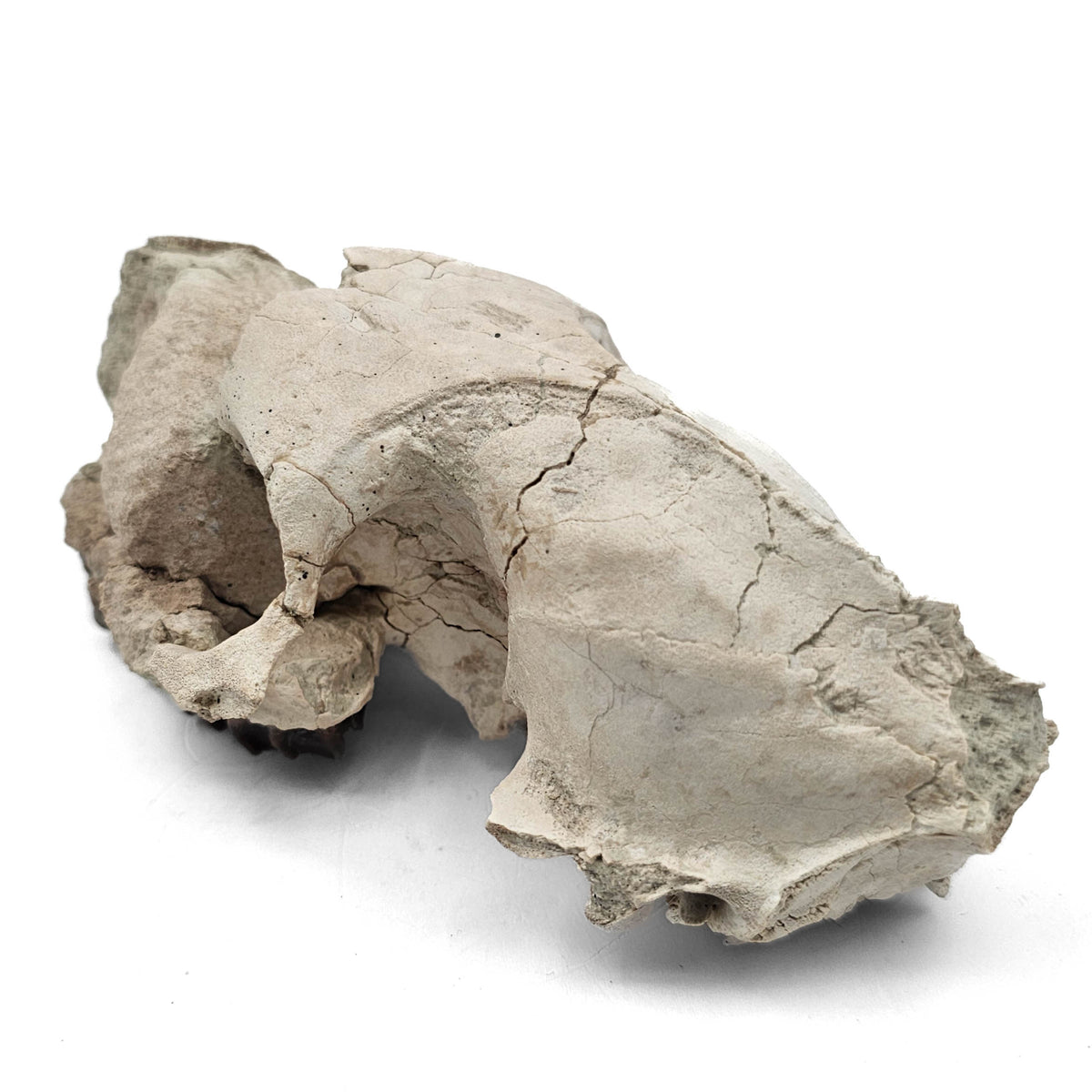
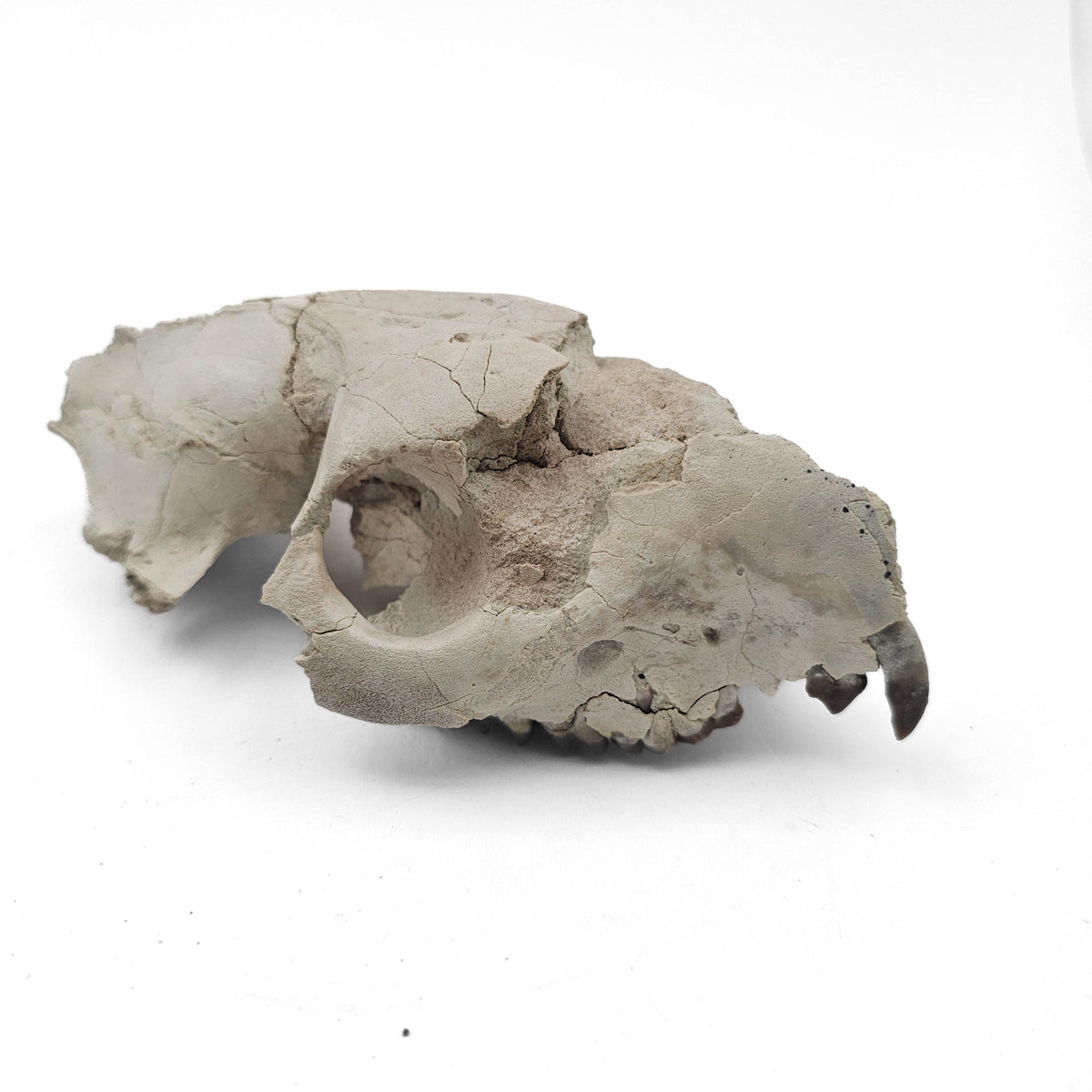
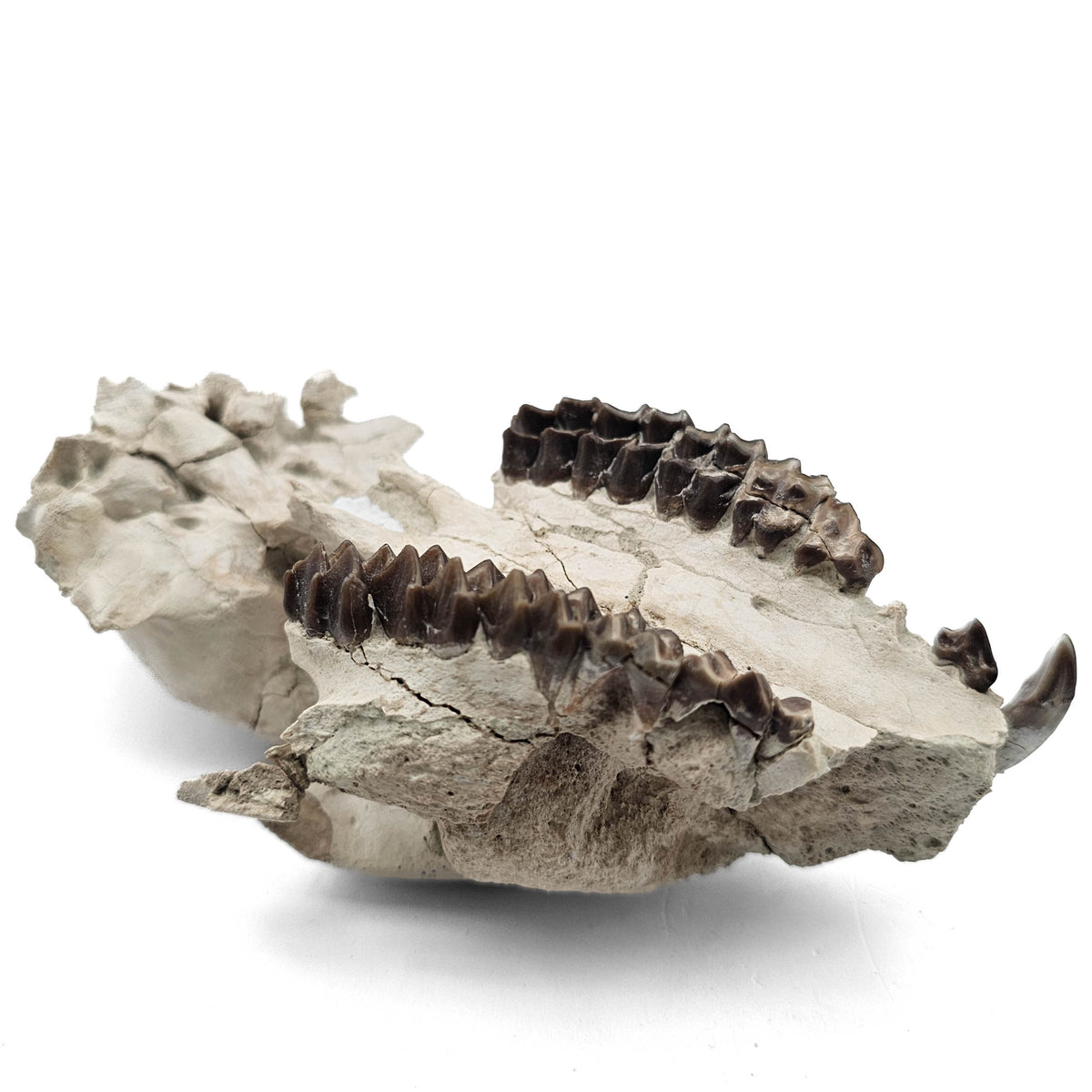
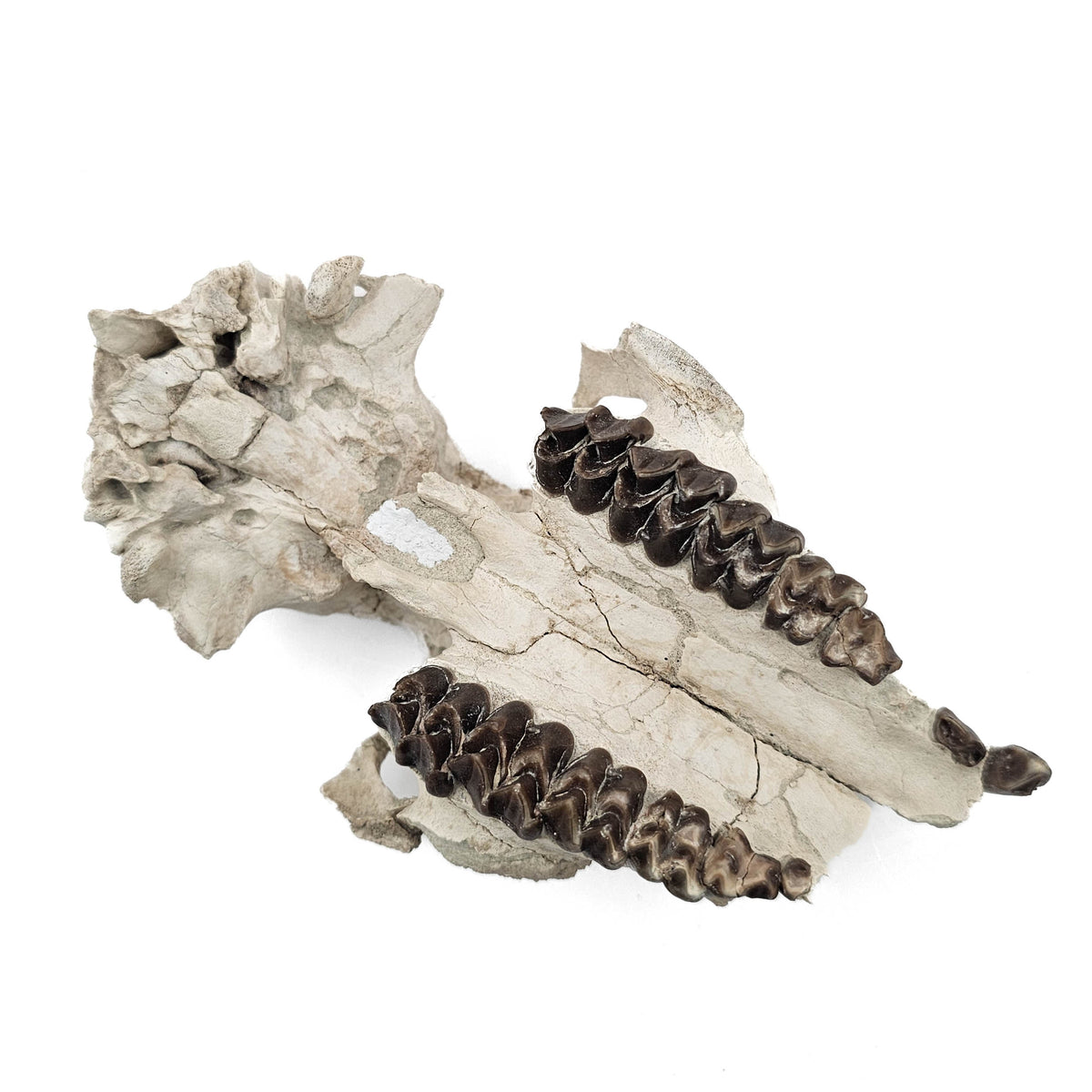
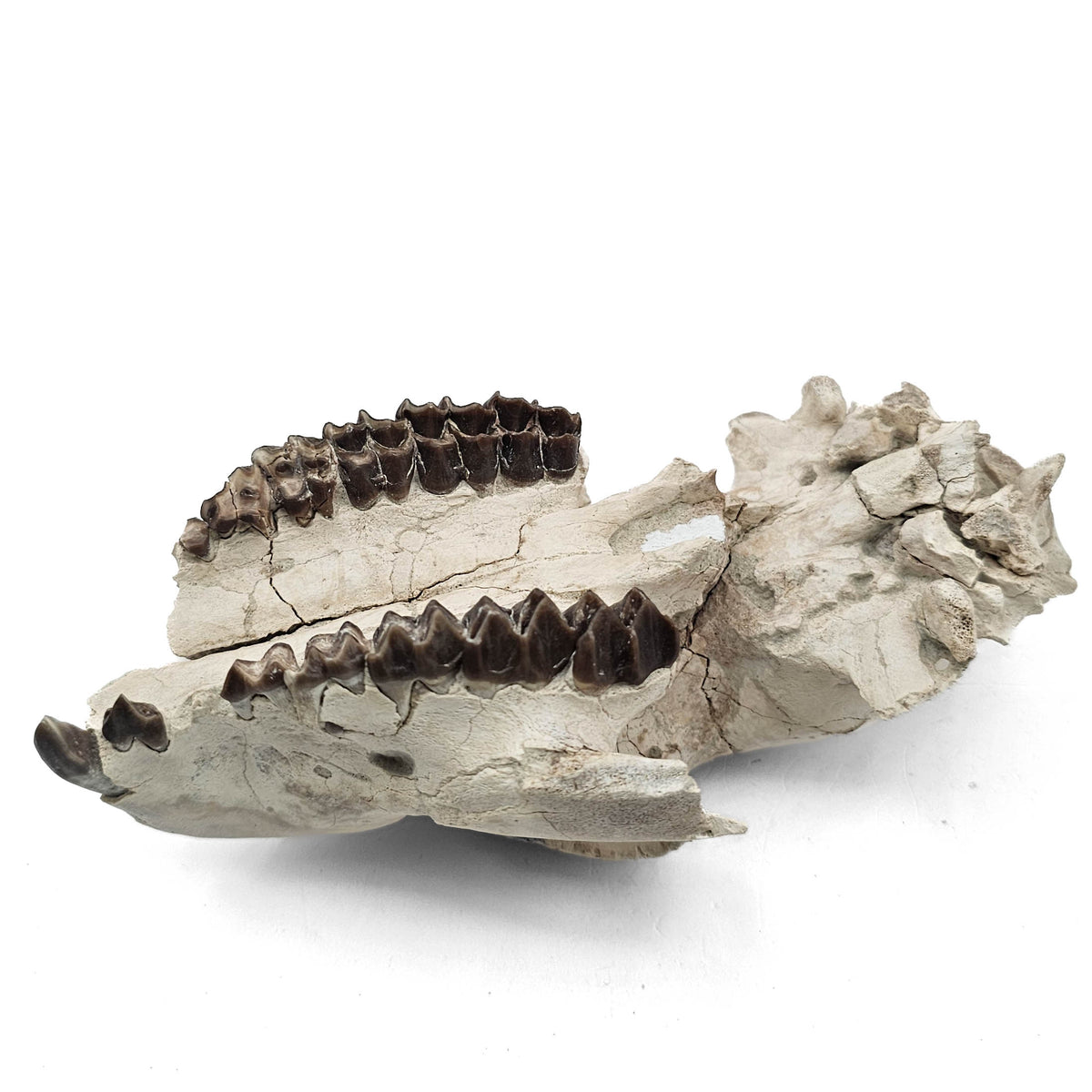
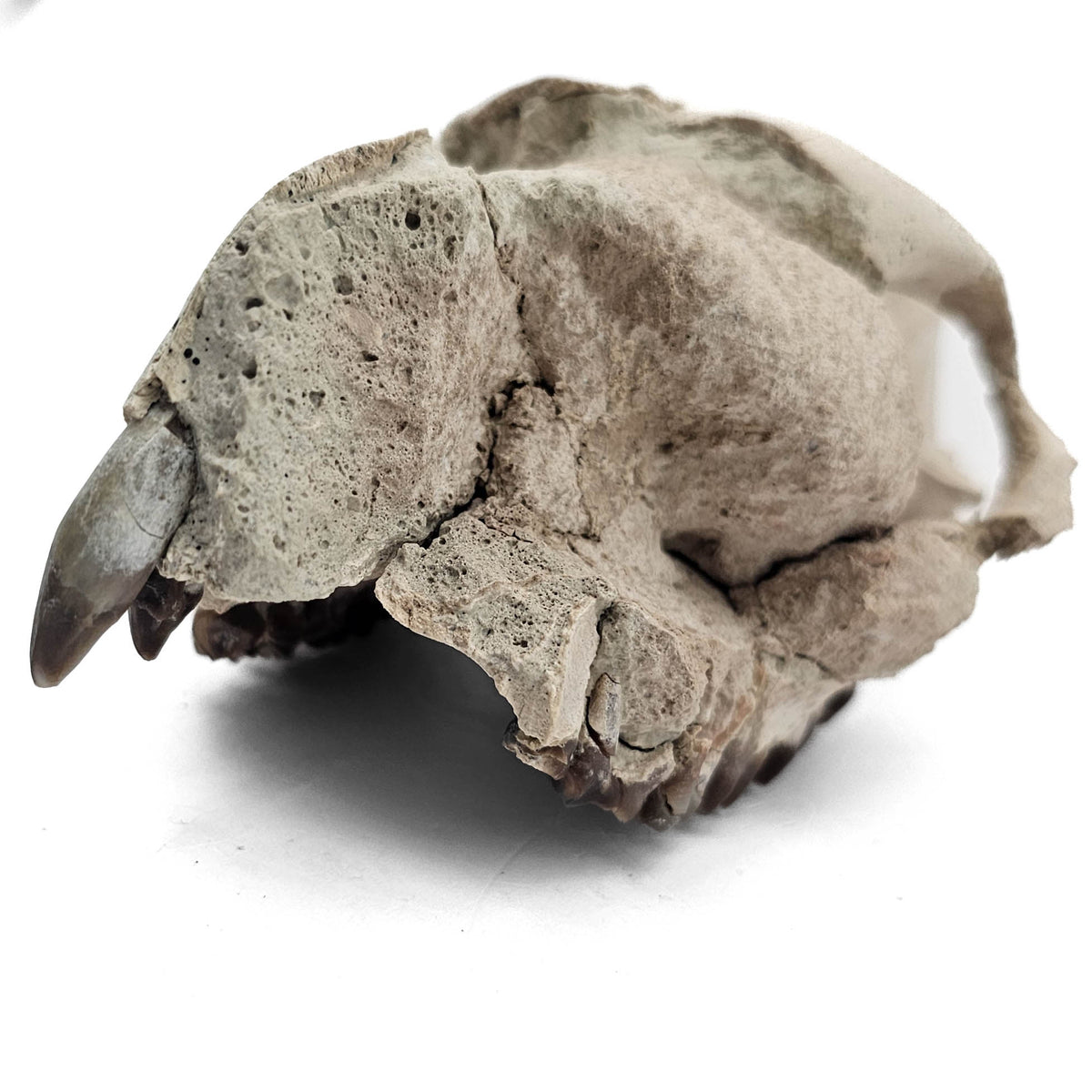
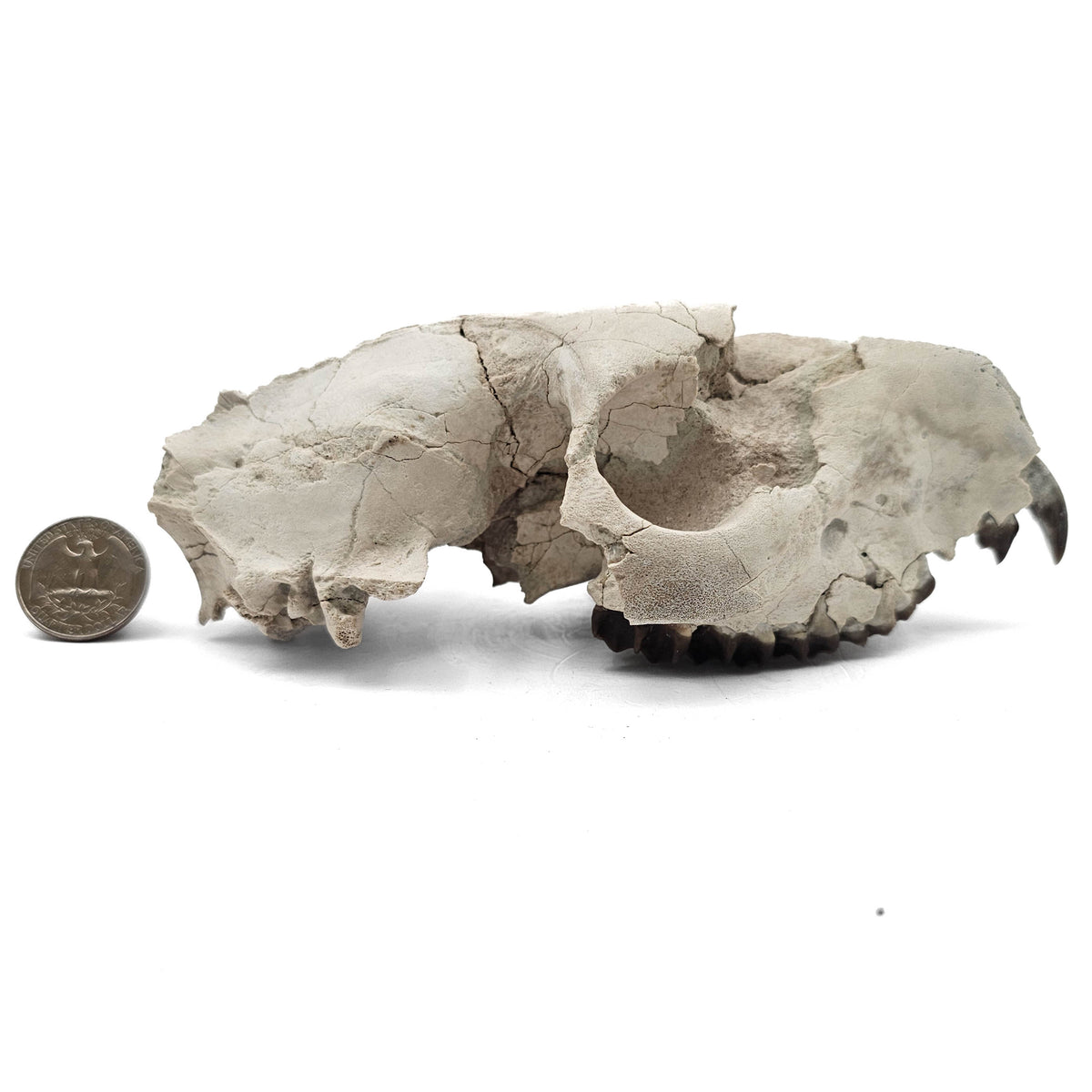
This one of a kind oreodont fossil specimen preserves a substantial skull with a strong side profile, a large open eye socket, a long narrow snout, and a prominent curved canine still in place at the front. The bone is mostly pale cream to light tan with soft grey and faint reddish staining, and the preserved tooth row stands out in deep brown to nearly black. The specimen has natural cracking and loss in a few areas, but it still holds a very recognizable skull shape and shows good anatomical character from multiple angles.
What makes this piece stand out is the amount of structure still present. The orbit, palate, cheek teeth, and forward tusk-like canine are all easy to read, which gives it much more presence than a loose jaw fragment or isolated tooth. Oreodonts were extinct hoofed mammals that lived in North America during the Oligocene, and this skull shows the compact build and grinding teeth that made them well suited to life on ancient plains and floodplains.
Collectors are often drawn to oreodont skulls because they feel substantial and direct. This specimen has that same appeal, with a real sense of age, survival, and natural history. It carries the kind of presence people usually want in a vertebrate fossil: recognizable form, visible teeth, and enough original structure to make it feel like a true centerpiece.
Quantity: 1pc
With this product, you will get the actual stone in the photograph. We do what we can to buy good quality products and price them honestly. The rocks may differ from the photos, but we hope we do them justice.