




Specifications
Beschreibung
Locality: Parkinsoni Beds, A33 excavation, Osnabrück, North Rhine-Westphalia, Germany
Era: Mesozoic Era
Geological Age: 168–166 mya
The name comes from the Egyptian god Amun, known to the Greeks as Zeus Ammon and shown with curling ram's horns. Early naturalists compared the coiled shells to serpents, and ammonites became widely known as snakestones. The town of Whitby in North Yorkshire still has three snakestones on its coat of arms.
Ammonites were marine cephalopods with a coiled outer shell, like the modern nautilus. The shell was divided into chambers by walls called septa. The animal lived only in the last chamber and could regulate gas or fluid in the earlier ones to control its buoyancy, much like a submarine. Ammonites died out at the end of the Cretaceous, at about the same time as the dinosaurs.
Using ammonites to date rocks was pioneered in the 1850s by two Germans, Friedrich Quenstedt of Tübingen and his one-time pupil Albert Oppel of Munich, who worked on the ammonites of the Swabian and Franconian Alb in southern Germany. Because ammonites evolved quickly and spread worldwide, they can separate intervals of geological time of less than 200,000 years.
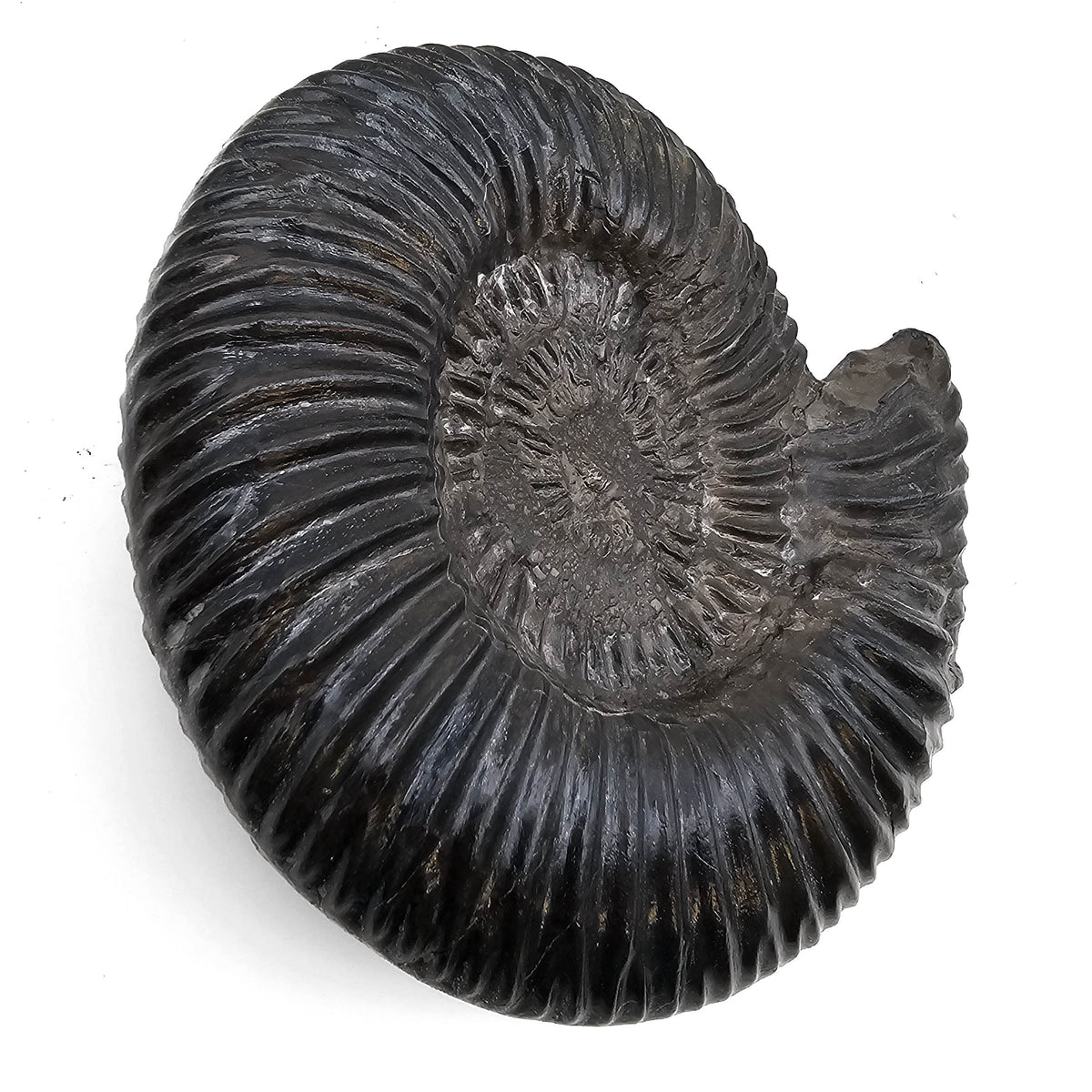
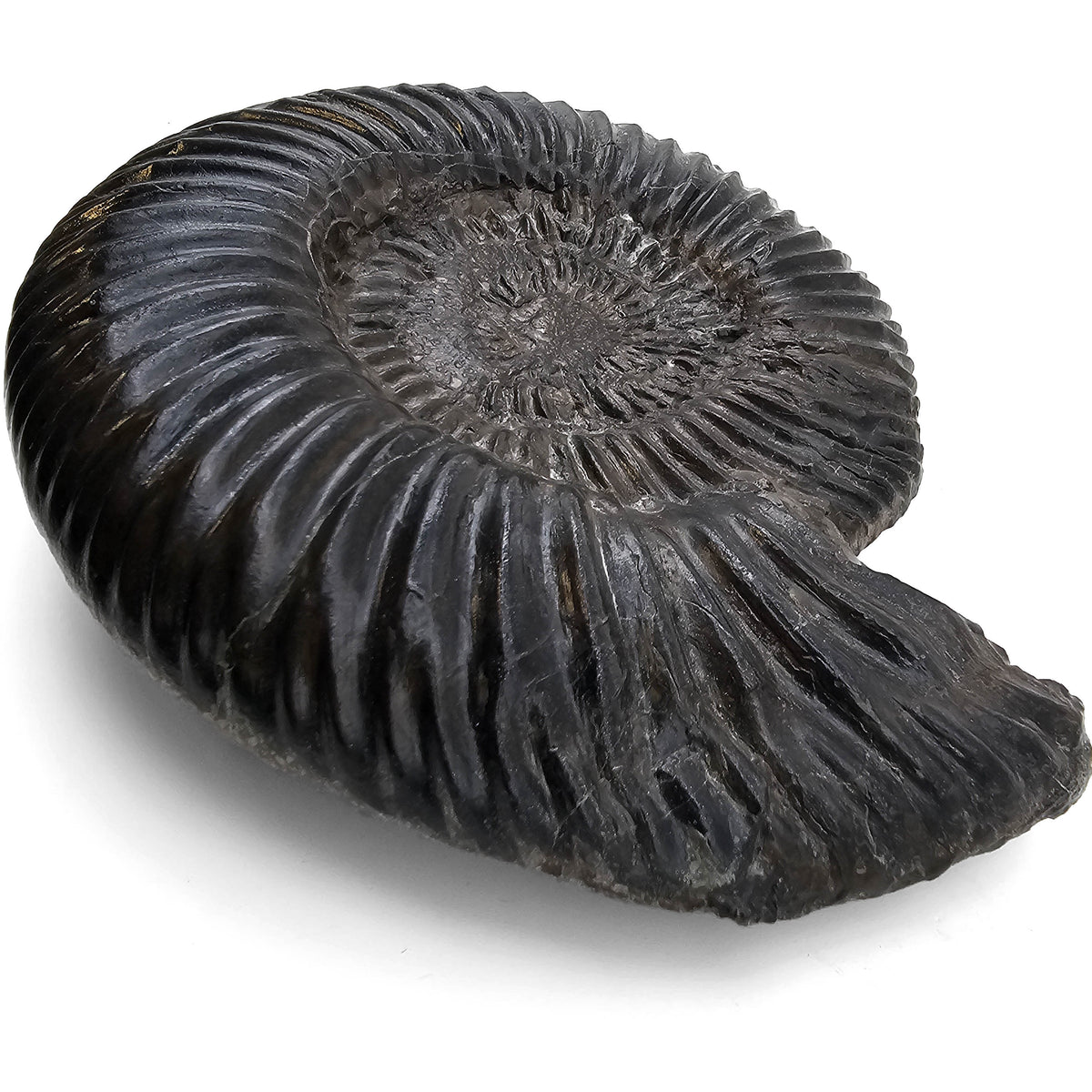
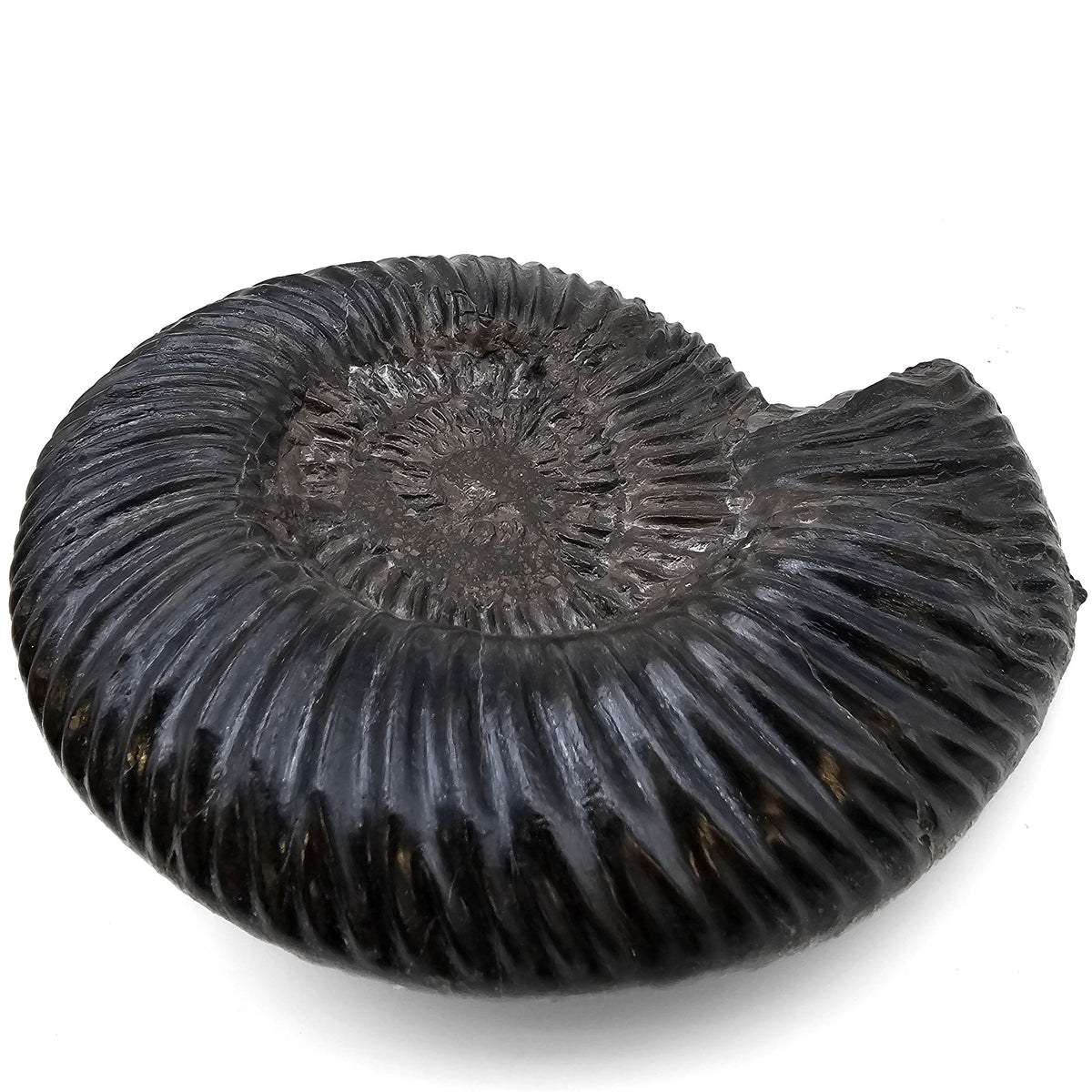
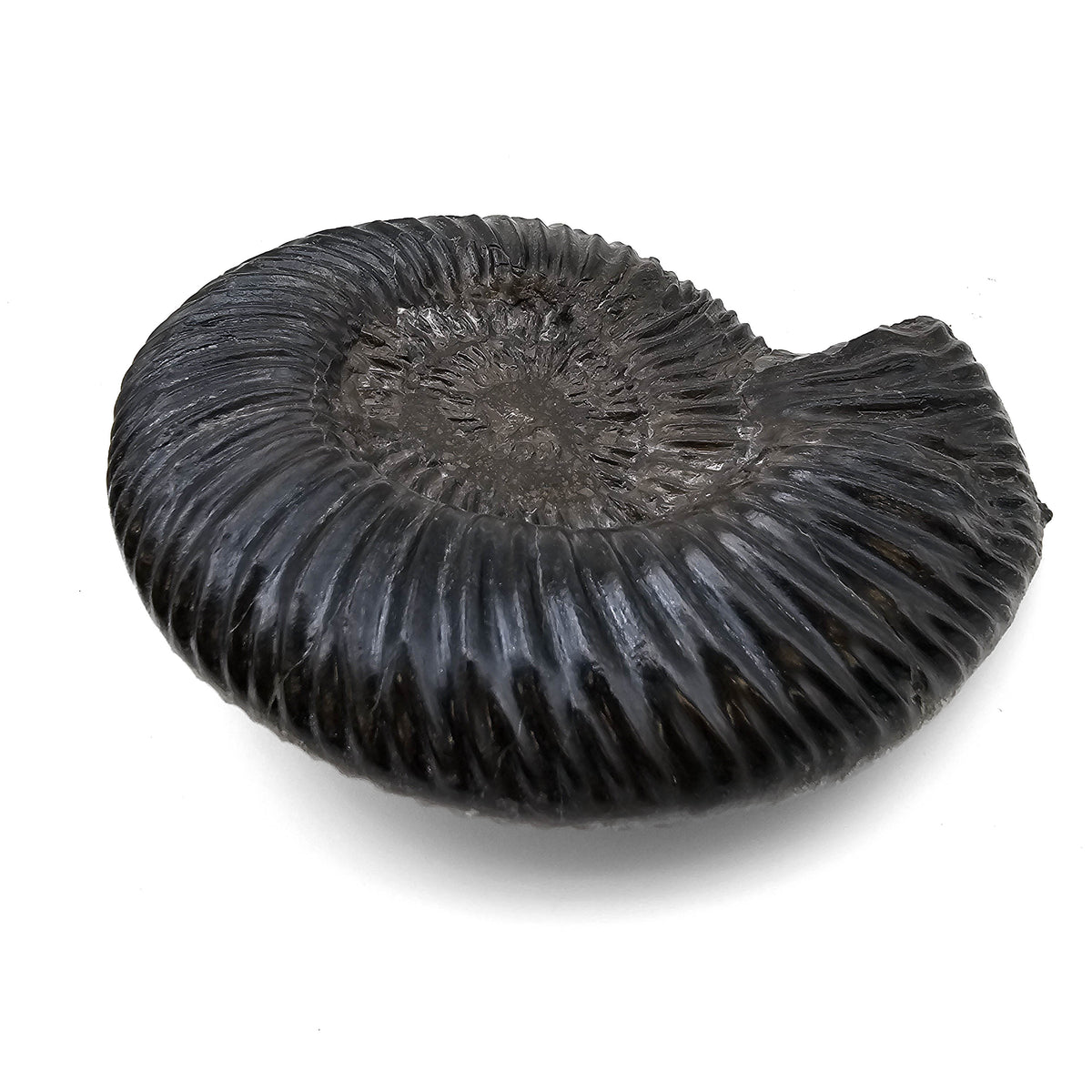
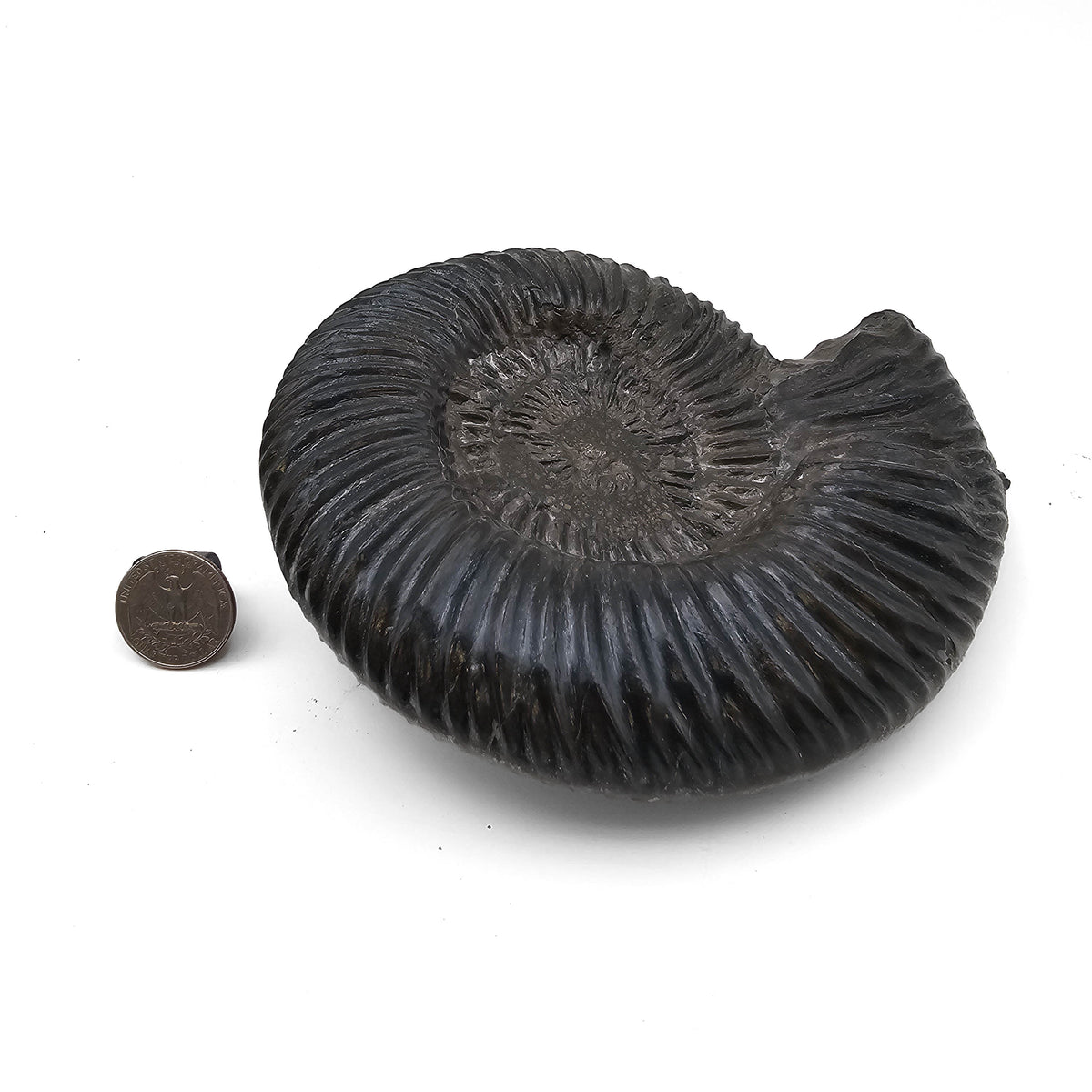
This one of a kind Parkinsonia ammonite fossil from Germany has a bold coiled form with deep, raised ribbing across the shell. The dark black to charcoal surface gives the fossil strong contrast, showing off the ridges, whorl shape, and preserved ammonite structure clearly. The specimen comes from the Parkinsoni Zone of the Upper Bajocian, a Middle Jurassic layer known for ammonites that help geologists date marine rock beds with impressive precision.
Spiritually, ammonites are often associated with time, cycles, protection, and steady personal growth. Their spiral form makes them popular with people drawn to fossils as symbols of deep history, natural order, and the long movement of life through change.
Quantity: 1pc
With this product, you will get the actual stone in the photograph. We do what we can to buy good quality products and price them honestly. The rocks may differ from the photos, but we hope we do them justice.