




Specifications
Beschreibung
Locality: Anatolia, Turkey
Era: Cenozoic
Geological Age: Pleistocene Epoch, about 2.58 to 0.0117 mya
Turkey's best-known travertine is at Pamukkale in Denizli Province, a UNESCO World Heritage Site since 1988; the name means "cotton castle". There, hot spring water rich in calcium carbonate emerges from faults and fissures, and as it cools and loses carbon dioxide, calcite is deposited as white terraces, pools and petrified waterfalls. Travertine has been building up there for at least the last 400,000 years.
According to NASA, western Anatolia holds the world's largest deposit of these rocks, because the Earth's crust there is pulling apart. The stretching opens faults and fissures that let groundwater, heated deep underground and loaded with minerals from limestone bedrock, rise back to the surface.
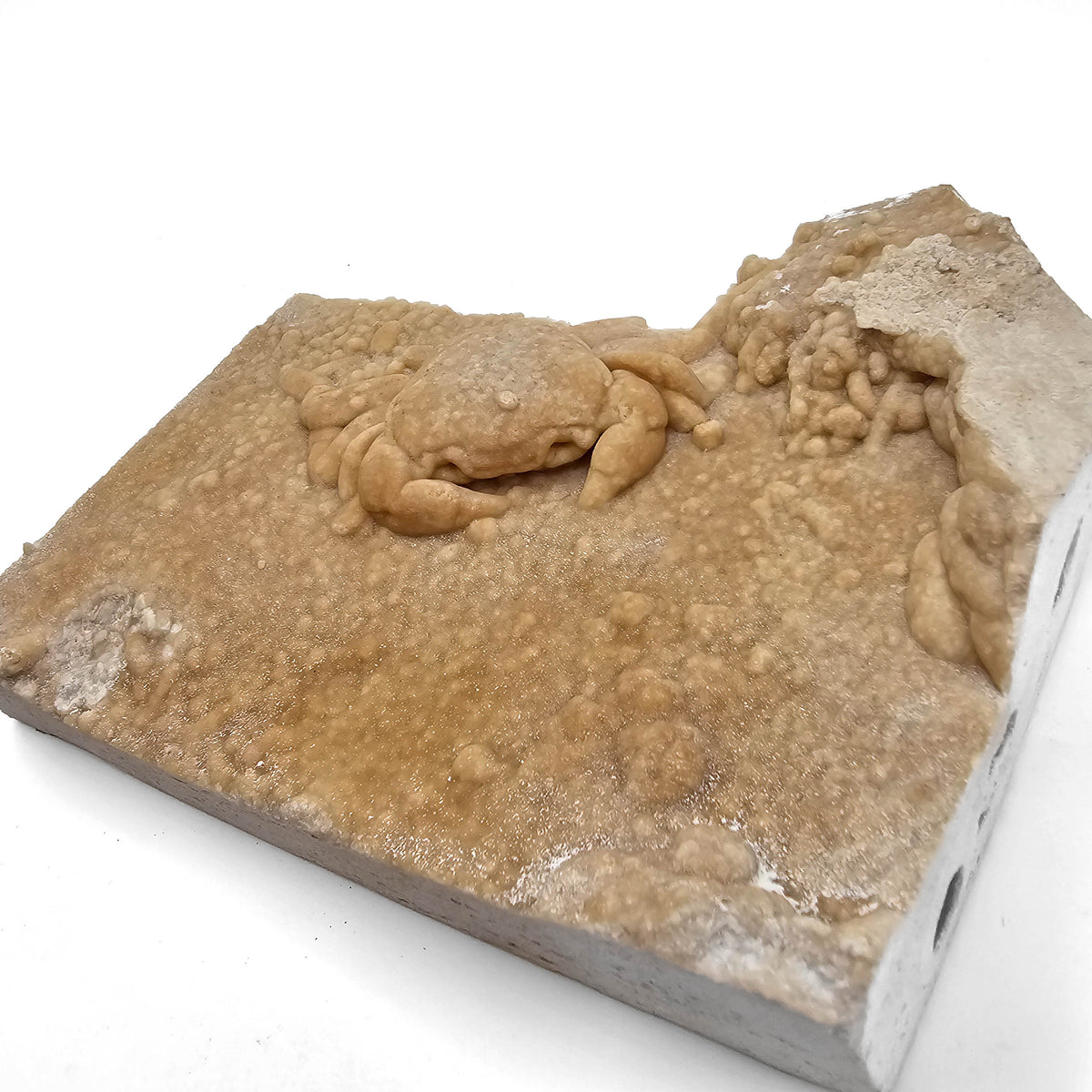
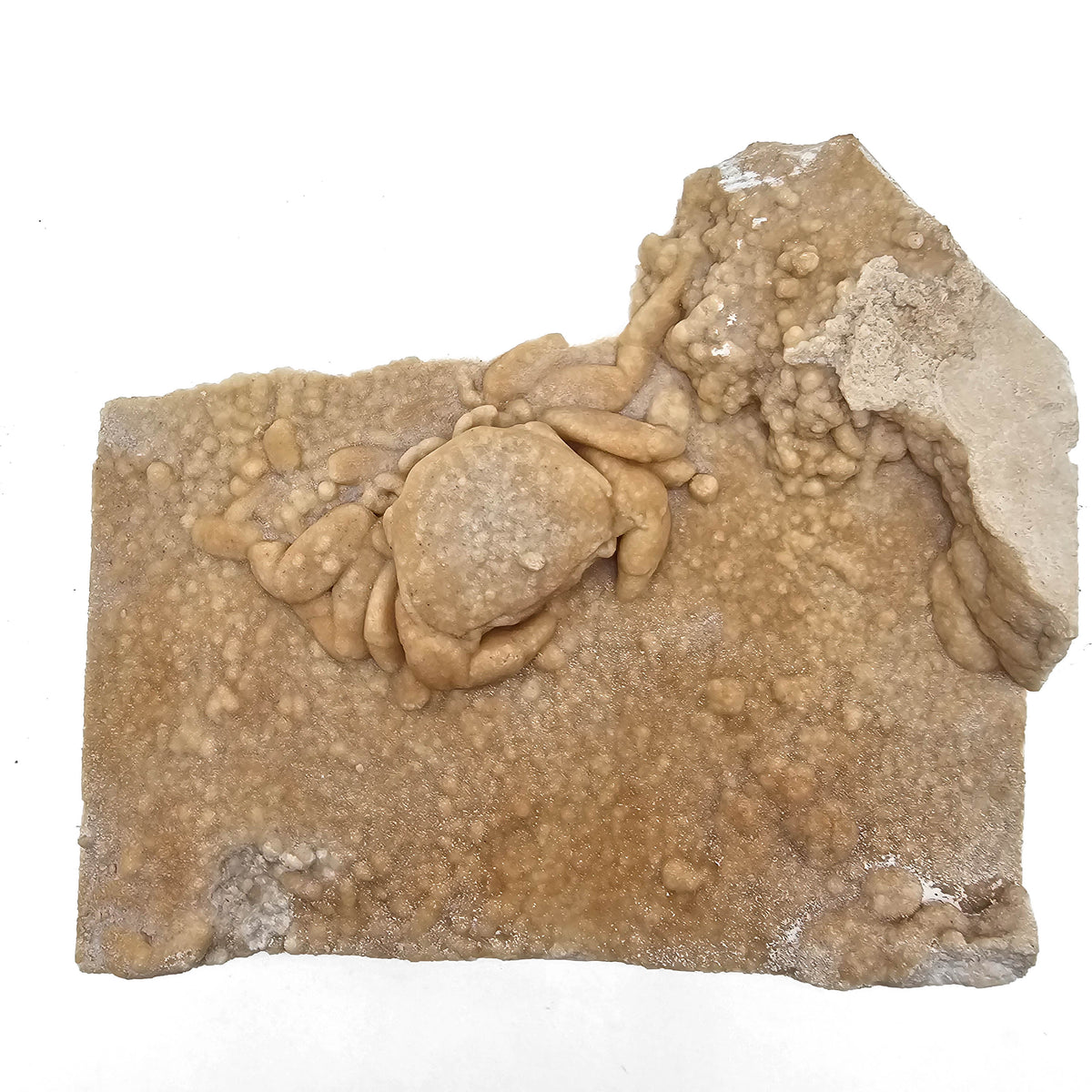
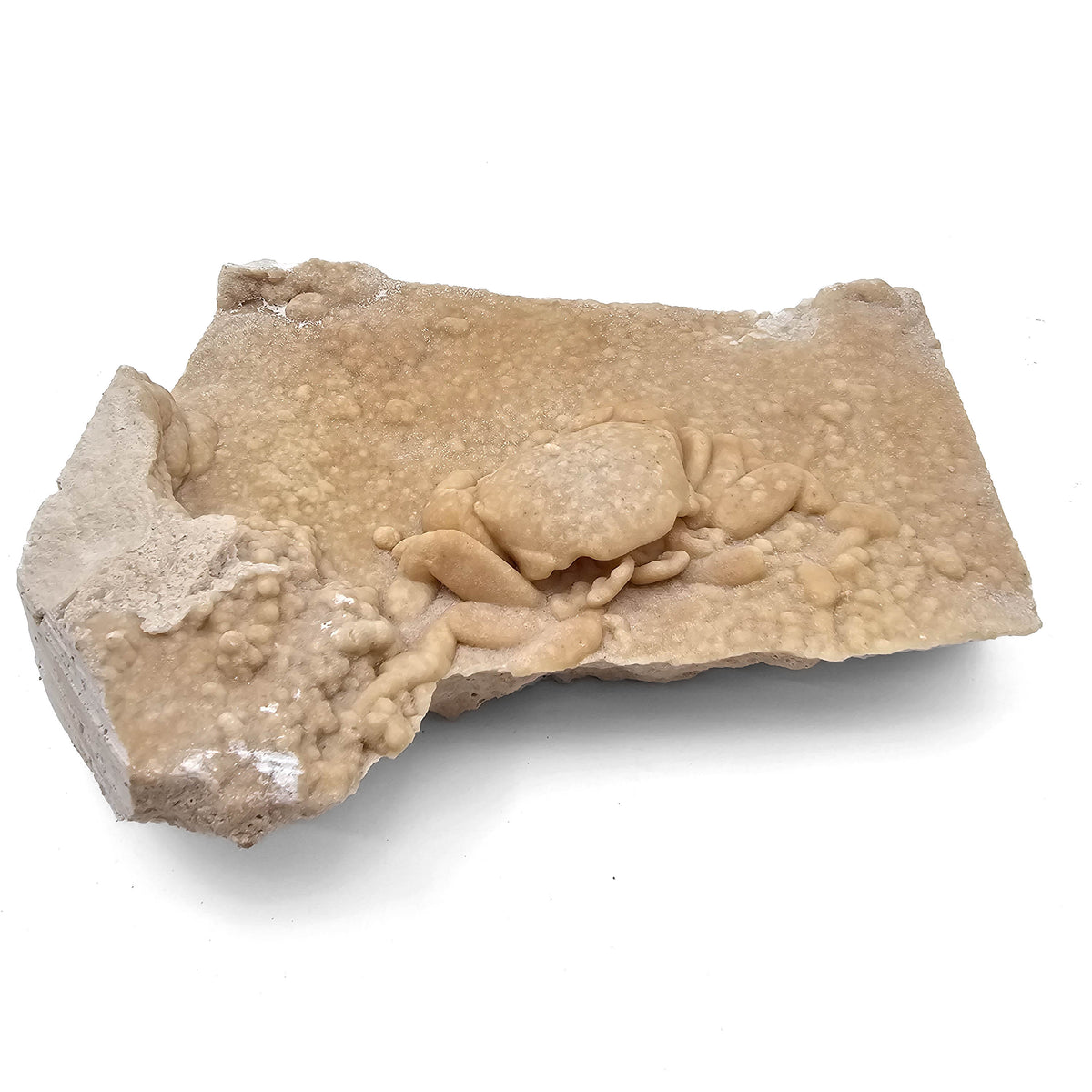
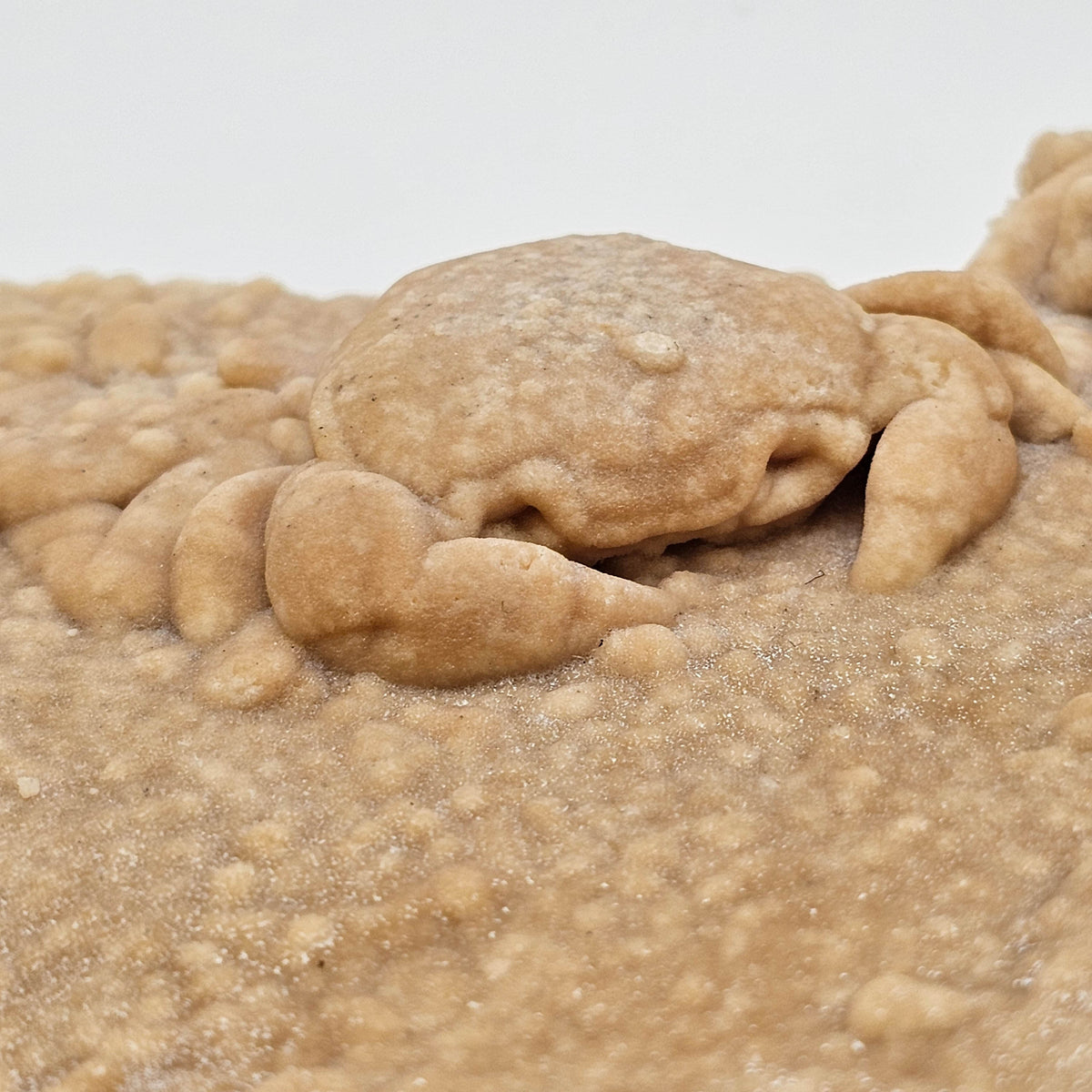
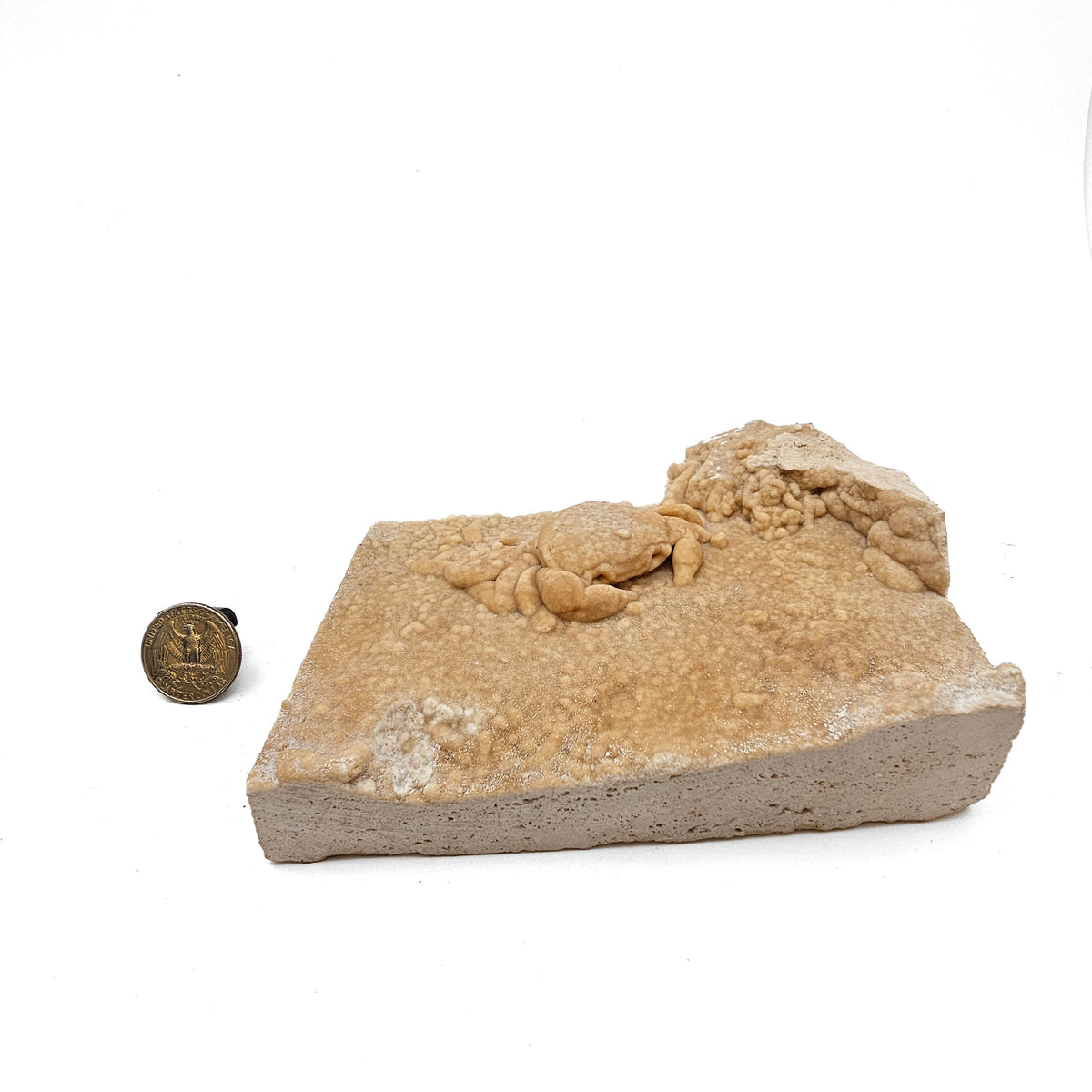
This one of a kind Potamon sp. fossil shows a small freshwater crab preserved in raised relief on a pale tan travertine slab. The crab sits clearly above the matrix, with the rounded carapace, claws, and leg elements still easy to read. The surrounding slab has a bubbly, nodular surface that gives the whole piece a natural spring-deposit look, and that texture makes the fossil feel more like a scene frozen in place than a simple isolated specimen.
Potamon is a true freshwater crab genus, not a marine crab, and members of the genus are known from southern Europe, the Middle East, and North Africa. Turkish examples like this are commonly sold from travertine deposits in southwestern Anatolia, especially the Denizli Basin, where mineral-rich spring waters deposited calcium carbonate and built up thick Pleistocene travertine bodies. That style of preservation explains the creamy carbonate coating and the soft, rounded look of the fossil and matrix.
The crab sits in raised relief with a steady, compact outline, a small Pleistocene animal preserved where it settled in the travertine.
Quantity: 1pc
With this product, you will get the actual stone in the photograph. We do what we can to buy good quality products and price them honestly. The rocks may differ from the photos, but we hope we do them justice.