




Science: Crystal & Formation
- Formula
- CaAl2Si3O10·3H2O
- Family
- Silicates
- Crystal System
- Monoclinic
- Habit
- Prismatic, Bladed, Radiating
- Cleavage
- Perfect {110} and {1-10}
- Named After
- From the Greek for "worm", for its curling when heated.
- Locality
- India
More Specs
Lore & Tradition
Chakra (Modern Lore)


Zodiac, birthstone and chakra associations are cultural traditions and modern crystal lore, shared for interest only; they are not health, medical or scientific claims.
Beschreibung
Locality: Nashik-area quarries, Nashik District, Maharashtra, India
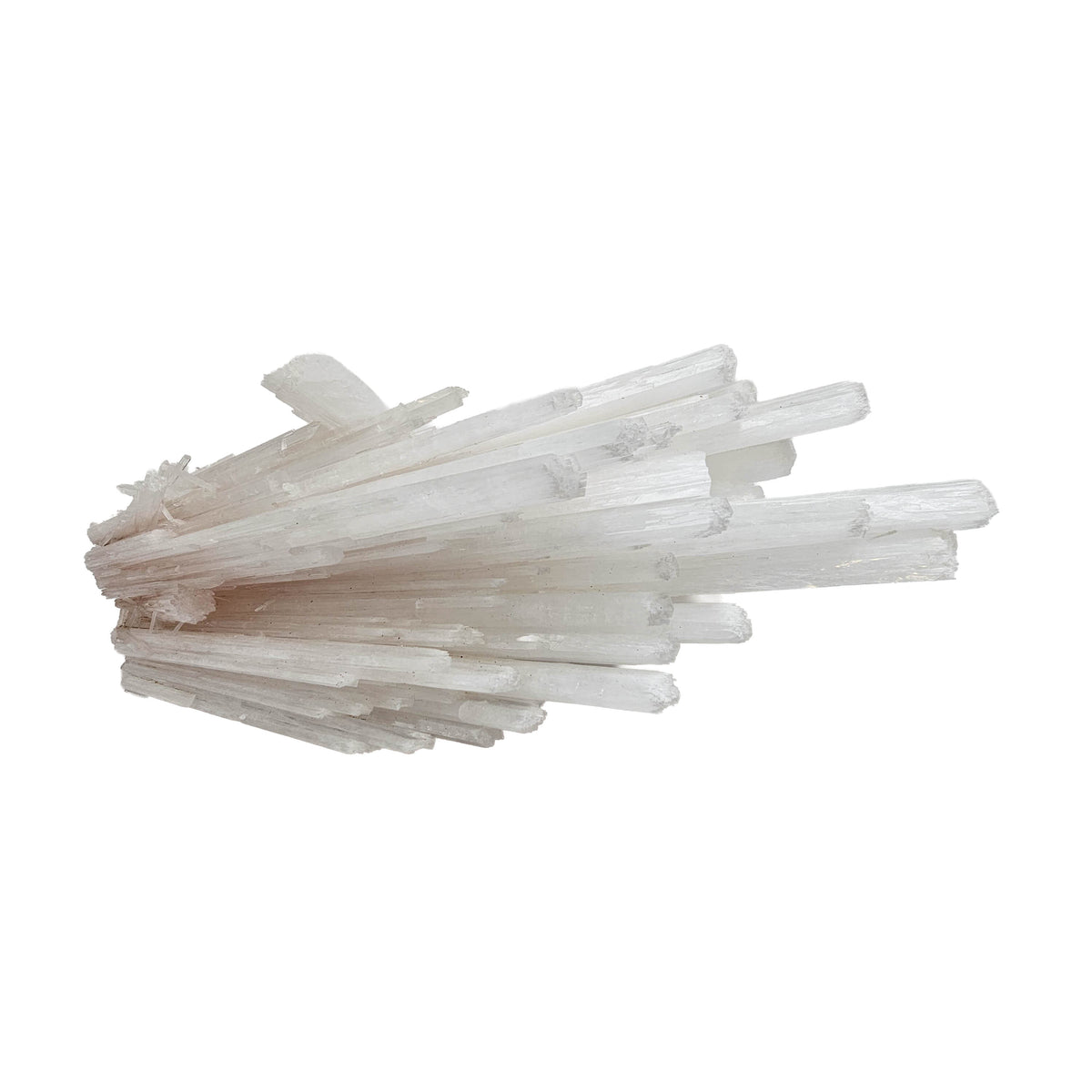
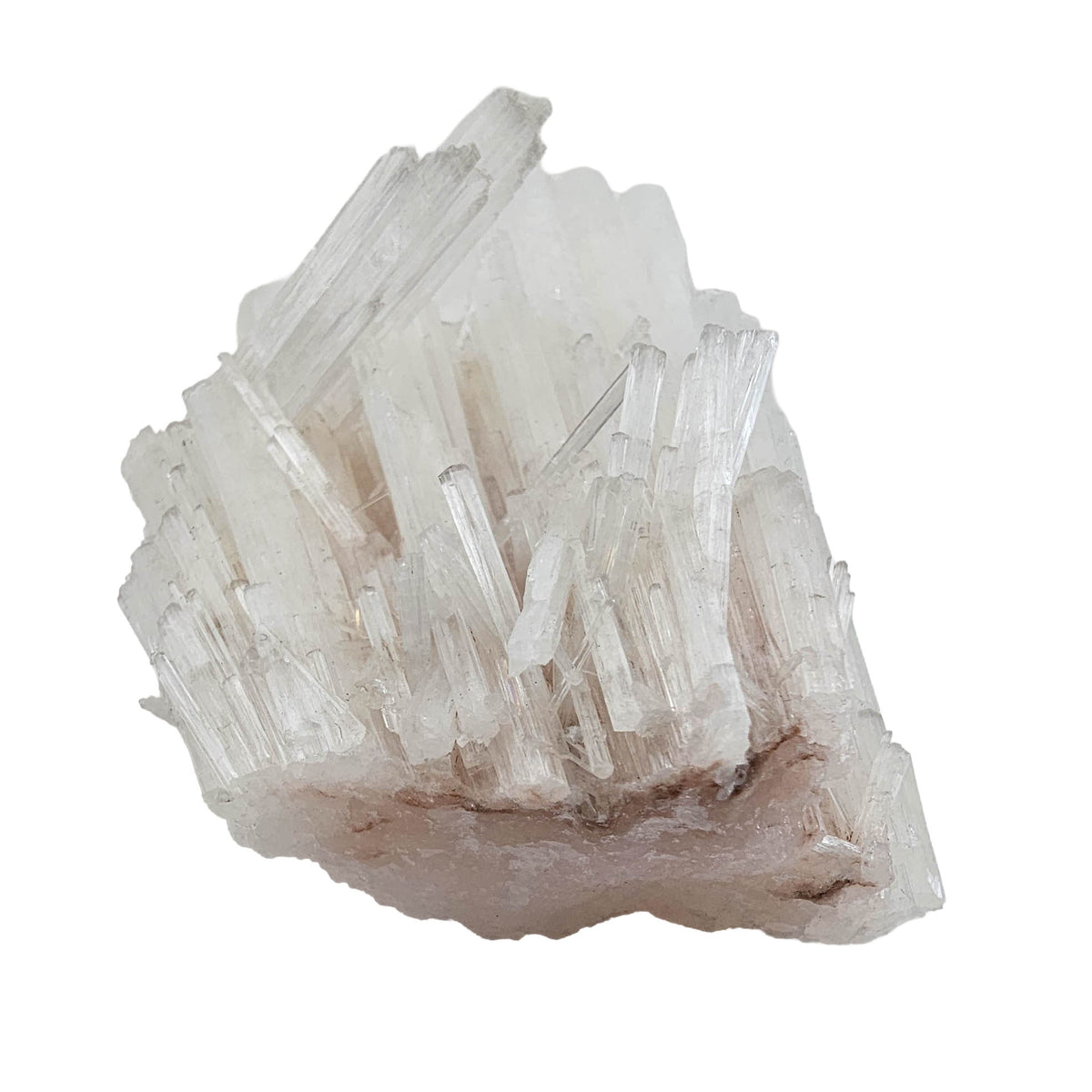
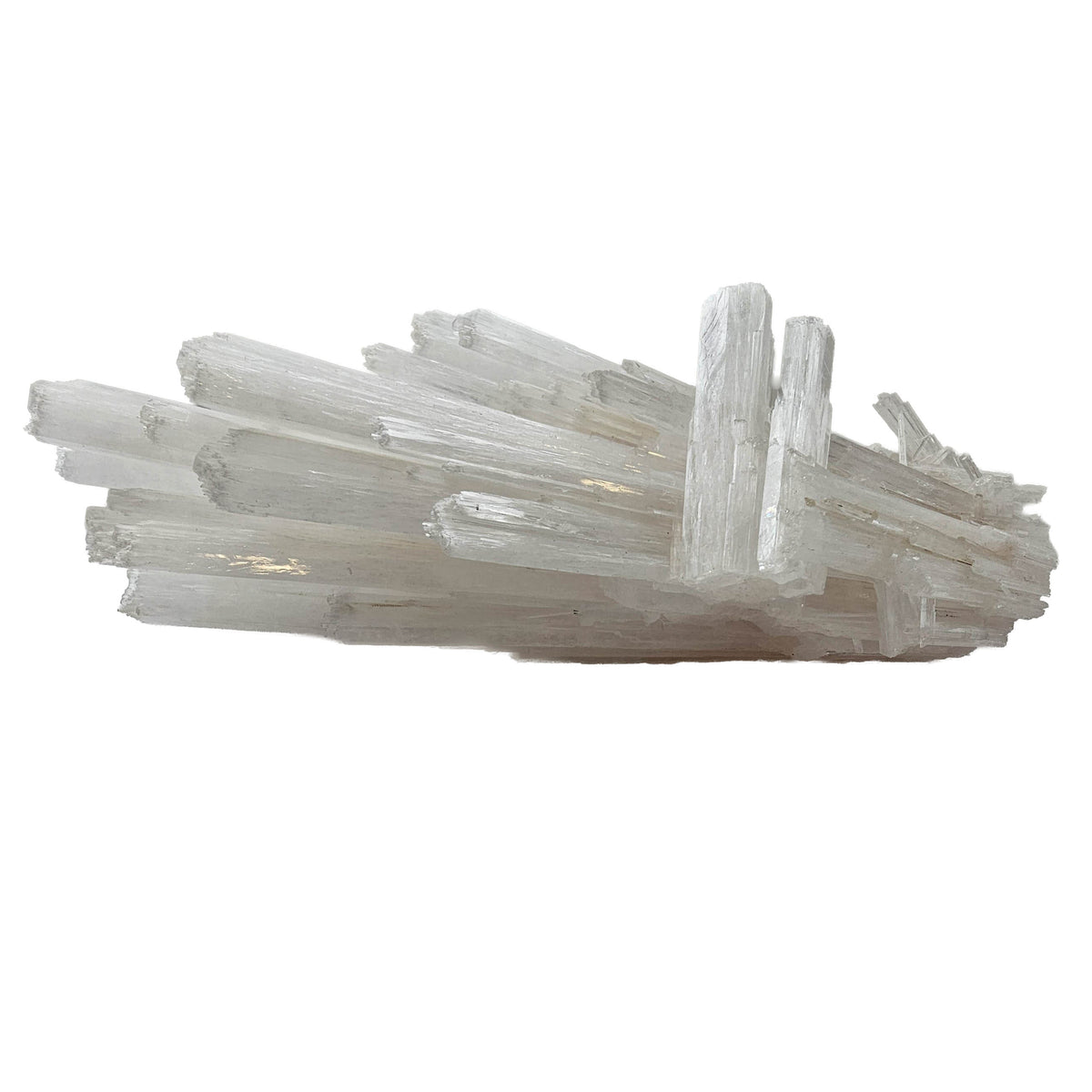
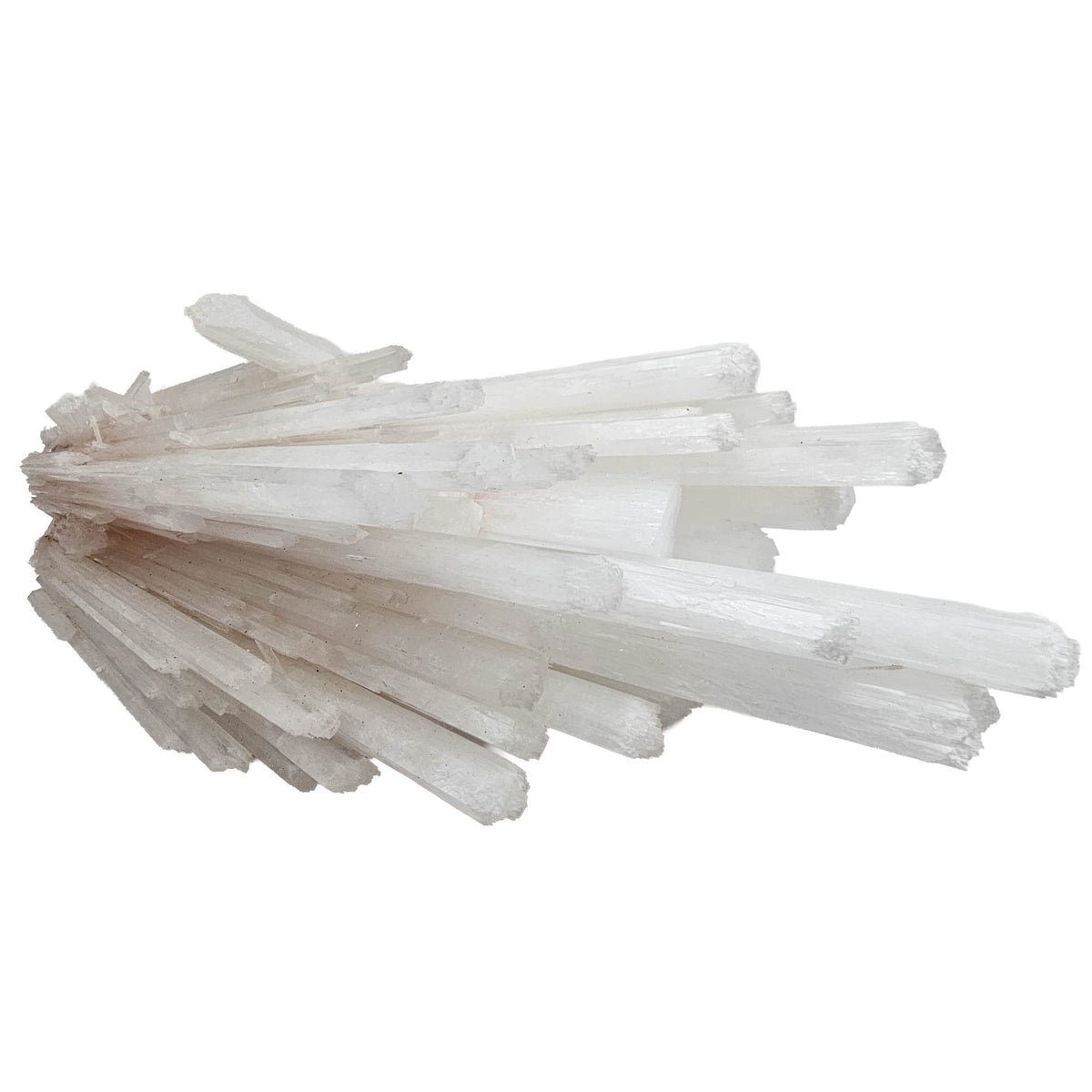
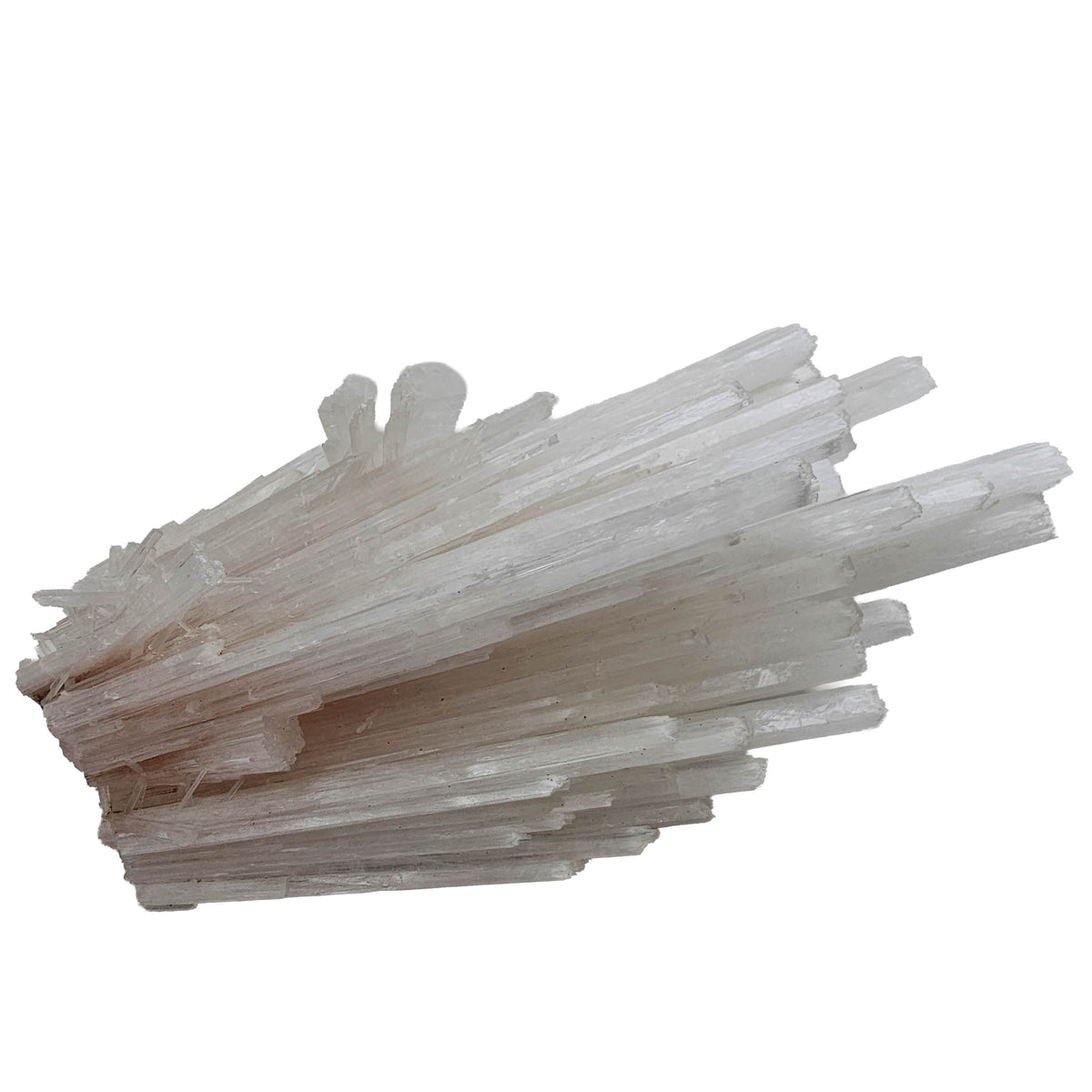
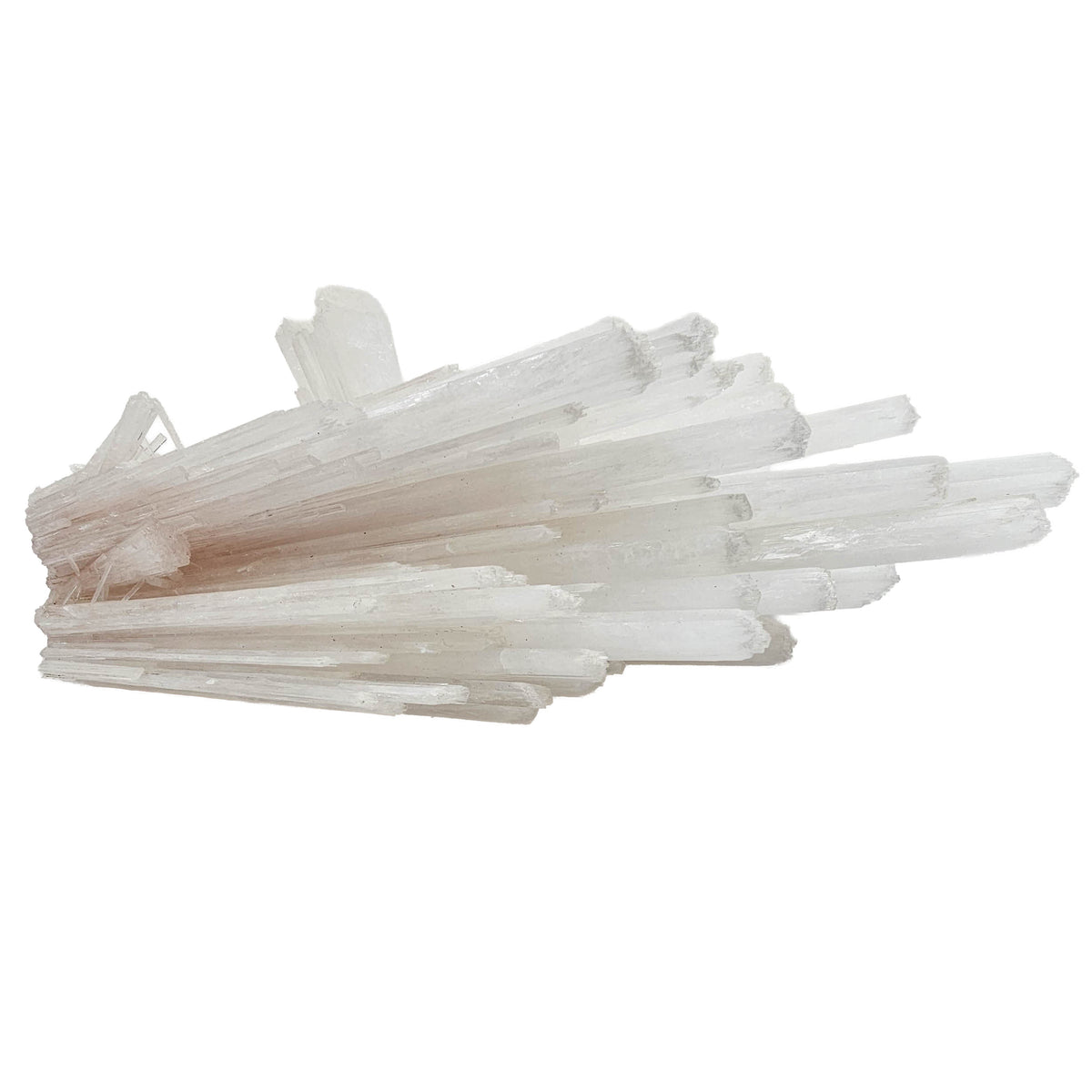
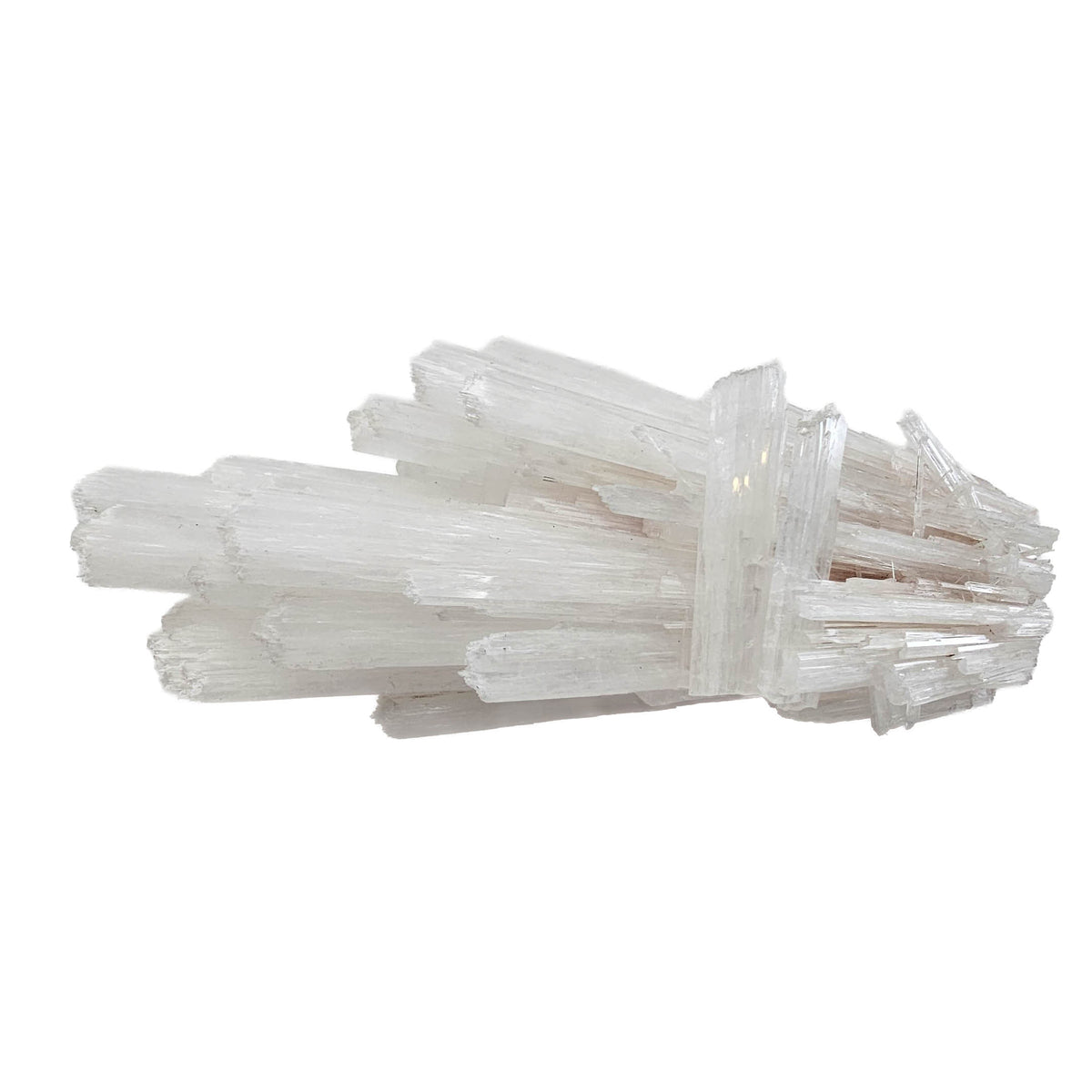
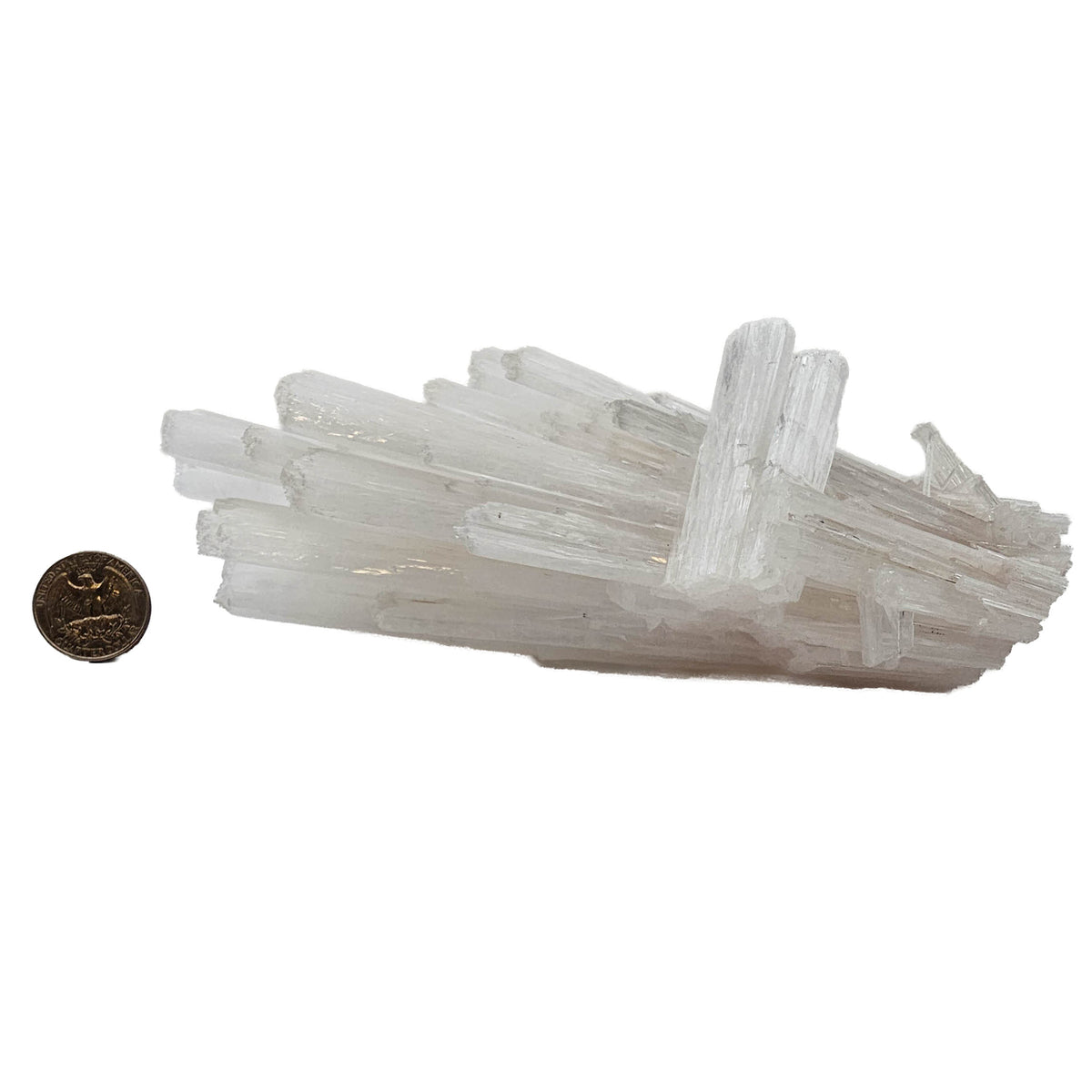
Description: This one of a kind Scolecite mineral specimen from India features a long, low cluster of white to translucent prismatic crystals growing mostly in parallel, with several thicker crystals rising above the main body of the specimen. It is a one of a kind scolecite specimen from the Nashik area of Maharashtra, India.
Scolecite is best known for its bursts of delicate needles, but it also grows as massive fibrous masses: solid, cohesive lumps or blocks that lack the distinct elongated crystals of its prismatic form. Those fibrous masses make ideal carving material, and once polished they show a beautiful silky lustre as light runs along the length of the fibres. Scolecite is a calcium aluminium silicate zeolite, CaAl₂Si₃O₁₀·3H₂O. The crystals show strong lengthwise striations and a soft glassy to silky luster, with faint cream to pale pink tones visible through parts of the cluster. Some crystals are more tightly packed while others project outward individually, giving the specimen a layered, linear structure with good depth from multiple viewing angles.
In crystal healing traditions, scolecite is associated with the Third Eye and Crown chakras, and many people keep it nearby during meditation.
Chemical Composition: CaAl₂Si₃O₁₀·3H₂O
Approximate size of 1 piece: 18.6 x 7.4 cm (7.3 x 2.9 in)
Quantity: 1pc
With this product, you will get the actual stone in the photograph.