


By Adam Kelliher
The short answer: a beginner kit needs a rock pick, safety glasses, gloves, a sturdy bag, a hand lens and a small first-aid kit. Add a chisel and a separate crack hammer to strike it once you start working specimens out of solid rock.[1]
You don't need much to start. Here's what's worth having on day one, and what can wait.
Day one
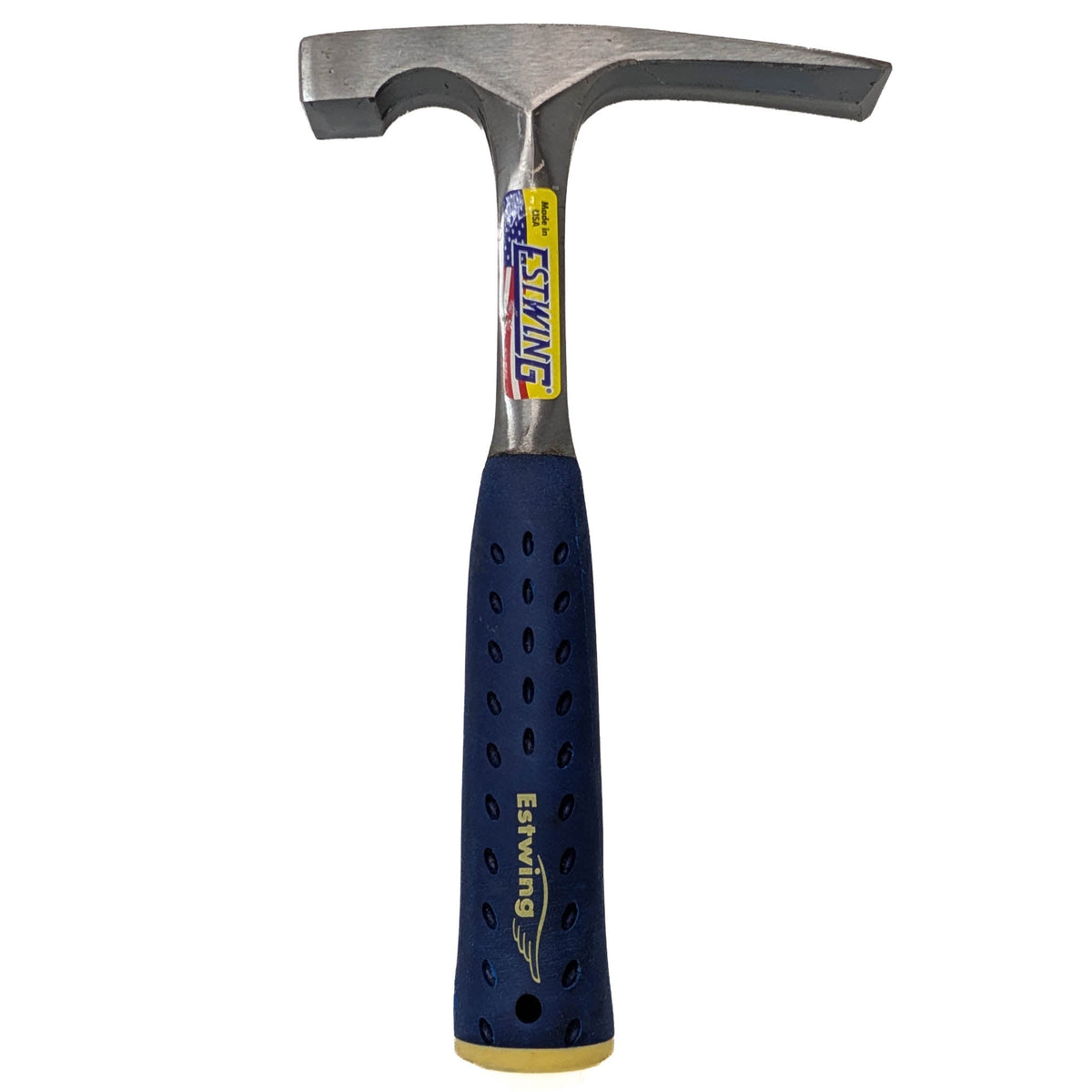
- Rock pick. The hammer geologists carry: a flat striking face on one side and a pick or chisel tip on the other. A one-piece forged hammer can't work its head loose.[1] We stock the Estwing 20 oz chisel tip and the 22 oz pick.
- Safety glasses. Rock throws chips when you hit it.[1] Wear them every time you swing.
- Gloves. Freshly broken rock is sharp.[1]
- A sturdy bag. Rock wears through thin daypacks.[1] Bring a marker and small bags to label finds with where you found them.
- Hand lens. A 10x loupe is how you check grains, crystals and scratches in the field.[2] Try the Enduro 10x.
- First aid and water. Many collecting sites have no phone signal.[1]

Once you're hooked
- Chisel and crack hammer. A chisel lets you work a specimen out instead of smashing it free. Strike it with a crack hammer, not your rock pick. A rock pick has a hardened face and shouldn't hit another hardened tool.[1] See the Estwing gad point chisel and 3 lb sledge.
- Gold pan. If you want to try panning, we carry an Estwing metal pan.
- UV torch. For fluorescent minerals. See How to Use a UV Light on Your Rock Collection.

Know the rules before you swing
Where you can collect, and how much, depends on who owns or manages the land. In the US, the Bureau of Land Management generally allows casual collecting of reasonable amounts of rocks and minerals on its land for personal use, with hand tools and only minor surface disturbance. That doesn't apply on active mining claims or in restricted areas.[3] In BC the rules are different. Start with BC Rockhounding Rules: Where You Can Legally Collect and How to Start Rock Collecting in British Columbia.
Everything above is in rockhounding tools.
See what's new: browse our newest arrivals for the latest pieces added to the shop.
Sources
- Rockhounding.org: Rockhounding Tools and Gear.
- Geology.com (Hobart M. King): Mohs Hardness Scale (using a hand lens to check for scratches).
- US Bureau of Land Management: Can I Keep This? A guide to collecting on public lands.