


By Adam Kelliher
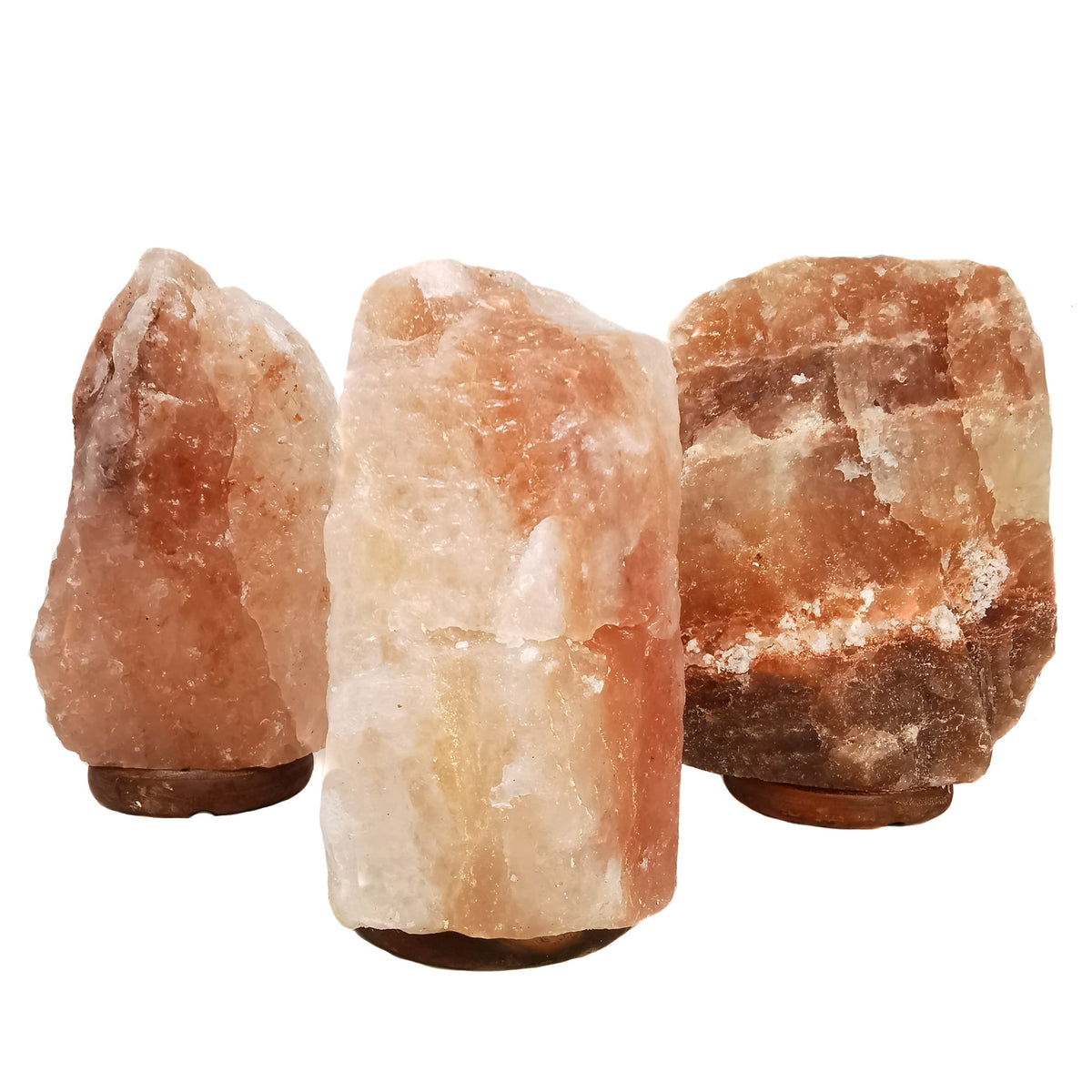
The short answer: a Himalayan salt lamp is a block of rock salt, the mineral halite, hollowed out to hold a bulb. The salt comes from the Salt Range in Punjab, Pakistan, from deposits laid down in the late Precambrian to early Cambrian, over 500 million years ago.[1][2][3] It's a lamp made of a mineral. We don't make health claims for it.
Salt lamps are popular, and a lot of what's written about them online is wellness marketing. This post sticks to the geology and how to look after one.
What it's made of
Halite is sodium chloride, the same compound as table salt. It's soft at about 2.5 on the Mohs scale, breaks into cubes along three cleavage planes at right angles, and dissolves in water.[4] Pure halite is colourless or white. Impurities tint it, and Salt Range salt is white to pink.[2][4]
Where it comes from
The Salt Range Formation is a thick sequence of rock salt, gypsum and marl in northern Pakistan. Its salt beds are among the thickest anywhere, around 2,000 metres in total.[1] Individual seams can reach 20 to 25 metres thick, and exceptionally up to 90.[2] The main mines are at Khewra, Warcha, Kalabagh and Noorpur. Khewra is one of the oldest on the subcontinent.[1][2] Geologically, the salt layer sits in front of the Himalayan mountain belt and acts as the weak layer that rock slides along as the Himalaya push south.[3]

Why salt lamps "sweat"
Halite pulls water out of the air. Above about 75% relative humidity it absorbs enough moisture to start dissolving.[5] That's why a lamp in a damp room can feel wet or leave a salty puddle.
Care
- Keep it in a dry room, away from bathrooms, kitchens, humidifiers and windows that steam up.
- Put it on a coaster or tray in case it gets damp.
- Wipe it with a dry cloth, not water.
- If you're storing it, wrap it in plastic to keep moisture off.
Electrical safety
Treat it like any lamp. In 2017 the US Consumer Product Safety Commission announced recalls of about 80,000 salt lamps, plus about 3,900 more later that year, because the dimmer switch or plug could overheat and ignite.[6] Check the cord and switch, replace damaged parts with proper fittings, and unplug it when you're away.
We sell salt lamps with replacement cords and bulbs, plus display pieces.
See what's new: browse our newest arrivals for the latest pieces added to the shop.
Sources
- Pakistan Journal of Scientific and Industrial Research (2021): An Overview of Pakistan Rock Salt Resources and Their Chemical Characterization.
- Punjab Mines and Minerals Department (PUNJMIN): Rock Salt.
- Geochronology (2021): Deformation recorded in polyhalite from evaporite detachments (Salt Range Formation, Khewra Mine).
- Geology.com: Halite.
- SaltWiki: Halite (deliquescence humidity).
- US Consumer Product Safety Commission: Michaels Recalls Rock Salt Lamps (January 2017); Sportex Recalls Salt Rock Lamps (May 2017).