






Specifications
Descripción
Locality: Renéville Mine, Kindamba District, Pool Department, Republic of the Congo
Description: Congo's dioptase has a long history in European collections. The mineral was first noted from "Gabon" in 1874. In 1890, crystals brought back by the explorer Thollon from the Mindouli mine, between Bouenza and Brazzaville, went on display at the Paris natural history museum, where they were said to rival the classic dioptase of Siberia.
Renéville, in the Kindamba District of the Pool Department of the Republic of the Congo, takes its name from René Petit-Jean, who directed the first mining work there for the Compagnie du Djoué around 1913. Its copper and lead ores are also the type locality of a rare mineral, fornacite.
Dioptase is a hydrated copper silicate. It forms near the surface, where weathering copper ores release copper that combines with silica, and the copper gives it its intense green colour.
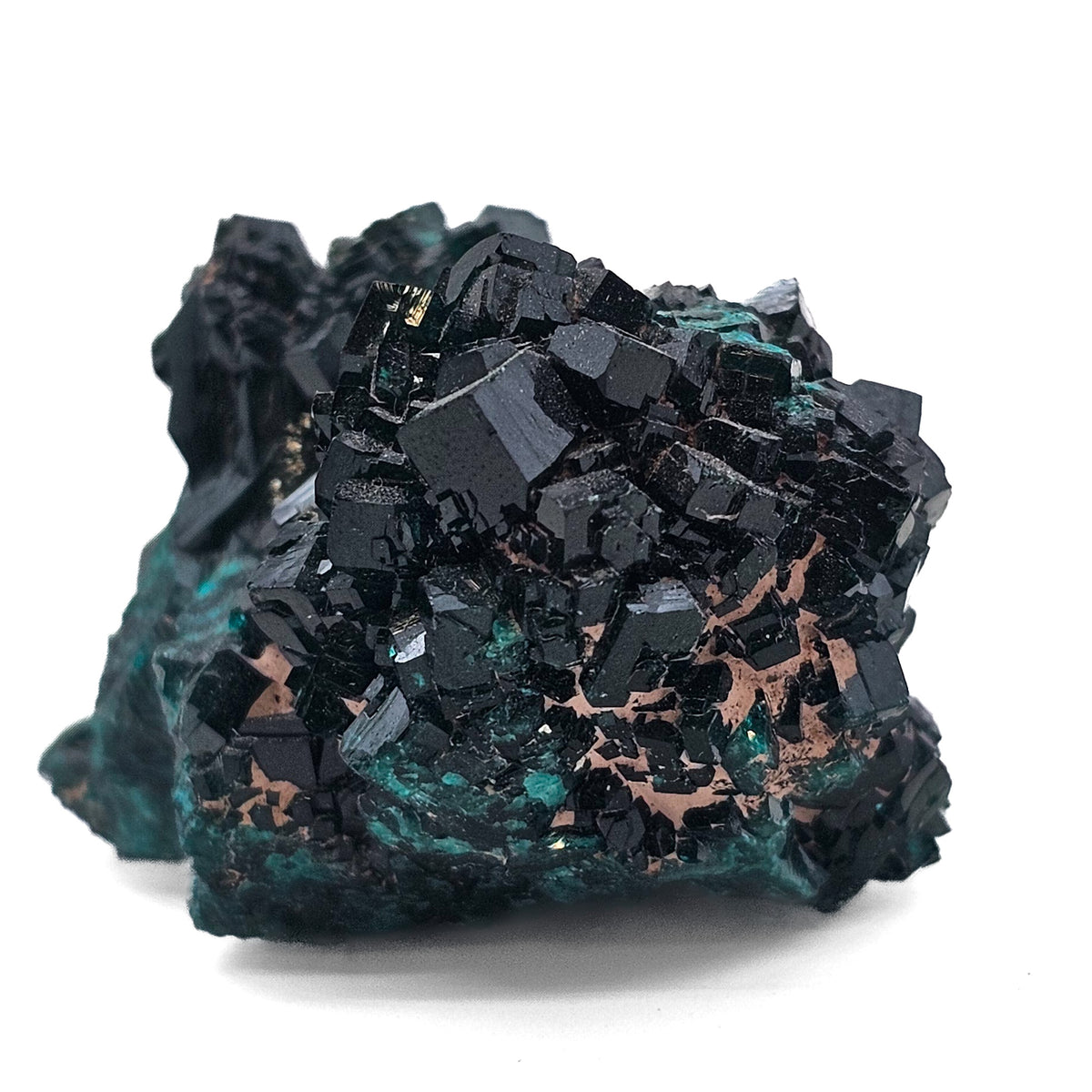
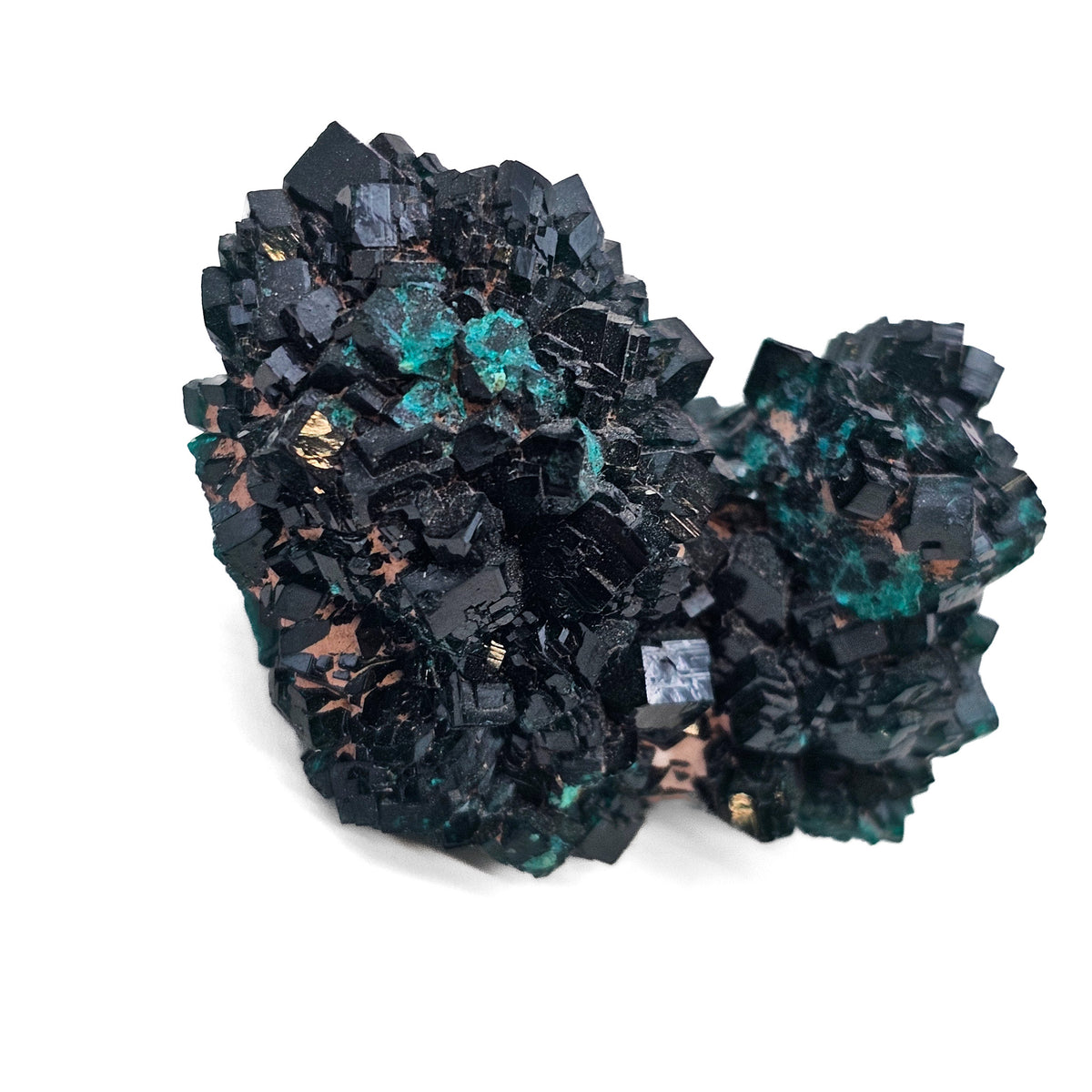
This one of a kind dioptase specimen has a dense, sculptural form with dark, tightly packed crystals covering both lobes of the piece. The crystals appear deep green to nearly black in lower light, but flashes of blue-green show through along the edges and thinner areas, especially where the light catches the glassy faces. The overall structure gives it a strong cabinet presence, with dozens of sharply defined crystal terminations stacked together in a natural clustered arrangement. Rather than looking airy or open, this piece feels compact, heavy, and saturated, with strong geometric crystal form across nearly the entire visible surface.
Crystal lore: In crystal tradition, dioptase is linked to the heart chakra and associated with truth, insight and renewal.
Chemical Composition: CuSiO3·H2O
With this product, you will get the actual stone in the photograph.