




Specifications
Descripción
Locality: Kem Kem Beds, near Taouz, Errachidia Province, Drâa-Tafilalet Region, Sahara Desert, Morocco
Era: Mesozoic
Geological Age: Late Cretaceous, Cenomanian 100.5 to 93.9 mya
Spinosaurus aegyptiacus was named in 1915 by the German palaeontologist Ernst Stromer, from a partial skeleton that the collector Richard Markgraf found in 1912 in the Bahariya Oasis of western Egypt. That skeleton was the only indisputable specimen of the species. It was destroyed on the night of 24–25 April 1944, when a bombing raid on Munich hit the museum that housed it, and only Stromer's notes, drawings and photographs survived.
Nearly a century later, Nizar Ibrahim and colleagues described a new partial Spinosaurus skeleton from the Kem Kem beds of southeastern Morocco, published in Science in September 2014. Comparing it with Stromer's surviving records, they concluded that Spinosaurus was at least partly aquatic, the first dinosaur known with such adaptations. Its nostrils sat far back on the skull, its hindlimbs were short, and its limb bones were solid, which would have helped with buoyancy control in water.
The Kem Kem beds form desert cliffs in the Moroccan Sahara. In the Cretaceous the area was part of a large river system, home to large sharks, coelacanths, lungfish and crocodile-like animals, along with giant flying reptiles and predatory dinosaurs.
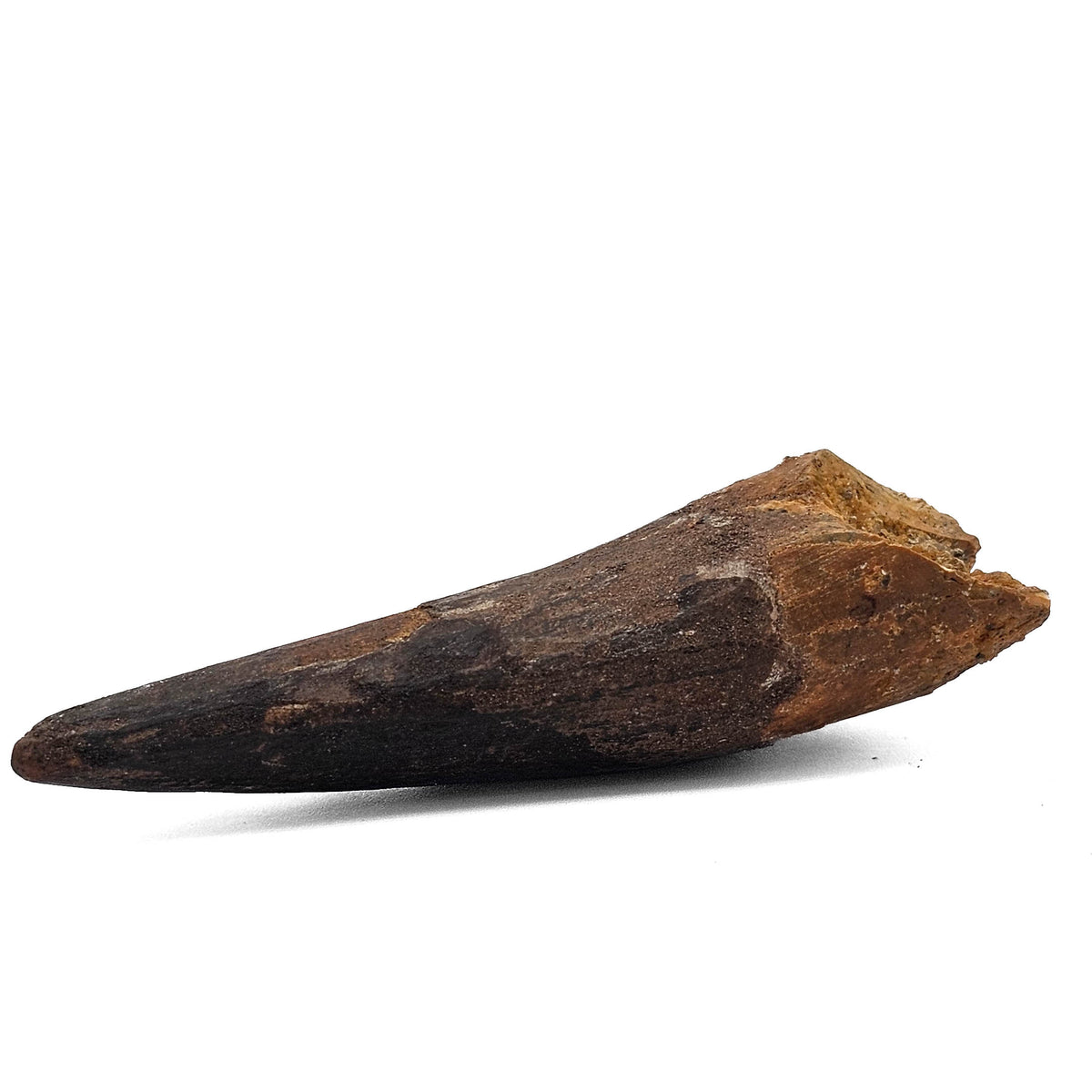
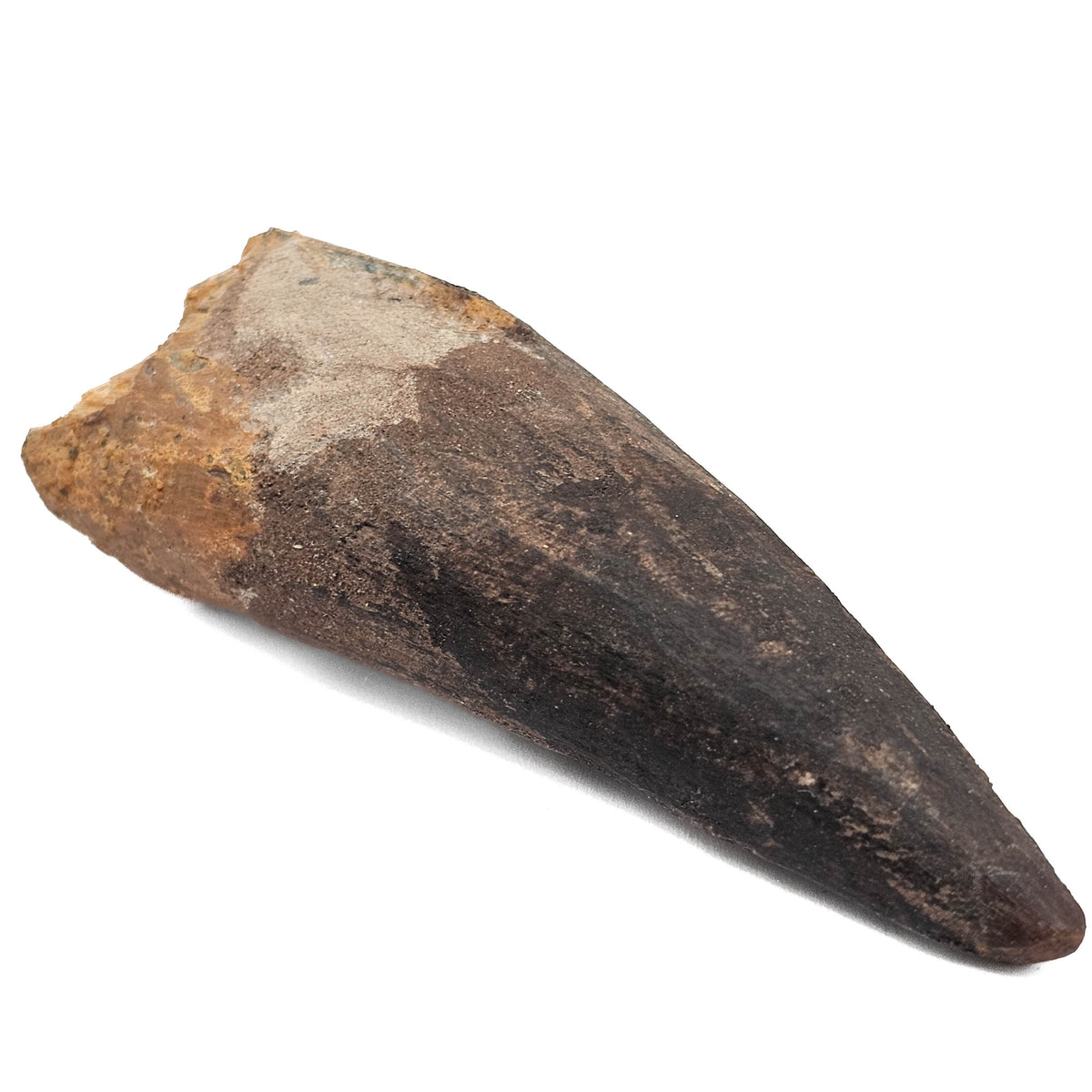
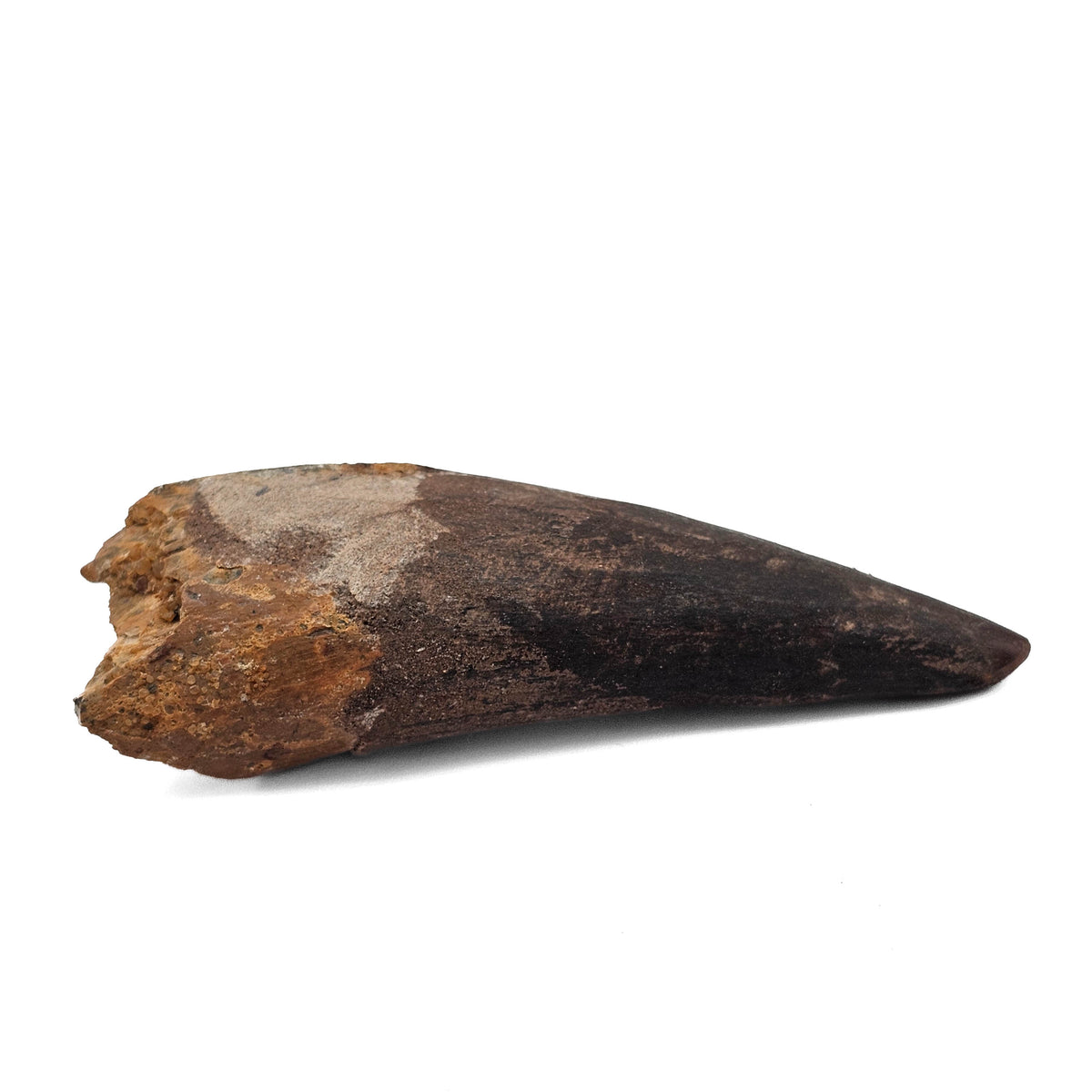
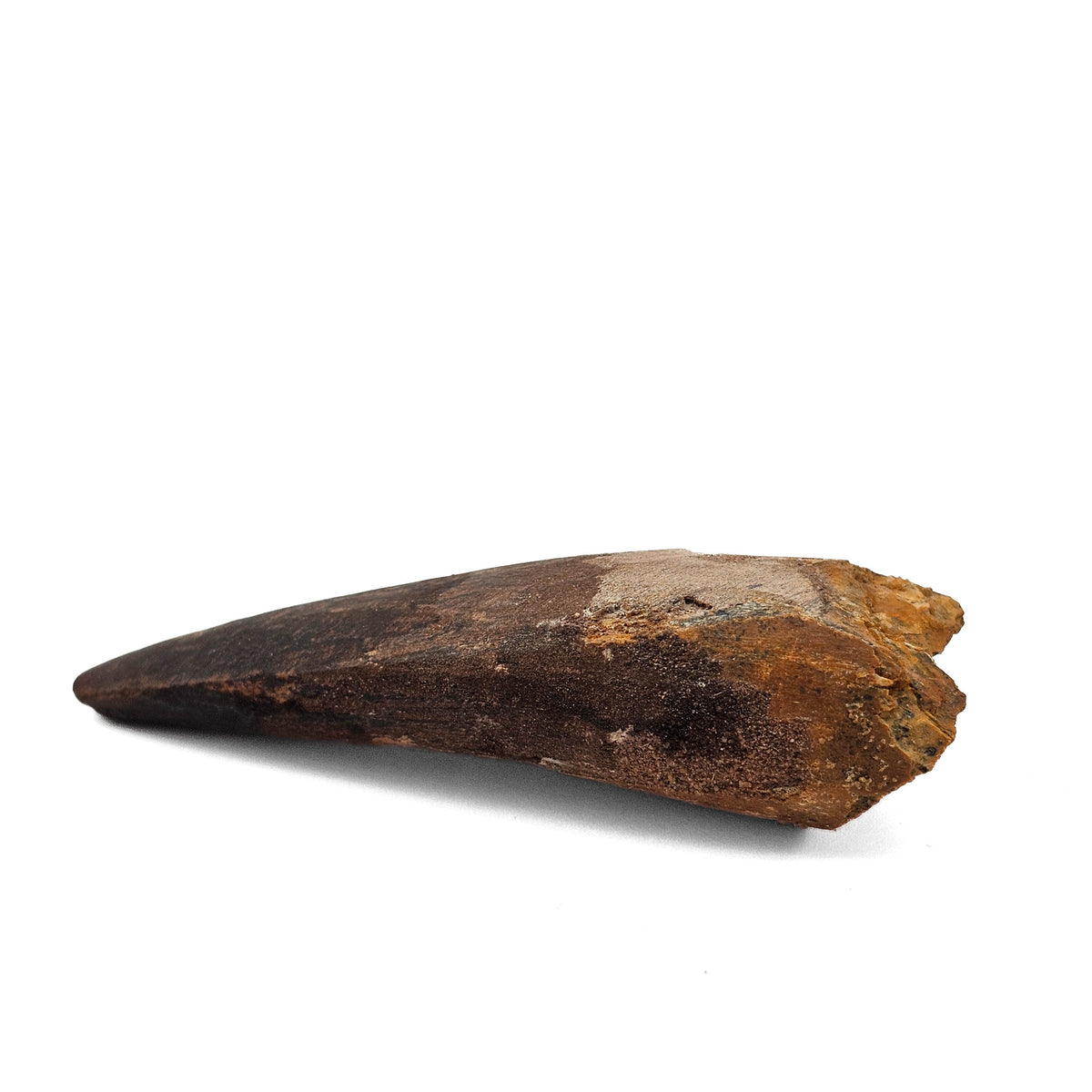
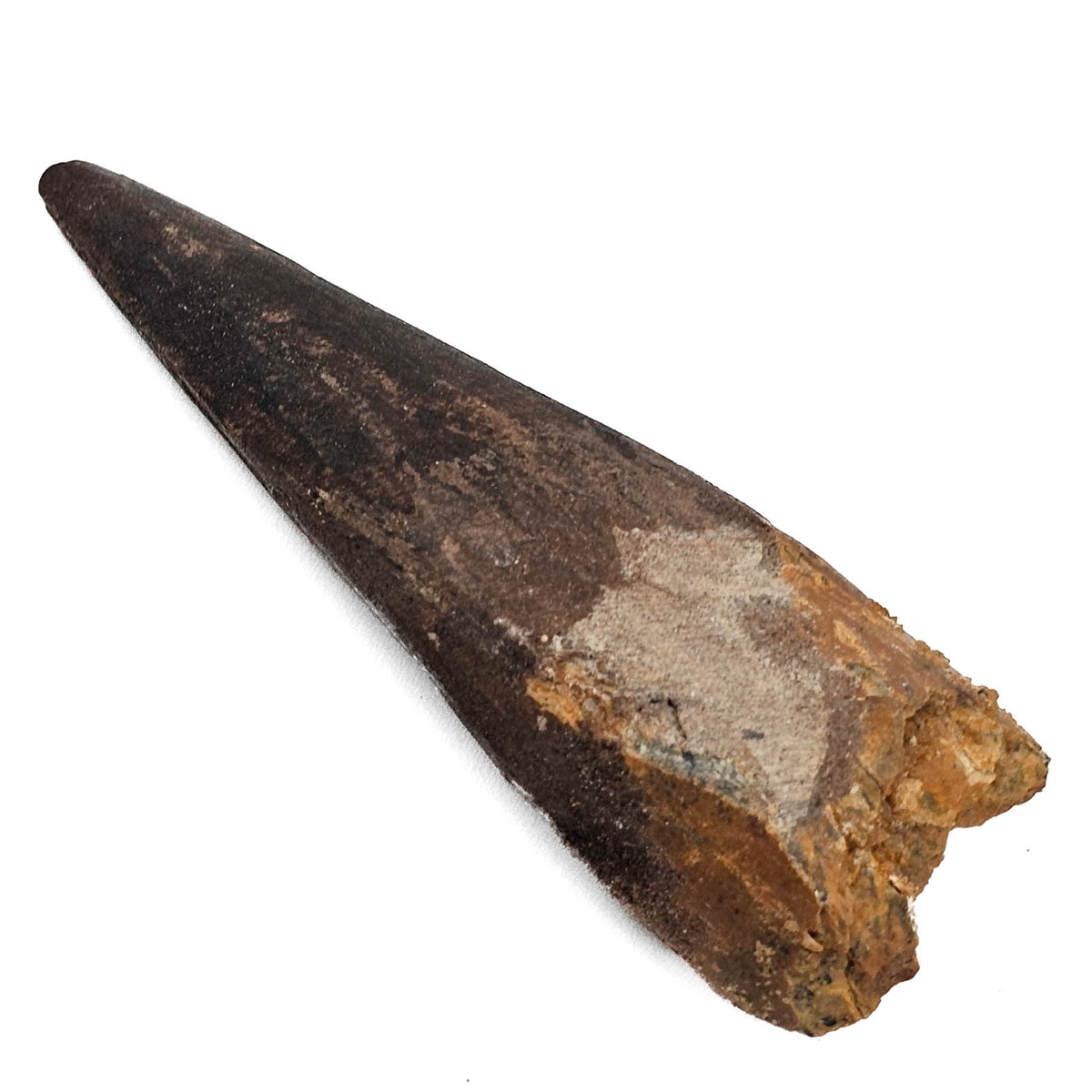
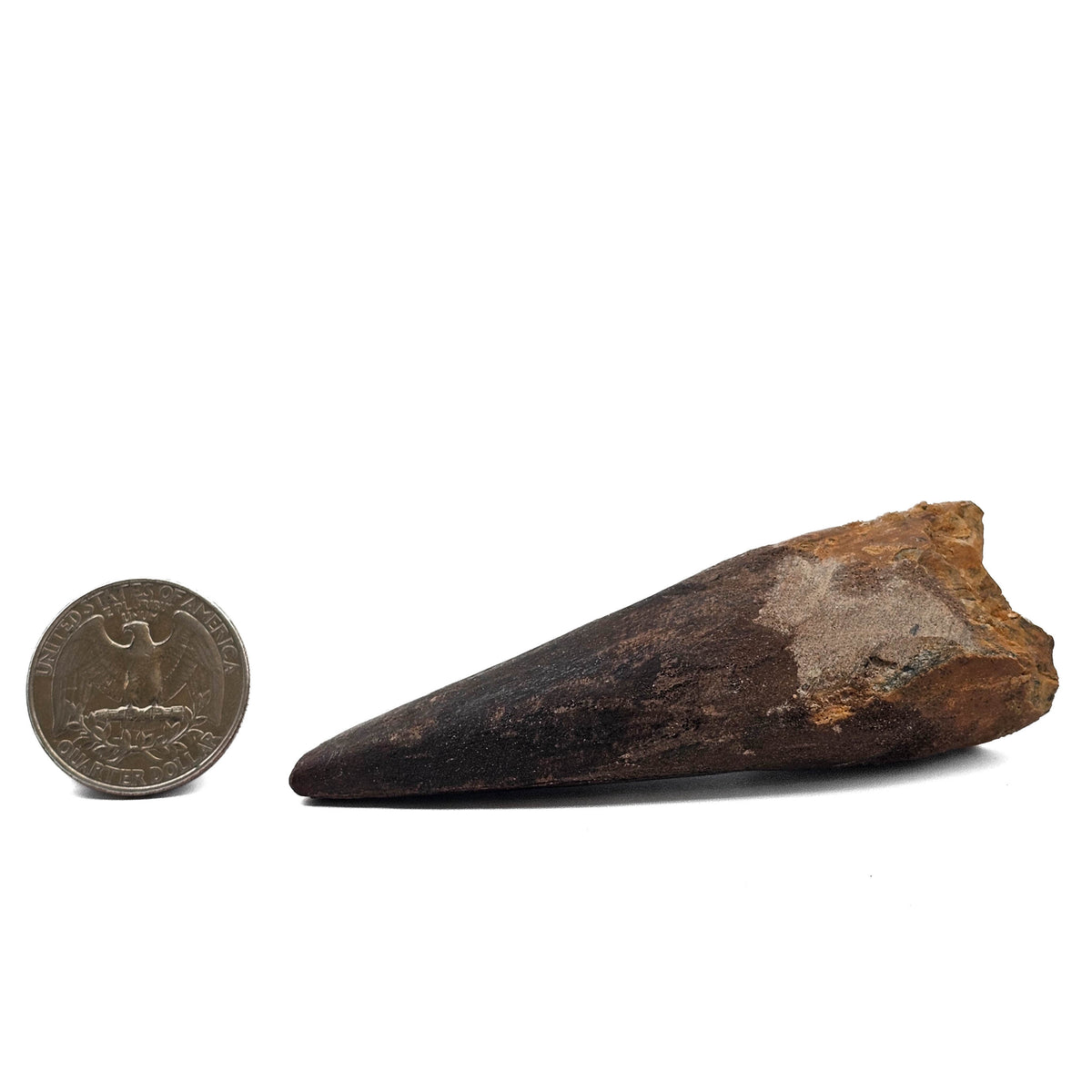
This one of a kind Spinosaurus tooth fossil specimen has a broad, sturdy shape with a dark brown crown that tapers to a smooth, intact point. The enamel-bearing portion is darker and more even in color, while the upper section shifts into lighter tan and rusty brown tones where the root area is exposed. The base is naturally broken and rough, with visible fossil texture and matrix still attached.
This tooth has a heavier, more compact look than some slimmer Moroccan Spinosaurus teeth. The crown is thick through the middle and narrows steadily toward the tip, giving it a solid display profile. Surface wear, color variation, and natural breakage at the base all add to the fossil’s authenticity without taking away from the overall form. It has a strong silhouette, intact point, and clear contrast between preserved enamel and the rougher root zone.
Spinosaurus teeth are recognized for their conical shape, which differs from the flatter, blade-like teeth of many other theropod dinosaurs. That profile is part of what makes specimens like this easy to identify. This piece has a grounded, field-found look and a substantial presence that works well as a display fossil.
Quantity: 1pc
With this product, you will get the actual stone in the photograph. We do what we can to buy good quality products and price them honestly. The rocks may differ from the photos, but we hope we do them justice.