






Science: Crystal & Formation
- Formula
- BaSO4
- Family
- Sulfates
- Crystal System
- Orthorhombic
- Habit
- Bladed, Tabular
- Cleavage
- Perfect {001}, less perfect {210}
- Named After
- From the Greek for "weight", for its high specific gravity.
- Locality
- Roumanie
More Specs
Description
Locality: Jebel Ouichane, Nador Province, Oriental, Morocco
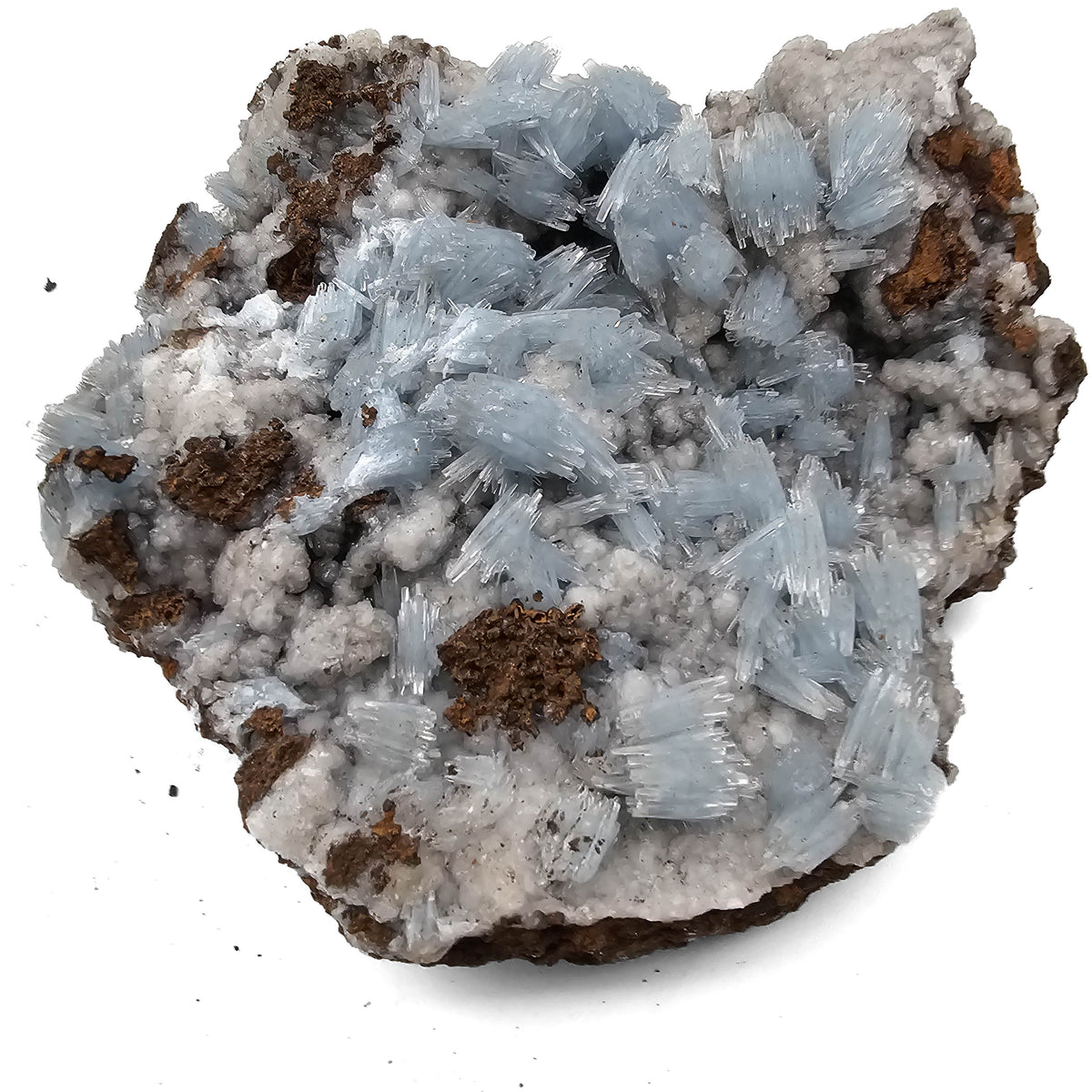
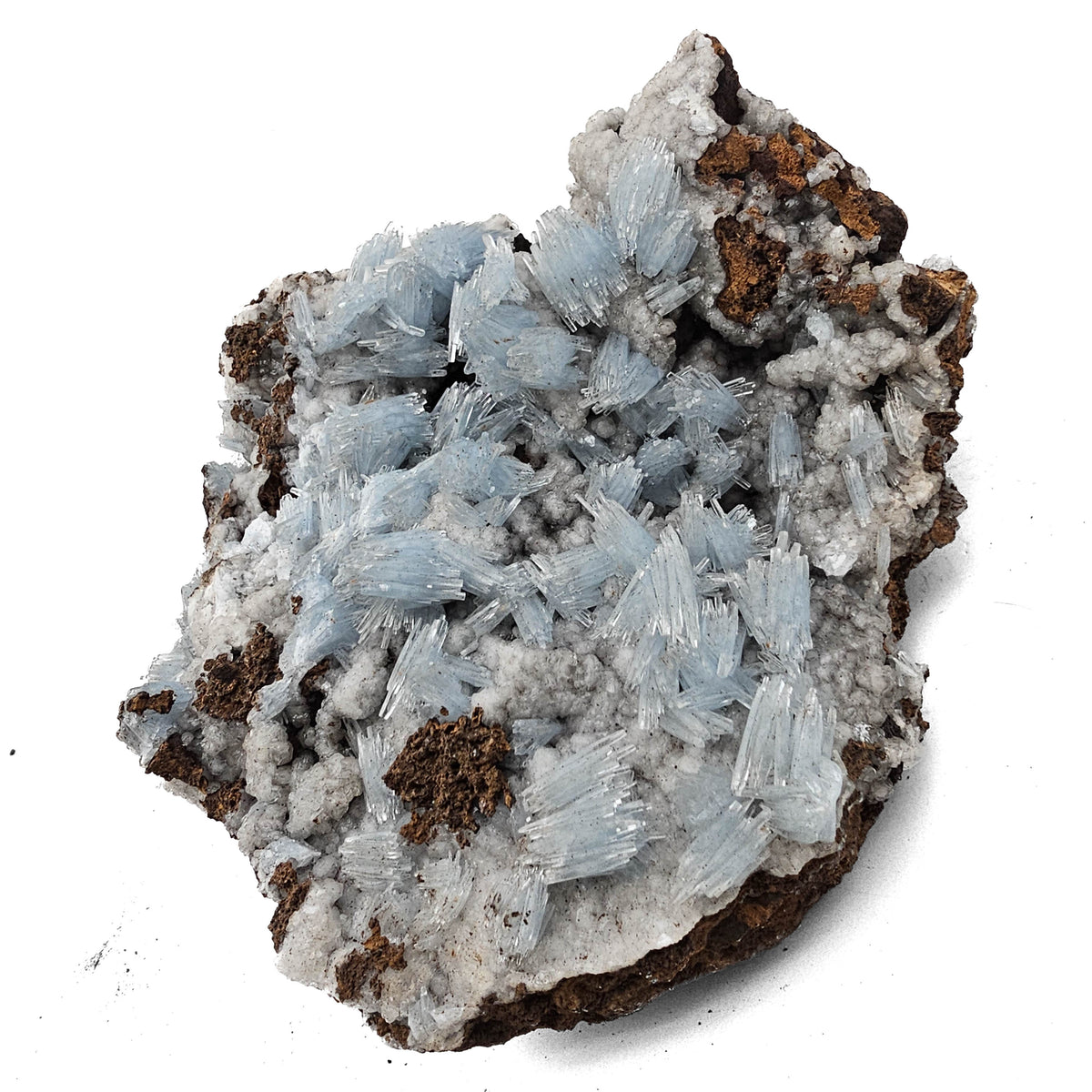
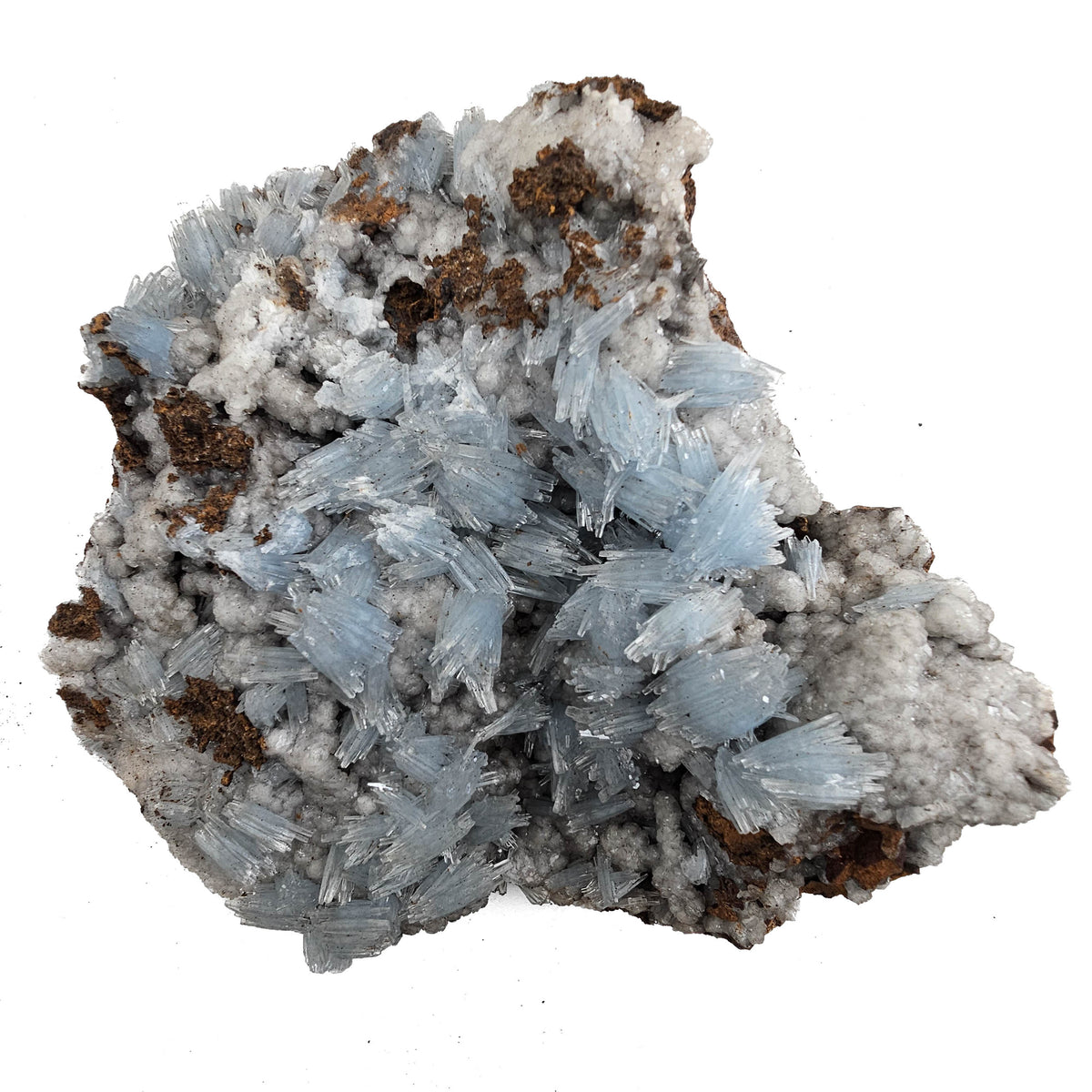
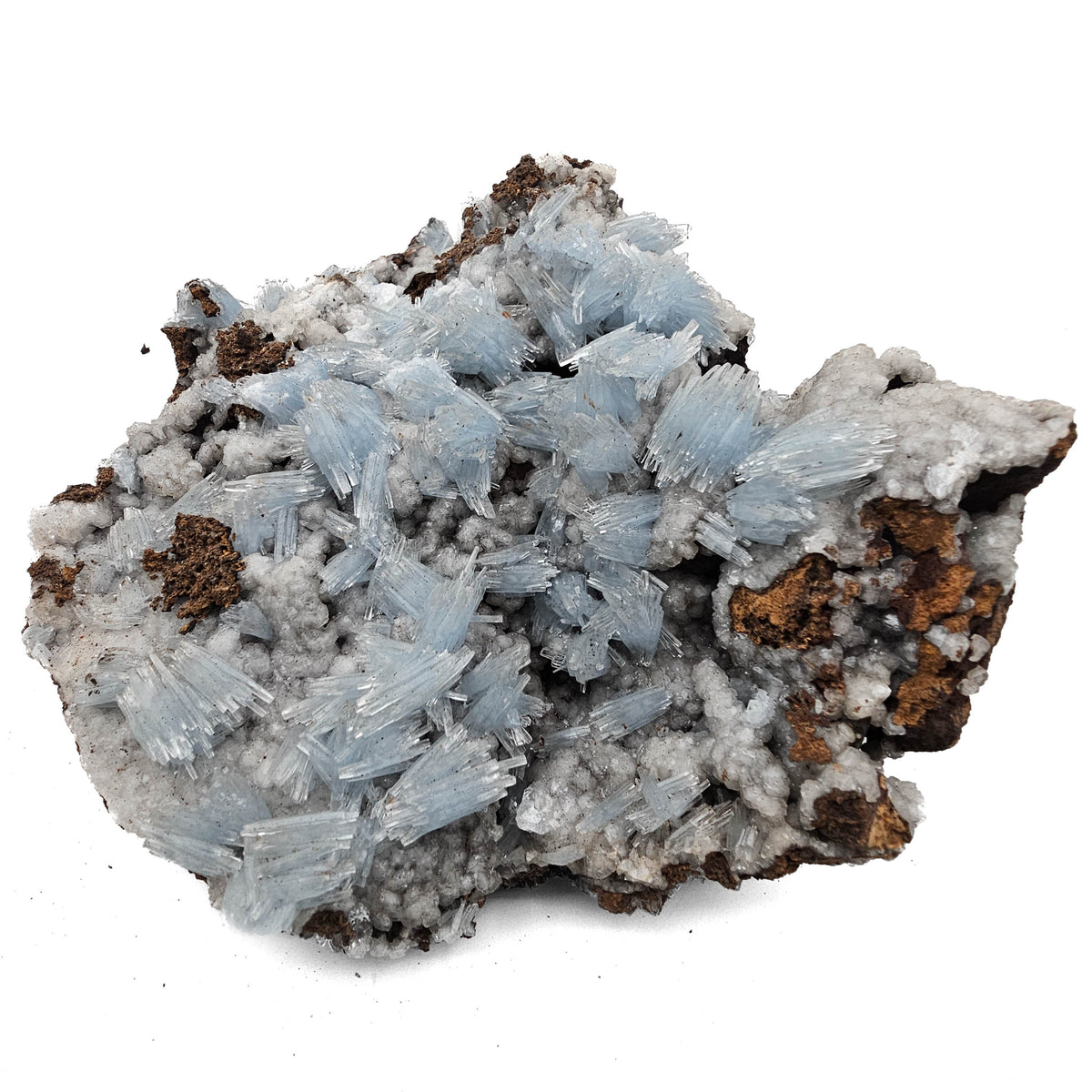
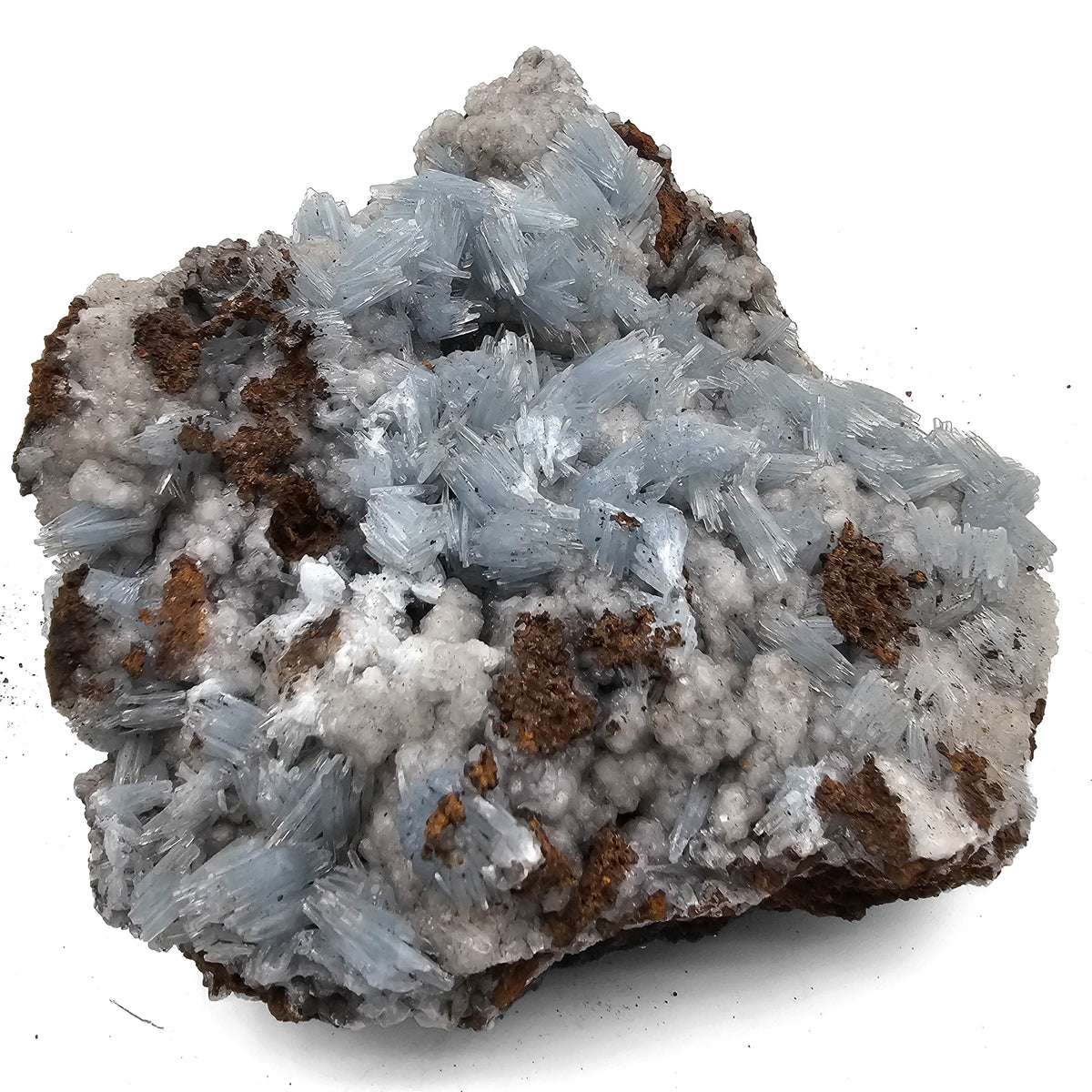
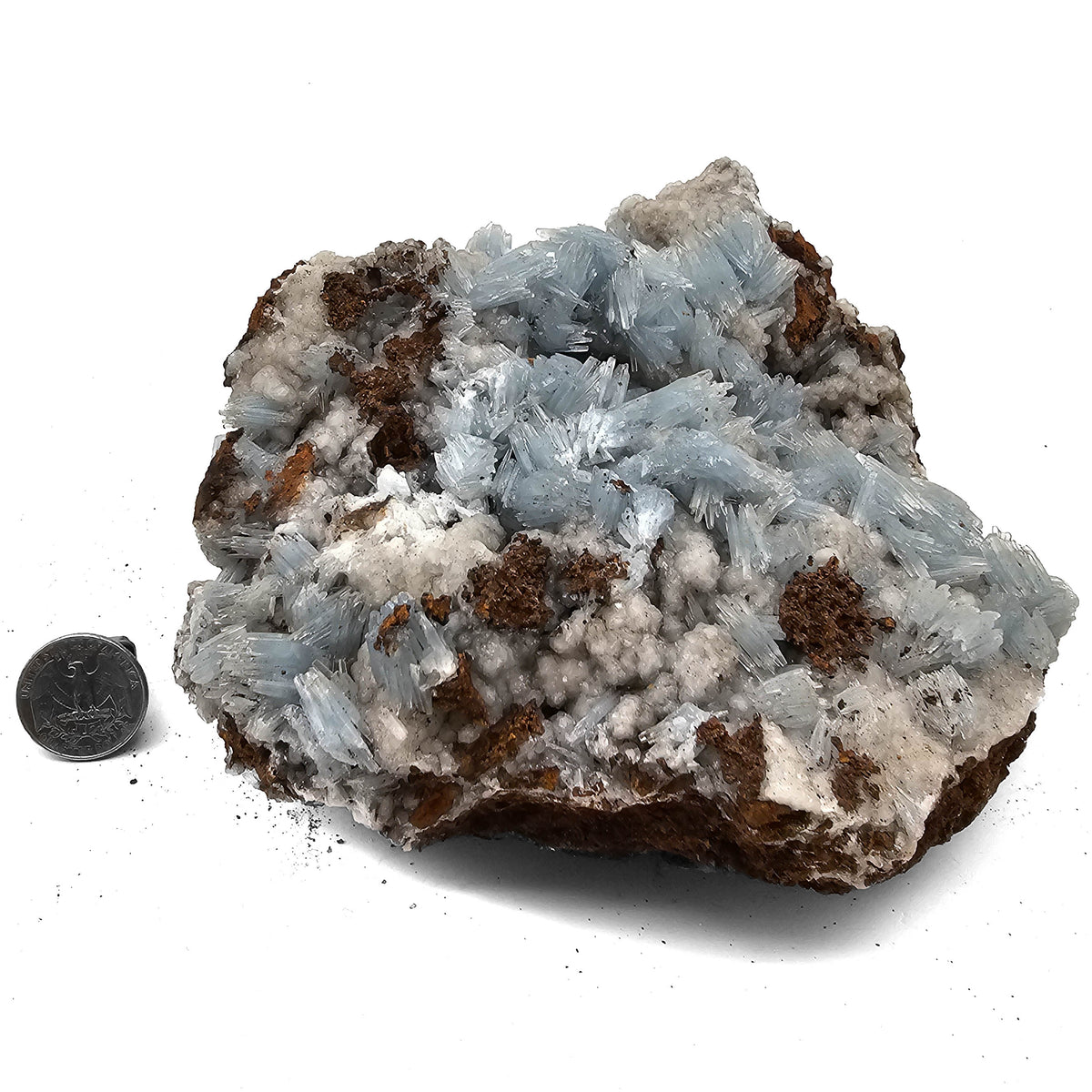
Description: This one of a kind Blue Barite mineral specimen features pale sky-blue bladed Barite crystals scattered across a white to light gray druzy matrix. The Barite forms thin, straight, blade-like sprays with a glassy luster and fine parallel growth lines, giving the specimen a crisp, sharp texture.
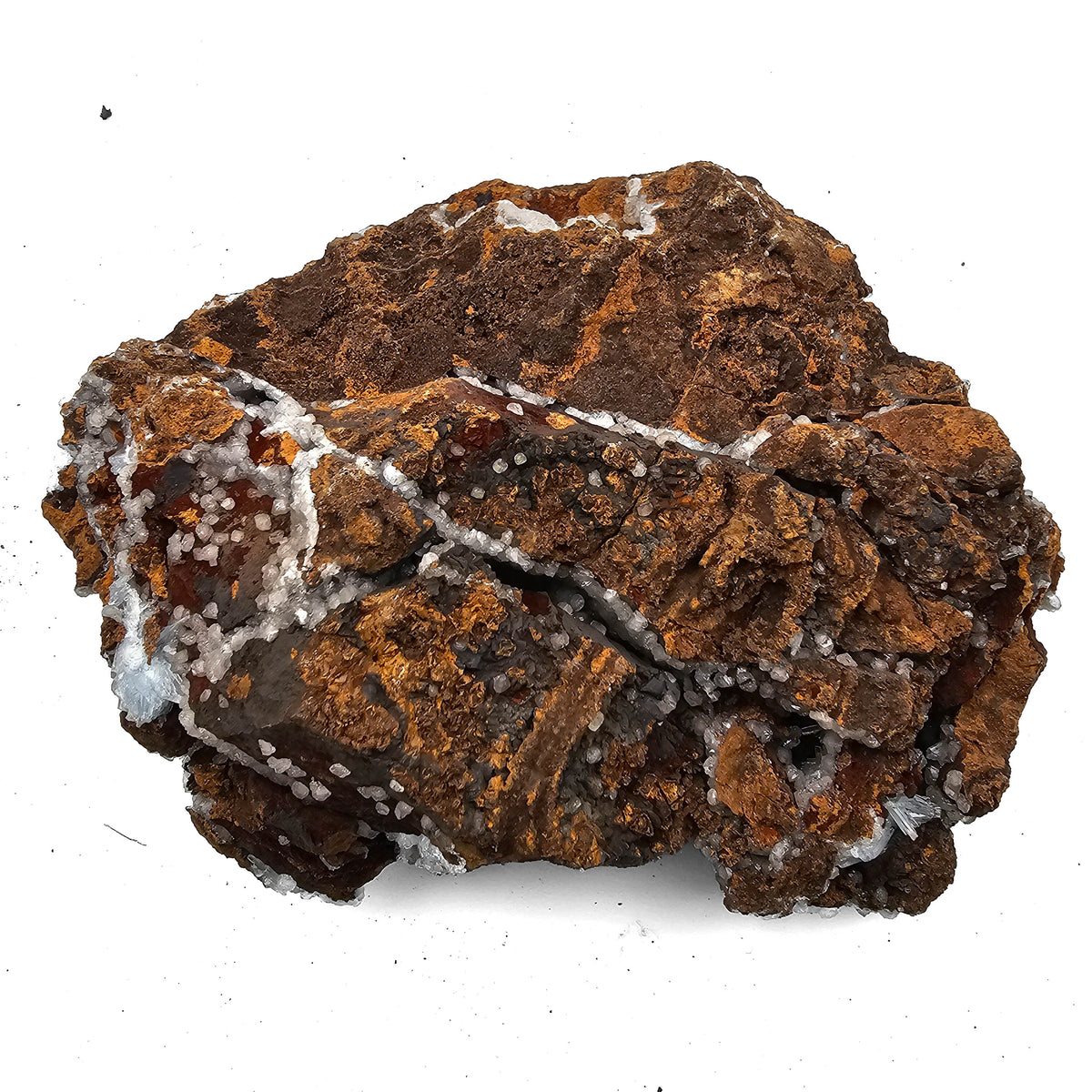
Barite, also spelled Baryte, is a barium sulfate mineral known for its heavy weight, tabular crystal habit, and wide range of colours. Blue Barite is especially valued by collectors because the colour is less common than white, gray, honey, or brown varieties. Rust-brown iron staining and rough matrix patches add natural contrast around the edges and through the lower surface, making the soft blue Barite stand out well without looking overly cleaned or altered.
Jebel Ouichane, near Nador, was a major iron-ore source. Its ore (magnetite, hematite, limonite) formed by contact skarn metamorphism, when a Miocene quartz-diorite porphyry intruded Jurassic limestone. The mineralisation is dated to 7.04 ± 0.47 Ma.
The blue barite grew later, in pockets and open fractures in these iron-rich skarns, together with calcite. Fluid-inclusion and isotope data show it crystallised below 100 °C, from dilute meteoric water mixed with magmatic-hydrothermal fluid, in a steam-heated near-surface setting. Slow growth at low supersaturation produced the transparent, lustrous blades, and the crystal cores are enriched in strontium.
The pockets were worked for specimens from 2012, and the barite reached the market that spring at the Sainte-Marie-aux-Mines show.
Chemical Composition: BaSO₄
Approximate size of 1 piece: 15.8 x 13.9 cm (6.2 x 5.5 in)
Quantity: 1pc
With this product, you will get the actual stone in the photograph.