





Specifications
Description
Locality: Pegmatite deposits, Afghanistan (exact locality unknown)
Morganite is the pink to orange-pink variety of beryl, the mineral that also includes emerald and aquamarine. Its colour comes from traces of manganese. Beryl is a beryllium aluminium silicate, Be3Al2Si6O18, with a hardness of 7.5 to 8, and it most often forms in granites and granite pegmatites alongside quartz, feldspar and mica.
Kunz noted that morganite glows an intense cherry red under X-rays. Morganite is also strongly pleochroic, showing pale pink and deeper bluish pink in different directions, so gem cutters orient the rough carefully. One of the largest crystals ever found, the "Rose of Maine", came from the Bennet Quarry in Buckfield, Maine, in 1989 and weighed just over 50 pounds.
After a new source of rose beryl was found in Madagascar, the gemmologist George F. Kunz proposed the name morganite on 5 December 1910 at a meeting of the New York Academy of Sciences. He named it for the financier J. P. Morgan, a major gem collector, in recognition of his support for the arts and sciences and his gifts of gem collections to museums in New York and Paris.
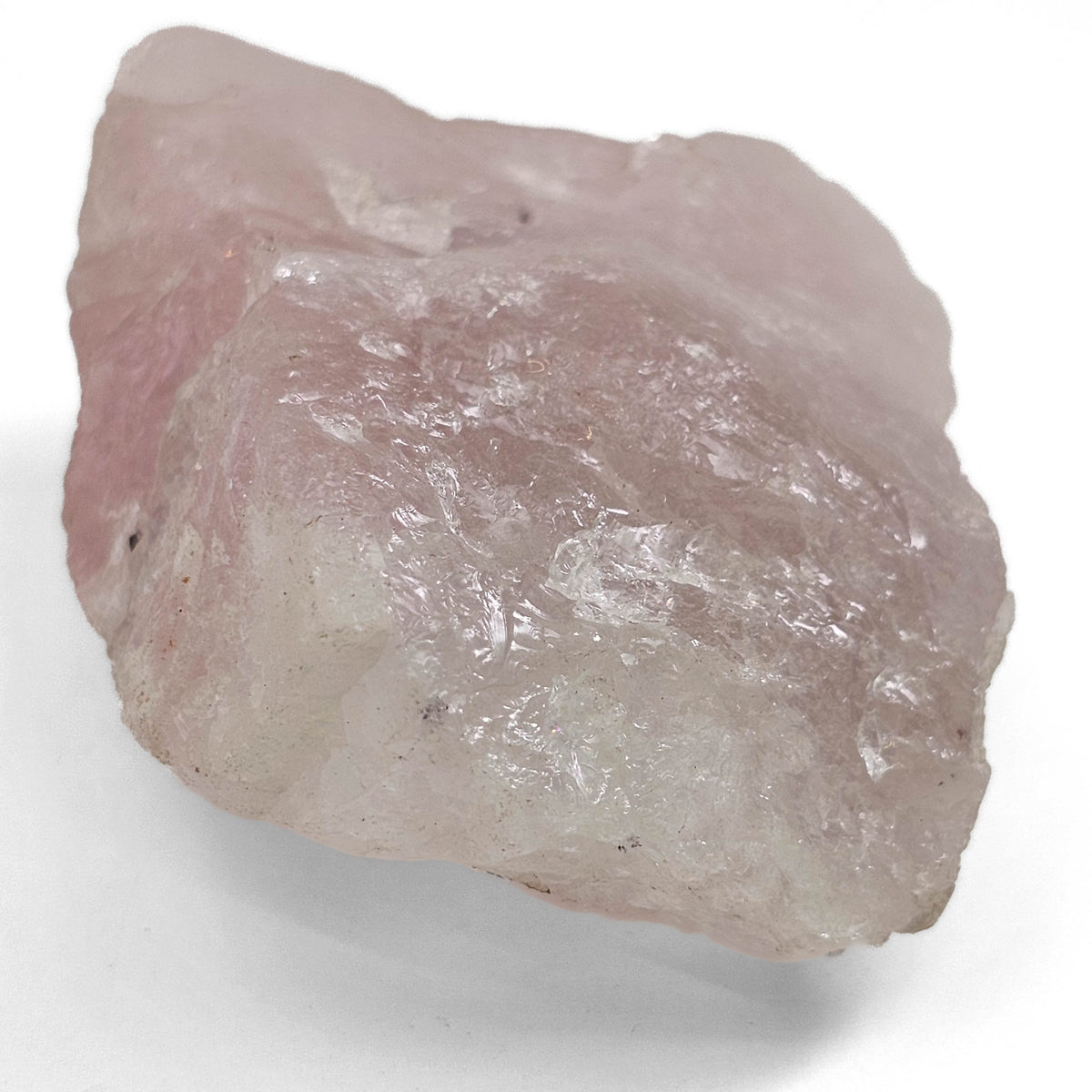
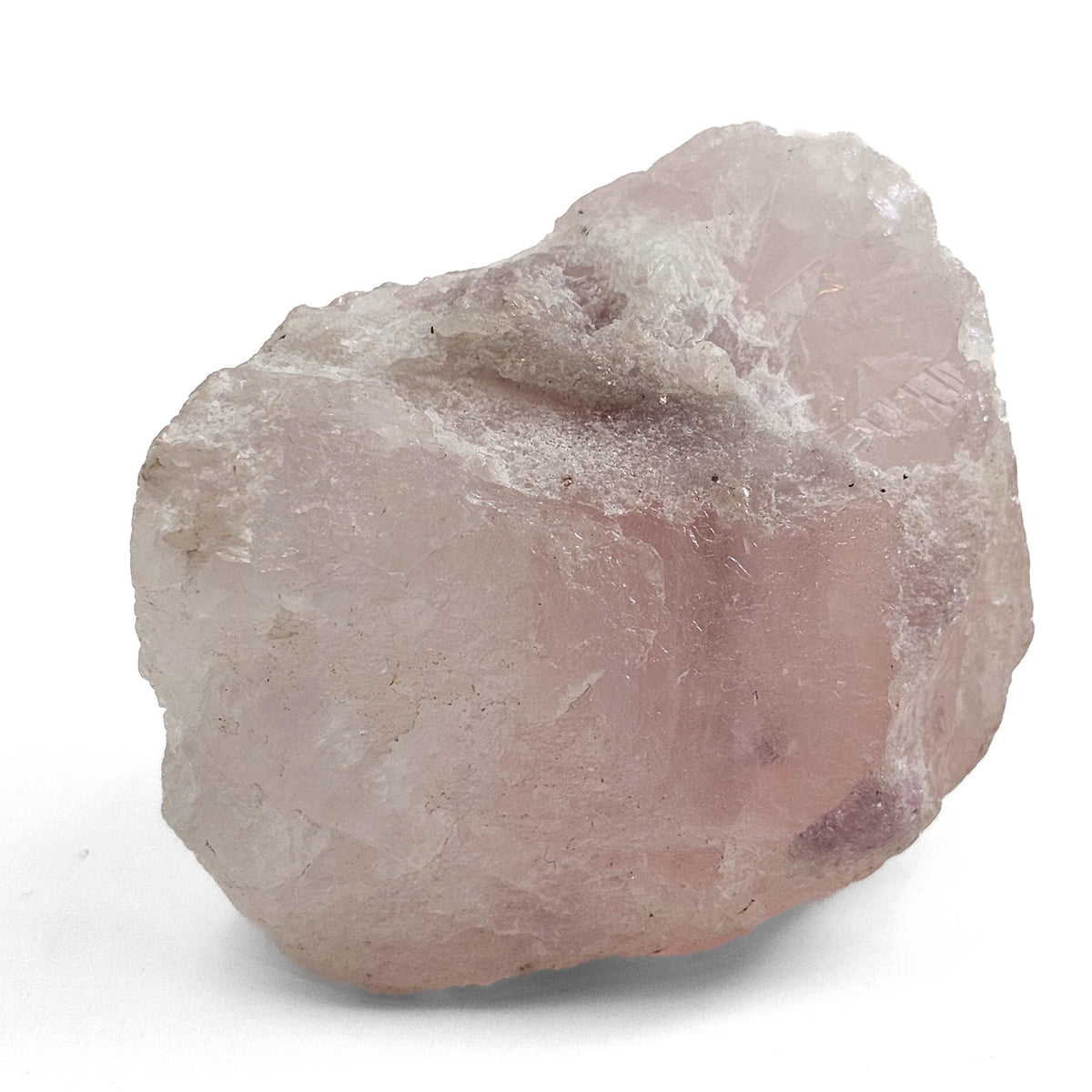
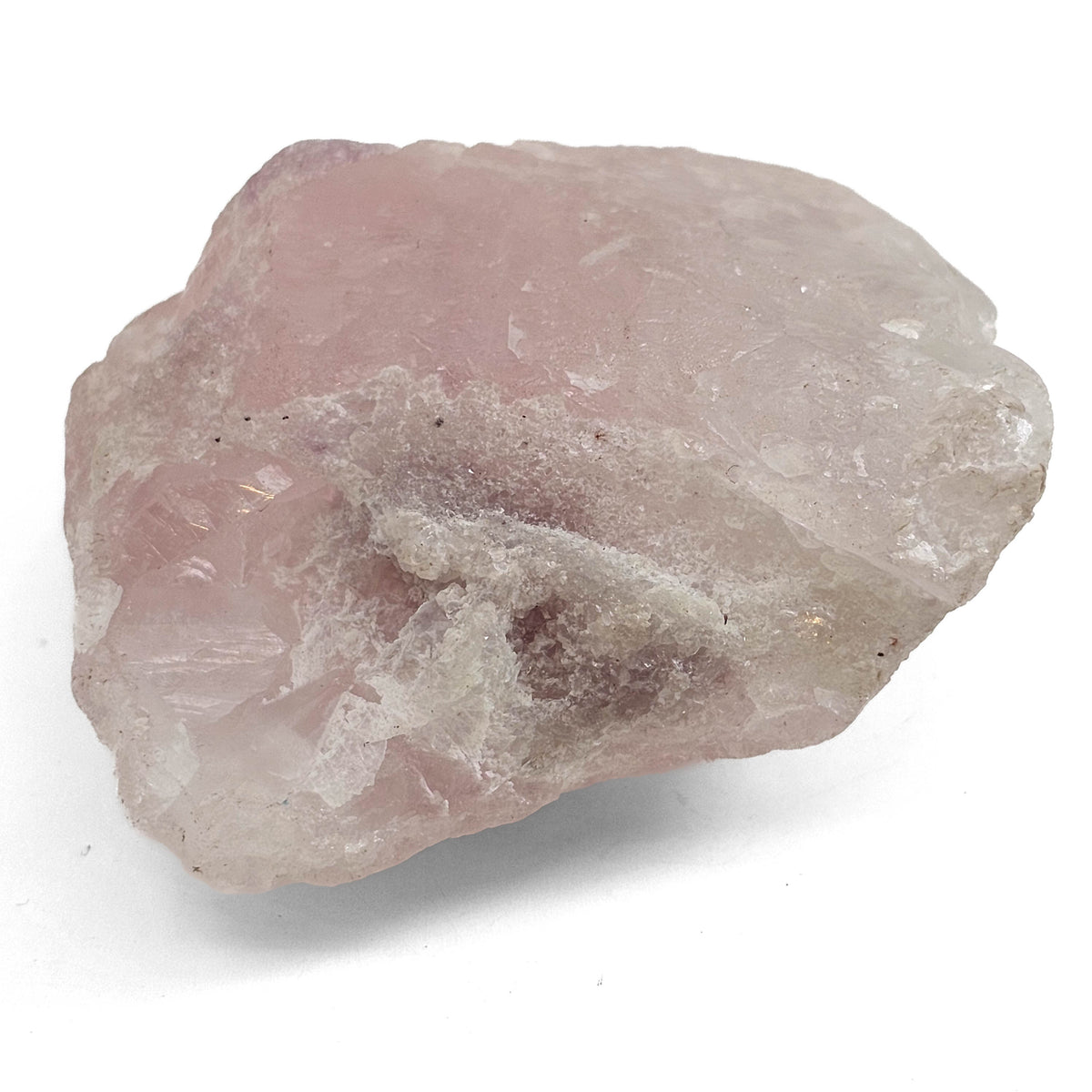
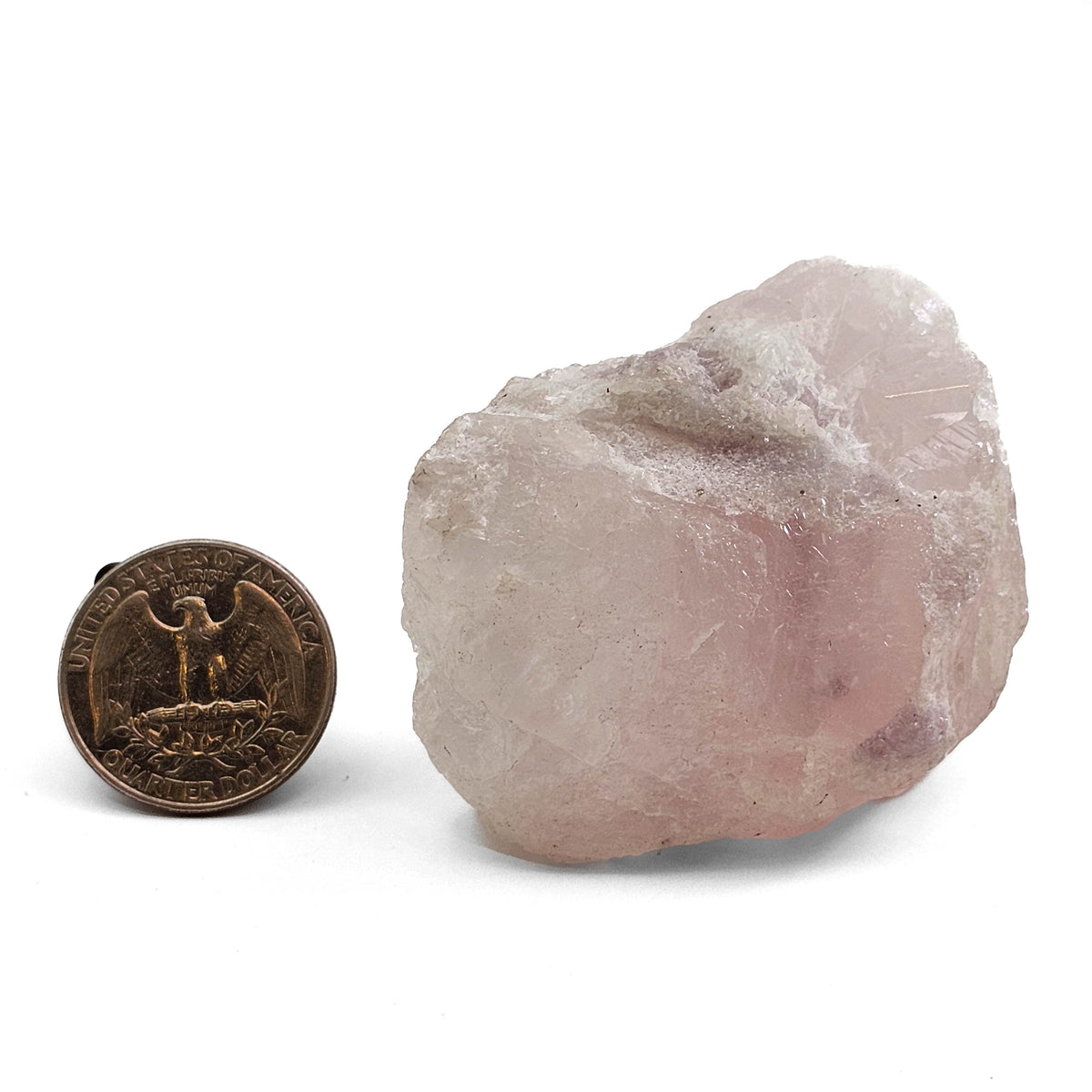
This one of a kind morganite specimen from Afghanistan shows the soft pink color that makes morganite stand out from other members of the beryl family. The piece has a broad, chunky form with pale blush to peach-pink areas, mixed with white sections and naturally broken surfaces. Instead of sharp gemmy transparency, this specimen has a more solid and sculptural look, with internal veils, cleavage-like breaks, and uneven etched faces that give it a raw pegmatite character.
Morganite forms in granitic pegmatites, which are coarse-grained igneous bodies known for producing large crystals and rare-element minerals. Its pink color comes from trace manganese in the crystal structure. Afghan pegmatites are well known for yielding beryl varieties, including aquamarine and morganite, often in association with quartz, feldspar, and mica. On a specimen like this, the rough surfaces and broken crystal sections reflect both the natural growth environment and the stress these large pegmatite crystals often undergo during formation and extraction.
Metaphysically, morganite is often associated with gentleness, emotional healing, and calm communication. Many people are drawn to it for its softer energy, seeing it as a stone connected with compassion, patience, and steadier forms of love rather than intensity.
Quantity: 1pc
With this product, you will get the actual stone in the photograph.