




Specifications
Description
Mined from: Haut-Katanga or Lualaba copper belt region. Congo
Barite is barium sulfate, BaSO4. Its name comes from the Greek for weight, because it is unusually heavy for a non-metallic mineral, with a density of about 4.5. It is soft, at 3 to 3.5 on the Mohs scale, and has a vitreous to resinous, sometimes pearly lustre.
Barite commonly forms well-shaped crystals, with more than 70 crystal forms recorded, usually as thin to thick tablets or prisms, and sometimes as crested or rosette-like clusters. It can be colourless, white, yellow, brown, grey or pale red, green or blue, and is often colour-zoned. It typically grows in low-temperature hydrothermal veins.
The Central African Copperbelt, which runs across the Democratic Republic of the Congo and Zambia, is the world's largest sedimentary copper district and holds the world's largest cobalt reserves. Its ores lie in Neoproterozoic sedimentary rocks of the Katangan Supergroup, roughly 880 to 600 million years old, which were laid down in a series of rift basins.
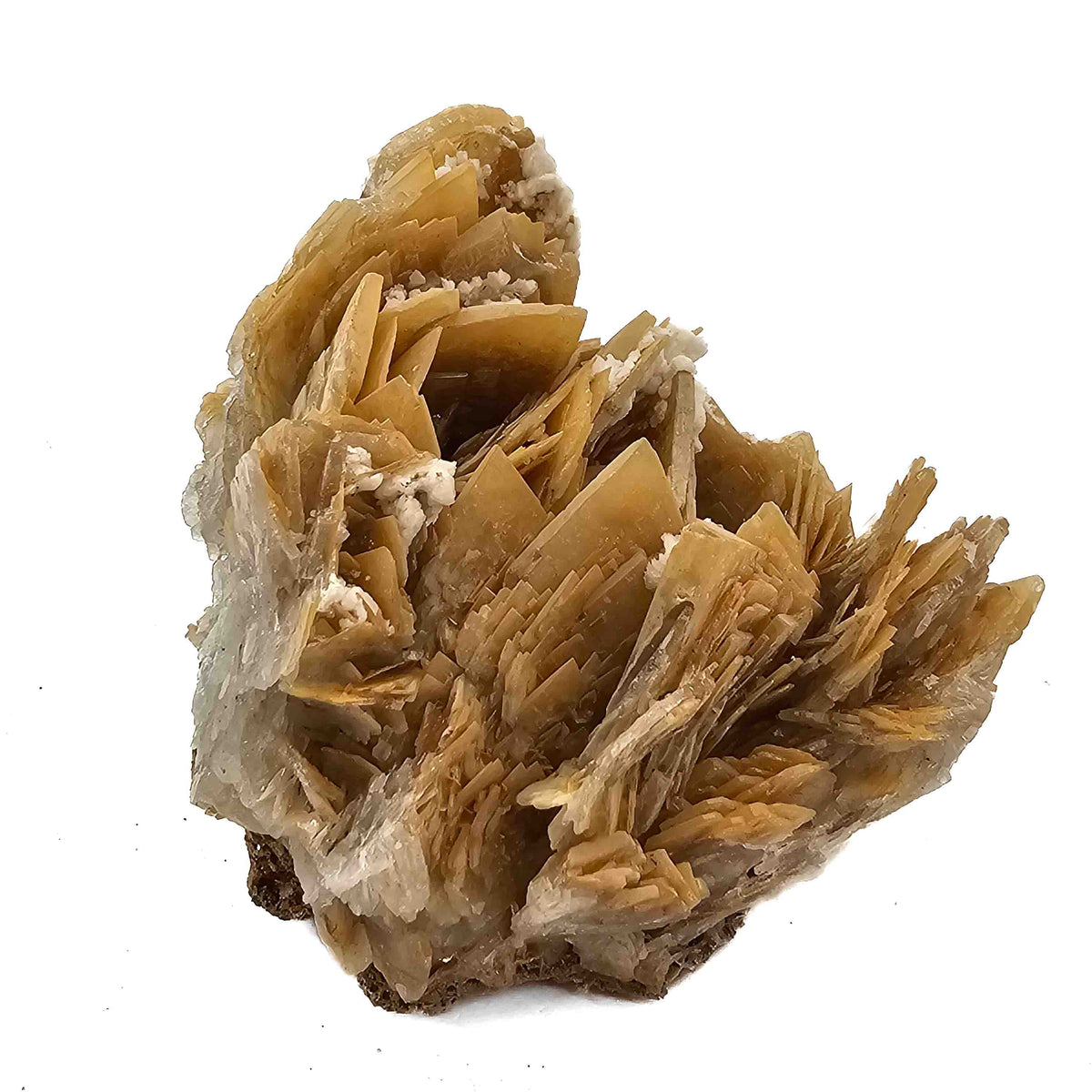
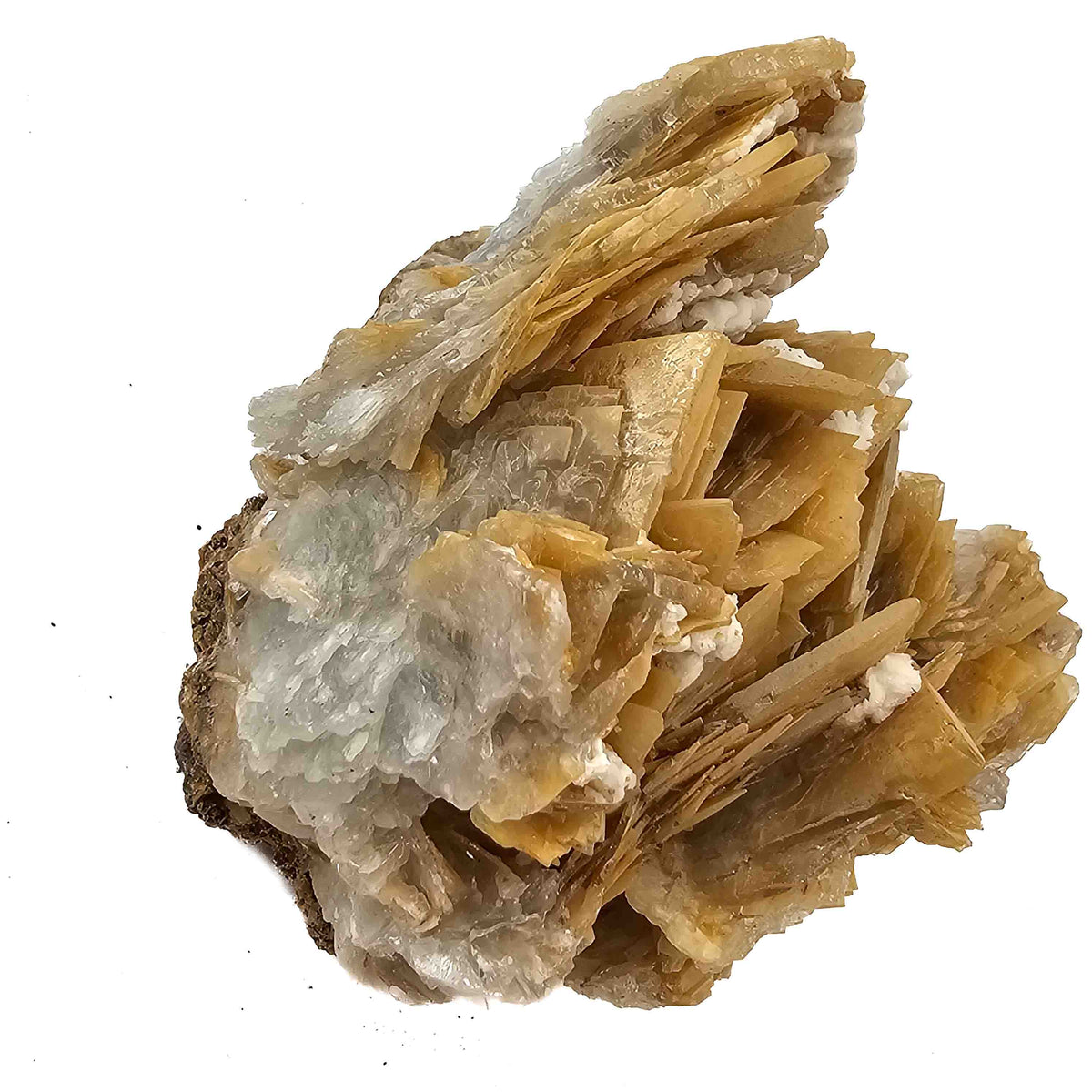
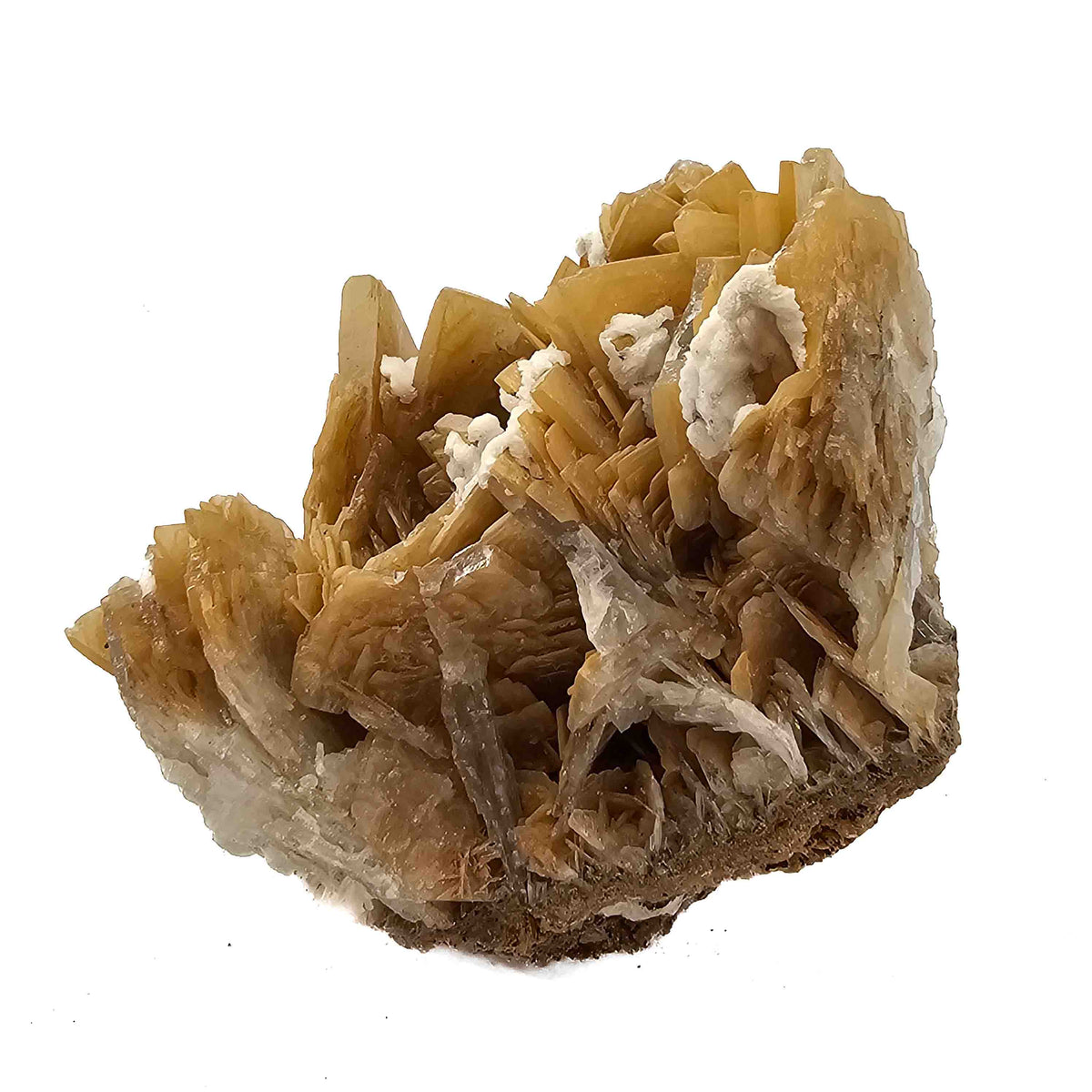
This one of a kind Barite mineral specimen from the Congo features a dense, sculptural cluster of warm honey-gold and cream-toned Barite crystals. The specimen shows dramatic bladed and tabular crystal growth, with many thin, layered plates forming fan-like sprays and stacked “cockscomb” formations across the surface. Small white botryoidal to druzy mineral accents sit between the golden Barite blades, adding contrast and giving the piece a highly dimensional, textured look.
Barite, also known as Baryte, is a barium sulfate mineral recognized for its unusually heavy weight and attractive crystal forms. Its name comes from the Greek word barys, meaning “heavy,” due to its high specific gravity. Barite commonly forms in hydrothermal veins, sedimentary environments, and mineral-rich cavities, often alongside quartz, calcite, fluorite, sulfides, and iron-rich matrix. Congolese Barite specimens are generally associated with the mineral-rich Katanga / Copperbelt region, an area known for producing unusual and visually striking mineral specimens.
Spiritually, Barite is often associated with grounding, calm focus, clarity, and energetic alignment. Many collectors connect it with dream work, emotional balance, and clearing heavy or stagnant energy. Its warm golden coloration and layered crystal structure give it a steady, grounding presence while still feeling bright and uplifting as a display piece.
Chemical Composition: BaSO4
Quantity: 1pc
With this product, you will get the actual stone in the photograph.