




Specifications
Descrizione
Locality: Madagascar
Era: Cenozoic
Geological Age: Pleistocene to Holocene; dated shell fragments are mostly about 6,200 to 1,300 years old, and elephant birds died out within a few centuries after that, roughly 1,000 years ago
Elephant birds were giant flightless birds that lived only on Madagascar. Their eggs are the largest known from any species, even larger than dinosaur eggs. Whole eggs are rare, but eggshell fragments are relatively common and litter ancient nesting sites around Madagascar's coast.
The shell fragments are also a record of time. A 2023 study in Nature Communications radiocarbon-dated 21 elephant bird eggshells. The dates ran from about 6,190 to 1,290 years ago, and the birds probably died out within a few centuries after the youngest date.
People and elephant birds shared Madagascar for a long time. A 2018 study in Science Advances described cut marks on elephant bird bones dated to more than 10,000 years ago. This suggests people hunted the birds for thousands of years before they disappeared.
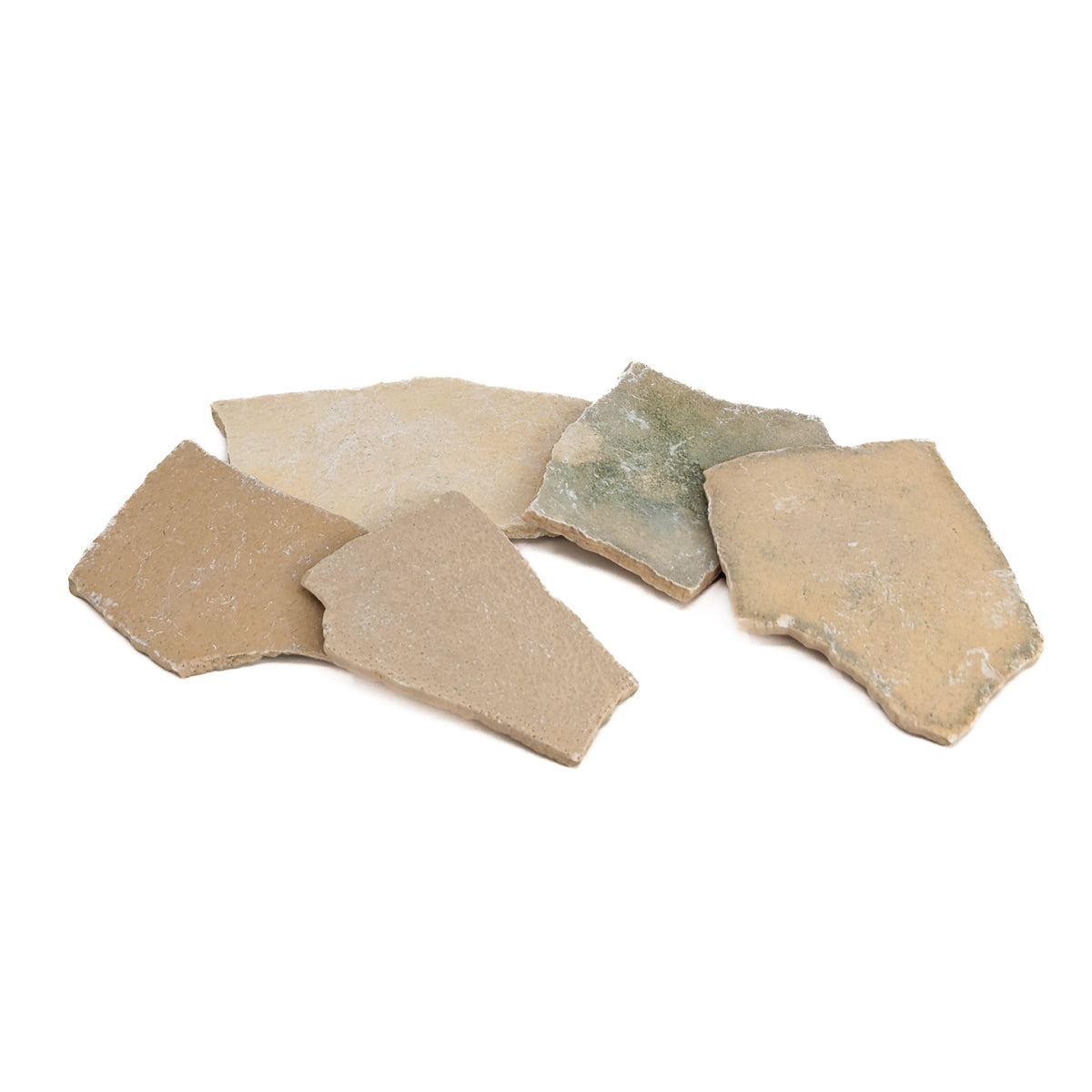
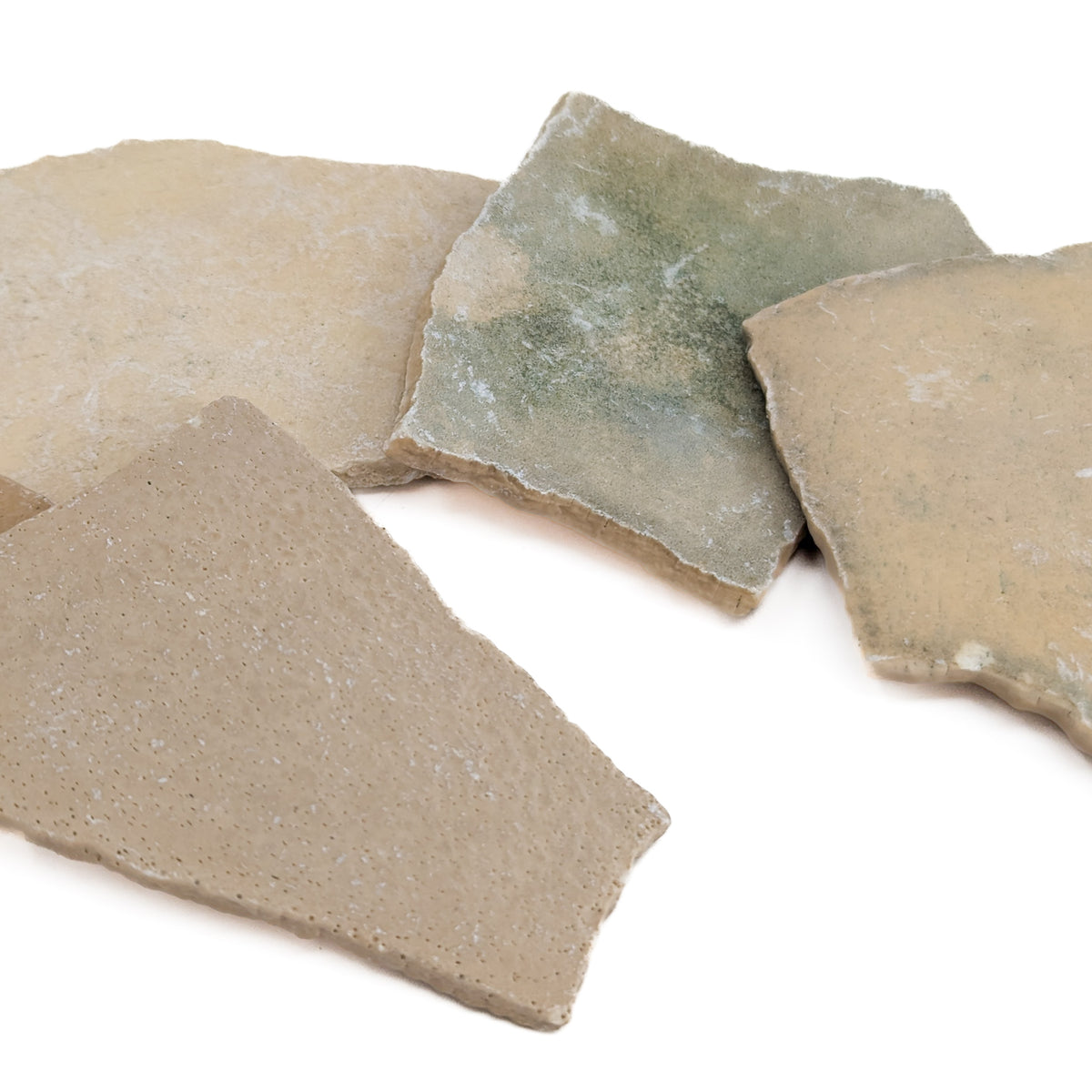
Each fragment is a curved piece of shell about 3 to 4 mm thick. Sizes are listed below.
This Elephant Bird eggshell fragment from Madagascar is an awe-inspiring relic of one of the largest birds to ever walk the Earth—Aepyornis, the extinct Elephant Bird. These massive, flightless birds lived during the Cenozoic Era, known from the Pleistocene until their extinction roughly 1,000 years ago. Once roaming the forests of Madagascar, an adult Aepyornis could stand about 3 meters tall and lay eggs with the volume of about 150 chicken eggs.
These fragments are often all that remain of the species, which likely went extinct due to a combination of habitat loss and human activity. Each piece is unique, with its own curvature, surface texture, and mineral staining. Though technically sub-fossilized rather than fully petrified, these shells still possess impressive durability and historical importance.
Small
Approximate Size of 1 piece: 45mm x 35mm x 3mm
Approximate Weight of 1 piece: 10g
Large
Approximate Size of 1 piece: 70mm x 45mm x 4mm
Approximate Weight of 1 piece: 25g
Quantity: 1pc
We do our best to buy quality products- although not every rock is the same. If you choose to purchase the "staff pick option", we will select the best of the batch for you. Otherwise, it will be at random from the larger batch we have in stock.