




Specifications
Descrizione
Locality: Khouribga, Morocco
Era: Cretaceous
Geological Age: Late Cretaceous (Maastrichtian), about 72–66 million years ago
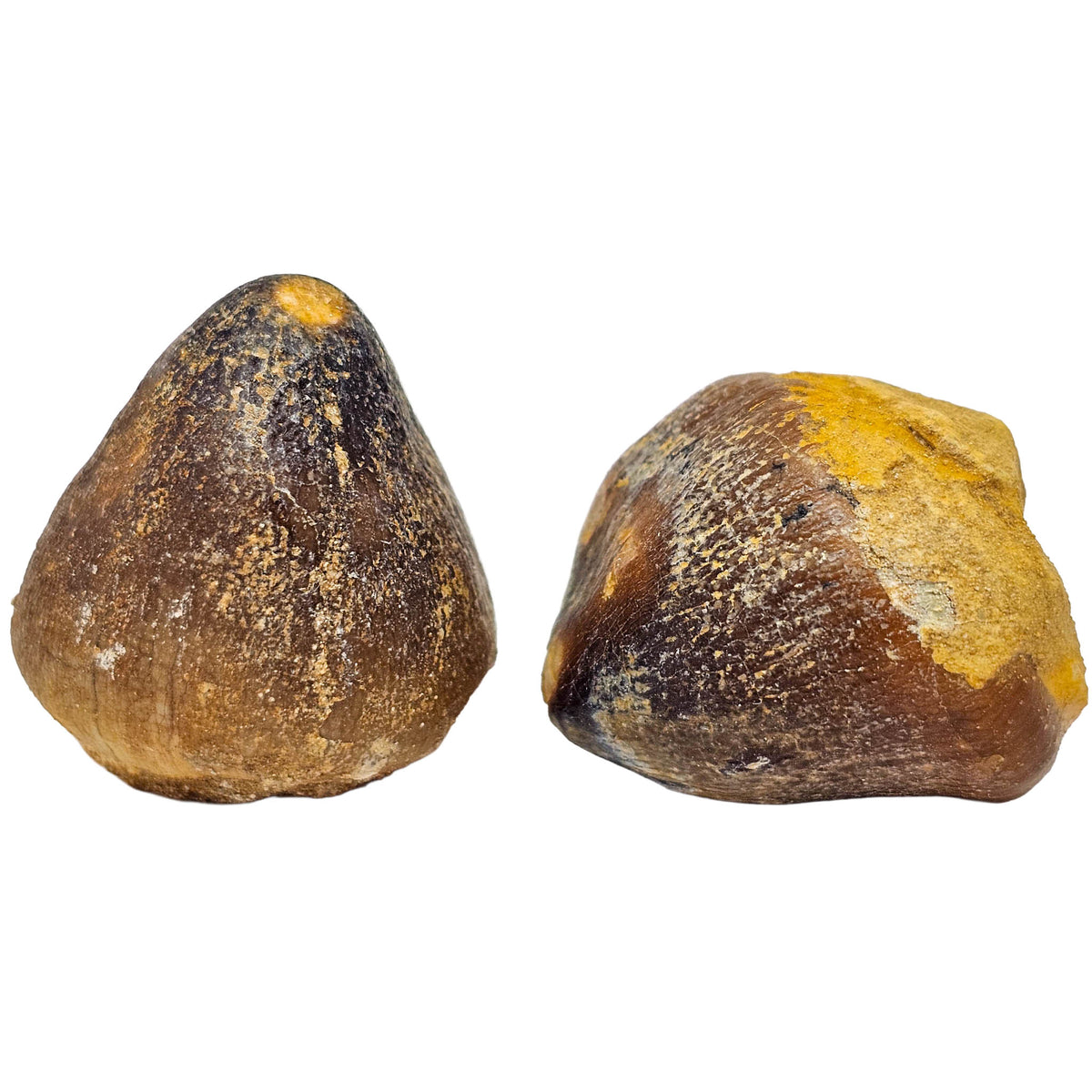
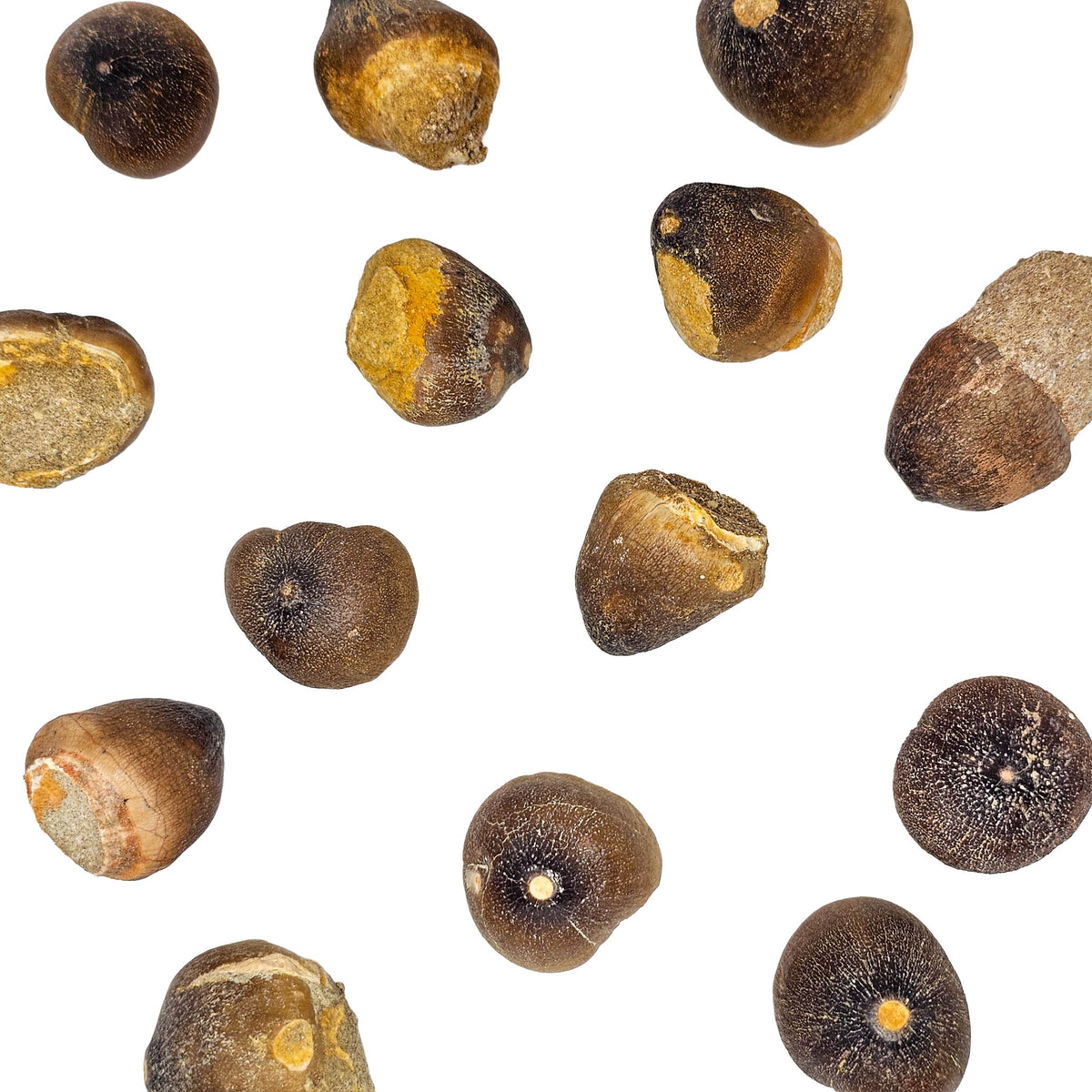
Description: Globidens means "globe tooth". Most mosasaurs, the big marine reptiles of the Late Cretaceous seas, had sharp cone-shaped teeth, but Globidens had rounded, bulbous teeth for crushing hard-shelled prey on the sea floor. A 2019 study of a partial skull from Morocco found dense, compact ribs and jaw features that fit a diet of shelled bottom-dwelling animals.
These teeth come from the phosphate beds around Khouribga in Morocco's Oulad Abdoun Basin. The phosphates there date from the Maastrichtian, the last stage of the Cretaceous before the mass extinction, and the Maastrichtian layer near Khouribga is only a few metres thick. Morocco's phosphates have yielded a wide range of mosasaurs, sharks and rays.
Globidens phosphaticus, described in 2005 from Moroccan phosphates, takes its name from these deposits.
These are rounded crushing teeth, about 34 mm across.
Approximate Size of 1 piece: 34mm x 34mm x 30mm
Approximate Weight of 1 piece: 28g
Quantity: 1pc
We do our best to buy quality products- although not every rock is the same. If you choose to purchase the "staff pick option", we will select the best of the batch for you. Otherwise, it will be at random from the larger batch we have in stock.