




Specifications
Descrizione
Locality: Hanford Site area, near Richland, Benton County, Washington, USA
Leaded glass, like lead crystal glassware, starts out clear and colourless, which is why it is widely used for windows in radiation shields. According to the Oak Ridge Associated Universities radiation museum, prolonged radiation exposure turns ordinary leaded glass dark amber-brown. Adding a small amount of cerium prevents this darkening but gives the glass a yellowish colour.
The Hanford Site in southeastern Washington was established in 1943 as part of the Manhattan Project to produce plutonium. Its B Reactor, built by DuPont from designs tested by Enrico Fermi, was the world's first full-scale plutonium production reactor. Plutonium made there was used in the Trinity test on July 16, 1945, and in the atomic bomb dropped on Nagasaki on August 9, 1945.
Nine reactors were eventually built along the Columbia River, and Hanford produced nearly two-thirds of the plutonium used in the U.S. nuclear weapons stockpile. Since the 1989 Tri-Party Agreement between the U.S. Department of Energy, the EPA and the Washington State Department of Ecology, the site's main mission has been cleanup. Today the Hanford Site is managed by the U.S. Department of Energy as one of the largest environmental cleanup projects in the country; Energy Northwest's Columbia Generating Station, a commercial nuclear power plant, operates on land leased from DOE at the site. B Reactor has been preserved as a National Historic Landmark and is part of the Manhattan Project National Historical Park.
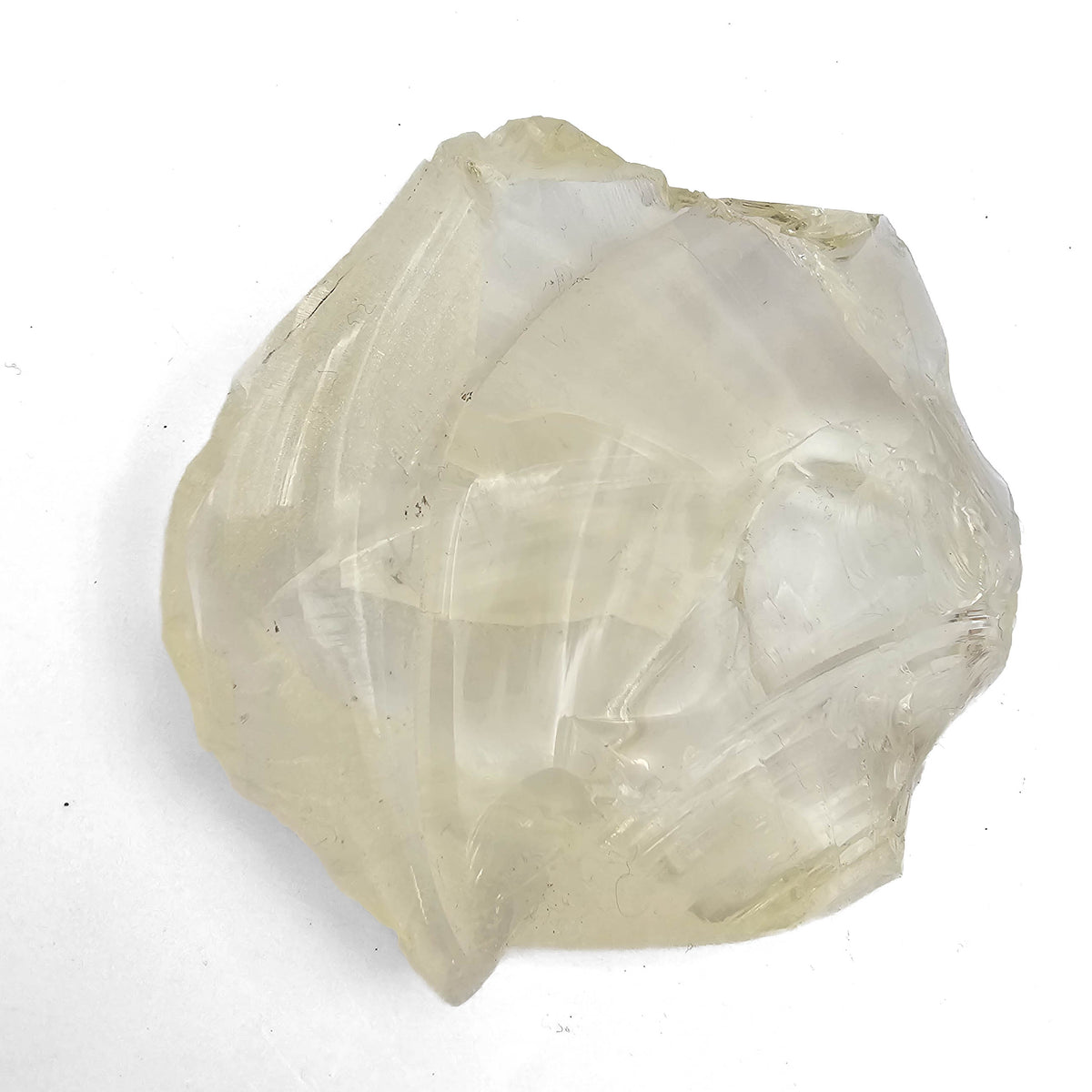
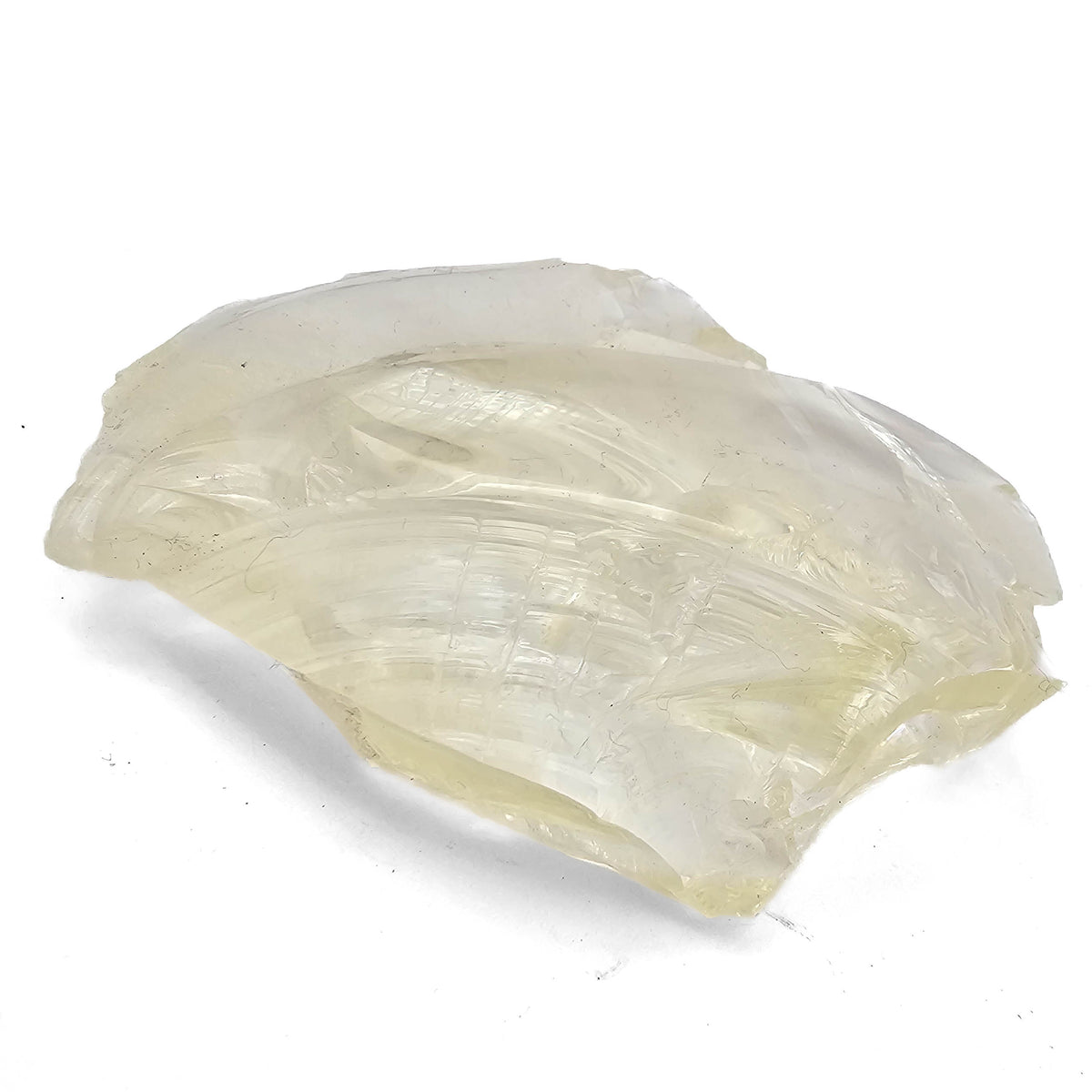
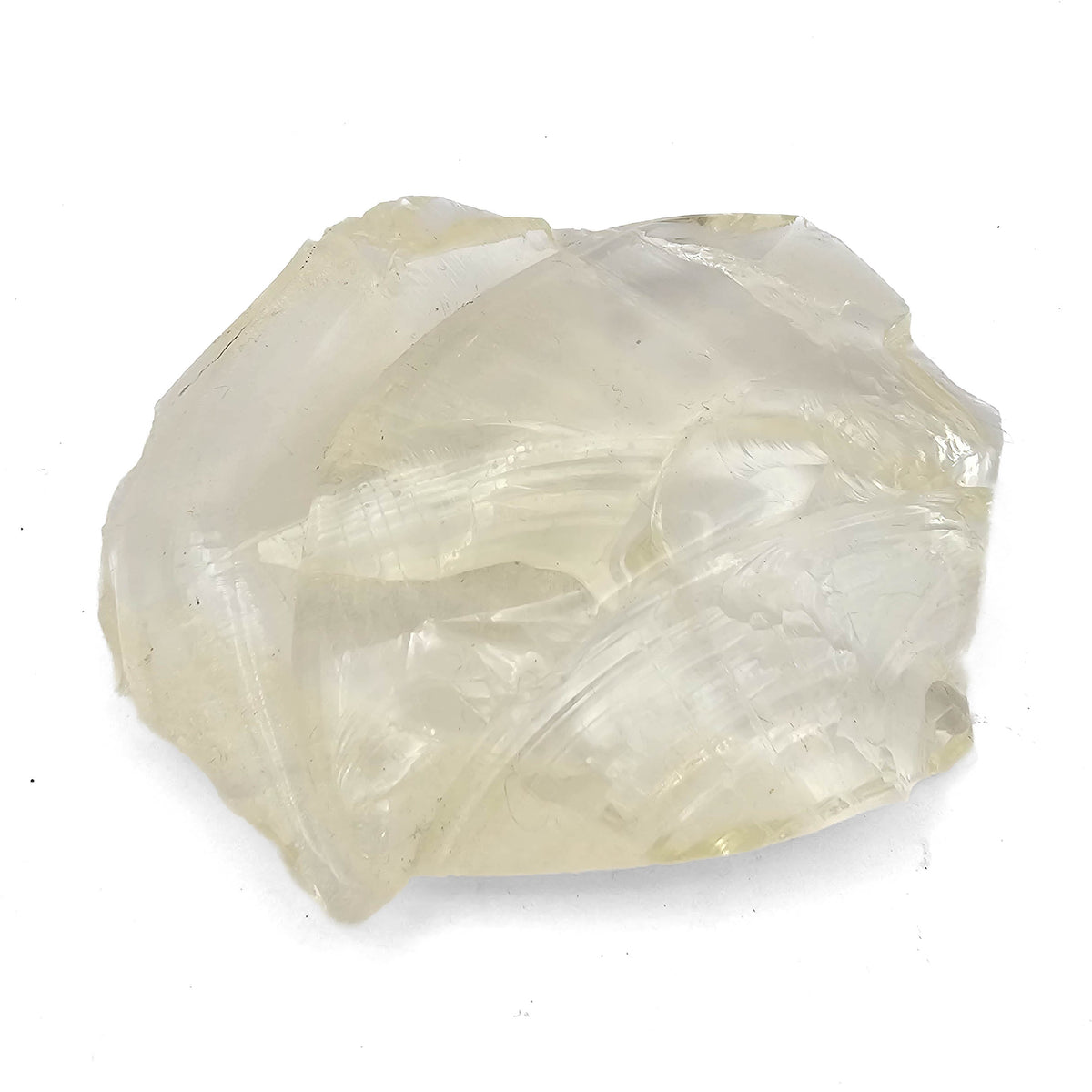
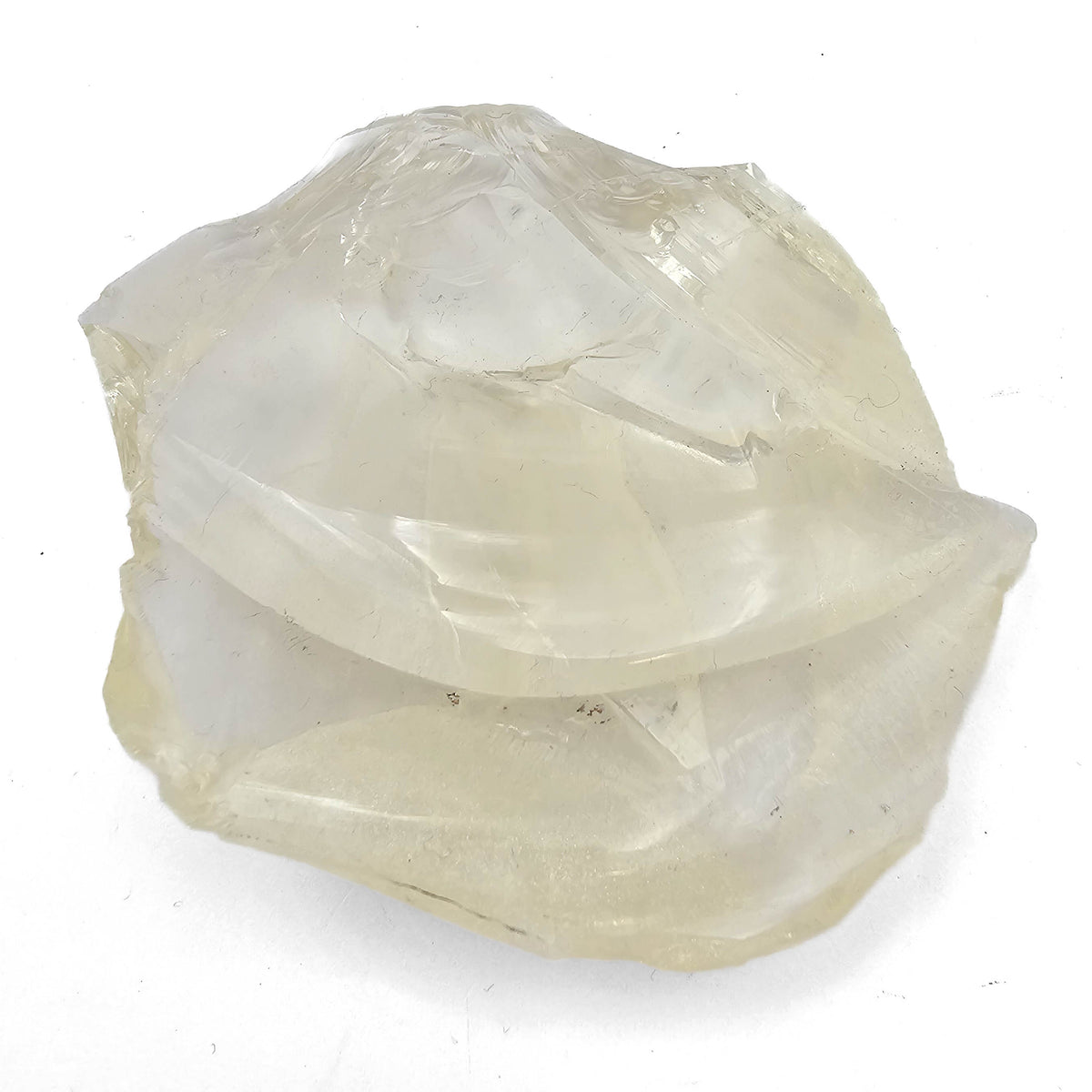
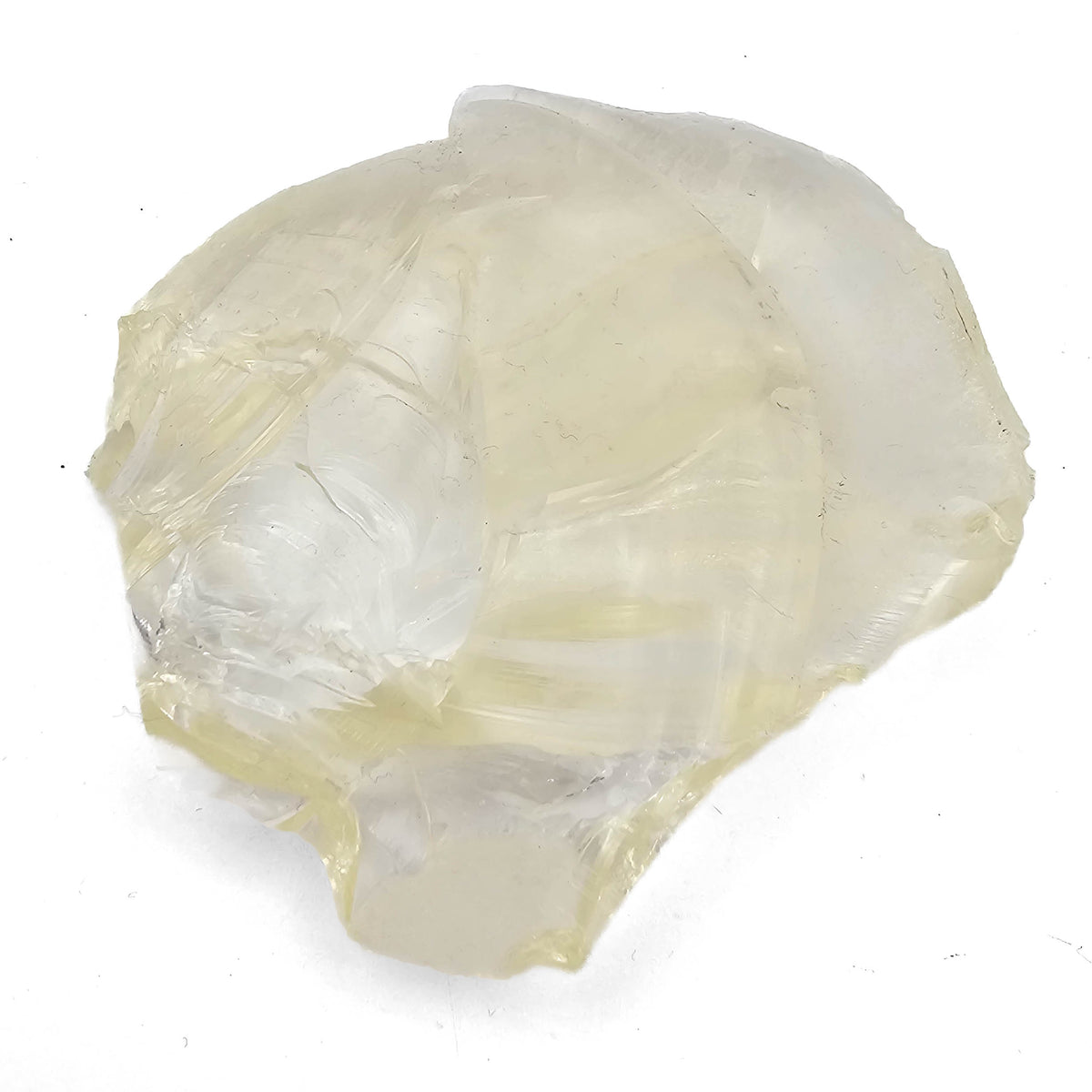
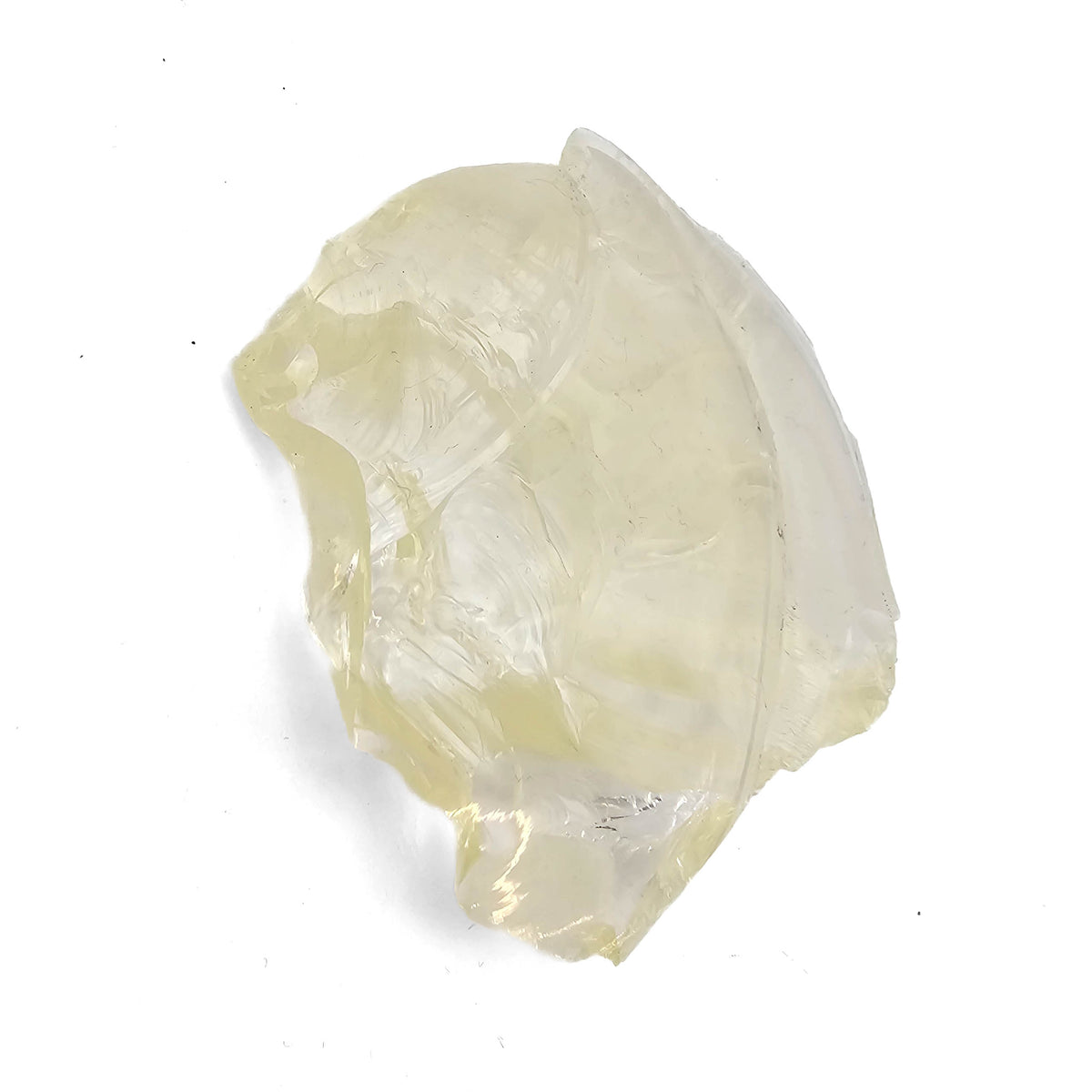
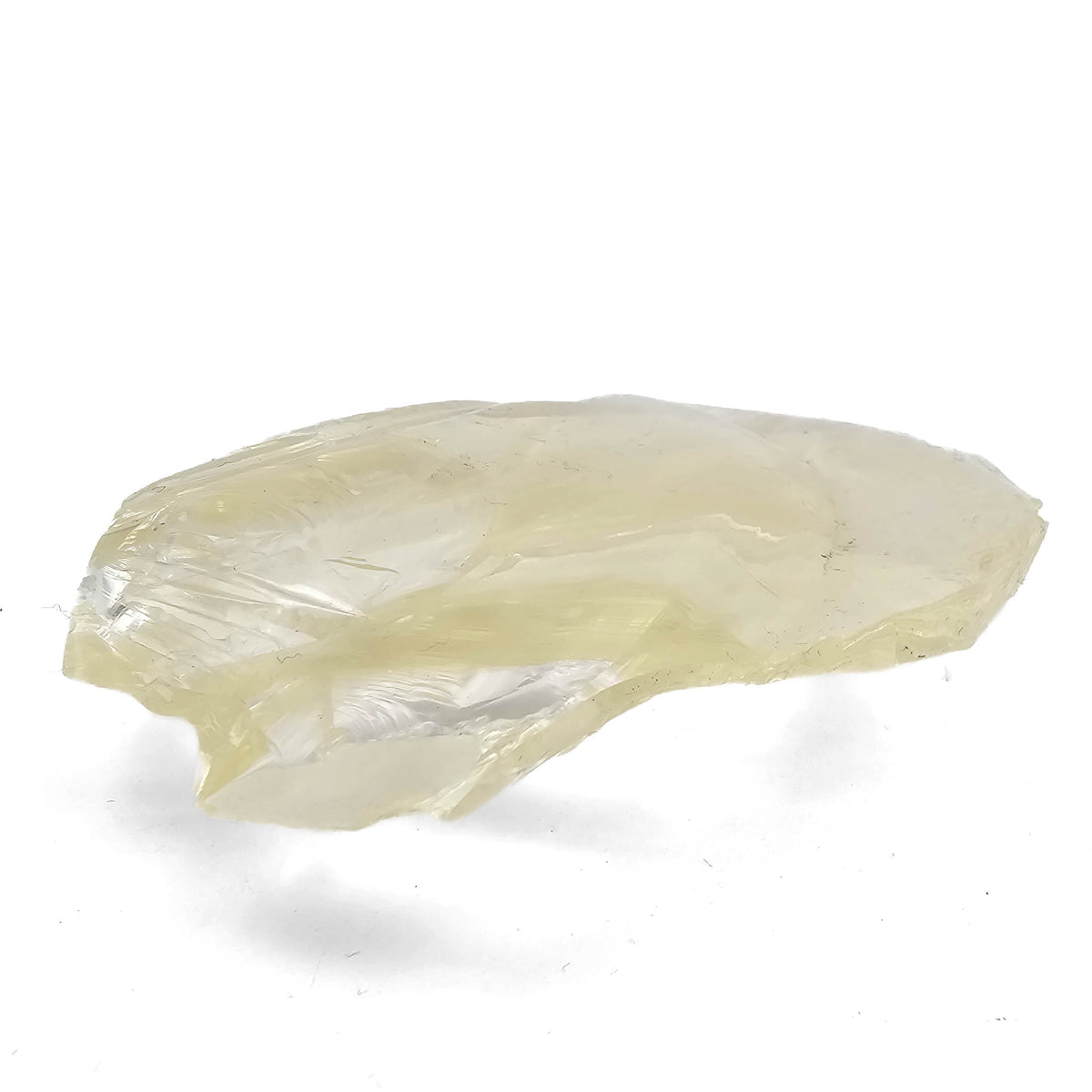
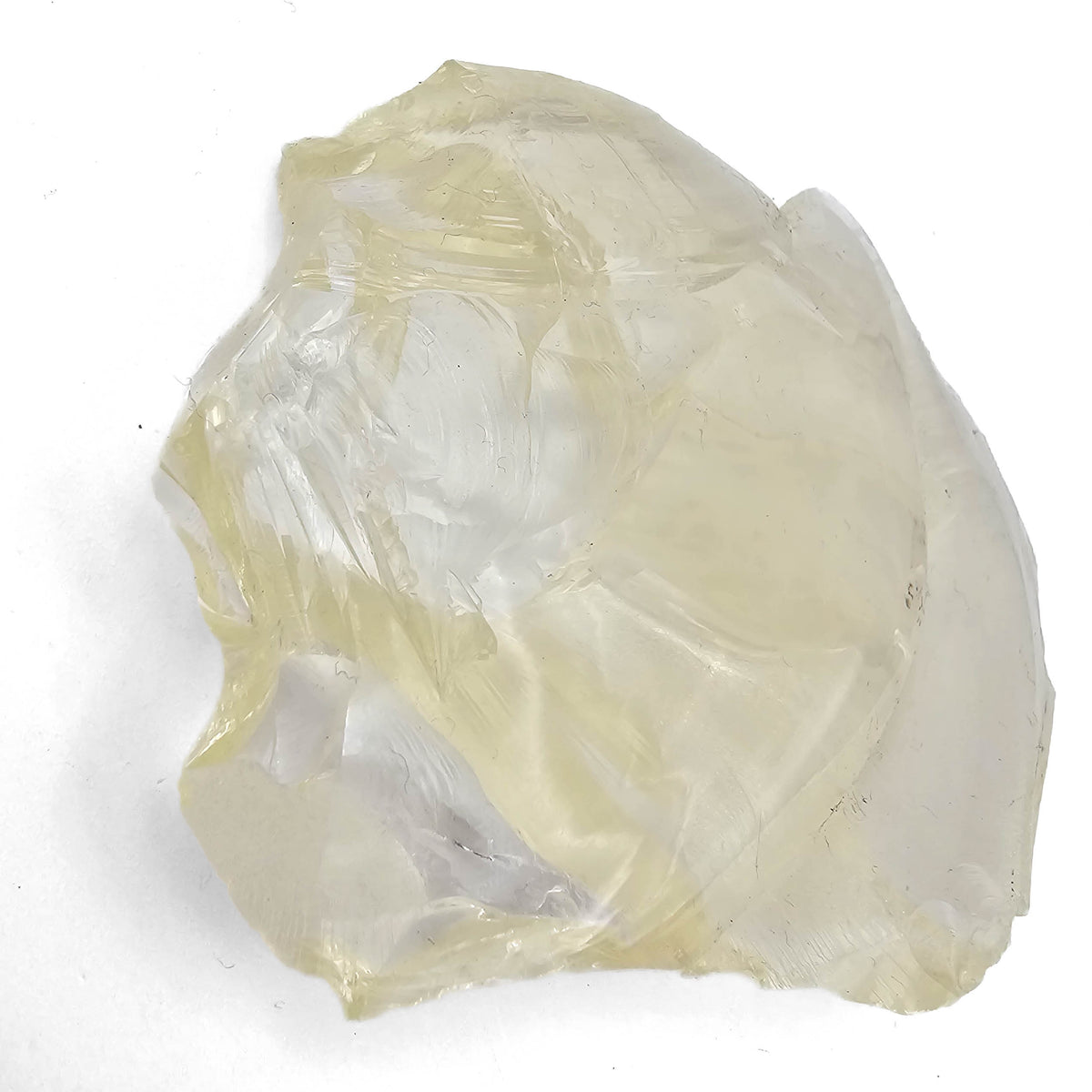
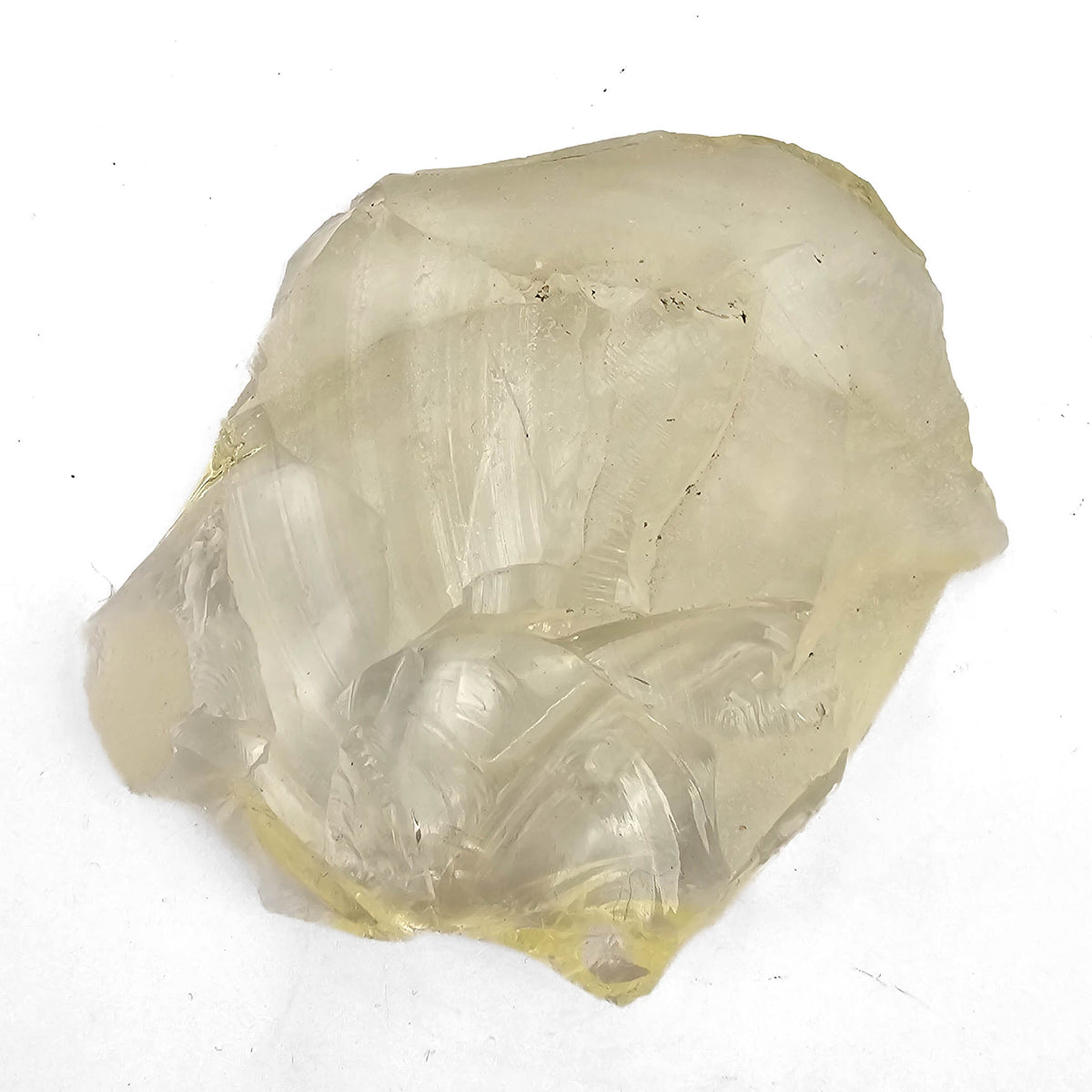
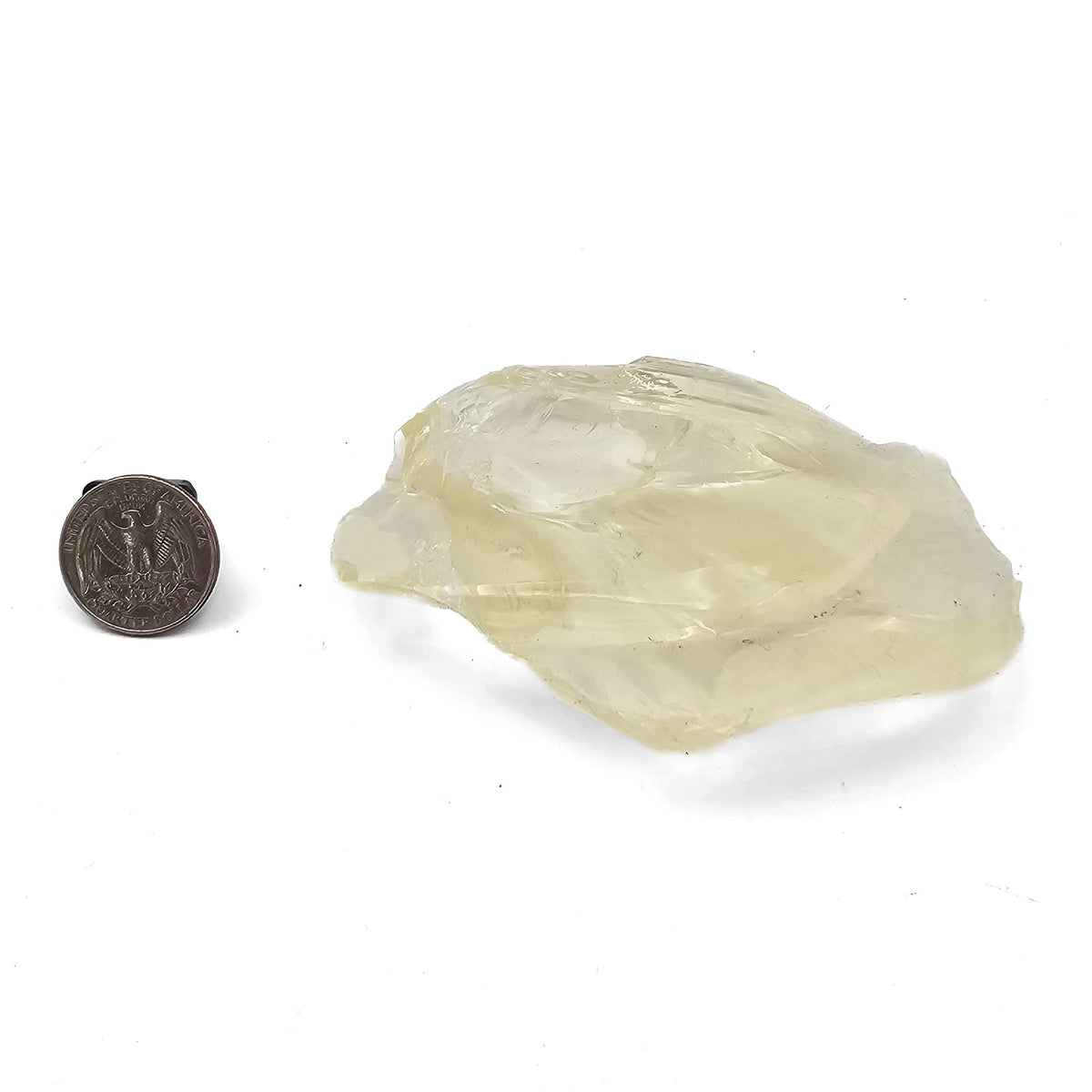
This one-of-a-kind Hanford glass specimen features a pale translucent yellow to milky white body with glossy glass-like surfaces and sweeping curved fracture patterns. The piece has a soft lemon-cream coloration, with clearer yellow edges, cloudy internal zones, and rippled conchoidal breaks that create a layered, flowing look. Fine surface lines, small inclusions, and uneven broken edges give it the appearance of a raw industrial glass fragment rather than a polished decorative piece.
Hanford glass is a man-made glass, not a naturally crystallized mineral. This unusual piece is sold as a fragment of thick leaded shielding glass from observation windows at the Hanford Site, which let workers watch radioactive materials being handled while helping block radiation. The history of an individual piece can't be independently documented.
In crystal traditions, glass is often associated with clarity, transformation, reflection, and the reshaping of energy. Some people also associate yellow stones and glass with optimism, focus and confidence. Those who follow these traditions often see glass as a fitting symbol of transformation, since it forms through heat, melting and cooling into a new state.
Contains a high level of lead oxide. Handle with care, wash your hands after handling, and keep away from children and pets. Not for jewellery or skin contact.
Quantity: 1pc
With this product, you will get the actual stone in the photograph.