





Specifications
Descrizione
Locality: Western Boyacá emerald region, Colombia (most likely the Cabiche diggings, Quípama)
The best-known source is around Cabiche in Quípama Municipality, in western Boyacá, Colombia's emerald-mining region. According to one dealer, mine owners had found these crystals earlier near the emerald mines but valued them too highly to sell. Larger finds reached the market around 2017, and the material was described in Rocks & Minerals magazine in 2019.
"Mango" quartz is a collector nickname for Colombian quartz crystals whose tips are coloured yellow to orange by dense, fibrous inclusions of halloysite, a clay mineral of the kaolinite group. The inclusions are usually concentrated in the crystal terminations, so the colour fades from clear stems to golden tips. Some of the yellow tips were first thought to be coloured by humboldtine. That mineral probably formed when specimens were cleaned with oxalic acid, and most collectors now refer to the inclusions as halloysite.
Quartz is silicon dioxide, SiO2, and halloysite is a hydrated aluminium silicate, Al2Si2O5(OH)4. Mango quartz from Cabiche has also produced rare Japan-law twins, in which two crystals join at nearly a right angle.
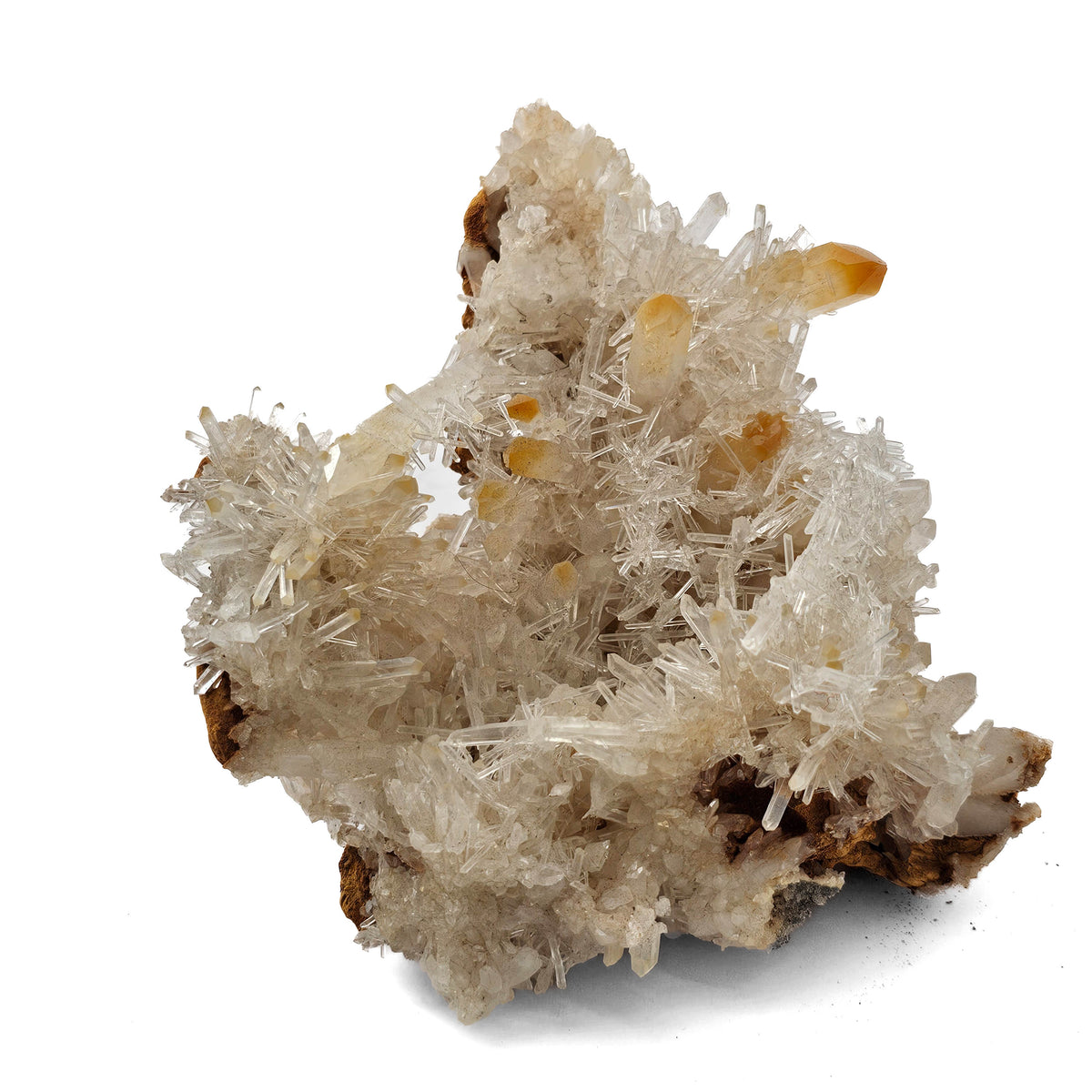
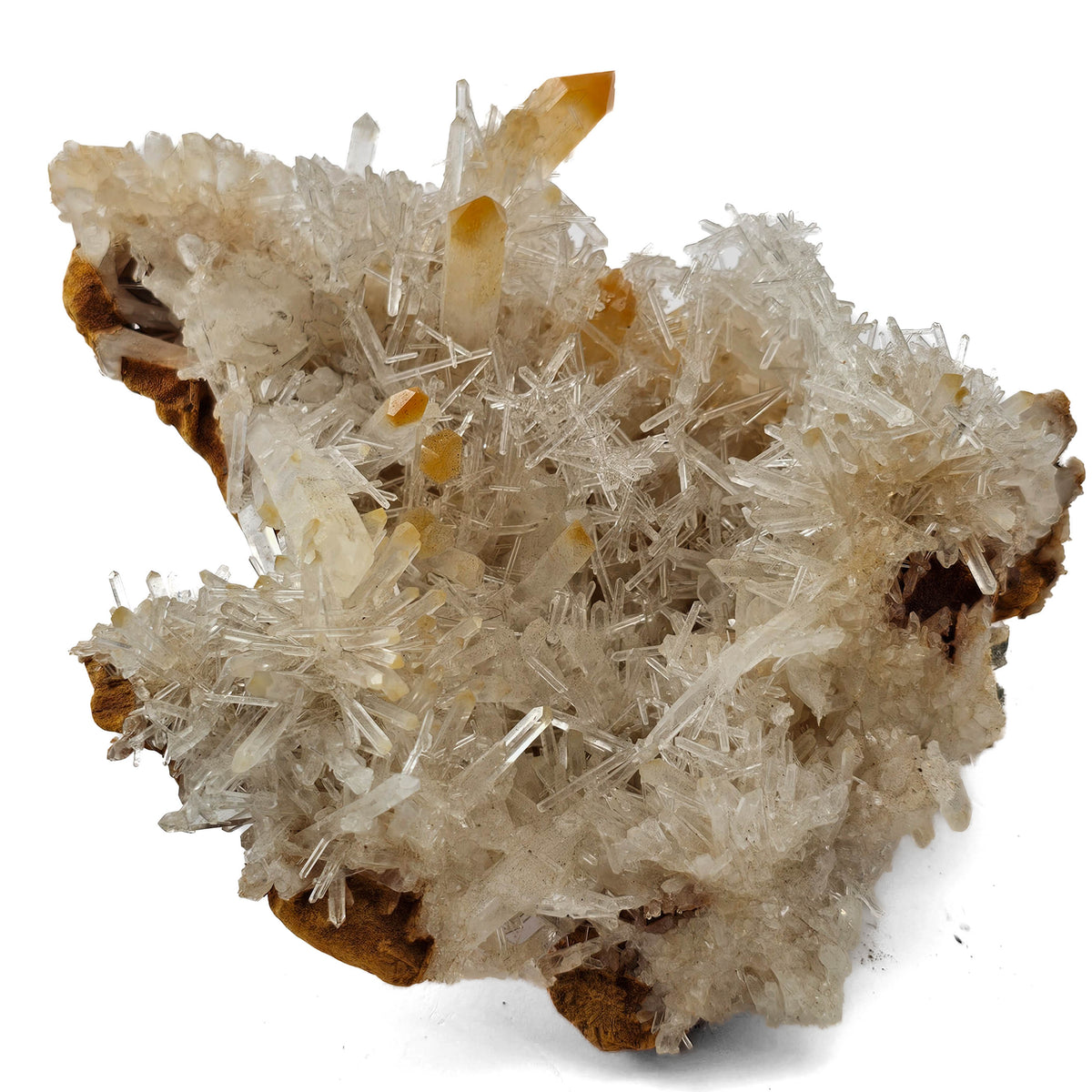
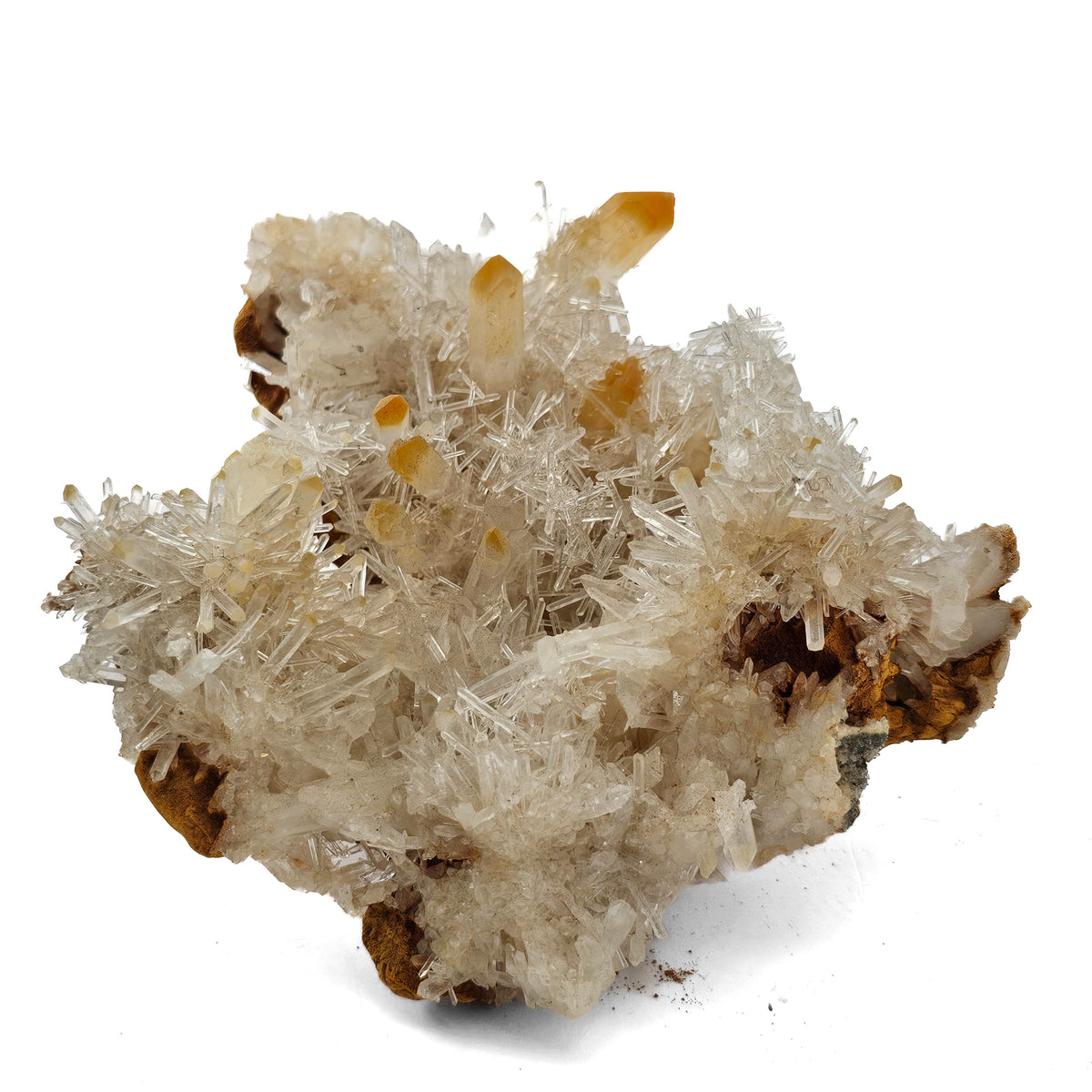
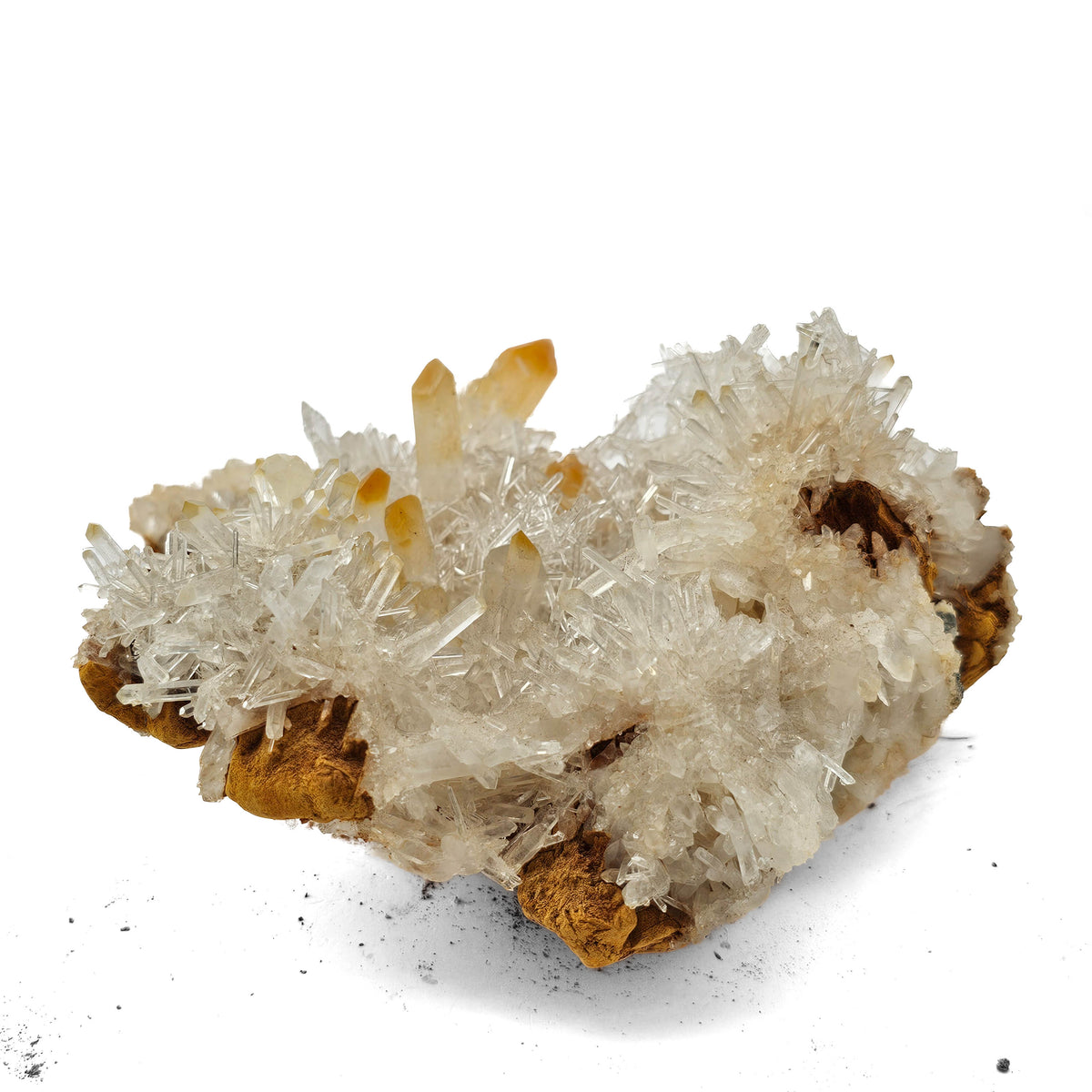
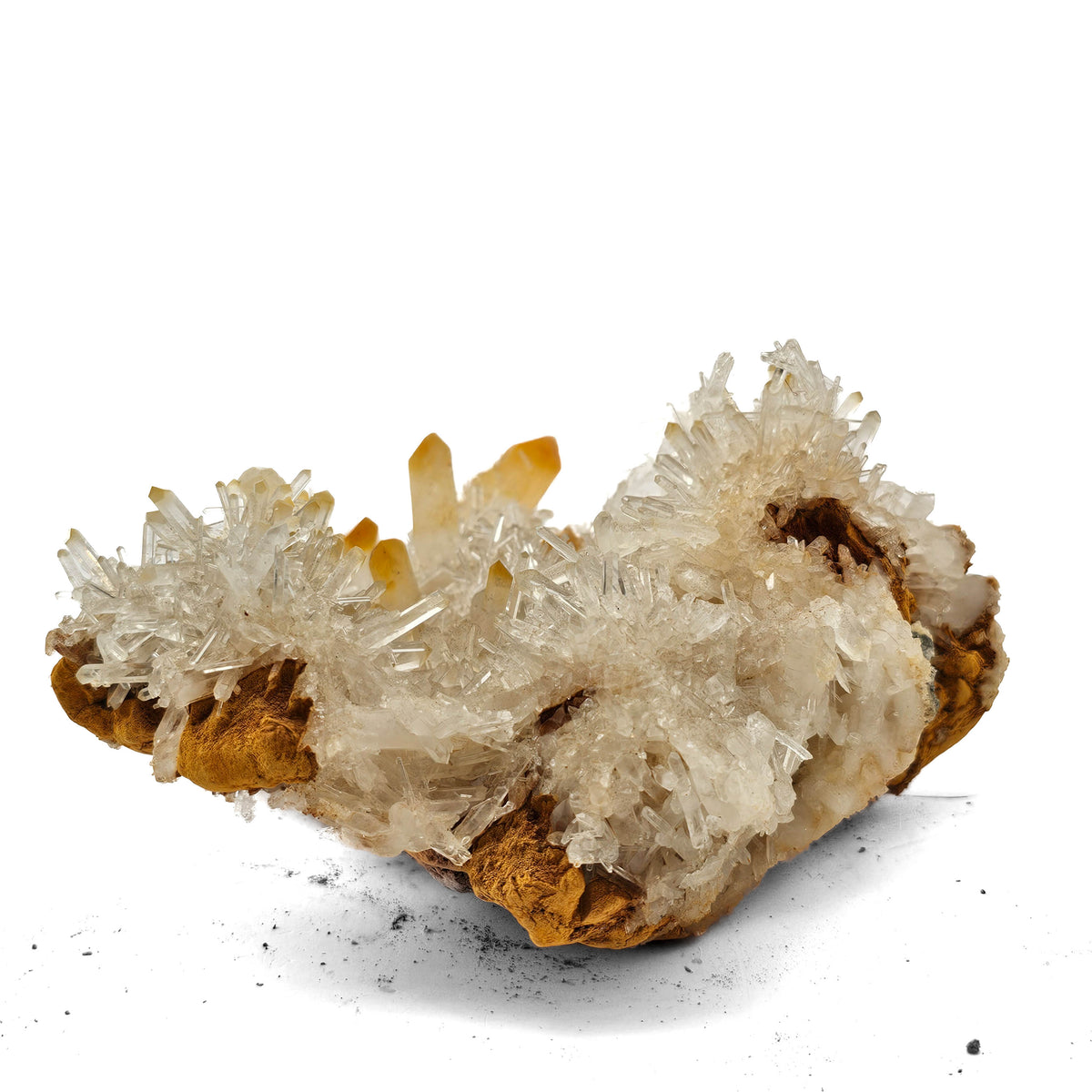
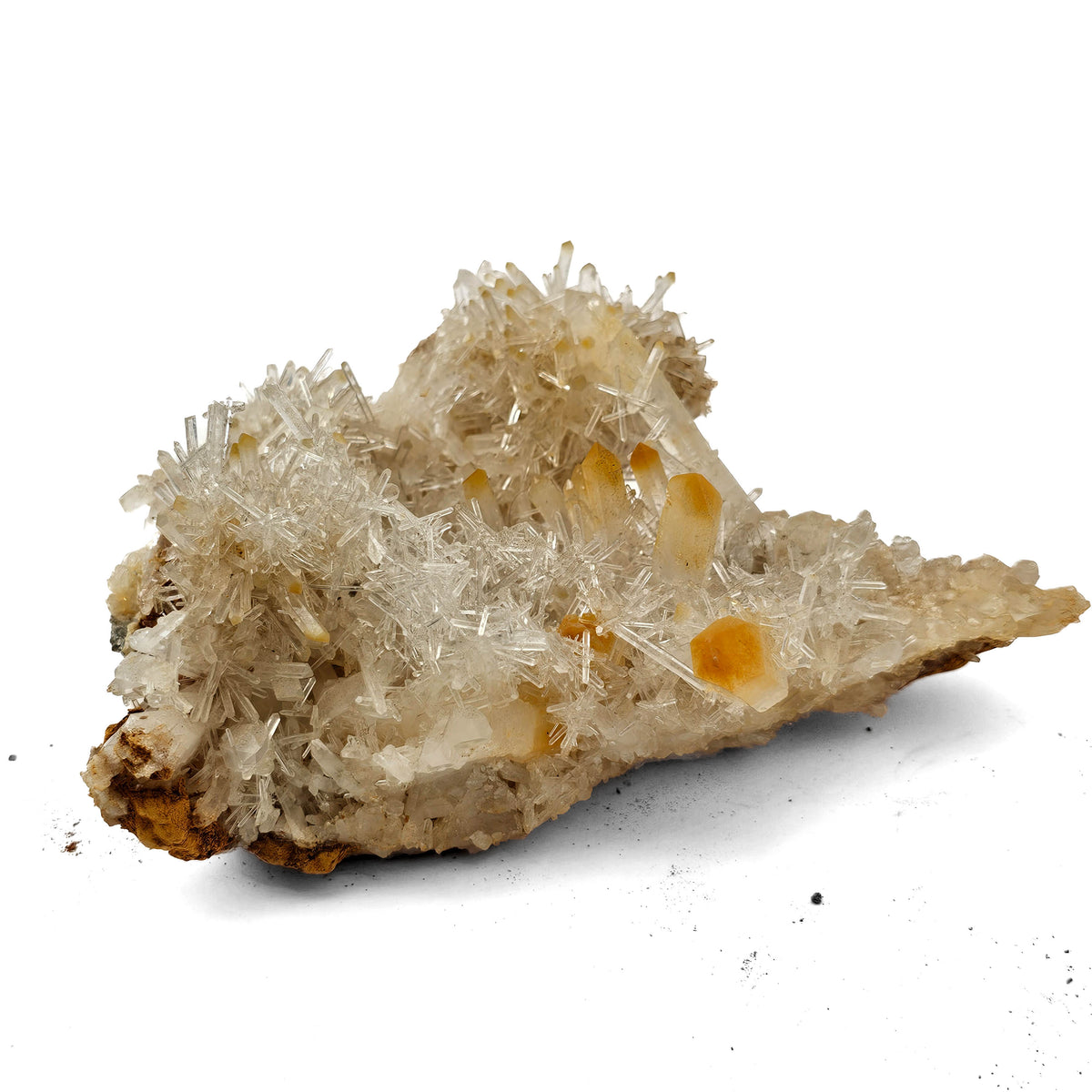
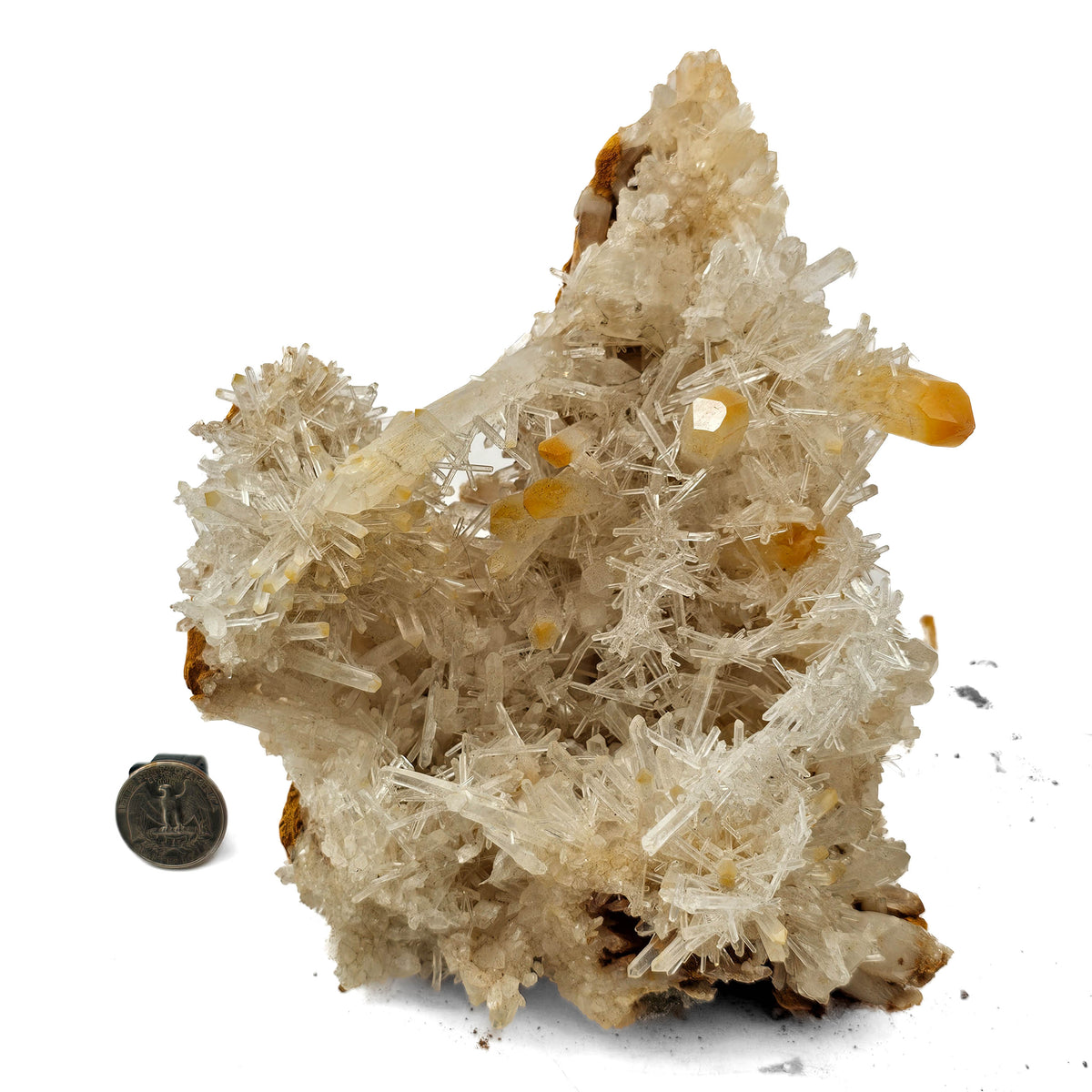
This one of a kind Mango Quartz with Halloysite mineral specimen from Colombia, features a sculptural, elevated cluster of clear to milky quartz points rising from a richly iron-stained matrix. Prominent prismatic crystals display saturated golden “mango” terminations, with several standout points projecting upward and outward. Surrounding these are dense sprays of fine, needle-like halloysite creating starburst formations across the surface, giving the piece a frosted, fibrous texture that contrasts beautifully with the glassy luster of the quartz. The specimen shows strong dimensionality with multiple crystal tiers and natural cavities throughout.
Quartz forms in a wide variety of geological settings, particularly in hydrothermal veins where silica-rich fluids crystallize over time. The “mango” coloration is typically caused by iron oxide staining or inclusions, giving the quartz its warm yellow-orange tips. Halloysite, a hydrated aluminum silicate clay mineral, commonly develops as microscopic tubes but occasionally appears in visible acicular or fibrous aggregates as seen here. Colombia, especially regions like Boyacá, is known for producing distinctive quartz specimens associated with iron-rich environments and hydrothermal mineralization.
In metaphysical traditions, quartz is considered a master amplifier, believed to enhance clarity, focus, and the flow of energy. Mango quartz is often associated with joy, creativity, and personal vitality due to its warm coloration, while halloysite is thought to carry grounding and stabilizing energy. Together, this combination is commonly seen as balancing—stimulating inspiration while maintaining emotional steadiness and connection to the earth.
Chemical Composition: SiO2
Quantity: 1pc
With this product, you will get the actual stone in the photograph.