




Specifications
Descrizione
Locality: Keweenaw Peninsula / Lake Superior Copper District, Michigan, U.S.A.
Native copper is the metal itself, Cu, formed in nature. It is highly malleable and ductile, with a hardness of 2.5 to 3 and a density of about 8.9. Its name comes from the Latin cuprum, from the Greek for Cyprus, the island where the metal was produced early on.
The Keweenaw copper formed after the North American continent began to split apart about 1.1 billion years ago along the Midcontinent Rift, when huge volumes of lava poured out. The copper fills the porous tops of the basalt flows and the conglomerate beds between them, and it is about 97% pure. Native peoples first mined copper here about 7,000 years ago, and copper artifacts from the peninsula were traded as far south as present-day Alabama. Industrial mining picked up in the 1840s, and the last mines closed in 1996.
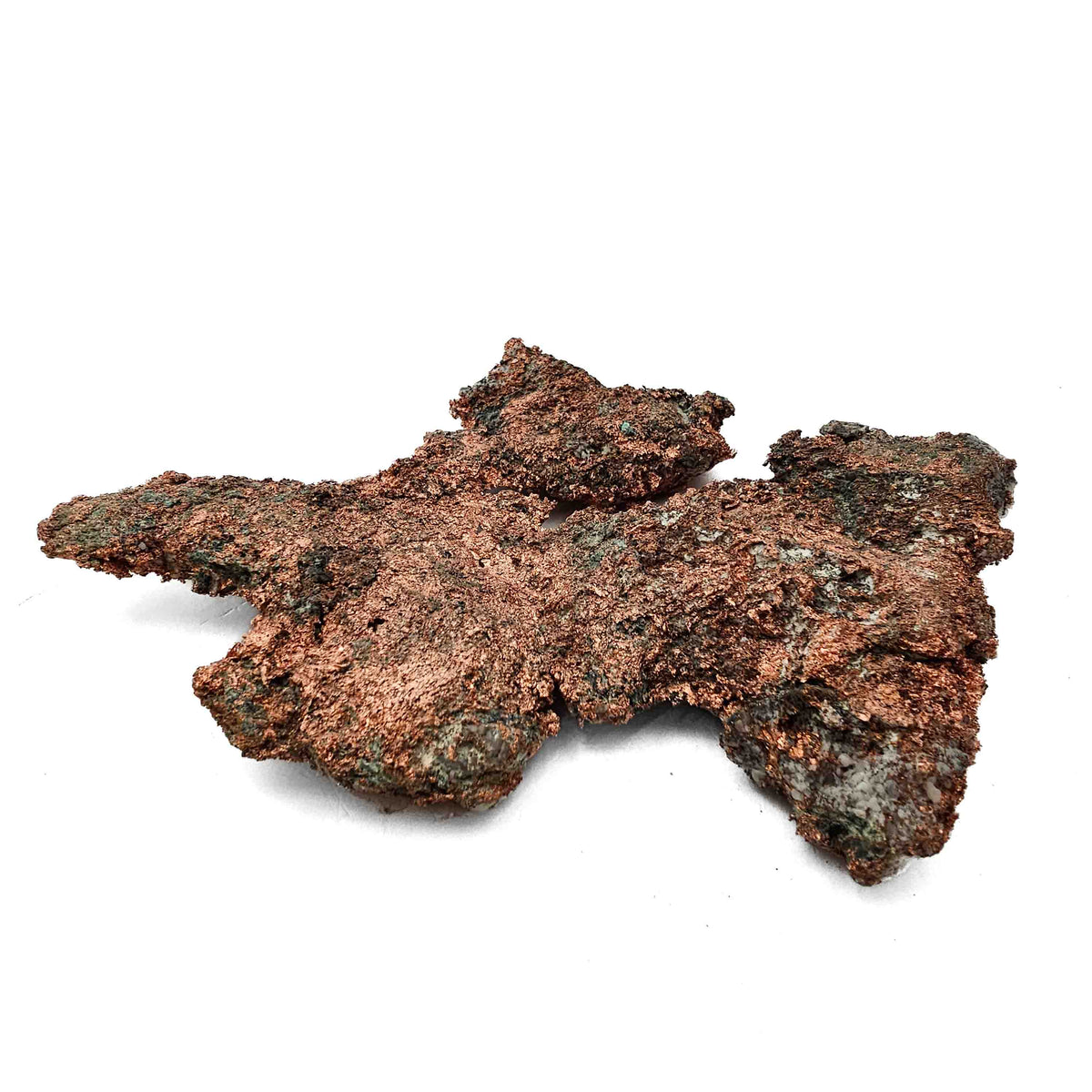
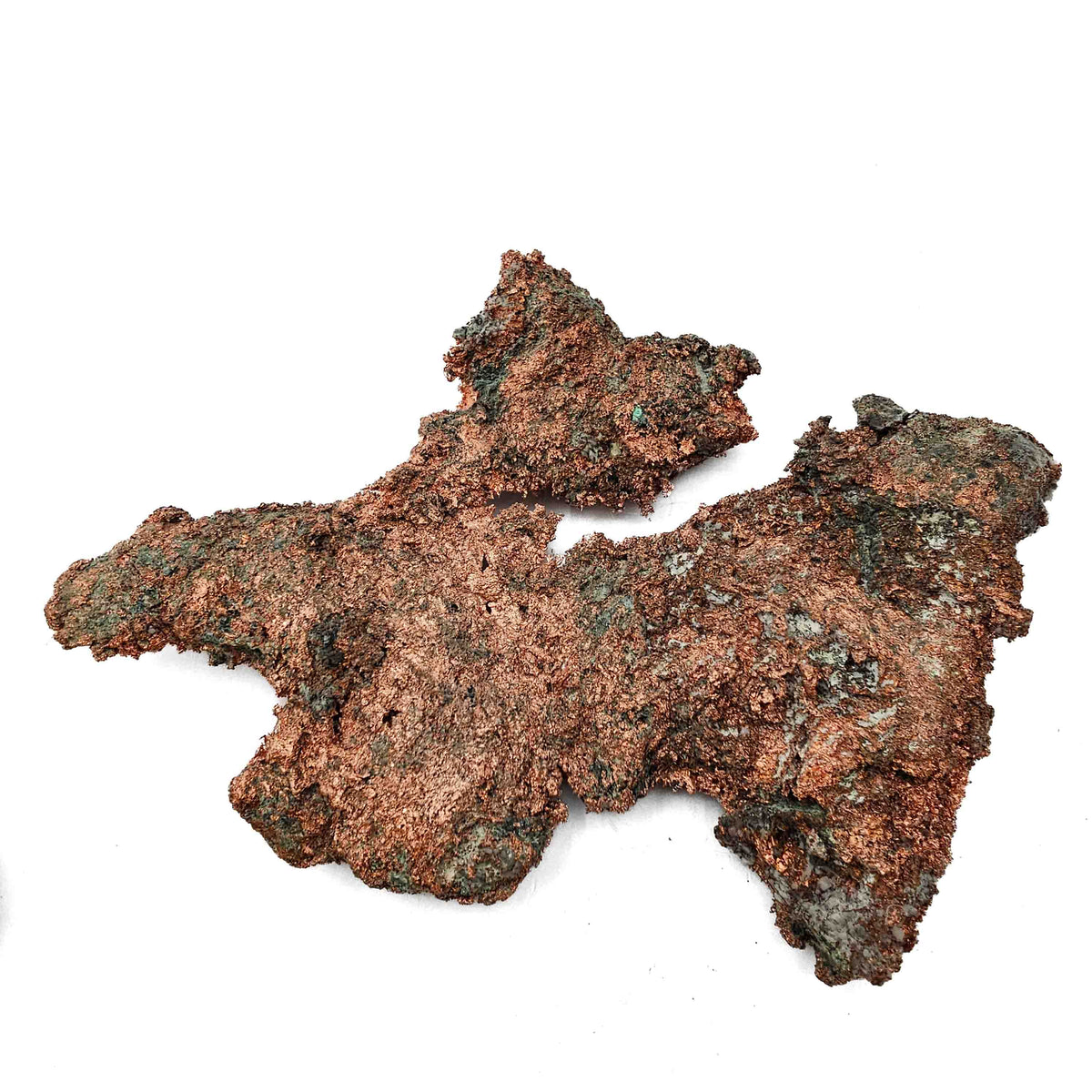
This one of a kind Native Copper specimen from Michigan, U.S.A. features a broad, naturally irregular sheet-like form with rich metallic copper coloration across the surface. The piece has a rugged, textured structure with jagged edges, natural openings, and scattered dark green to gray oxidation and matrix remnants that add depth and contrast. Its wide, sculptural shape gives it a strong display presence, making it an excellent statement specimen for collectors of native metals and classic American minerals.
Native Copper from Michigan is especially historic, as the Keweenaw Peninsula and surrounding Lake Superior copper district are among the most famous native copper localities in the world. Copper was mined and used in the region for thousands of years by Indigenous peoples before large-scale mining began in the 1800s. Michigan copper is known for occurring in natural metallic masses, sheets, dendritic formations, and occasionally with minerals such as calcite, prehnite, epidote, datolite, and quartz.
In crystal traditions, native copper is associated with energy flow and grounding.
Quantity: 1pc
With this product, you will get the actual stone in the photograph.