




Specifications
Descrizione
Locality: Cruzeiro Mine, São José da Safira, Minas Gerais, Brazil
The Cruzeiro mine lies about 13.5 km north of São José da Safira in east-central Minas Gerais. Its granitic pegmatite forms three steep, parallel dikes cutting quartzite, and it is world-famous for large, multicoloured tourmaline crystals. A Portuguese expedition led by Fernão Dias Paes Leme reached the Serra do Cruzeiro in 1674 looking for emeralds, but the green stones turned out to be tourmaline.
Small-scale mining for gem tourmaline began at Cruzeiro in 1914. Real mining started during World War II, when the mine produced more than half of the mica that Minas Gerais supplied to the Allies. After the war, work turned to gems, and Cruzeiro became one of the world's largest tourmaline producers.
Tourmaline crystals are pyroelectric and piezoelectric, meaning they build up an electric charge when heated or squeezed. Elbaite, a tourmaline species named for the Italian island of Elba, can be green, blue, red, orange, yellow or colourless, and its crystals are often colour-zoned.
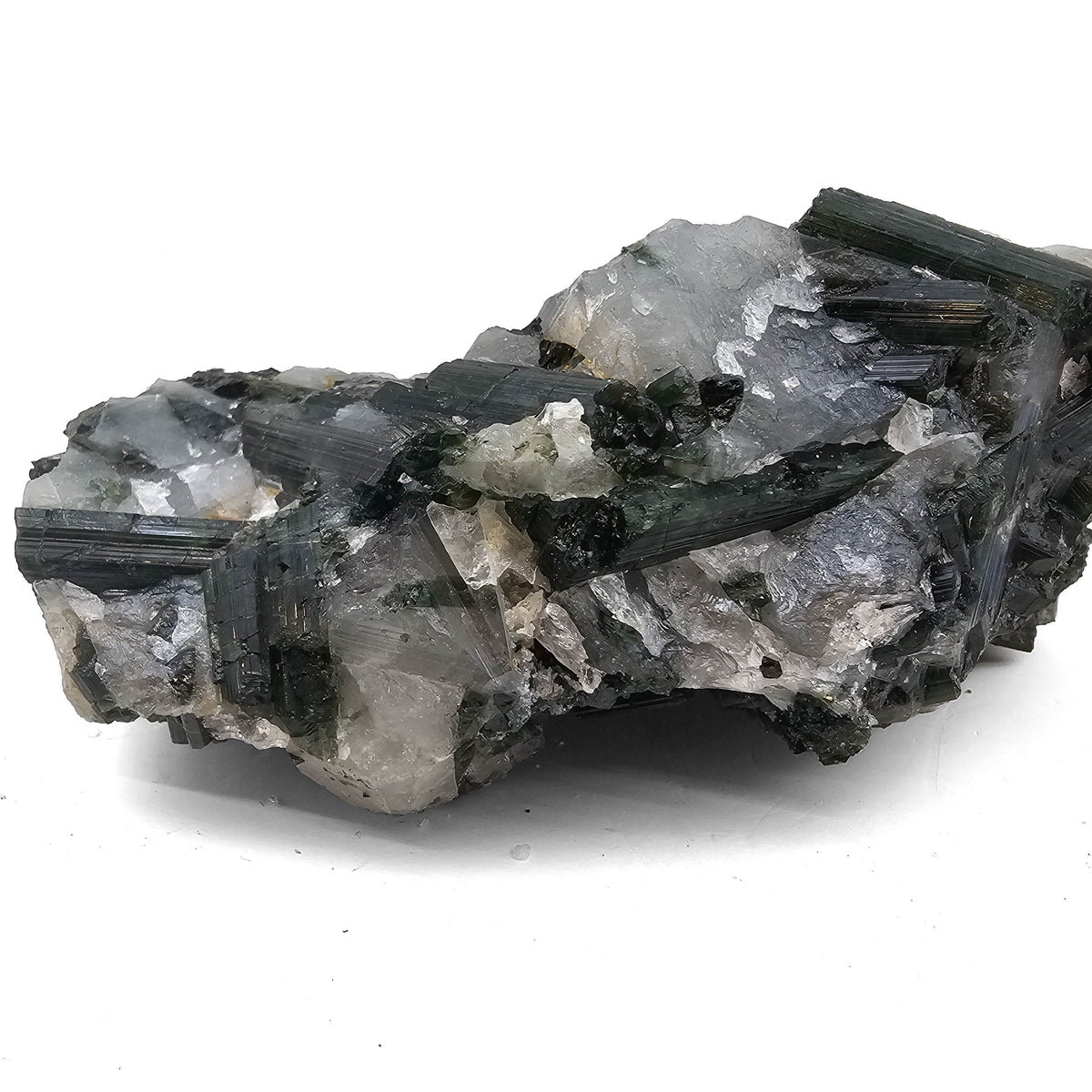
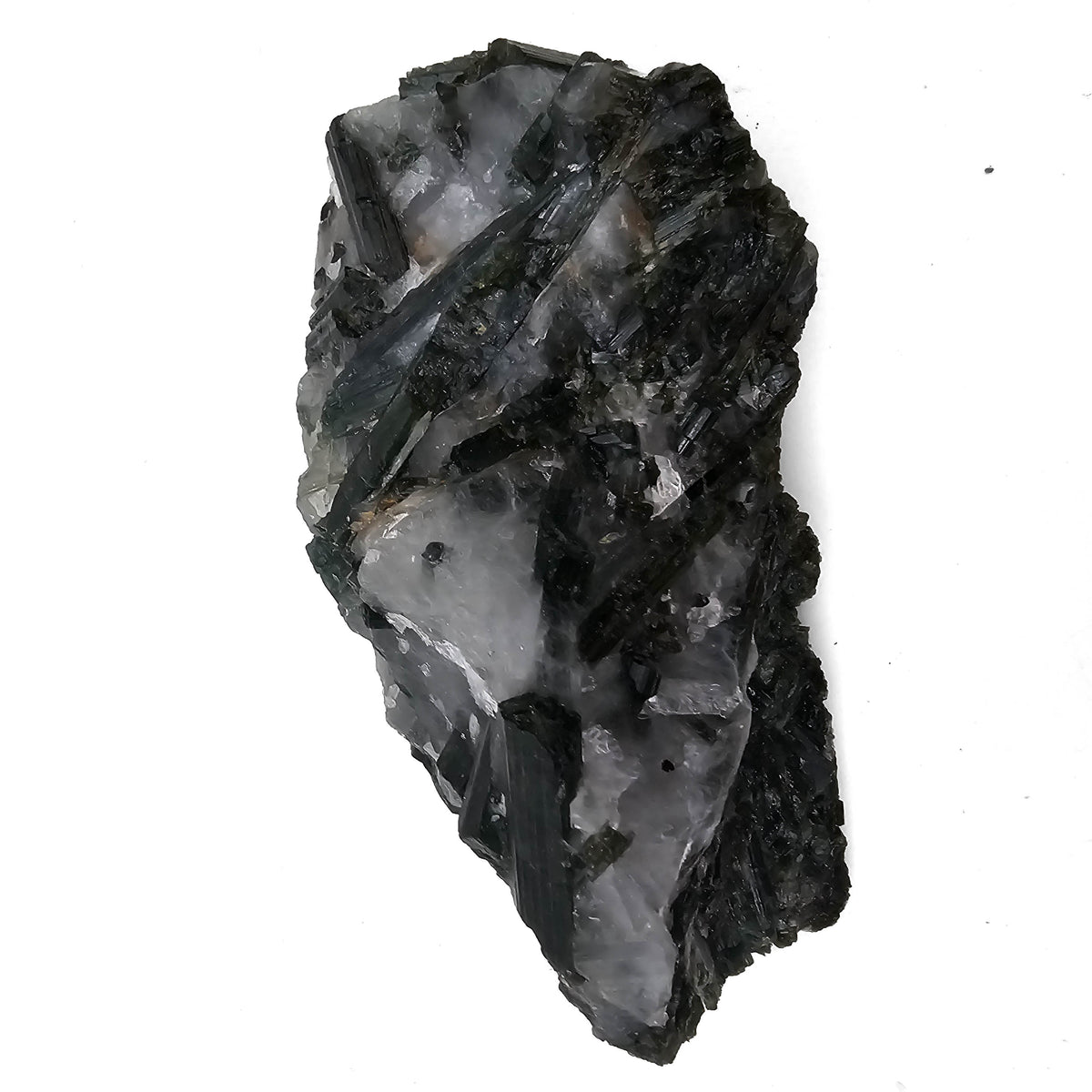
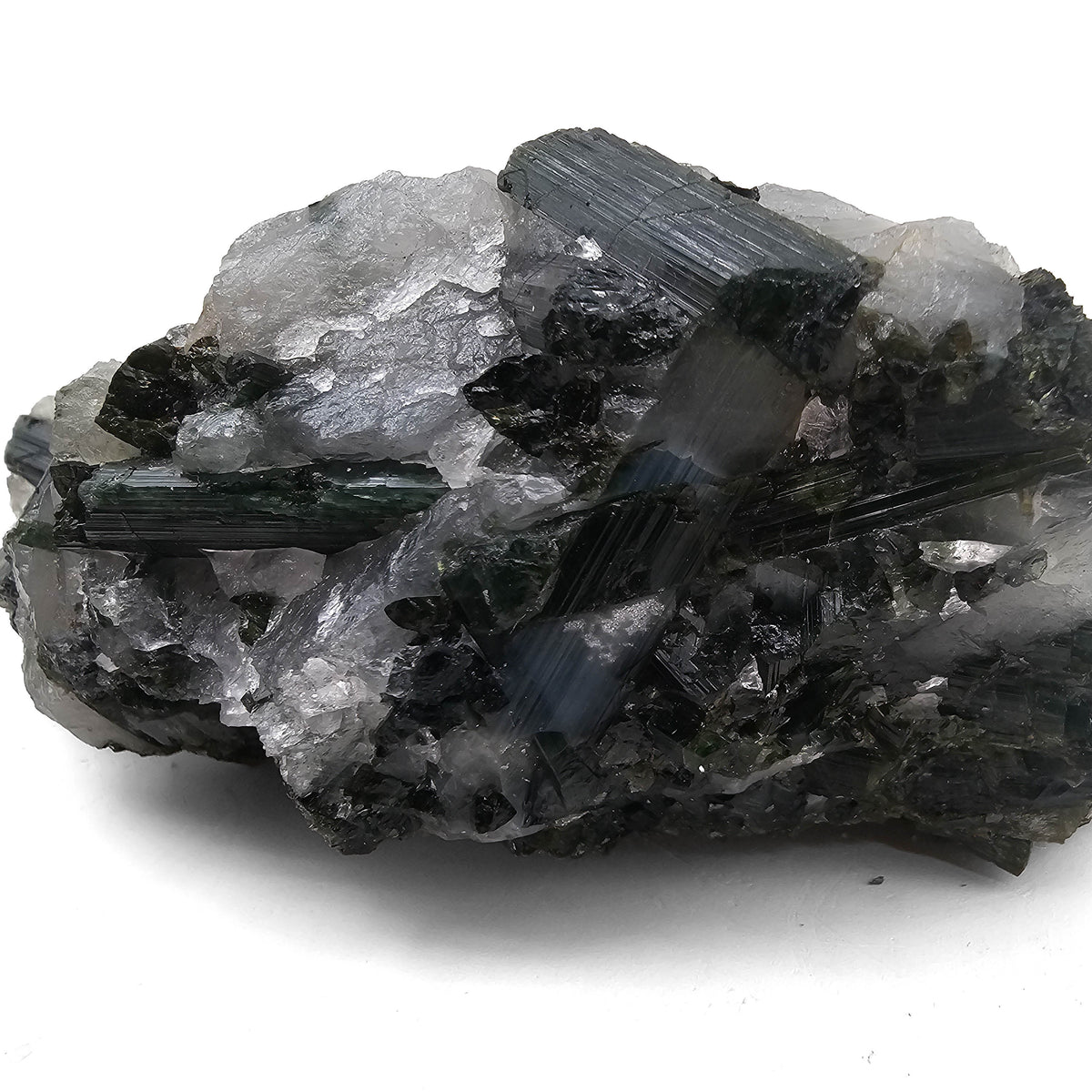
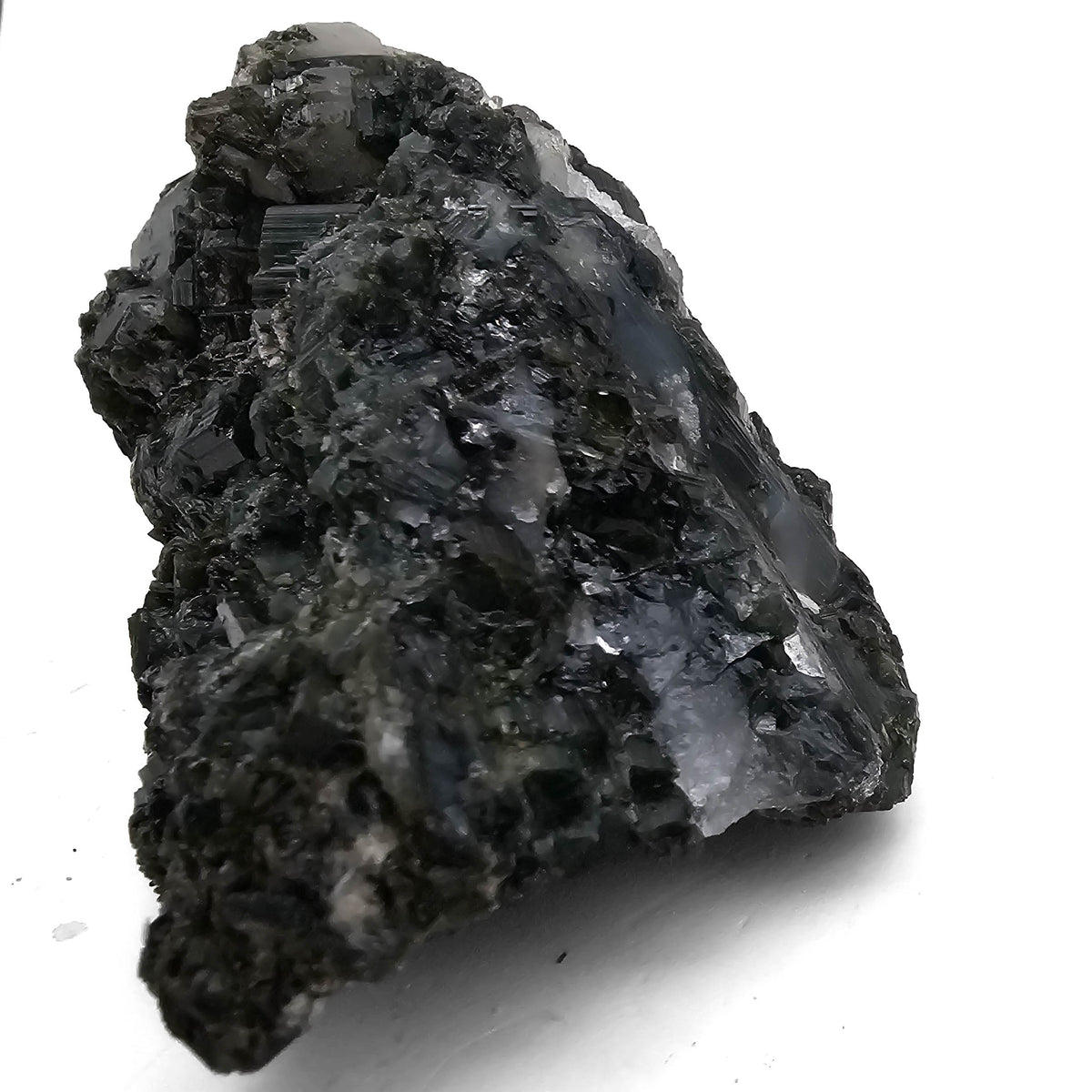
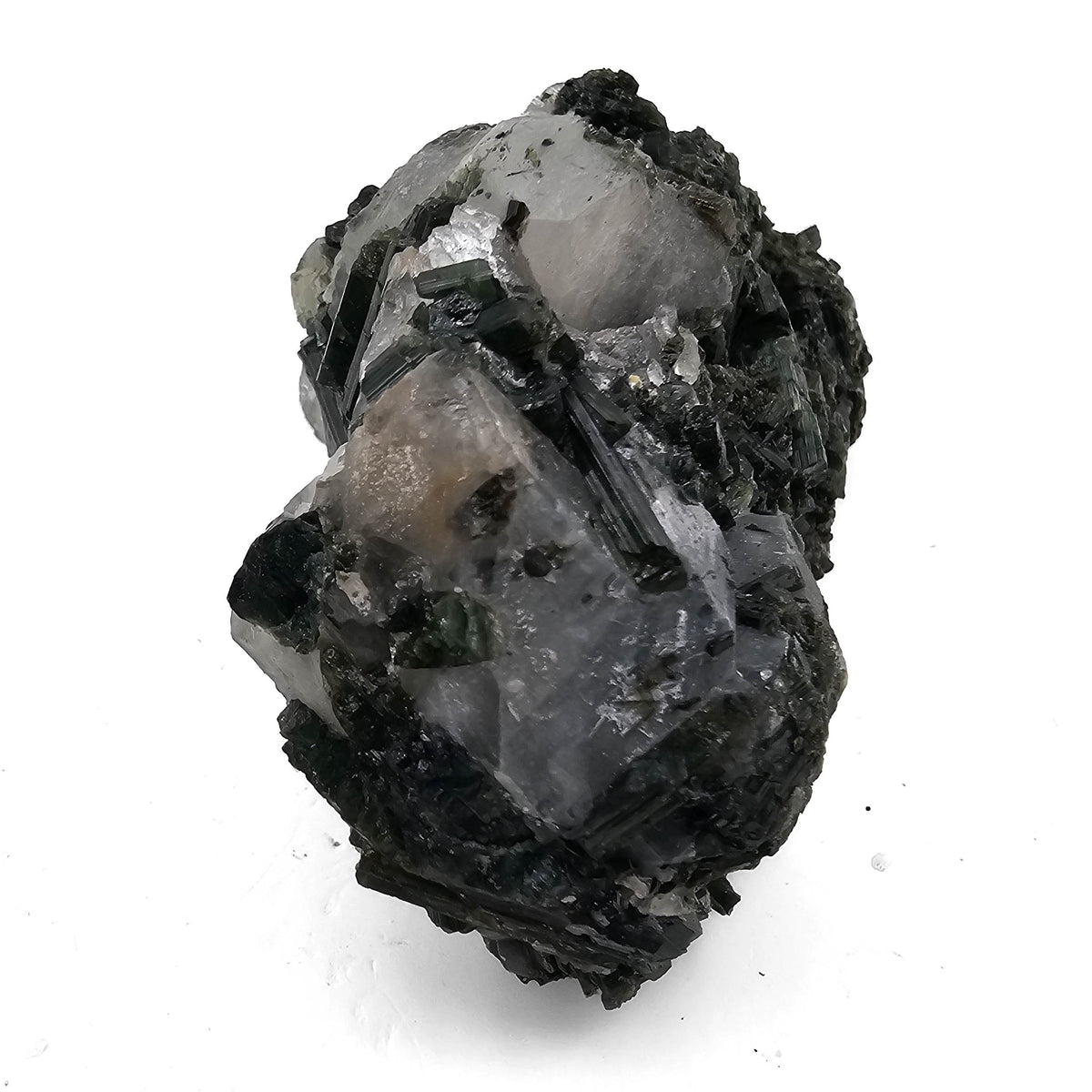
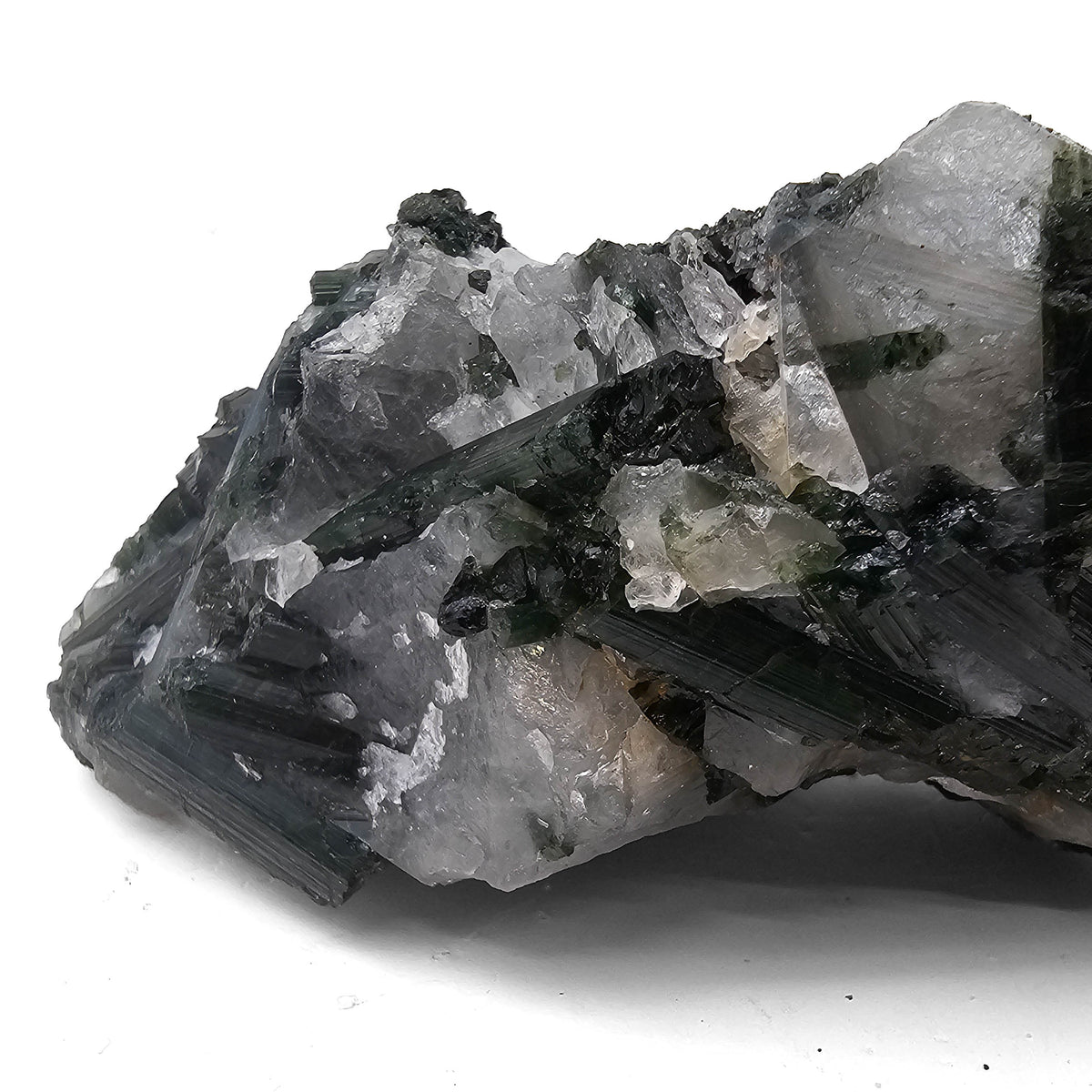
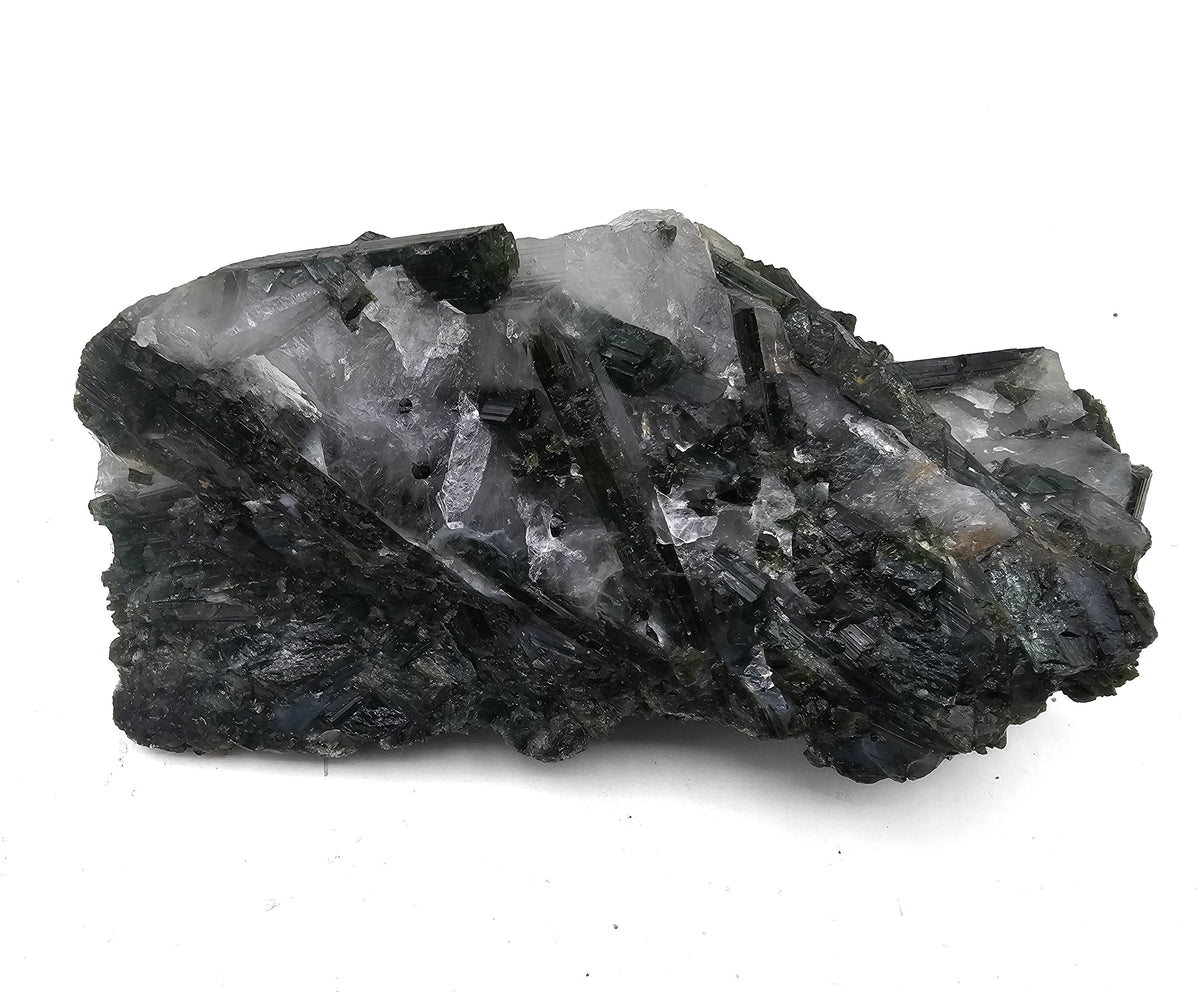
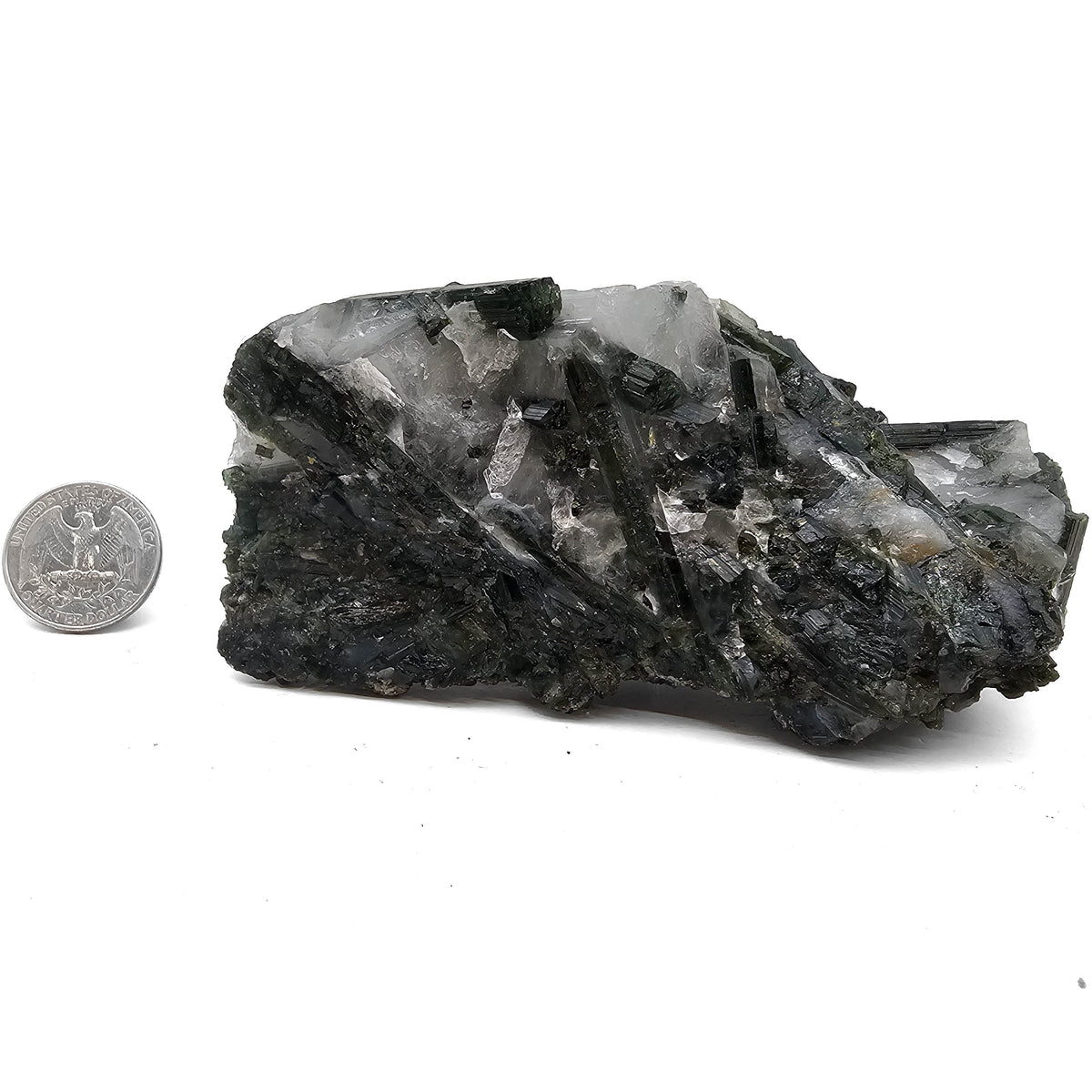
This one of a kind Brazilian tourmaline specimen features thick, well-developed prismatic crystals set in a dense quartz matrix. The tourmaline crystals range from deep forest green to nearly black, with strong longitudinal striations and a slightly glassy to submetallic luster. Several crystals run diagonally across the piece, creating a layered, structural look rather than isolated points. The surrounding quartz is milky to translucent, filling gaps and locking the tourmaline in place, giving the specimen a solid, weighty feel.
This type of formation is typical of lithium-rich pegmatites in Minas Gerais, one of the most important tourmaline-producing regions in the world. As the pegmatite melt cooled, quartz crystallized alongside boron-rich fluids that allowed tourmaline to grow in elongated prisms. The darker coloration suggests a higher iron content, placing these crystals closer to the schorl end of the tourmaline series rather than the brightly colored elbaite varieties Brazil is also known for. The intergrowth seen here reflects a late-stage crystallization environment where minerals competed for space, resulting in overlapping and intersecting crystal forms.
Tourmaline is widely regarded as a grounding and protective stone, often associated with stabilizing energy and absorbing unwanted influences. In this darker form, it is commonly valued for its connection to strength, resilience, and a steady, anchored presence.
Quantity: 1pc
With this product, you will get the actual stone in the photograph.