




Specifications
Descrizione
Locality: Minas Gerais, Brazil
Vivianite is named after John Henry Vivian (1785–1855), a Welsh-Cornish mineralogist from Truro in Cornwall who discovered the species. Classic early specimens came from Wheal Kind at St Agnes and other Cornish mines.
Fresh vivianite is colourless or very pale green. As its iron oxidizes, the crystals darken through blue, greenish blue and indigo, and finally to black, which is why many specimens are deep blue-green to nearly black. It is also very soft, only 1.5 to 2 on the Mohs scale, with a perfect cleavage, and thin crystals can even bend.
Vivianite forms as a secondary mineral in the oxidized zones of metal ore deposits and in complex granite pegmatites. It also grows in lake sediments, bog-iron ores and peat bogs, and can replace organic material in fossil bones. In Brazil, the Handbook of Mineralogy lists it from the Énio pegmatite mine near Galiléia, Minas Gerais.
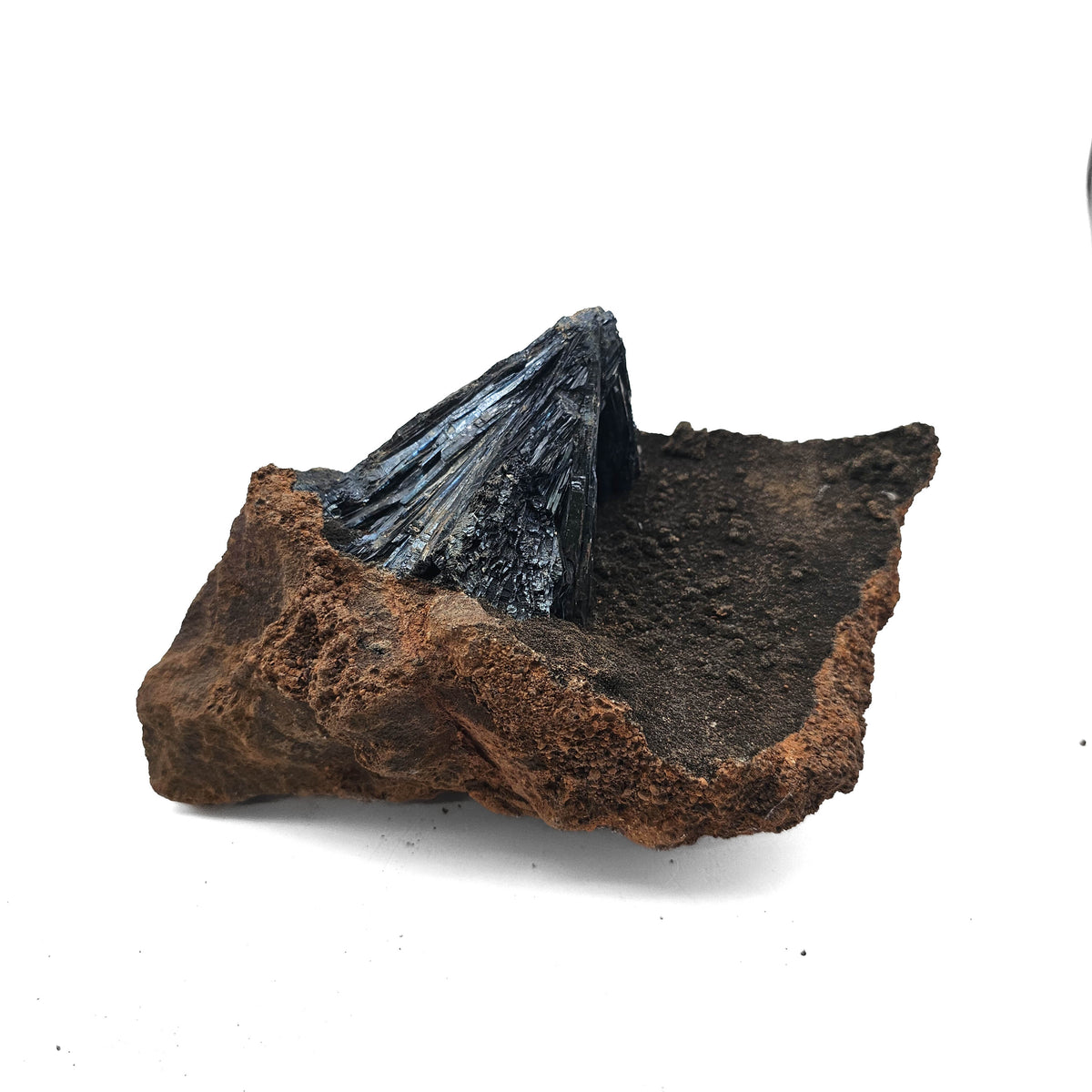
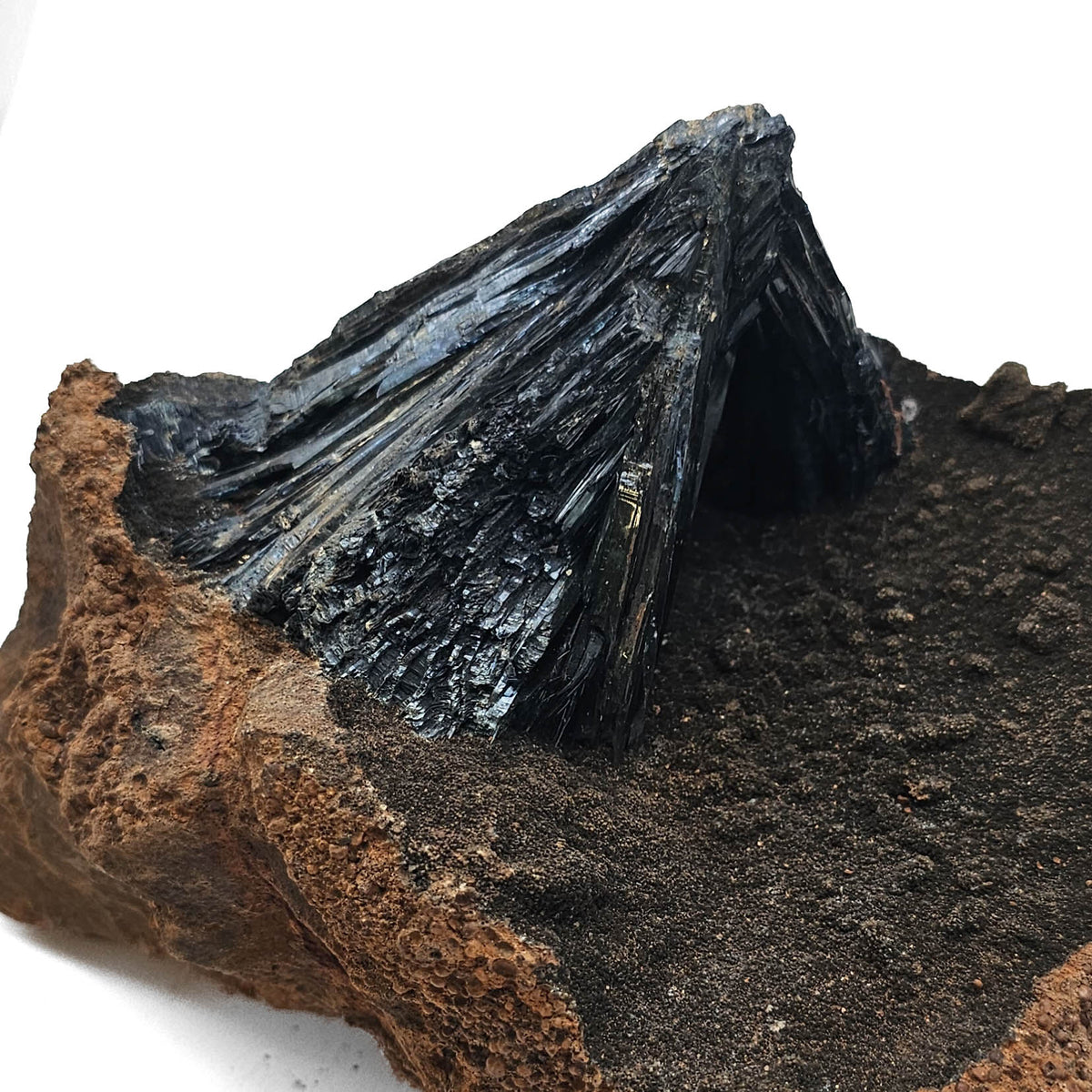
This one of a kind Vivianite specimen from Brazil features a dramatic fan-shaped cluster of dark blue-green to nearly black Vivianite blades rising from a rich, earthy brown matrix. The crystal formation has a striking architectural look, with glossy, striated blades radiating outward from the base and catching subtle flashes of deep teal, blue, and green in the light.
The iron-stained matrix creates a rugged natural frame around the Vivianite, giving the piece strong contrast and a bold display presence. Its sculptural shape, deep coloration, and fan-like crystal habit make it a standout specimen for collectors who appreciate raw, naturally dramatic mineral formations.
Vivianite is named after the British mineralogist John Henry Vivian, who discovered the species. It is commonly associated with emotional healing, heart-centered awareness, compassion, renewal, patience, and gentle transformation.
Chemical Composition: Fe2+3(PO4)2·8H2O
Quantity: 1pc
With this product, you will get the actual stone in the photograph.