




Specifications
Description
Locality: Red River Floodway, Winnipeg, Manitoba, Canada
Selenite is the clear, crystalline form of gypsum, a hydrated calcium sulfate (CaSO4·2H2O), the same mineral used to make drywall. Around Winnipeg, selenite grows as rosettes, many crystals radiating from a common centre, inside the thick clay left by glacial Lake Agassiz, which covered much of southern Manitoba during the Pleistocene. The crystals range from clear or very pale yellow to rich amber.
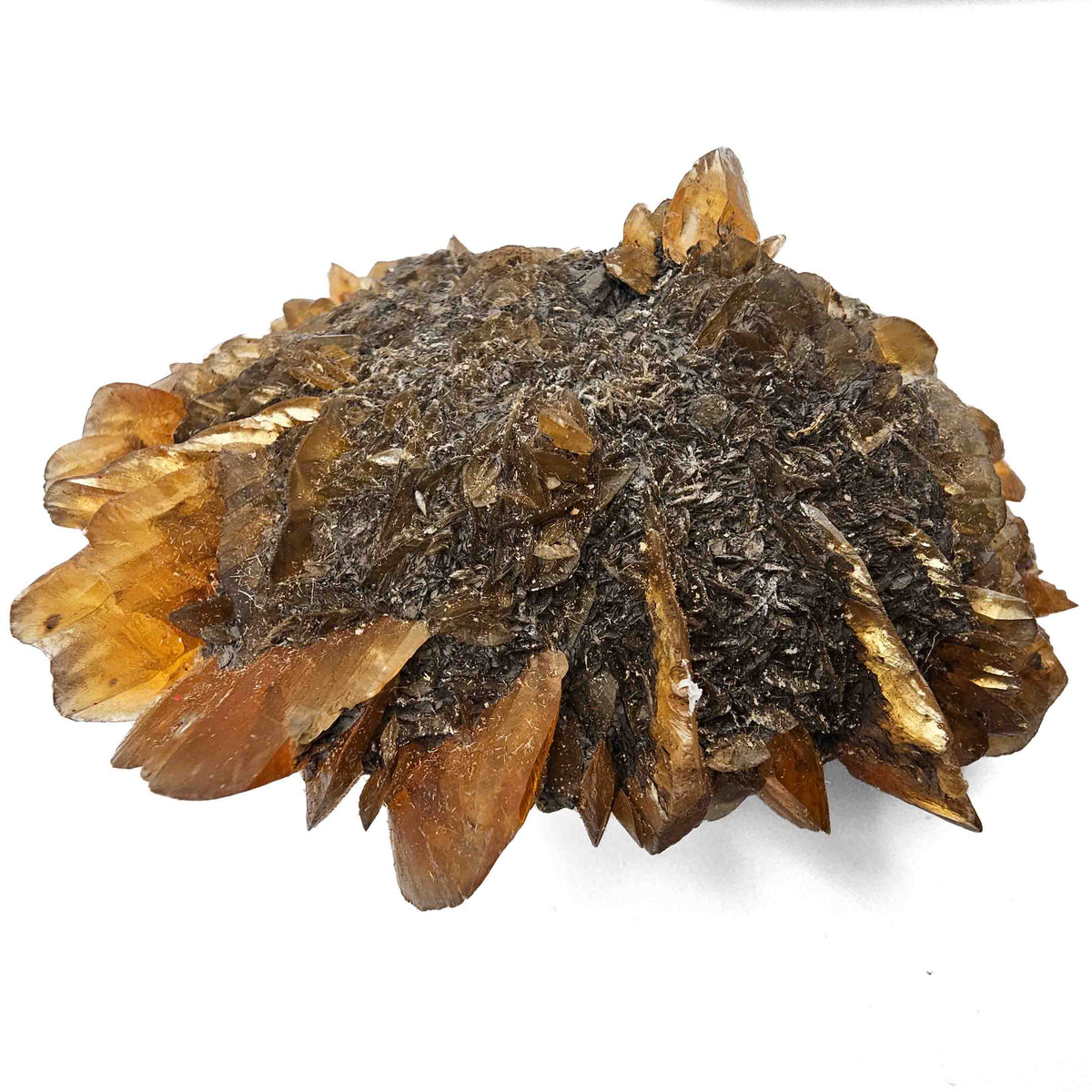
The clusters begin as balls of intersecting crystals. Larger crystals can then grow outward from the centre, and these are often twinned into a shape that resembles a duck's bill. According to the Fluorescent Mineral Society, these duck bill crystals are known only from the Red River Floodway deposit. Under ultraviolet light they glow brightly and keep glowing for a while afterwards.
The Red River Floodway is a 49 km channel along Winnipeg's eastern edge, built to divert spring floodwater around the city. It was completed in 1968. Selenite was found in test holes and during construction from 1959 on, and rockhounds have collected rosettes from the floodway banks ever since. Later excavation to expand the floodway exposed more crystals that are normally about six metres underground.
This one of a kind Golden Duck Bill Selenite specimen from Manitoba, Canada features a low, rounded cluster of translucent golden amber blades growing around a darker smoky-brown crystalline center. The specimen has a beautiful radial form, with flattened “duck bill” crystals extending outward from the edges like layered petals. Its warm honey, bronze, and smoky tones create a naturally rich contrast, while the fine inner crystal growth gives the piece a textured, sparkling surface. Its phosphorescent character adds another unusual and desirable quality, making it especially appealing to collectors of distinctive Canadian gypsum specimens.
Golden Duck Bill Selenite is a crystalline variety of gypsum, a hydrated calcium sulfate mineral formed in evaporite deposits where mineral-rich waters gradually leave gypsum behind. Manitoba is especially well known for these distinctive duck bill formations, most commonly associated with the Red River Floodway area near Winnipeg and deposits related to the ancient Lake Agassiz basin. Unlike long wand-style selenite, these specimens are prized for their curved tabular blades, rosette-like clusters, warm amber to smoky colouration, and unusual natural form. Collecting at the Red River Floodway is now restricted. The floodway is provincial flood-control infrastructure, and digging is only allowed with provincial permission, so new material rarely reaches the market.
Spiritually, Selenite is often associated with cleansing, clarity, peace, and calm energy. Golden and smoky varieties are also commonly connected with grounding, confidence, warmth, and emotional balance. The radiating duck bill formation gives this specimen a strong visual sense of movement and renewal, making it appealing as both a Canadian collector mineral and a display piece with gentle energetic associations, while its phosphorescence adds an extra layer of fascination and rarity.
Chemical Composition: CaSO4·2H2O
Quantity: 1pc
With this product, you will get the actual stone in the photograph.