






Specifications
Description
Locality: Canada
Era: Cenozoic (Pleistocene)
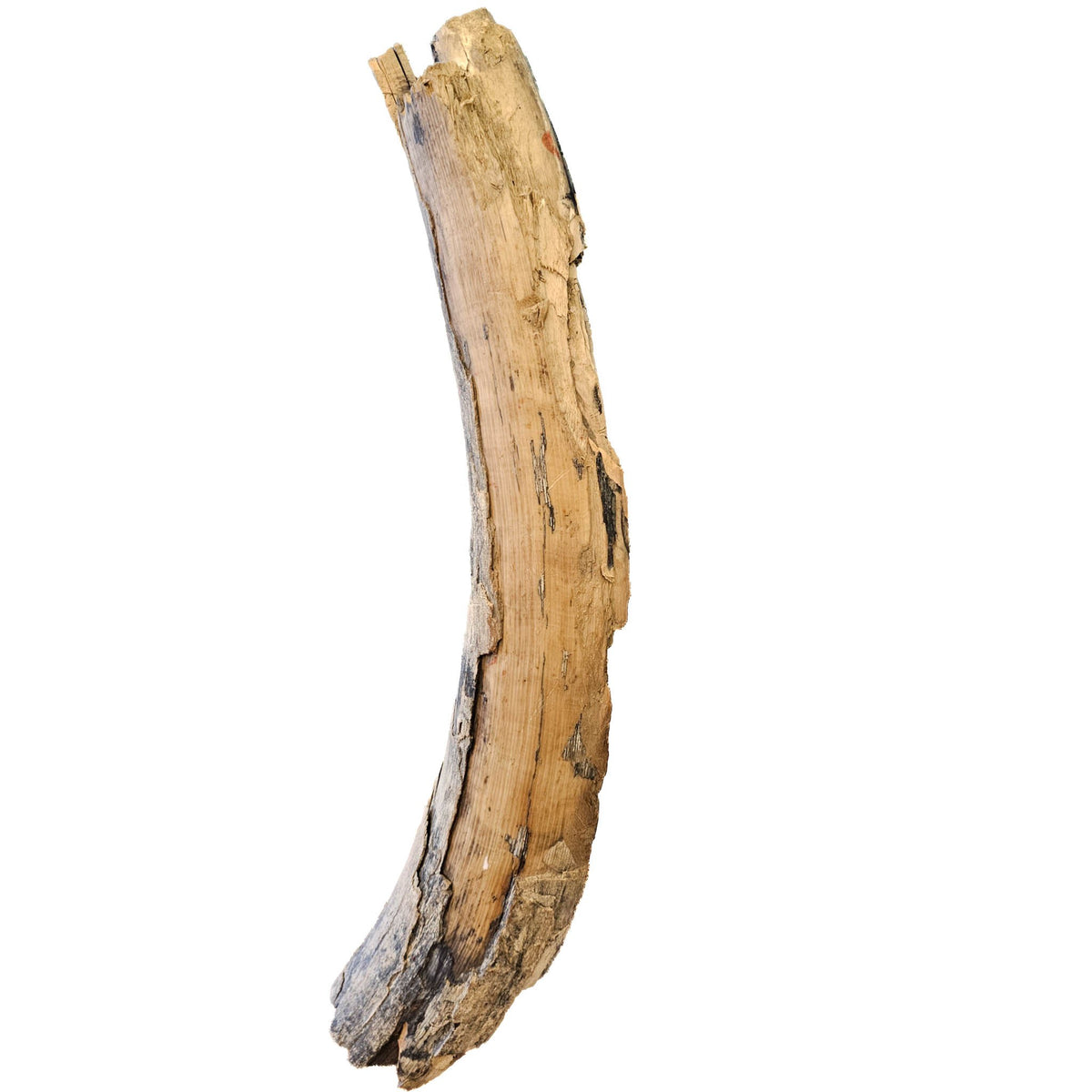
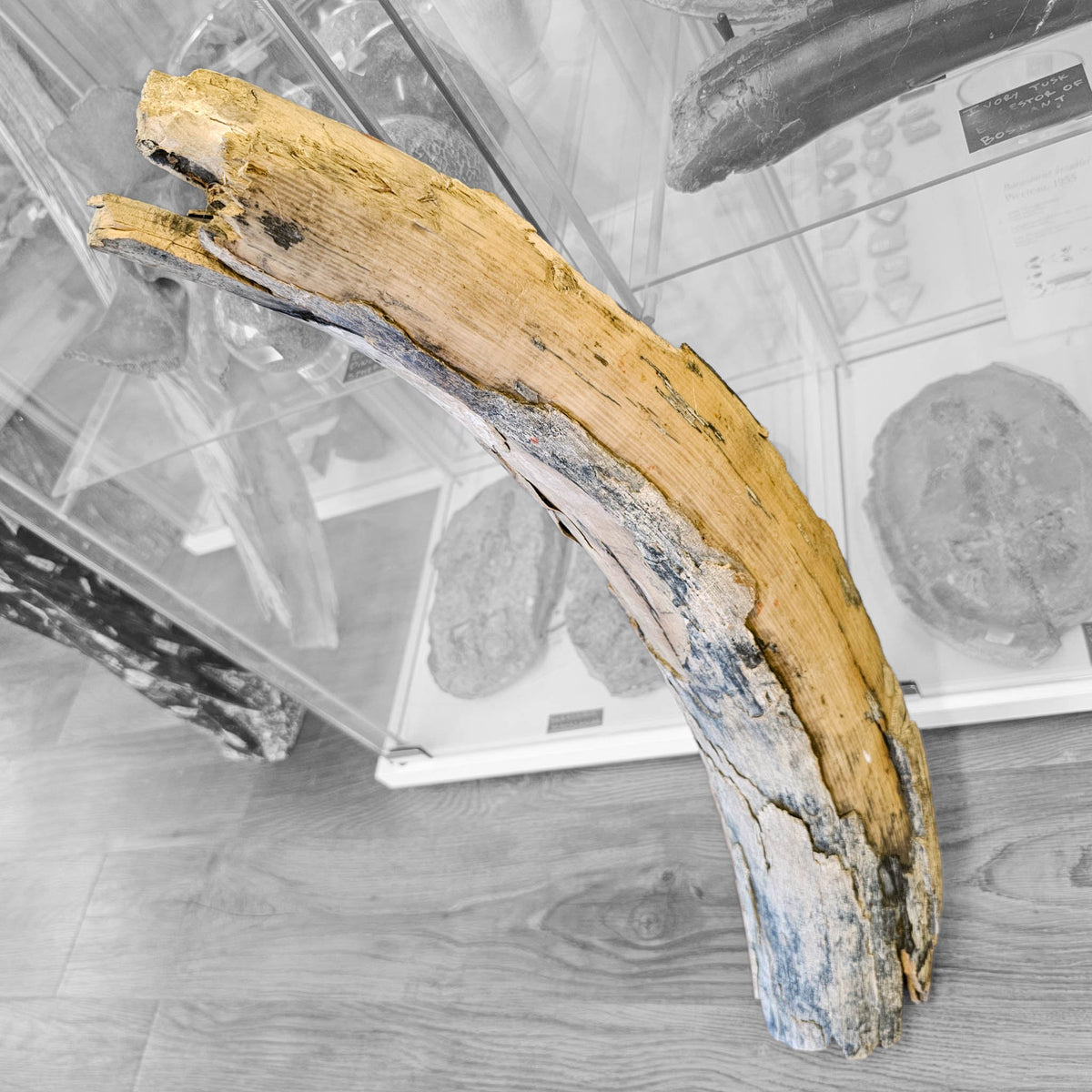
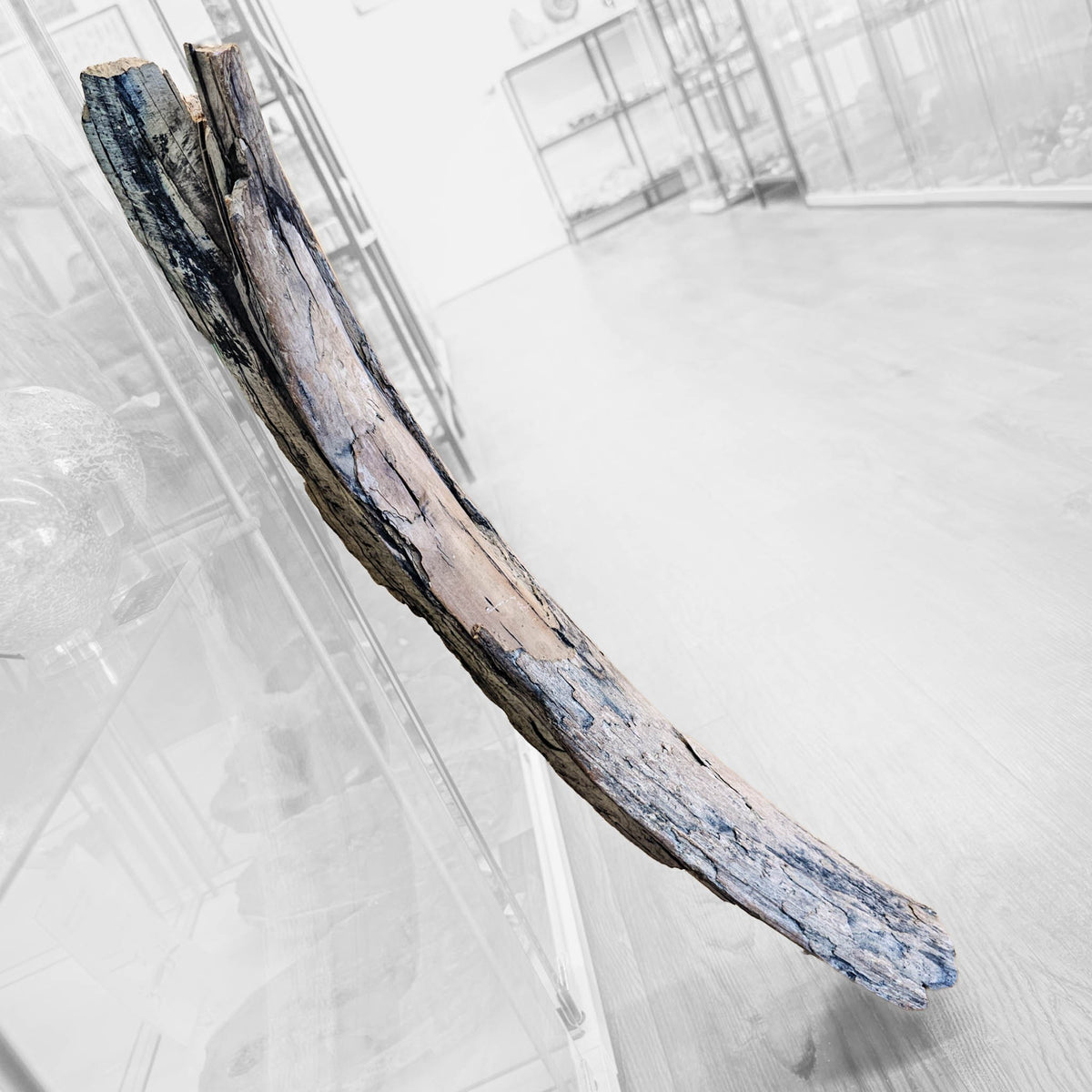
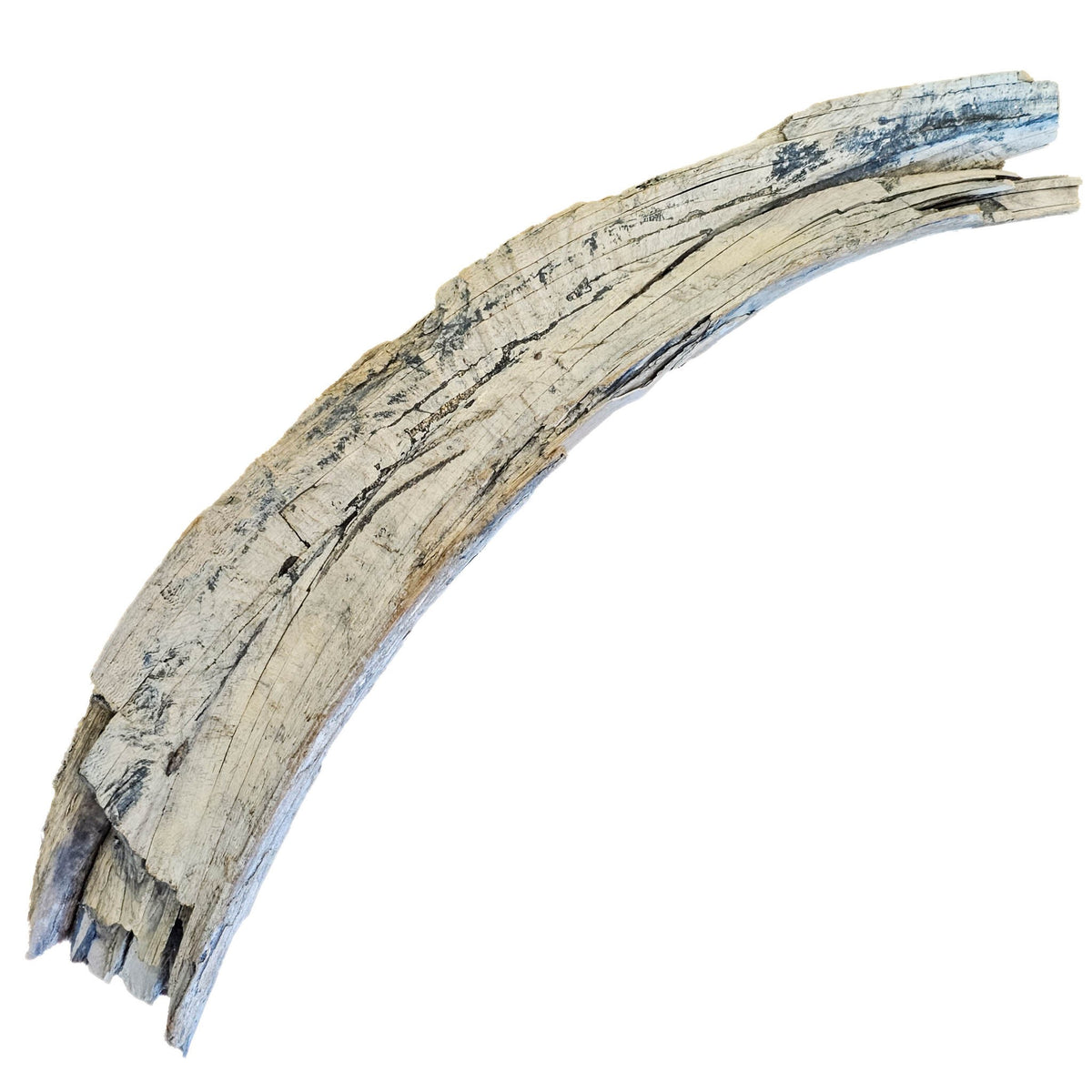
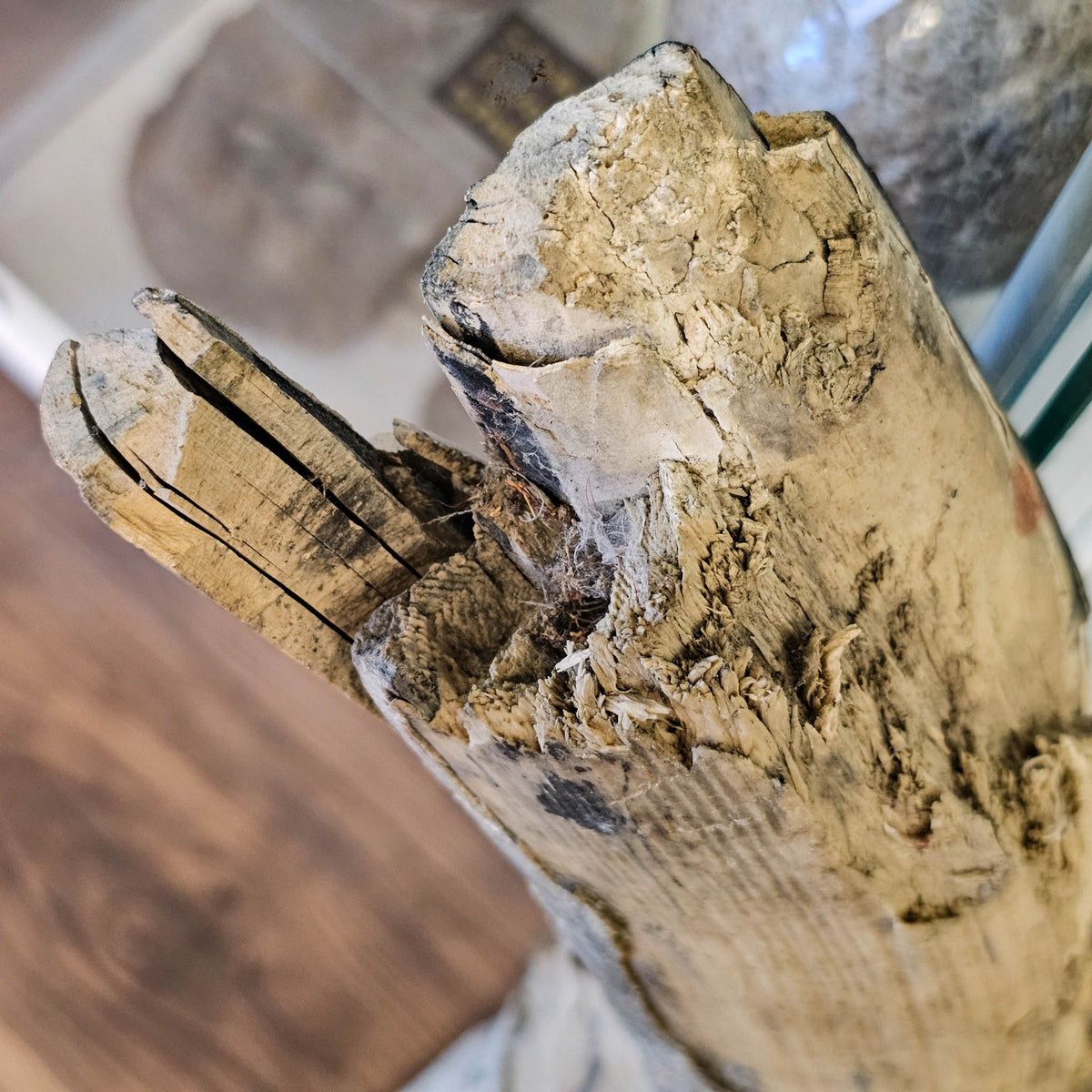
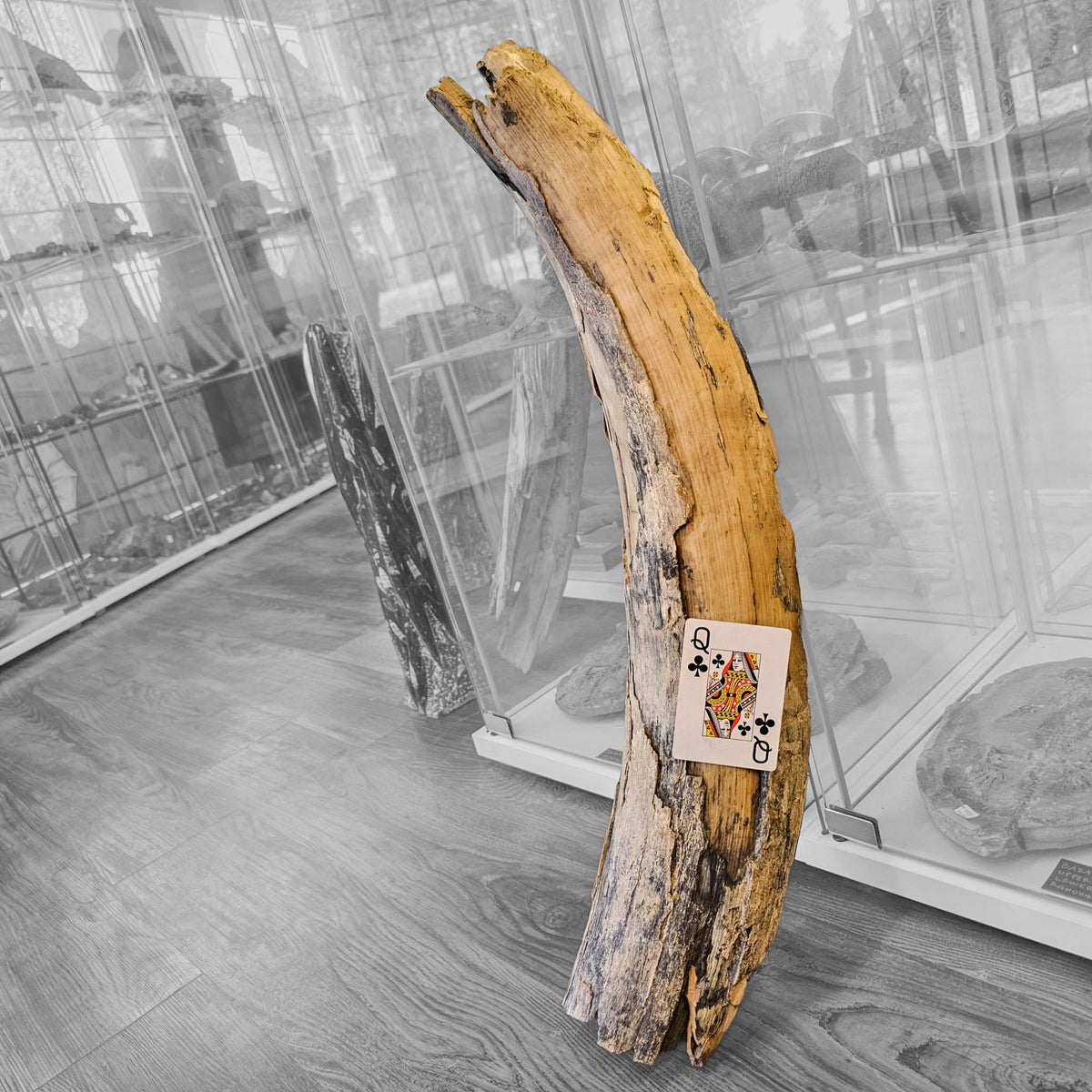
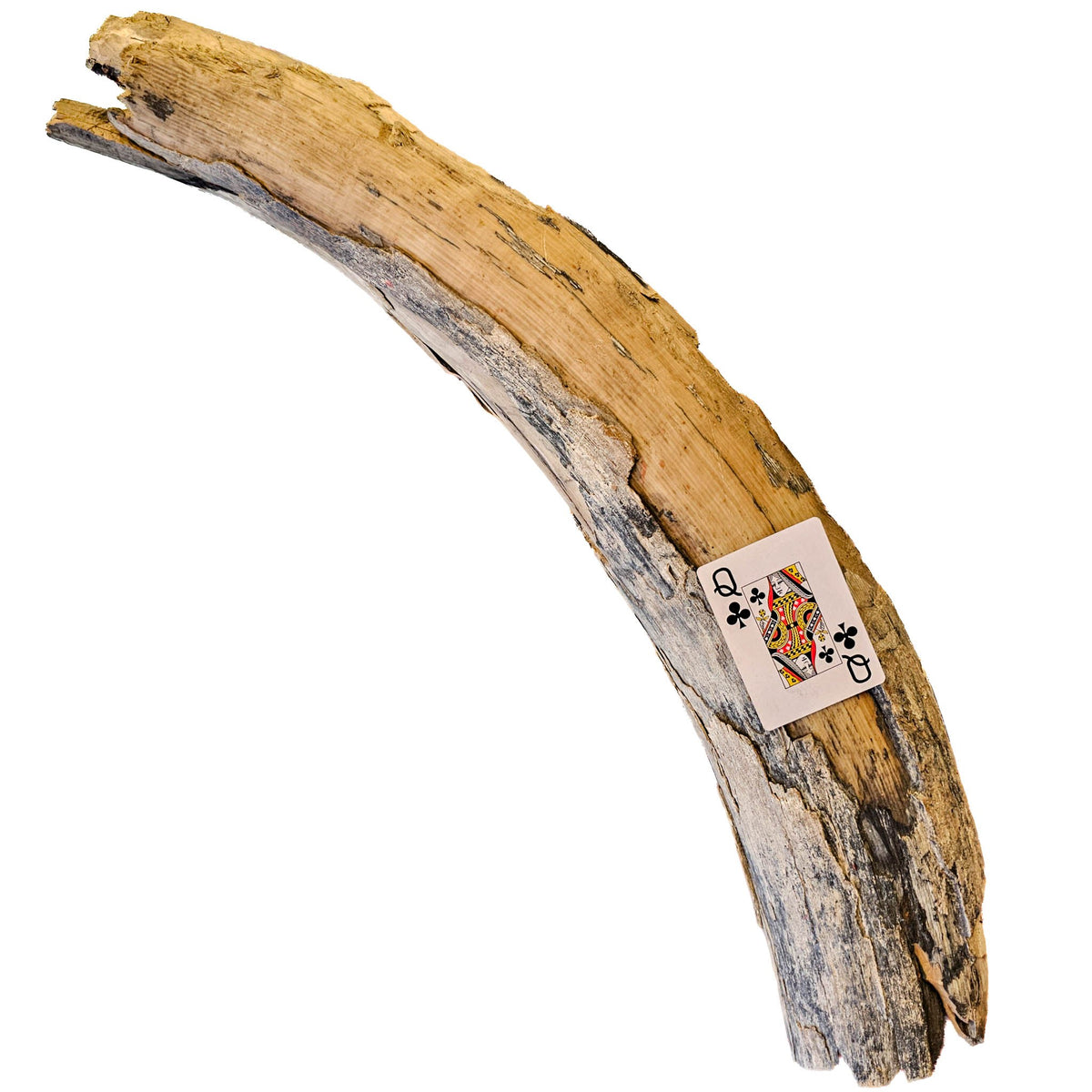
Description: This is a curved partial mammoth tusk with a warm honey-tan colour on one side and darker grey-brown weathering on the other. The natural curve is clear along its full length, and the broken end shows the stacked layers of ivory.
It comes from the northern Canadian Arctic, where mammoth tusks are recovered from Ice Age river gravels and frozen ground.
Mammoth tusks are elongated upper incisors made of dentine, laid down in thin cone-shaped layers throughout the animal's life. The honey colour comes from minerals and tannins absorbed from the surrounding sediment, while the cracking and flaking along the surface follow the growth layers as the ivory slowly dries out.
Identifying features: At the broken end the ivory shows concentric growth layers, and the surface cracks run lengthwise along those layers rather than across them. The honey-tan and grey staining soaked into the ivory from the sediment and is darker in the cracks and on the weathered side.
Mammoths roamed the northern continents during the Pleistocene, and fossil mammoth ivory has long been collected and carved across the far north.
Approximate size: 67 cm (26.5 in) long
Quantity: 1pc
With this product, you will get the actual stone in the photograph. We do what we can to buy good quality products and price them honestly. The rocks may differ from the photos, but we hope we do them justice.