






Specifications
Description
Locality: Badlands region / White River Badlands, Brule Formation (within the White River Group), Pennington County area, South Dakota, U.S.A.
Era: Cenozoic
Geological Age: 28-34 mya
The White River Badlands of southwestern South Dakota are a landscape of spires, buttes and mesas carved by erosion, and the same weathering keeps exposing fossils. The National Park Service describes Badlands National Park, at the heart of the region, as home to the world's richest collection of Oligocene vertebrate fossils. More than 50 species of plant-eaters and 14 of meat-eaters have been found in the White River Group, mostly in the Oligocene Brule Formation.
Oreodonts are one of the most common fossils in the Badlands. They were even-toed hoofed mammals that lived from about 40 million to 5 million years ago, and in life they probably looked like a mix of camel, sheep and pig. They are most common in the Brule Formation, which records a savannah-like landscape of open grazing land with occasional river channels. Paleontologists estimate that oreodonts were about as abundant there as zebras are on the Serengeti today.
Their name means "mountain tooth", because their molars look like miniature mountain ranges. The flat, low teeth were built for chewing and grinding leaves and shoots.
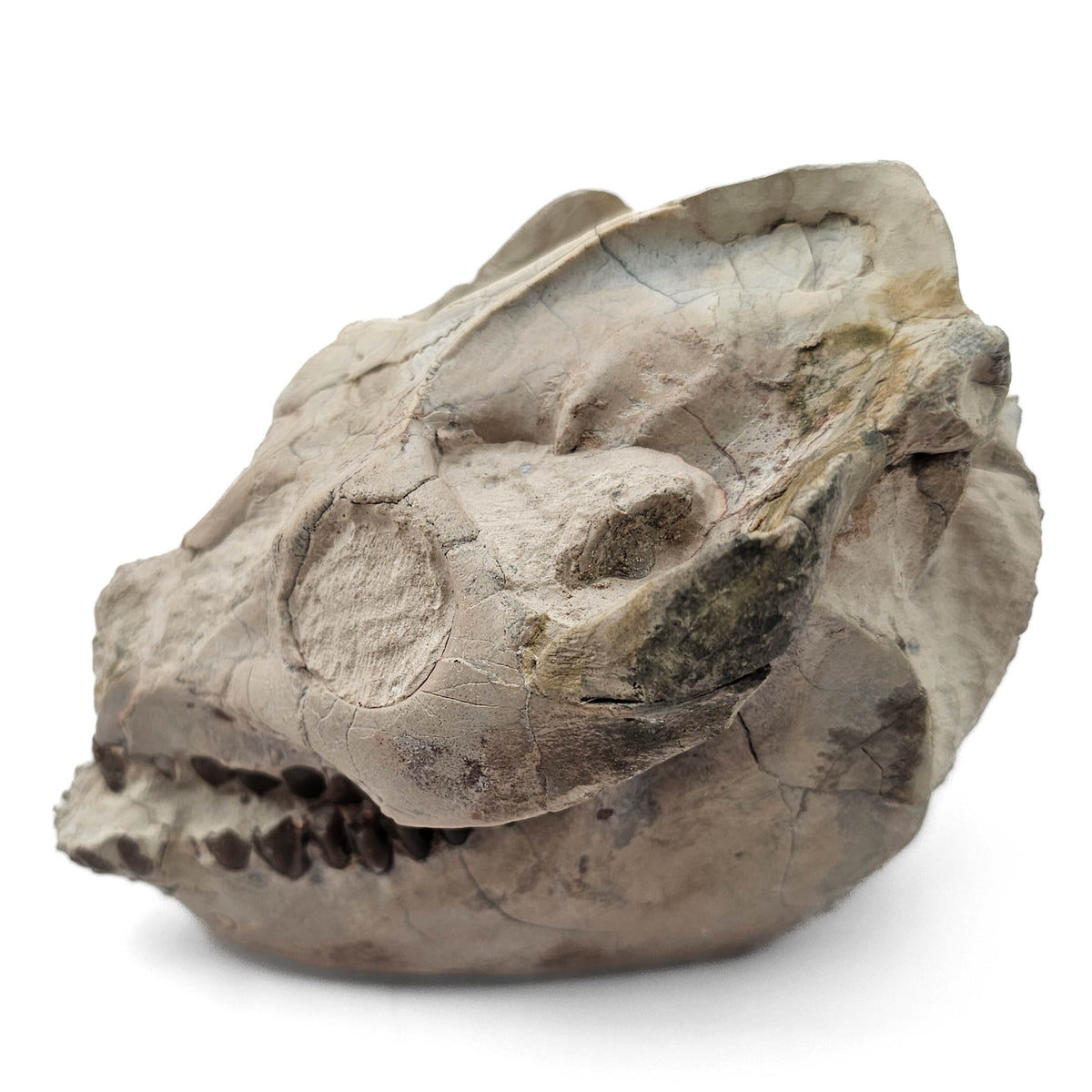
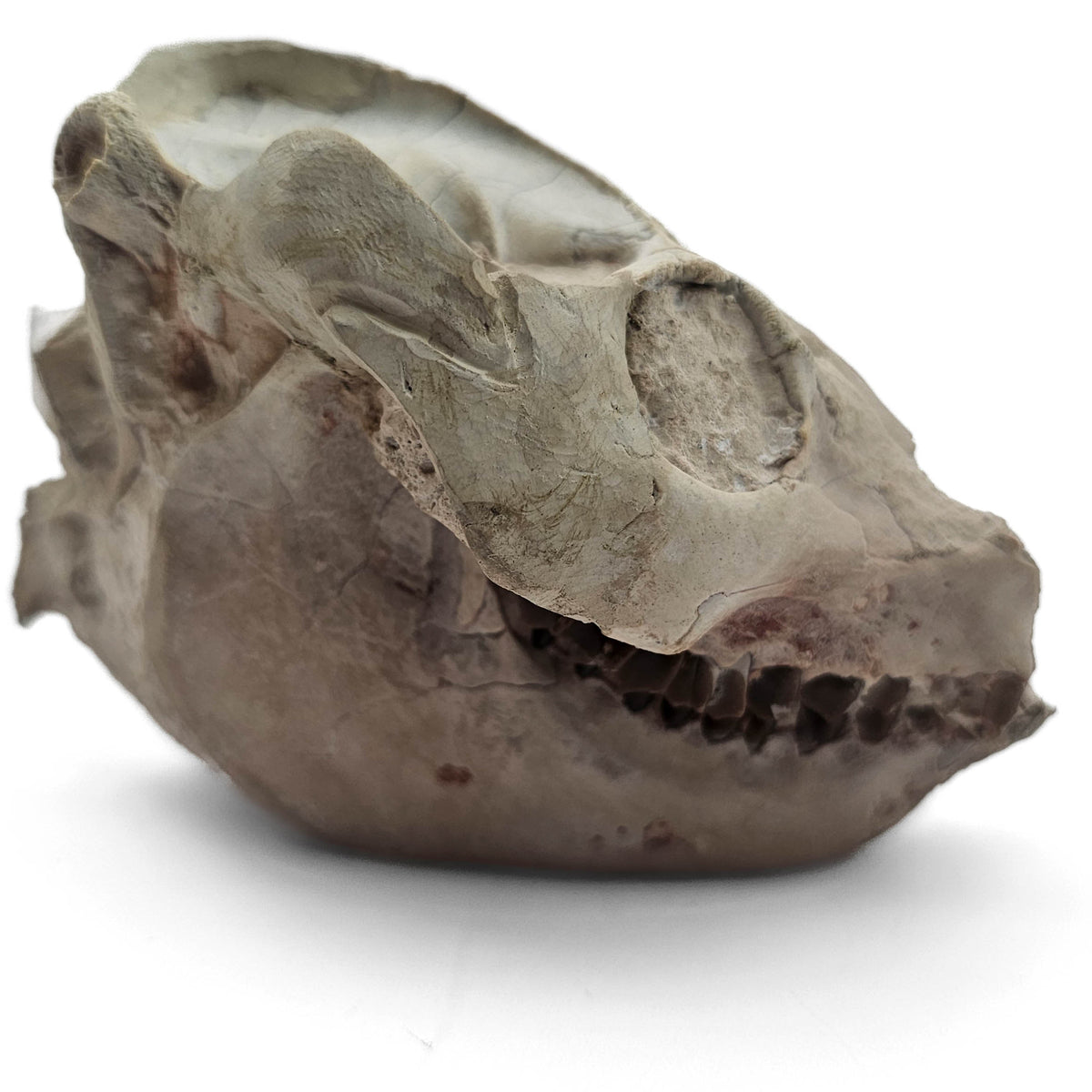
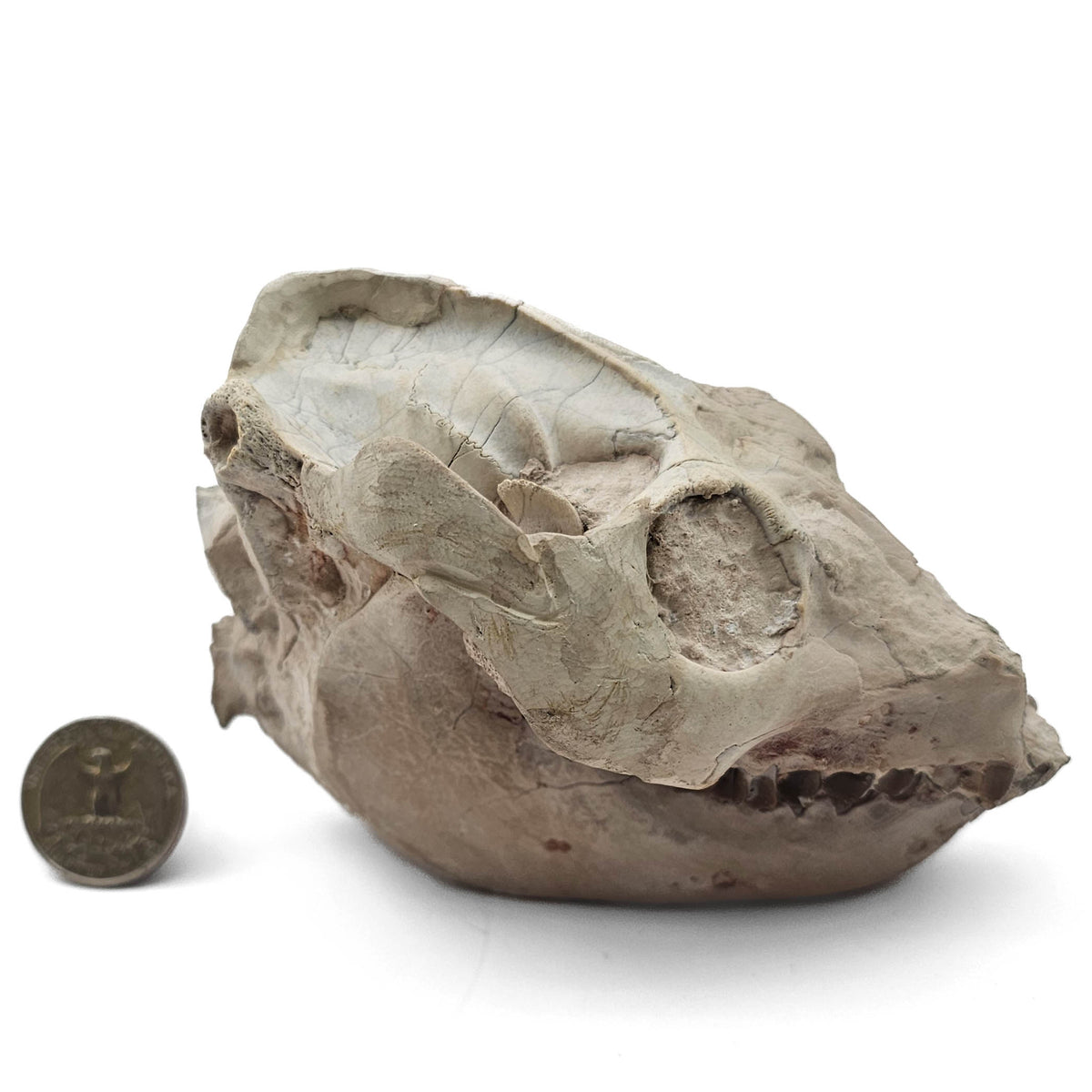
This one of a kind oreodont fossil specimen preserves a substantial portion of the skull, including the upper and lower jaw, part of the eye socket area, and a visible row of dark fossil teeth. The piece has a solid, heavy look, with pale tan to off white bone against darker preserved teeth and subtle natural staining throughout. The shape of the skull gives it strong display value, especially from the side, where the jawline and cheek area are easy to read.
Oreodonts were extinct hoofed mammals that lived across North America during the Oligocene. South Dakota is one of the classic places to find them, especially in the White River deposits, which preserve mammals from ancient plains, river channels, and dry open country. This specimen shows the kind of compact skull and sturdy teeth that made oreodont fossils such recognizable finds from those beds. It is a real fossil skull piece, not just a loose tooth or fragment, which gives it much more anatomical interest for a collector.
People are often drawn to fossil skulls because they feel direct and tangible. This piece carries a strong sense of age, survival, and natural history, and it tends to appeal to collectors who like fossils that show both structure and presence rather than just surface detail.
Quantity: 1pc
With this product, you will get the actual stone in the photograph. We do what we can to buy good quality products and price them honestly. The rocks may differ from the photos, but we hope we do them justice.