




Specifications
Description
Locality: Bou Azzer District, Ouarzazate Province, Drâa-Tafilalet Region, Morocco
Skutterudite is a cobalt arsenide, CoAs3, with some nickel and iron often taking the place of cobalt. It was named in 1845 for its type locality, the Skuterud mines at Modum in Norway. It is tin-white to silver-grey with a metallic lustre, often tarnishing grey or iridescent, and is heavy, with a density of about 6.5. Its crystals are cubic, growing as cubes, octahedra or dodecahedra.
The Bou Azzer district lies in Morocco's central Anti-Atlas, about 120 km southwest of Ouarzazate. Its cobalt, nickel and iron arsenide ores occur in a body of serpentinised Neoproterozoic ophiolite, a slice of ancient ocean floor, mostly along contacts between the serpentinite and harder rocks such as diorite. Geologists still debate when and how the ores formed.
According to the mining company Managem, the deposit was found after the French industrialist Jean Epinat saw arsenate minerals for sale in Marrakech's Jemaa el-Fna square in 1928. Local people used cobalt arsenate minerals against insects and rats. Artisanal mining began in 1932 and industrial mining in 1934, and Bou Azzer remains a cobalt mine today.
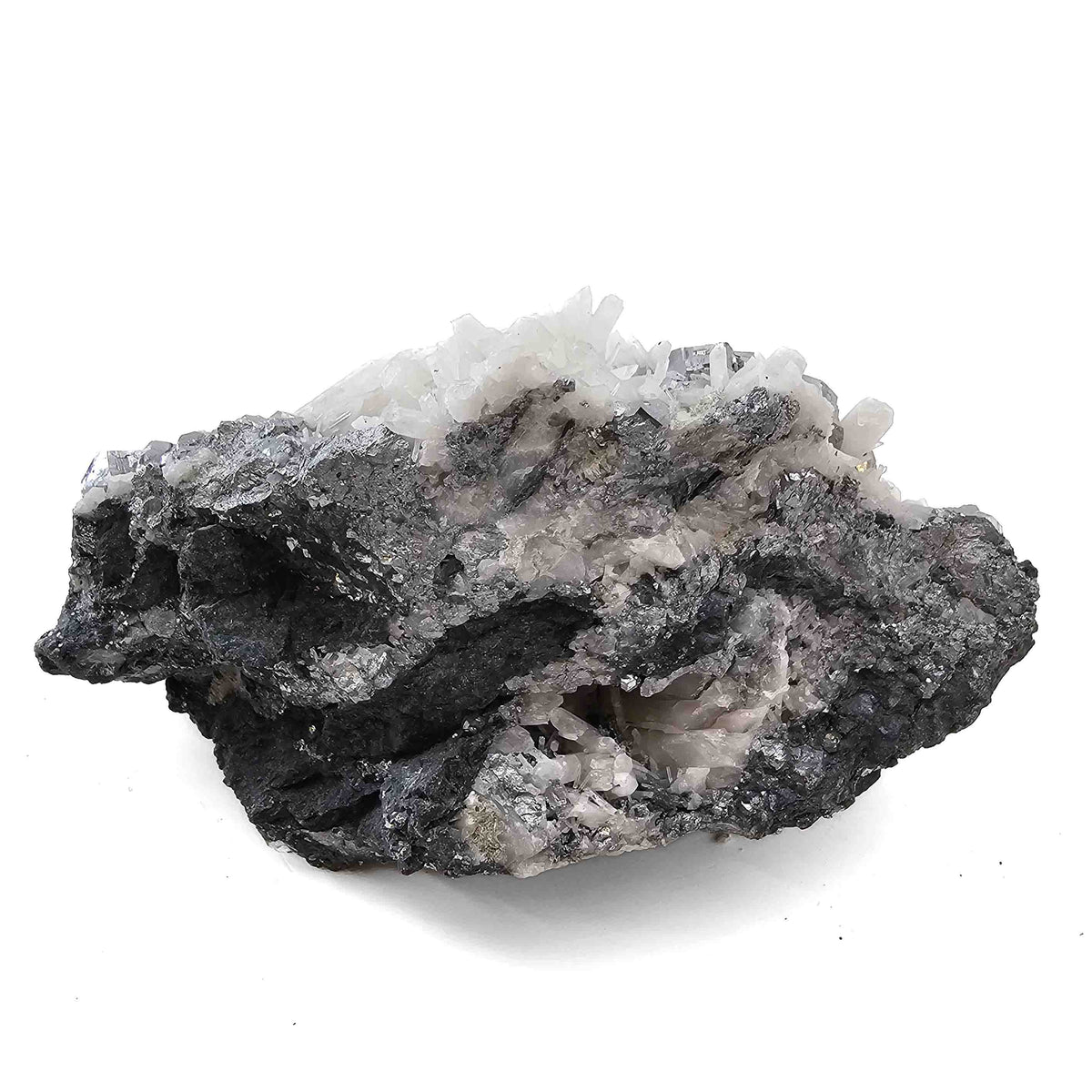
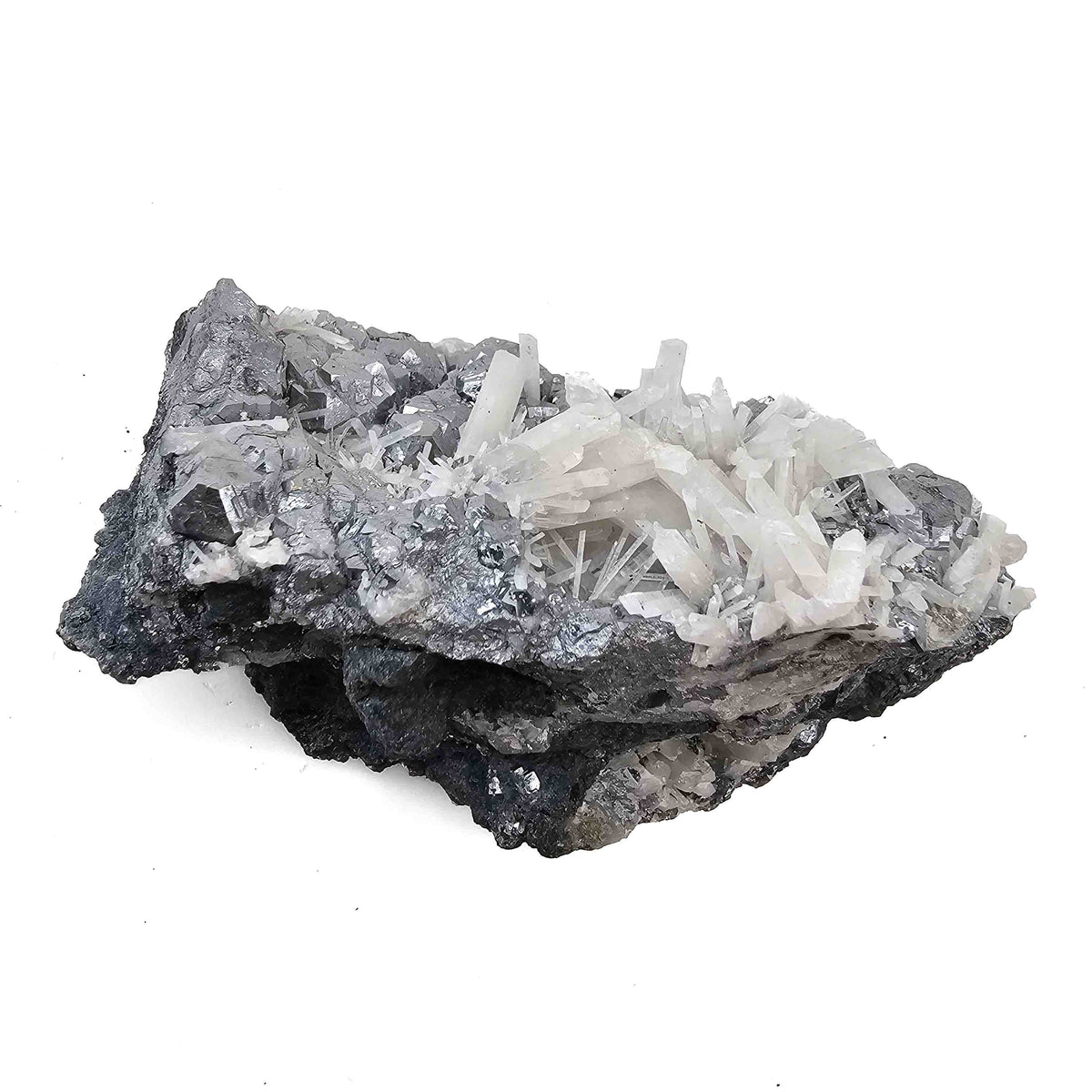
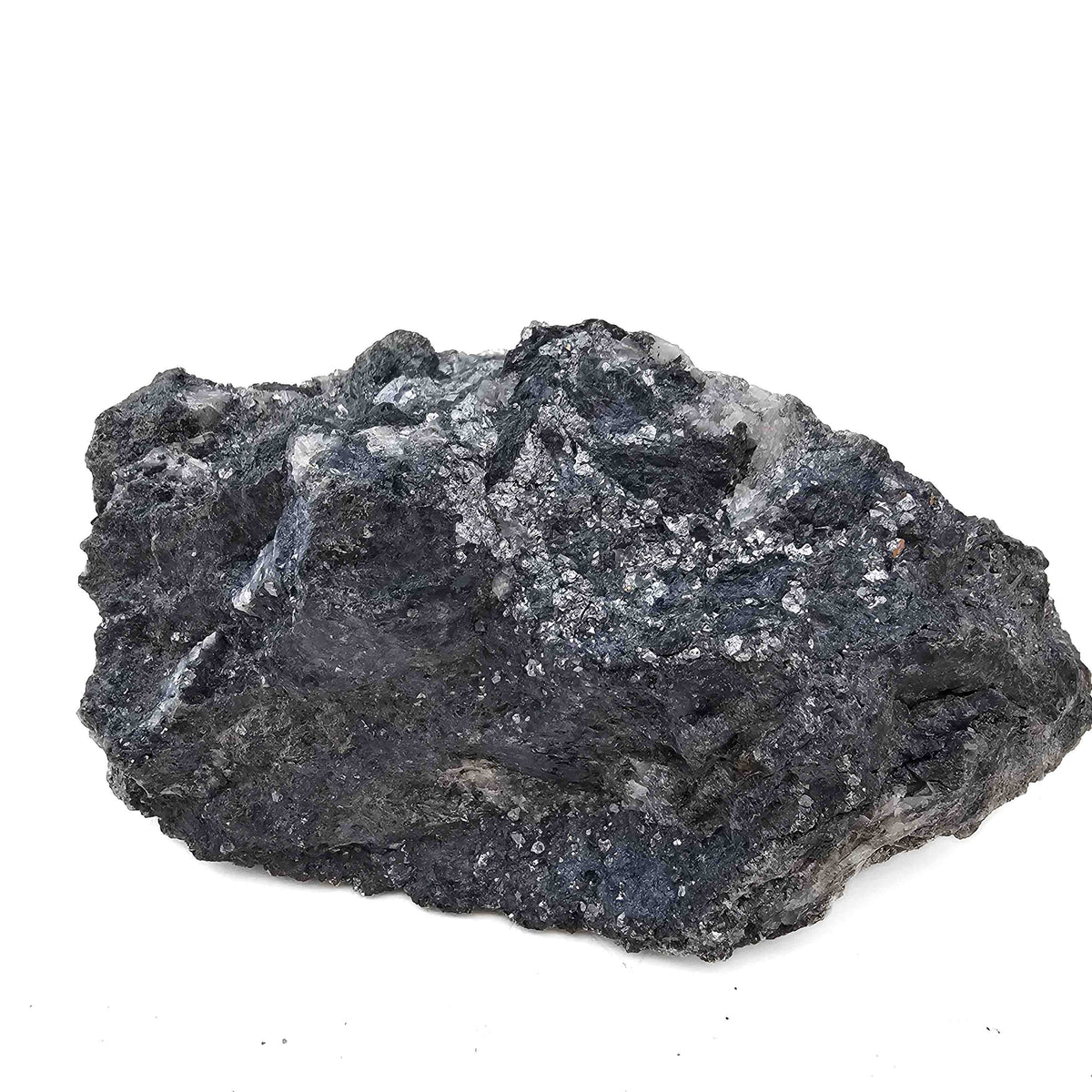
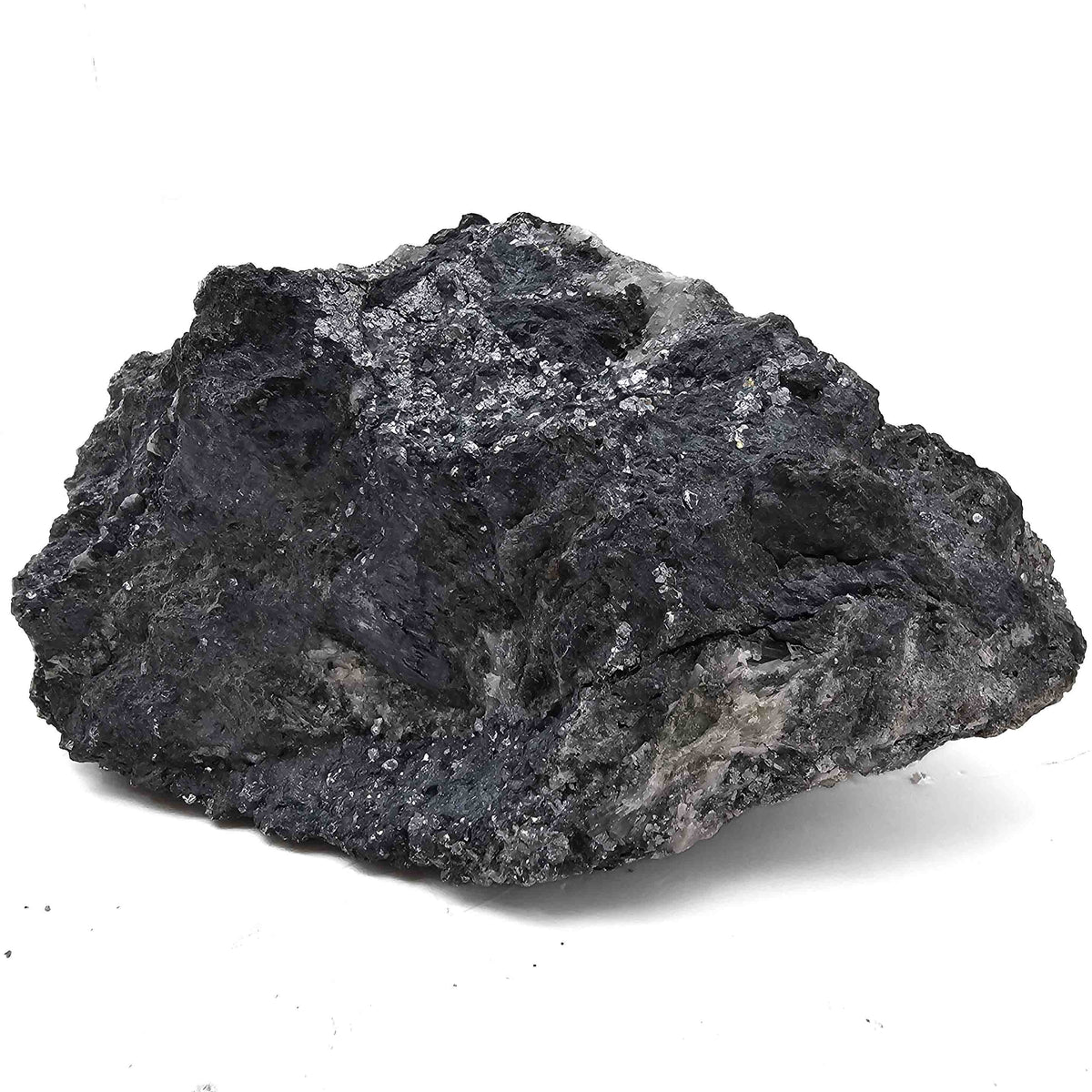
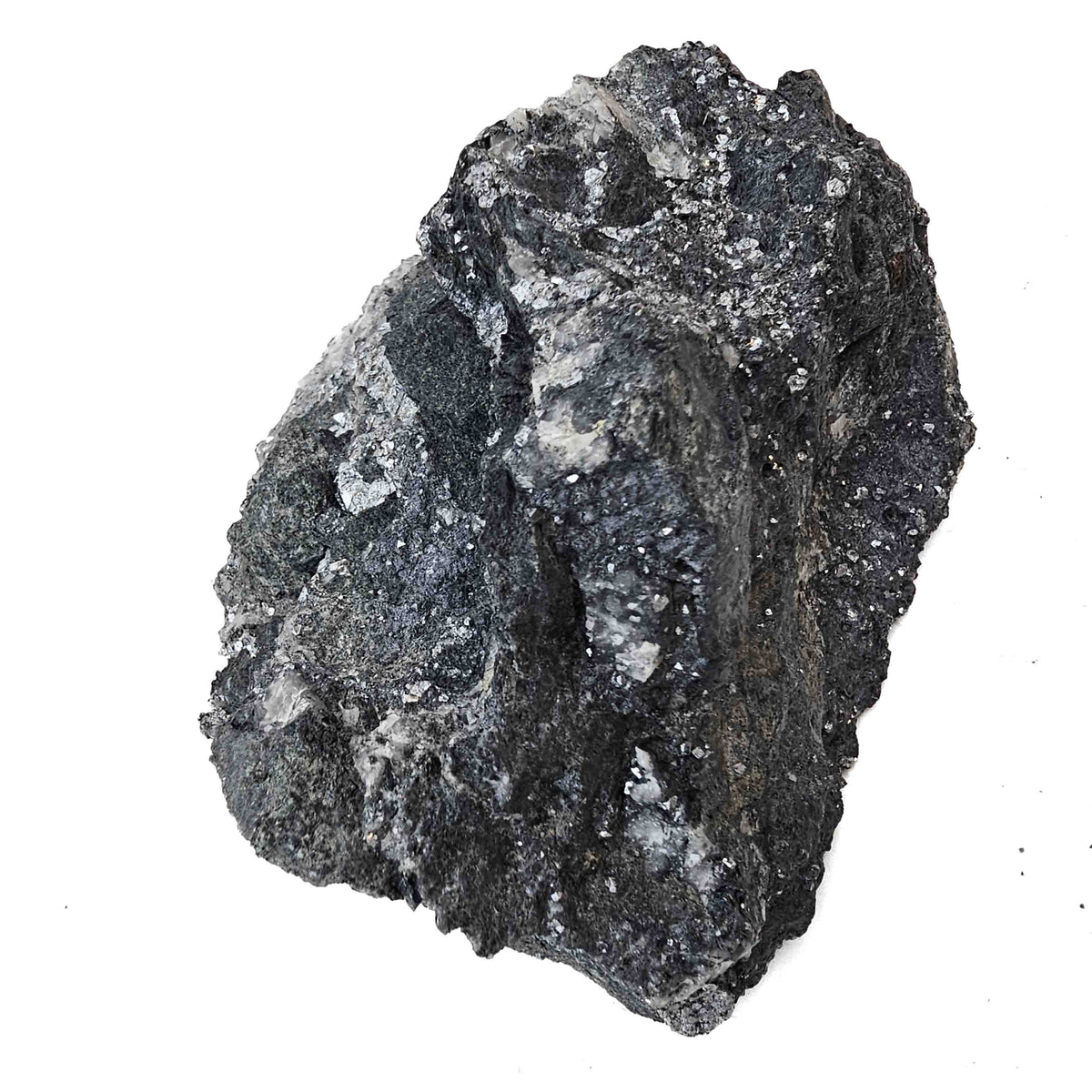
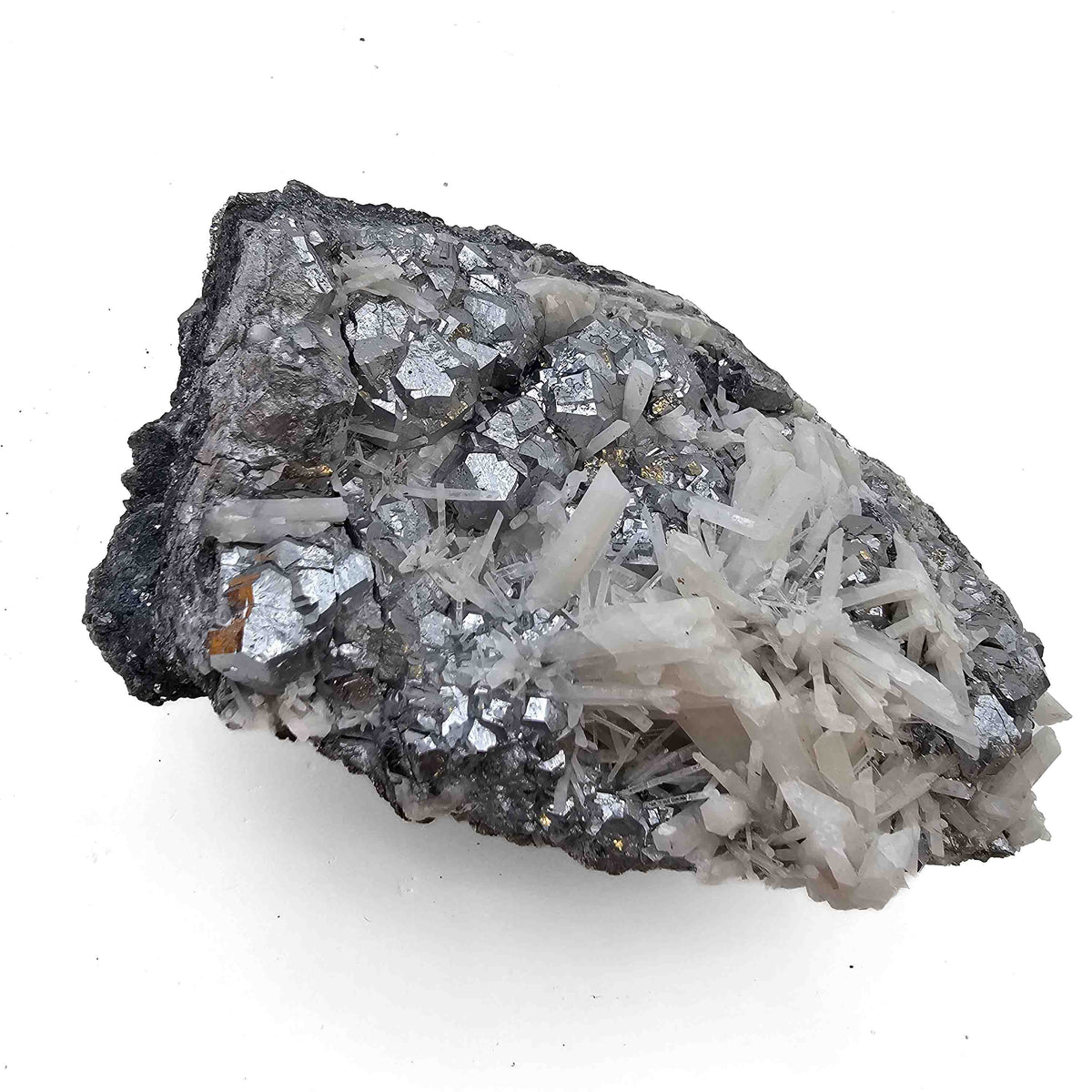
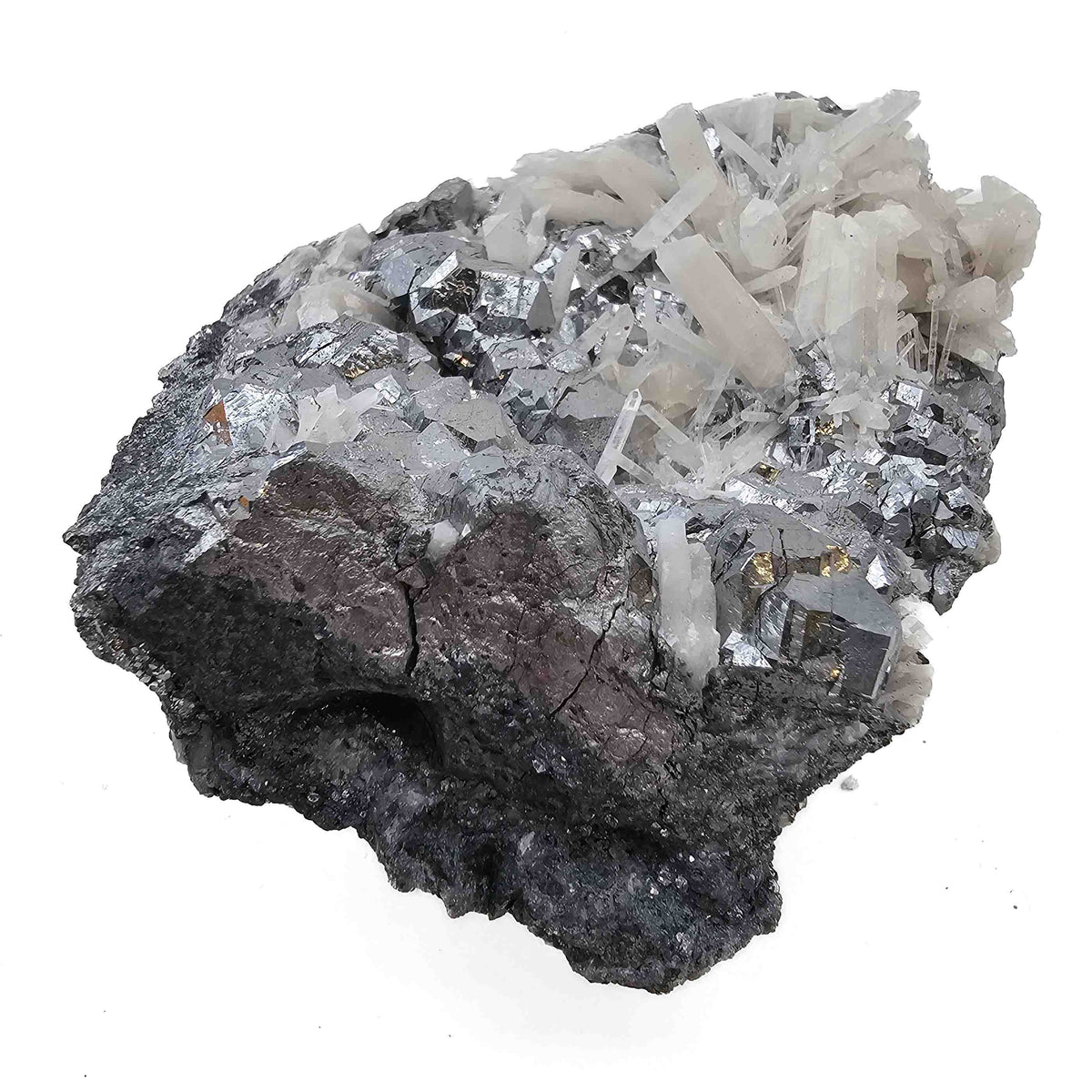
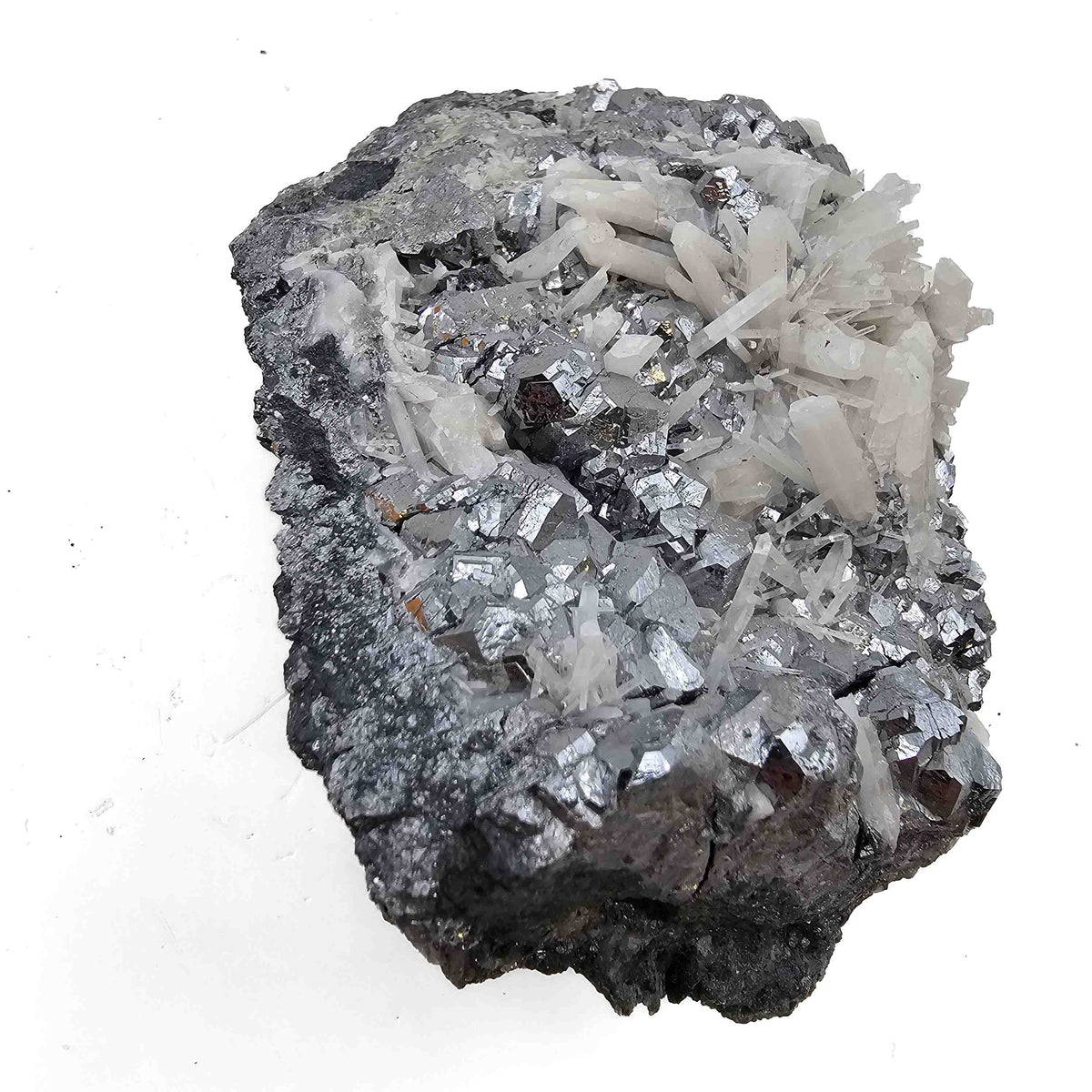
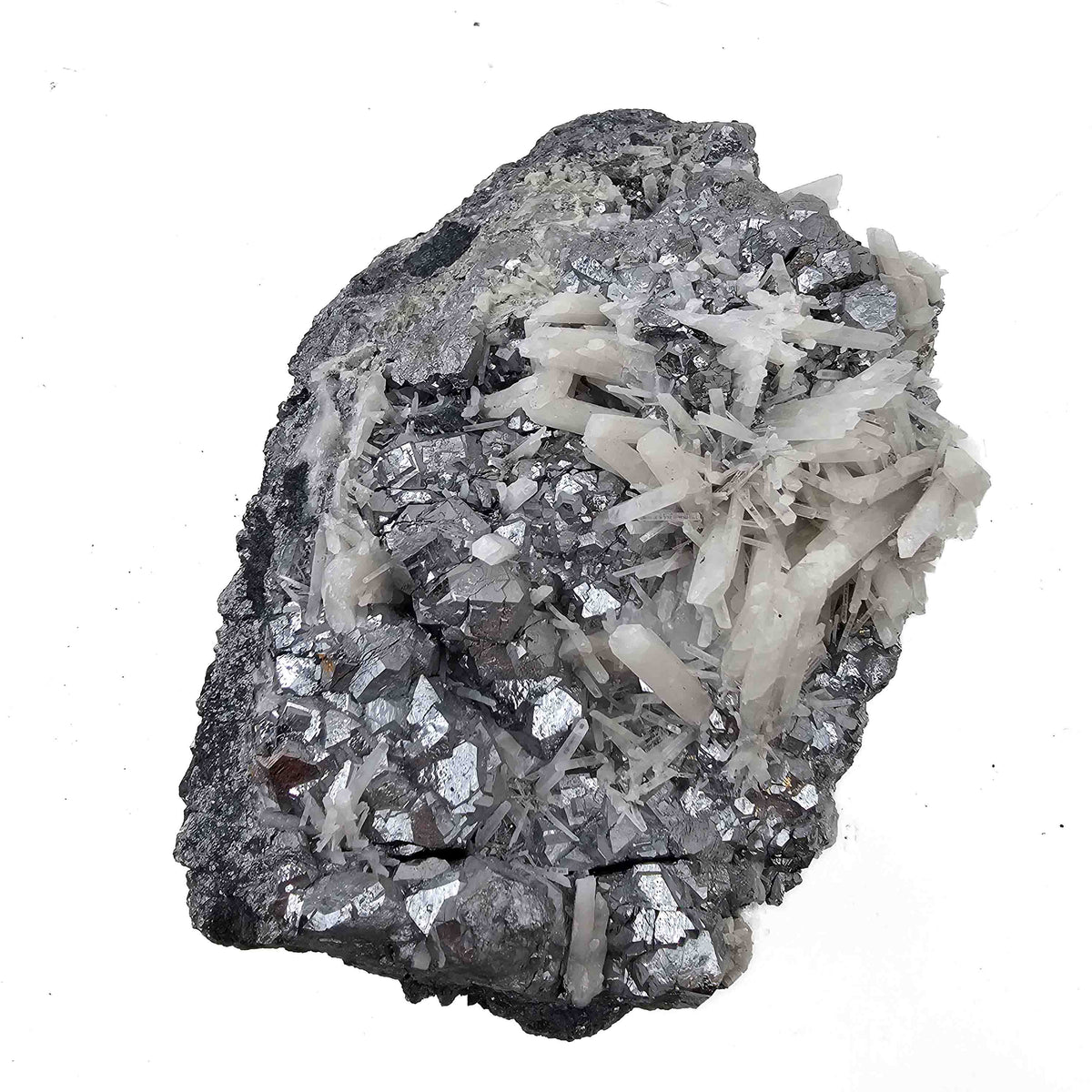
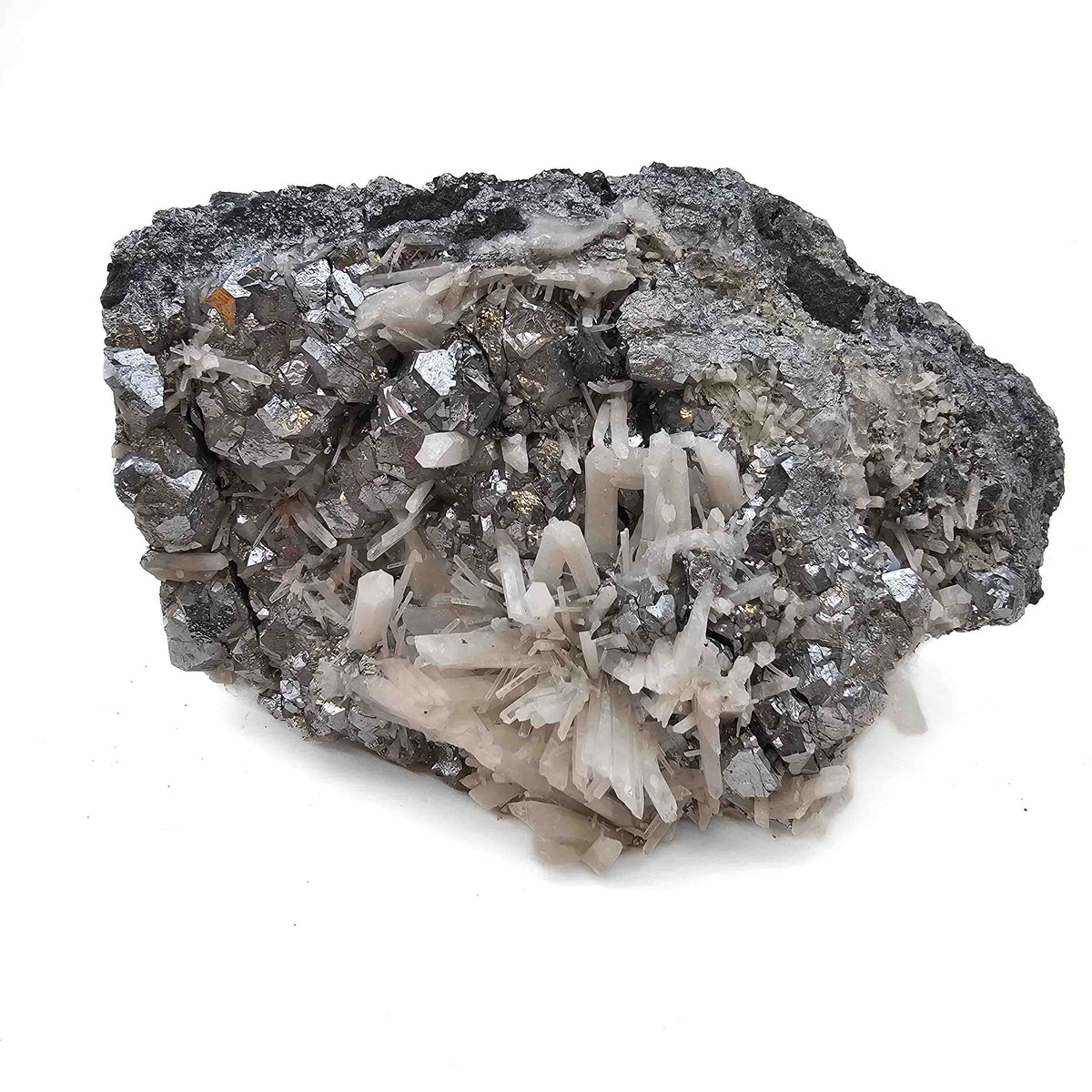
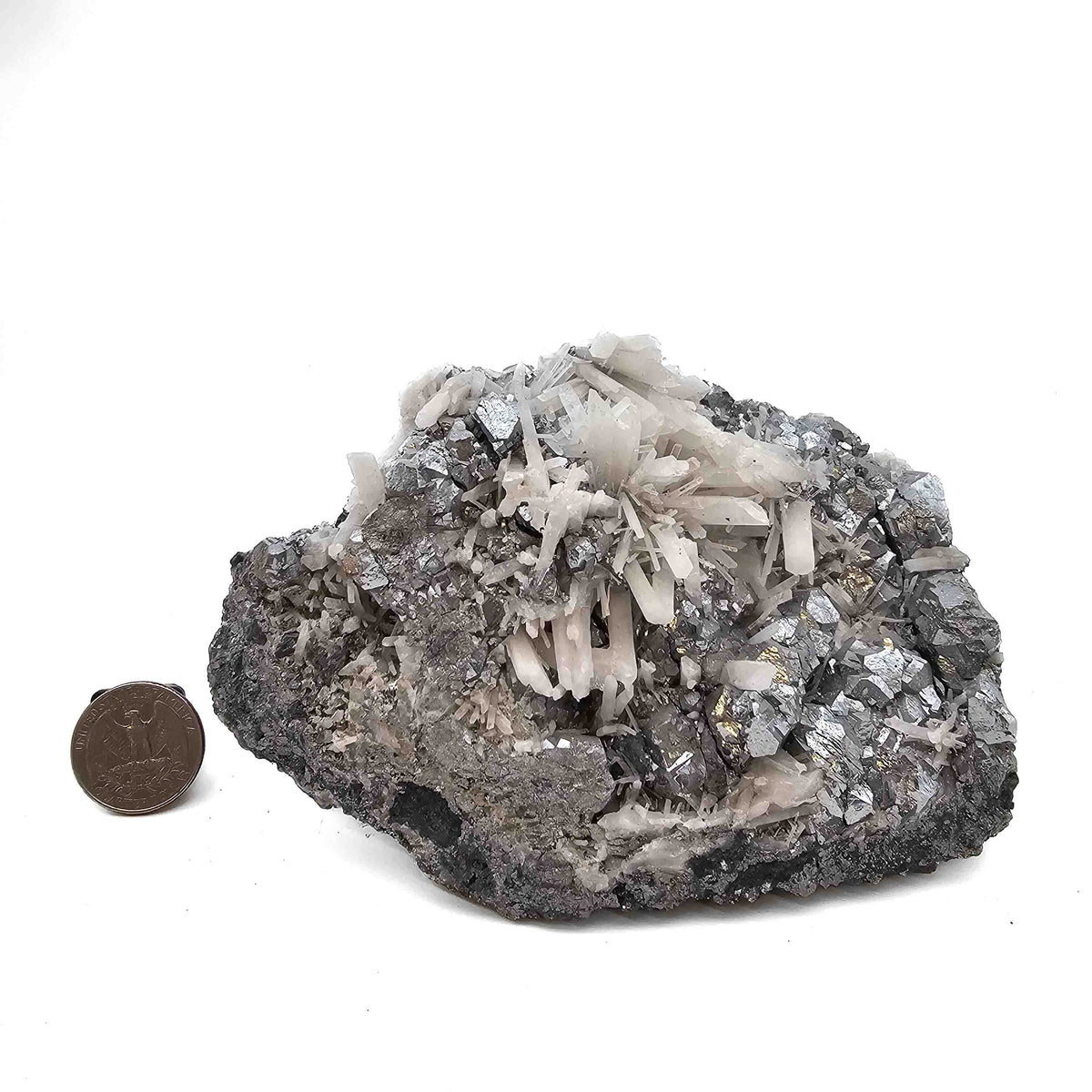
This one of a kind Skutterudite mineral specimen from Morocco features a dramatic contrast between bright metallic grey crystal faces and milky white crystal sprays. The Skutterudite forms dense, lustrous, steel-grey to silver-grey masses across a dark matrix, with reflective cubic to irregular crystal surfaces catching the light throughout the piece. White, bladed to prismatic crystals grow across the surface in radiating clusters, adding sharp texture and strong visual contrast against the darker metallic base.
Skutterudite is a cobalt arsenide mineral historically associated with cobalt and nickel ore deposits. It was first described from the Skutterud mines in Norway, from which it takes its name, and is known for its metallic luster, high density, and silvery-grey appearance. Moroccan specimens are often collected for their bold metallic surfaces and attractive associations with pale quartz or calcite, especially when the contrast creates a striking display piece like this one.
Chemical Composition: CoAs3
Skutterudite is a cobalt arsenide (CoAs3) and contains arsenic. Handle with care, wash your hands after handling, do not lick or ingest, and keep away from children and pets.
Quantity: 1pc
With this product, you will get the actual stone in the photograph.