


By Adam Kelliher
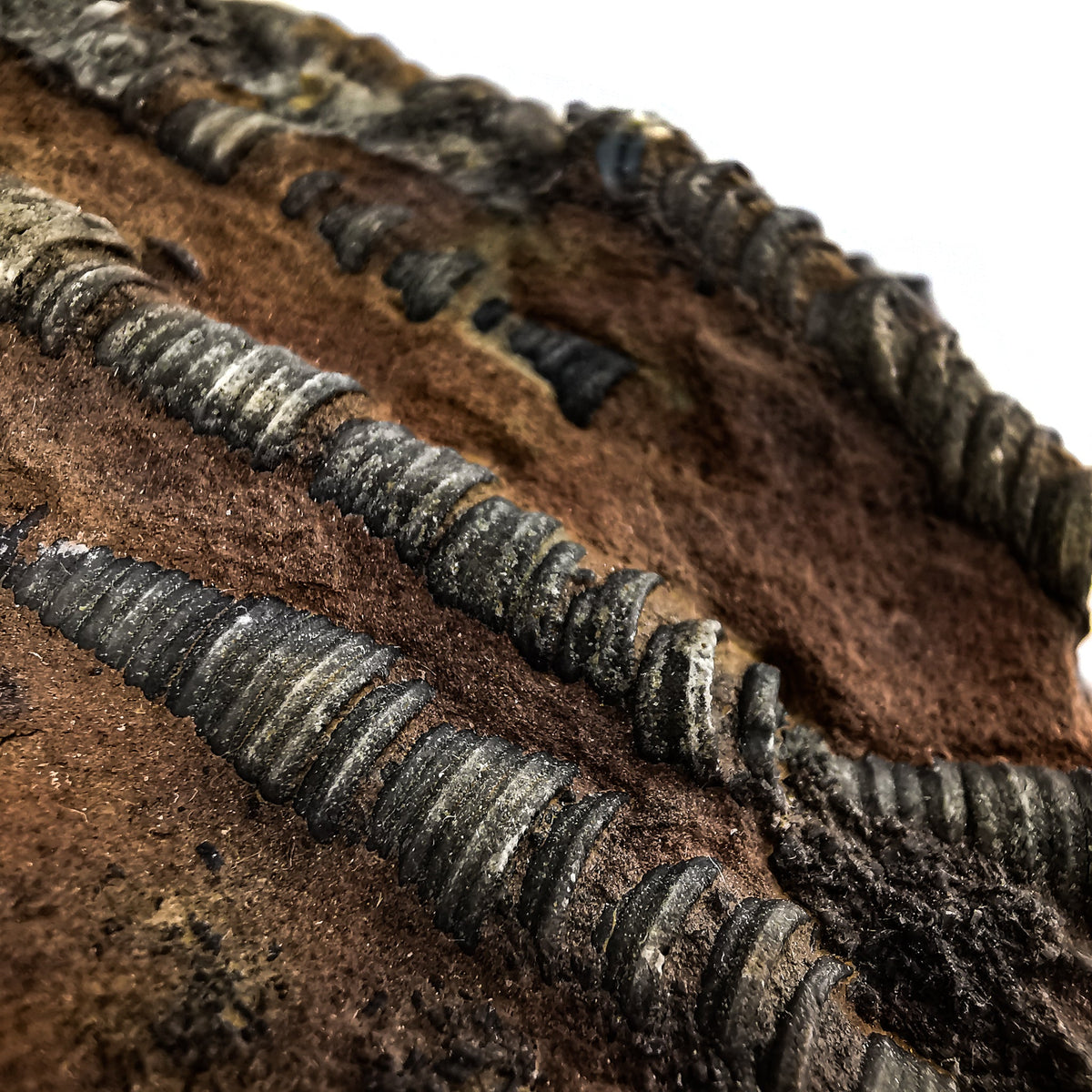
Crinoids are the fossil that fools everyone. They look like a flower on a stalk, so people call them sea lilies. They were animals the whole time.
What they are
Crinoids are echinoderms, the same group as sea stars and sea urchins. Stalked crinoids, the sea lilies, lived attached to the sea floor and filtered food out of passing currents. Today's living crinoids are the only attached suspension-feeding echinoderms left.[1]

Whole rocks made of them
Crinoids dominated the Paleozoic echinoderm record and shallow seas until the Permo-Triassic extinction, when they came close to disappearing. Many Paleozoic limestones are made up largely of crinoid fragments.[1] Those little round discs you find in limestone, often with a hole in the middle, are usually stem pieces.
Still around
Living stalked crinoids mostly live in deep water. The feather stars, which have no stalk, can crawl around on small structures called cirri, with the mouth facing up.[1]
Our crinoid plaques are B grade, which means some imperfections. They still make a great wall piece, and they're a good way to show a class that a plant-looking fossil can be an animal.
See what's new: browse our newest arrivals for the latest pieces added to the shop.
Sources
- University of California Museum of Paleontology. Crinoids: sea lilies and feather stars.