





Specifications
Description
Locality: Shigar Valley, Skardu District, Gilgit-Baltistan, Pakistan
The Shigar Valley, north of Skardu, is the gateway for most expeditions to K2, the world's second-highest peak, and one of the most important gem valleys of Baltistan. Its gemstones grow in pockets and cavities in zoned pegmatite dikes that cut the metamorphic rocks of the Karakoram, alongside topaz, green fluorite, black tourmaline, garnet, morganite and goshenite.
Geochemical studies suggest the Shigar pegmatites formed from the melting of metamorphosed sediments, with their emplacement linked to the collision of the Indian and Eurasian plates. Aquamarine mining in the valley has a long record: a 1918 Geological Survey of India report described the aquamarine mines of Dassu on the Braldu River.
Aquamarine is the blue to blue-green variety of beryl, the mineral that also includes emerald and morganite. Beryl is a beryllium aluminium silicate, Be3Al2Si6O18, with a hardness of 7.5 to 8, and it most often forms in granites and granite pegmatites alongside quartz, feldspar and mica.
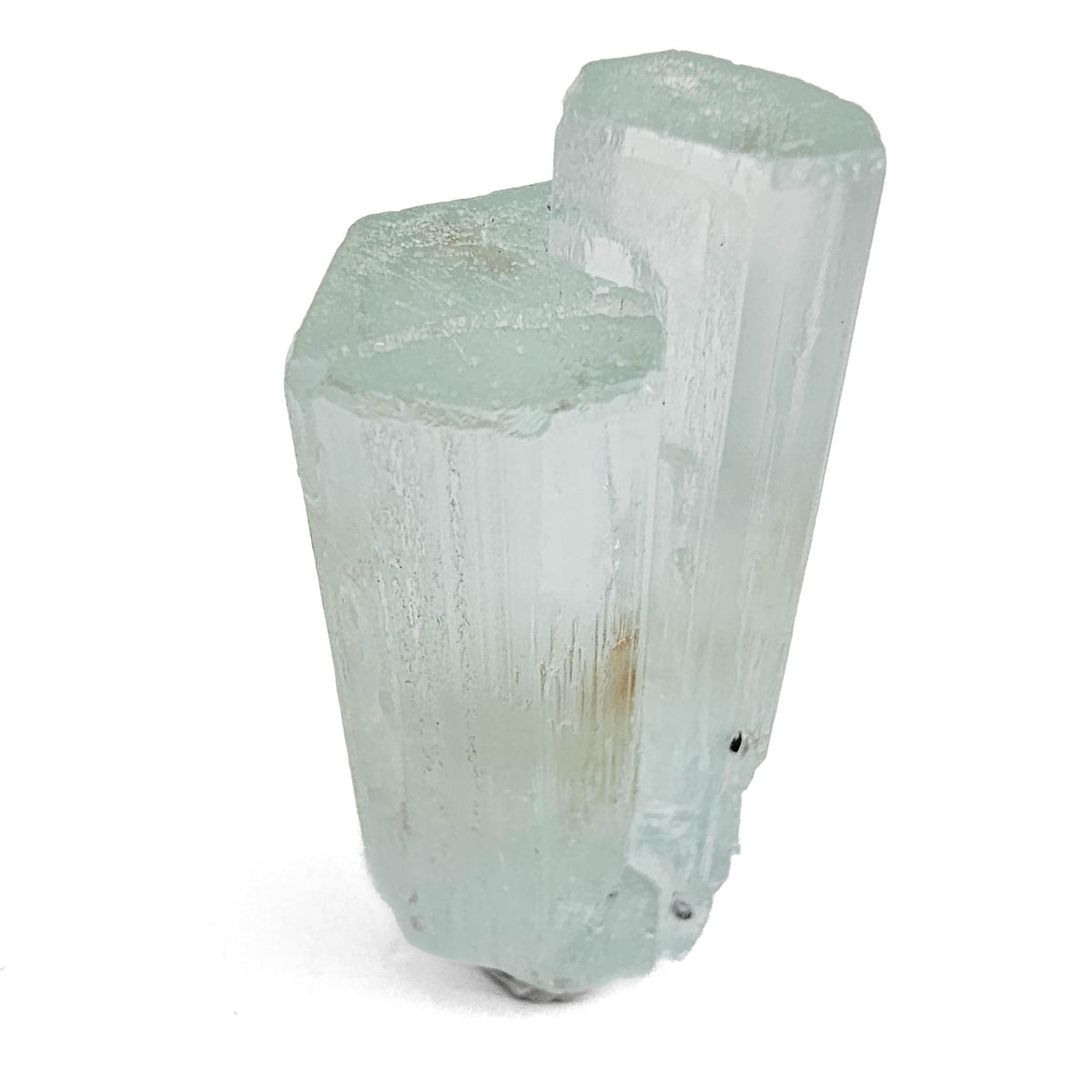
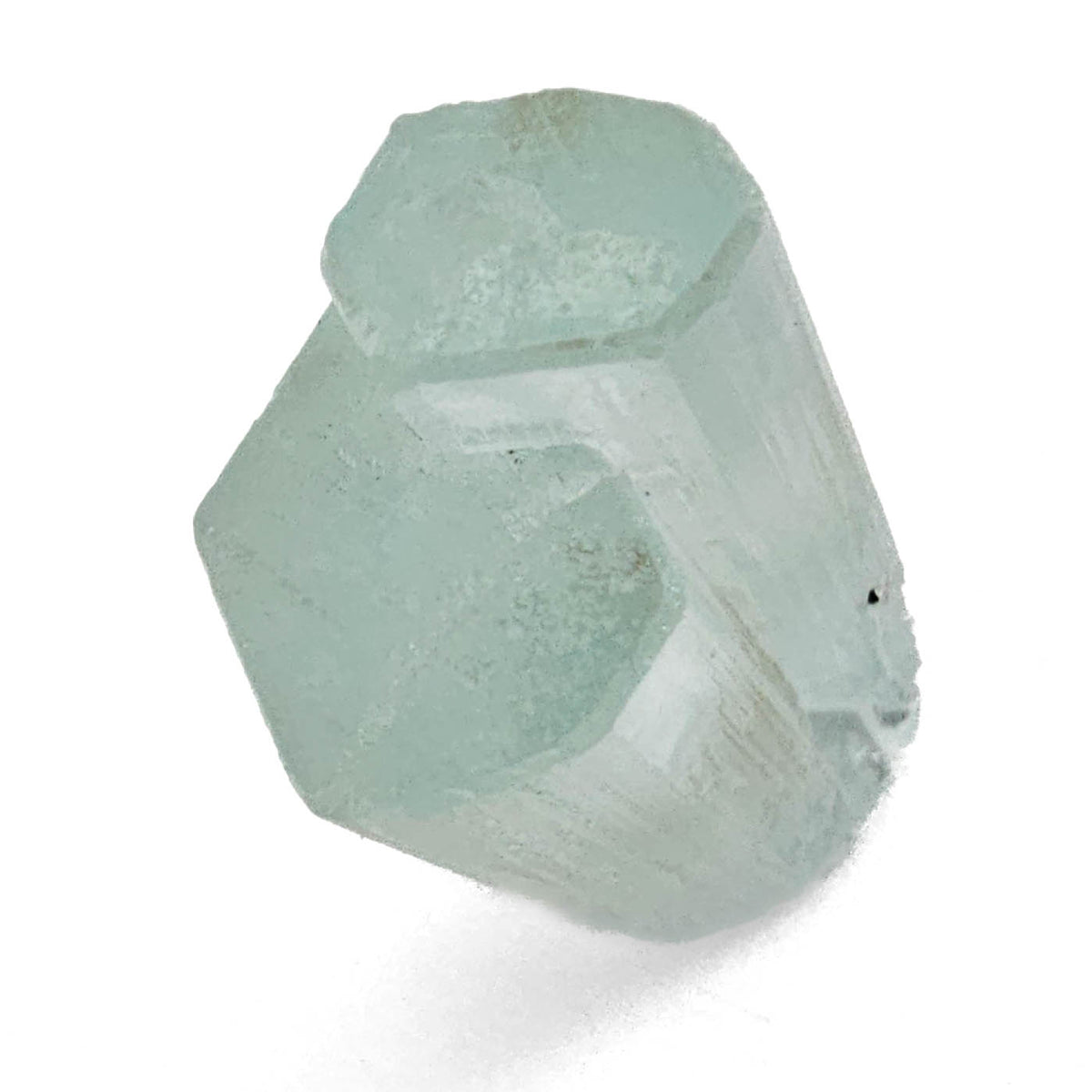
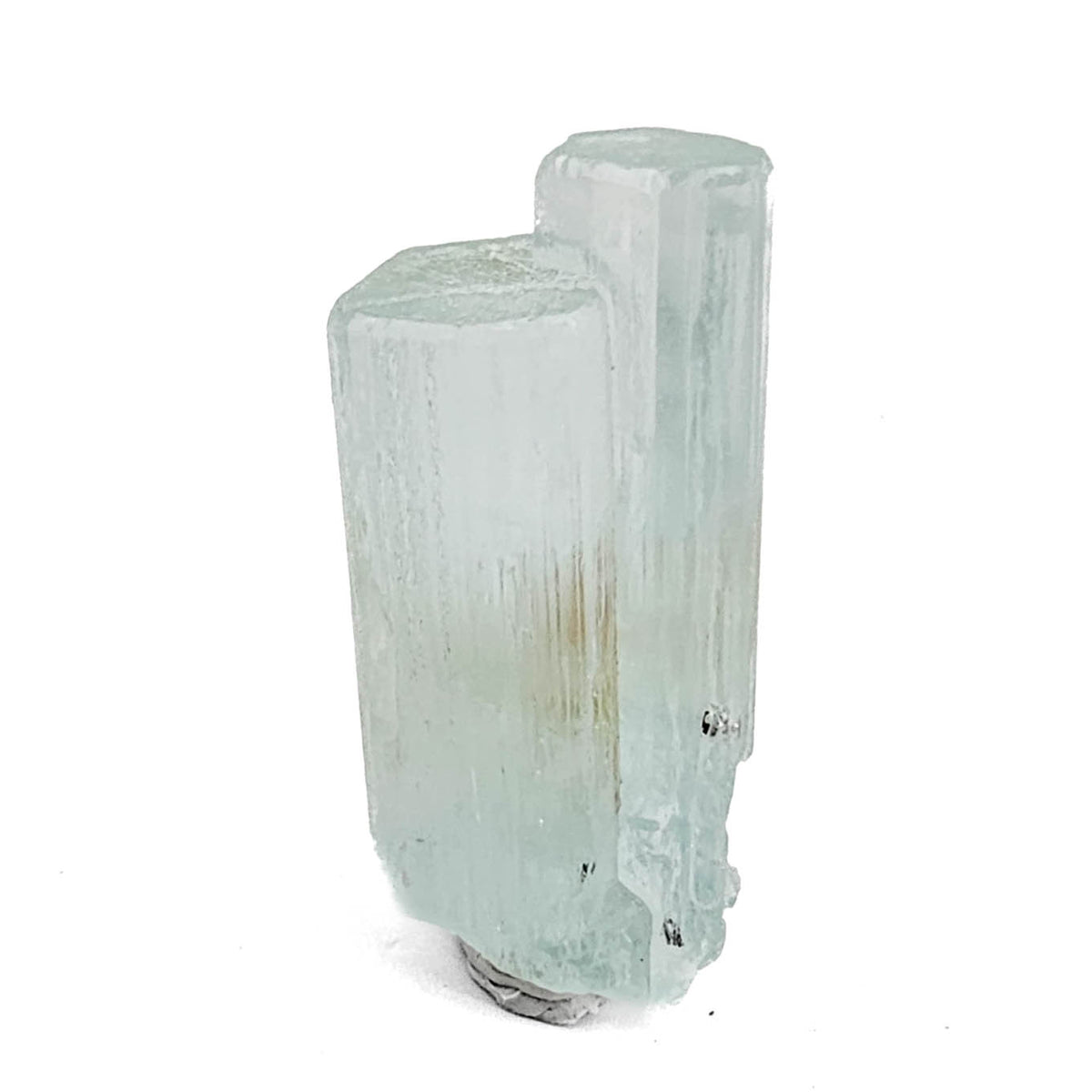
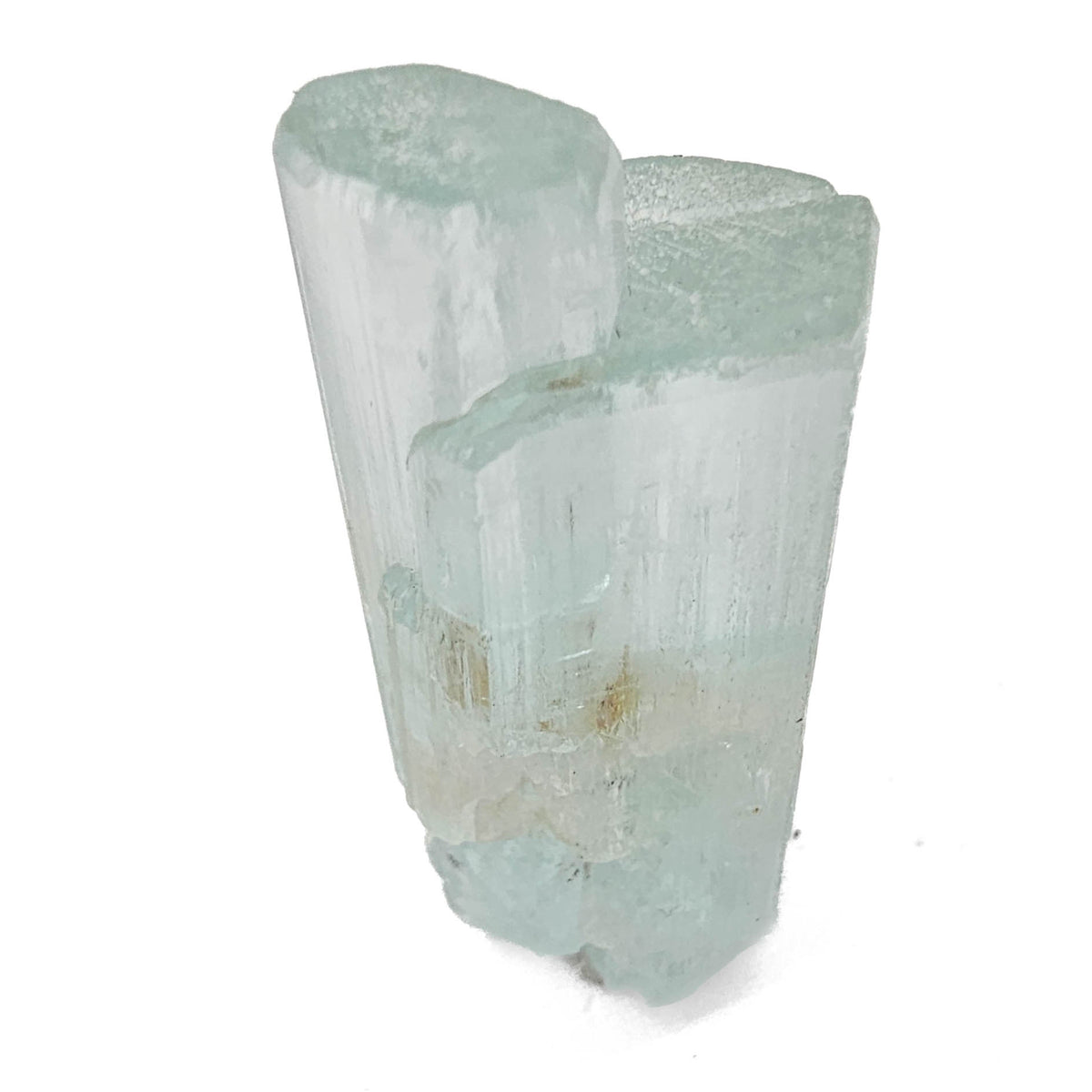
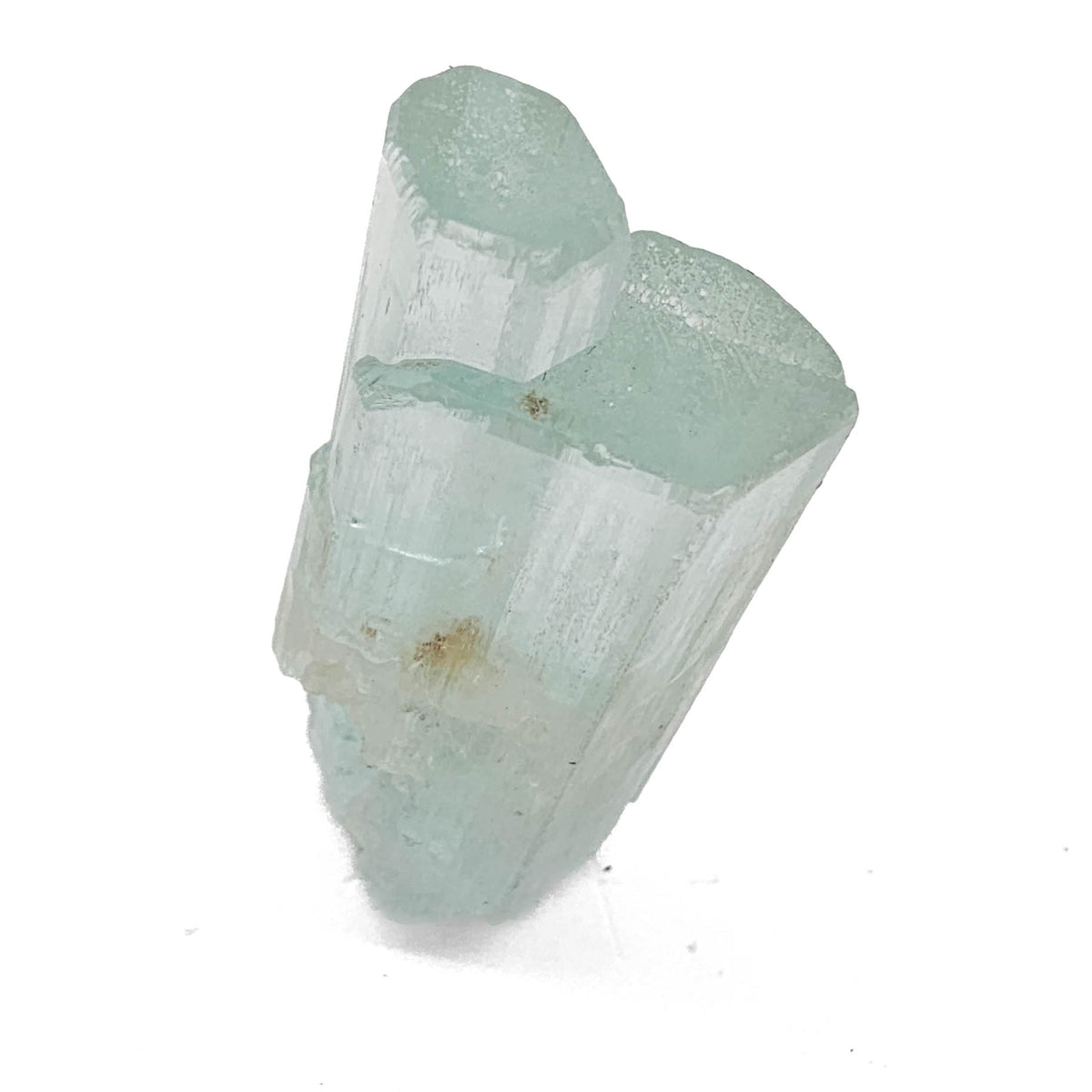
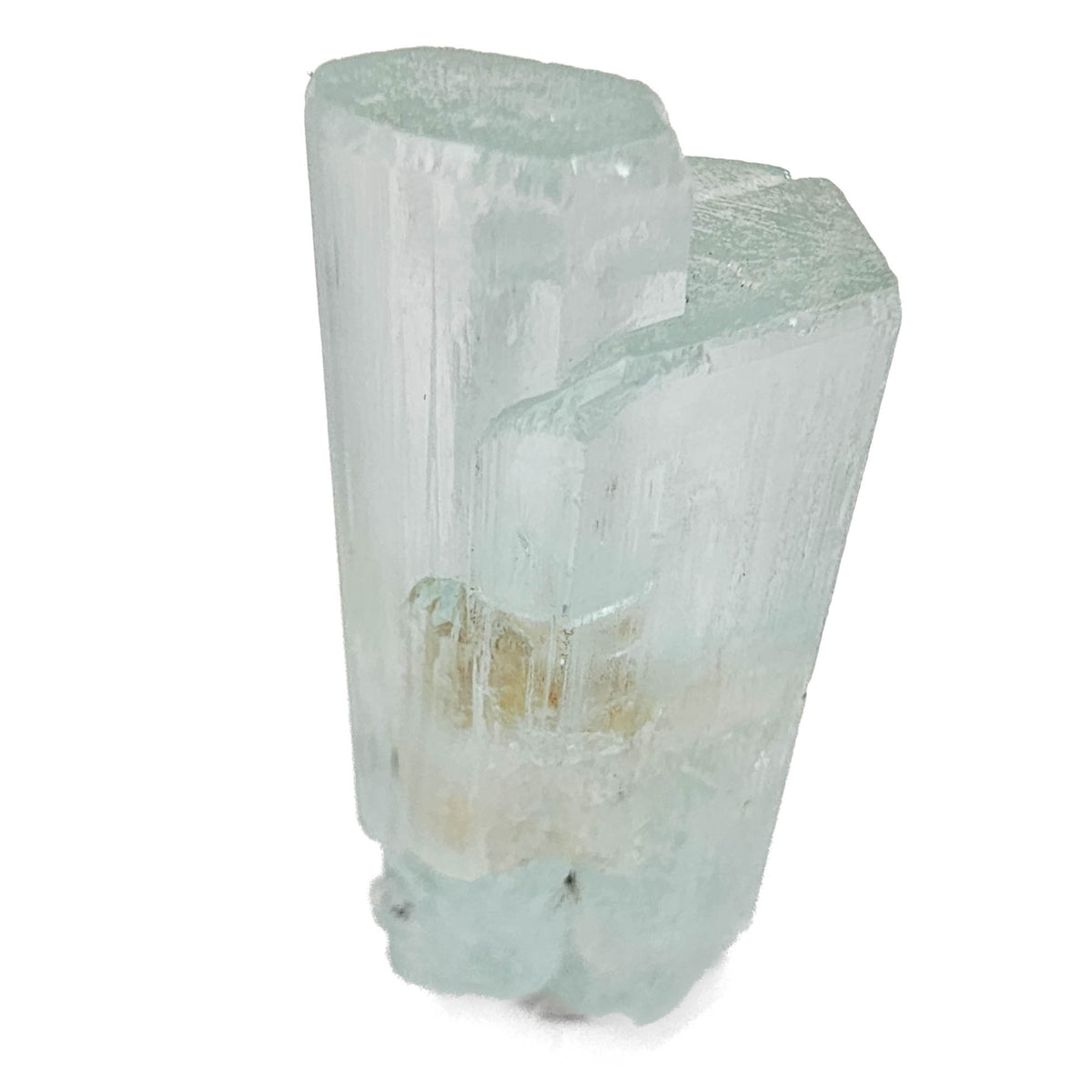
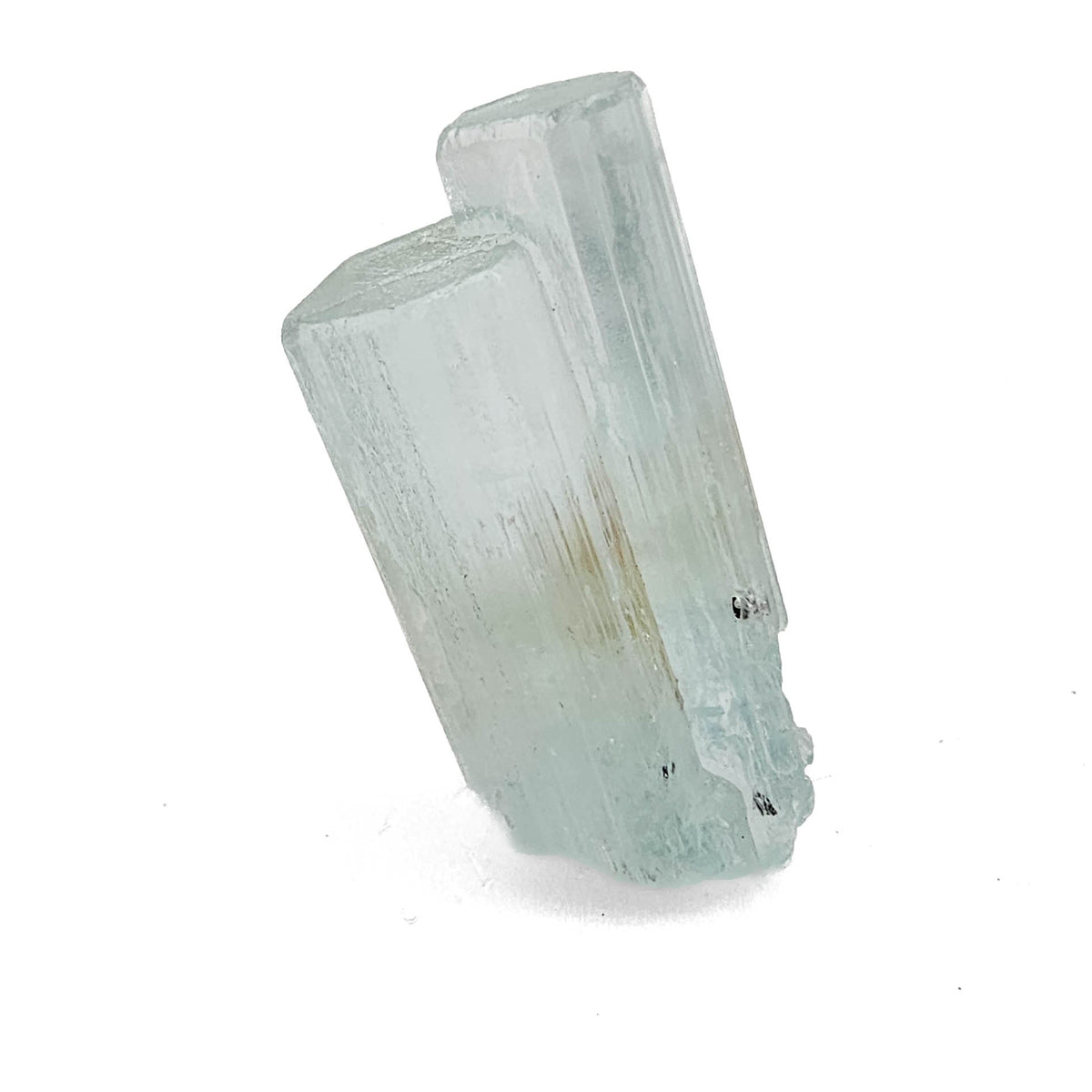
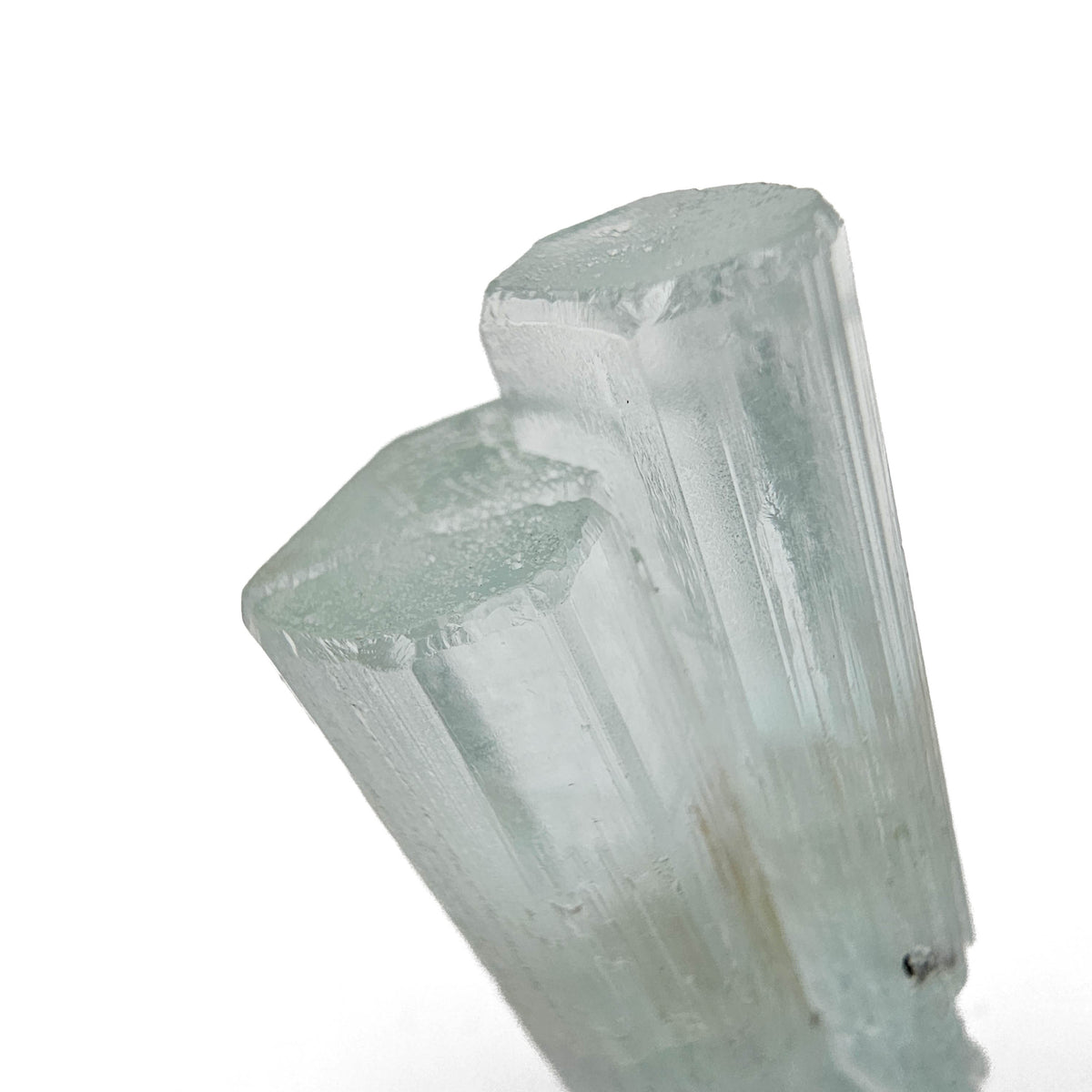
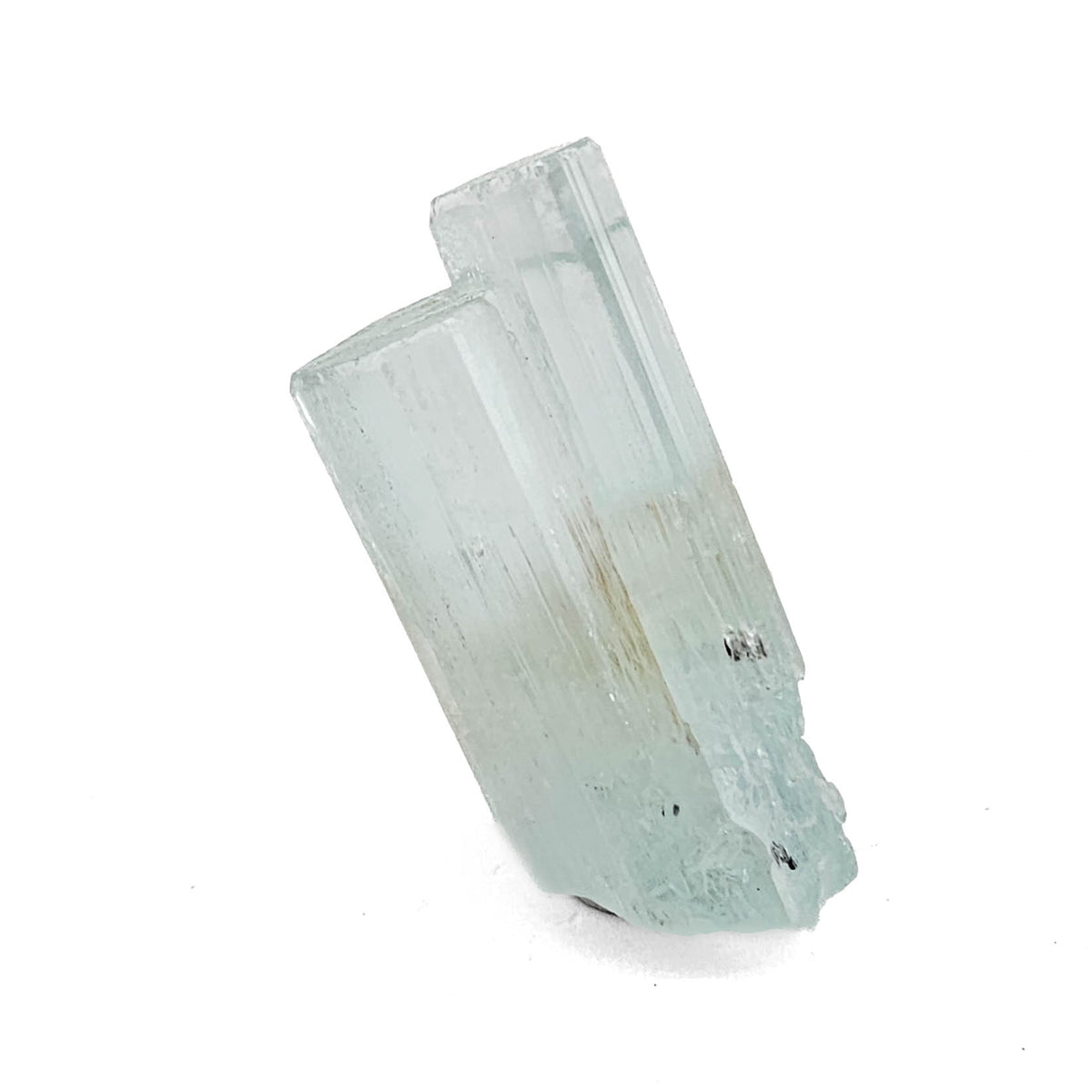
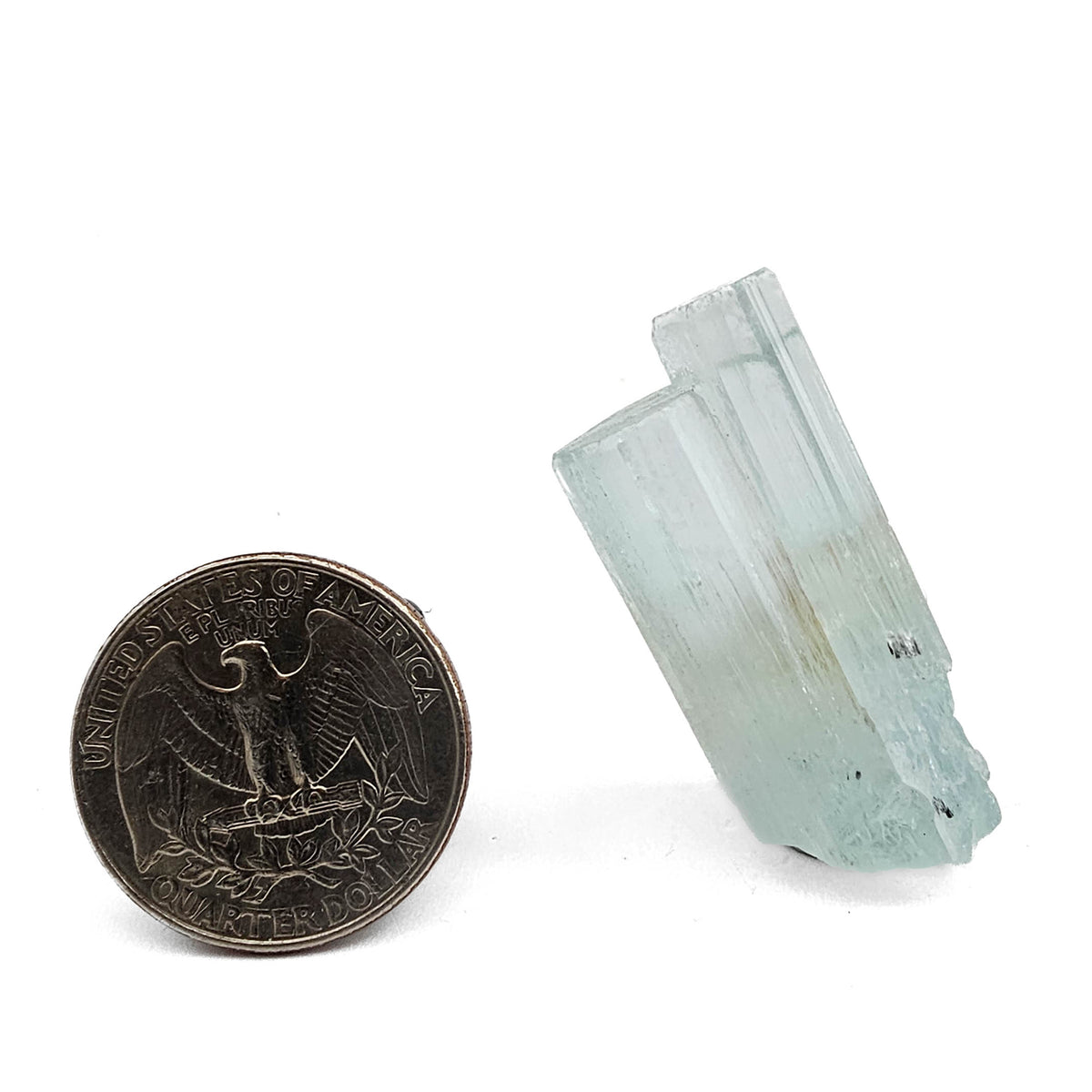
This one of a kind Aquamarine specimen from Pakistan features two intergrown pale blue Beryl crystals in a compact upright formation. The crystals are transparent to translucent with straight prismatic sides, clear vertical striations, and a light icy-blue colour. Both upper ends appear naturally broken or incomplete rather than fully terminated, and the specimen shows a few small dark inclusions, minor iron staining, edge wear, and natural contact areas along the lower portion. The joined twin-like form gives the piece a solid display shape while keeping the crystal structure easy to see.
Aquamarine is the blue variety of Beryl, the same mineral family as Emerald, Morganite, Heliodor, and Goshenite. Pakistan is well known for Aquamarine from pegmatite deposits in the northern mountain regions, especially around Skardu and the broader Gilgit-Baltistan area. These localities are known for producing blue Beryl crystals with prismatic form, natural striations, and a clean pale blue to blue-green colour.
Spiritually, Aquamarine is often associated with calm communication, emotional balance, clear thinking, and steady confidence. It is commonly connected with the throat chakra and is often used by crystal collectors as a stone for peace, honesty, and self-expression.
Chemical Composition: Be3Al2Si6O18
Quantity: 1pc
With this product, you will get the actual stone in the photograph.