


By Adam Kelliher
The short answer: "UV reactive" means a mineral glows (fluoresces) under ultraviolet light. To see it, use a longwave UV light (about 365 nm) in a dark room, and for minerals that only respond to shortwave (about 254 nm) you'll need a shortwave lamp and UV-blocking eye protection.[1][2]
Turning the lights off and a UV light on is one of the best tricks in the hobby. Rocks you walk past every day turn green, orange, pink or blue. Here's how to do it properly.
What fluorescence is
Some minerals absorb invisible ultraviolet light and give back part of that energy as visible light. That's fluorescence. If a mineral keeps glowing for a moment after the light goes off, that's phosphorescence.[1][2] The word comes from fluorite: George Stokes named the effect after it in 1852.[1]
Longwave vs shortwave
- Longwave (UVA, about 365 nm). The common choice. Inexpensive, and it shows yooperlite, most fluorite and others. The Fluorescent Mineral Society estimates only about 15% of fluorescent minerals respond well to longwave.[1]
- Shortwave (UVC, about 254 nm). Brings out a lot of minerals that do little under longwave, perhaps 90% of fluorescent minerals, including classics like willemite. Shortwave lamps cost more, and the light is hazardous to eyes and skin, so wear UV-blocking glasses and keep it off skin.[1]
- Midwave lamps exist too, but most collectors start with longwave and add shortwave later.

Getting a good result
- Get it dark. Fluorescence is often faint. A dark room makes all the difference.
- Use a filtered light. Unfiltered lights leak violet light that washes out the glow and can make white rocks look like they're glowing blue when they aren't. A filtered 365 nm light shows much more.[1]
- Try both wavelengths if you can. The same rock can glow one colour under longwave and another under shortwave, or only under one.[1]
- Don't assume. Fluorescence varies between specimens of the same mineral, even from the same locality. It's a clue, not proof of what something is.[2]

What to try first
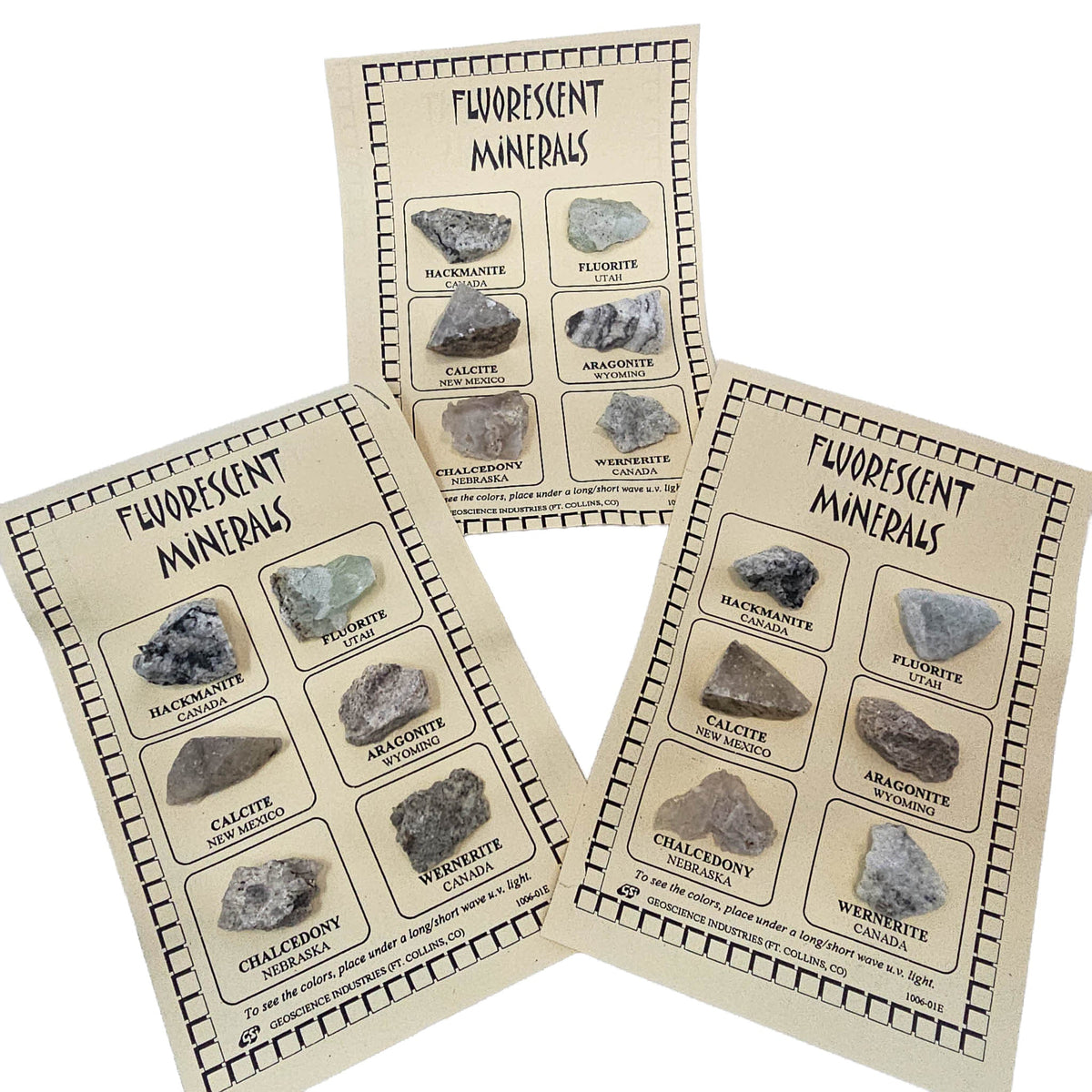
Fluorite, calcite, sodalite and hackmanite, and opal are good starting points.[2] Hyalite opal often glows bright green under shortwave UV because of trace uranium.[2] And of course yooperlite, which we explain in What Is Yooperlite?.

Safety
- Never look into a UV light or shine it in someone's eyes, especially shortwave.[1]
- Wear UV-blocking glasses with shortwave lamps.[1]
- Keep UV lights away from kids unless an adult is in charge.
Our UV lights and fluorescent minerals are a good place to start. For a mineral-by-mineral rundown, read our fluorescent minerals post.
See what's new: browse our newest arrivals for the latest pieces added to the shop.
Sources
- Fluorescent Mineral Society: Fluorescence in Minerals; Ultraviolet Spectrum; Common Fluorescent Minerals; Is My Rock Really Fluorescent?
- Mindat.org (Hudson Institute of Mineralogy): fluorescence glossary entry and mineral pages for fluorite, calcite, sodalite and hyalite opal.