





Science: Crystal & Formation
- Formula
- CaAl2Si3O10·3H2O
- Family
- Silicates
- Crystal System
- Monoclinic
- Habit
- Prismatic, Bladed, Radiating
- Cleavage
- Perfect {110} and {1-10}
- Named After
- From the Greek for "worm", for its curling when heated.
- Locality
- India
More Specs
Lore & Tradition
Chakra (Modern Lore)


Zodiac, birthstone and chakra associations are cultural traditions and modern crystal lore, shared for interest only; they are not health, medical or scientific claims.
Description
Locality: Nashik-area quarries, Nashik District, Maharashtra, India
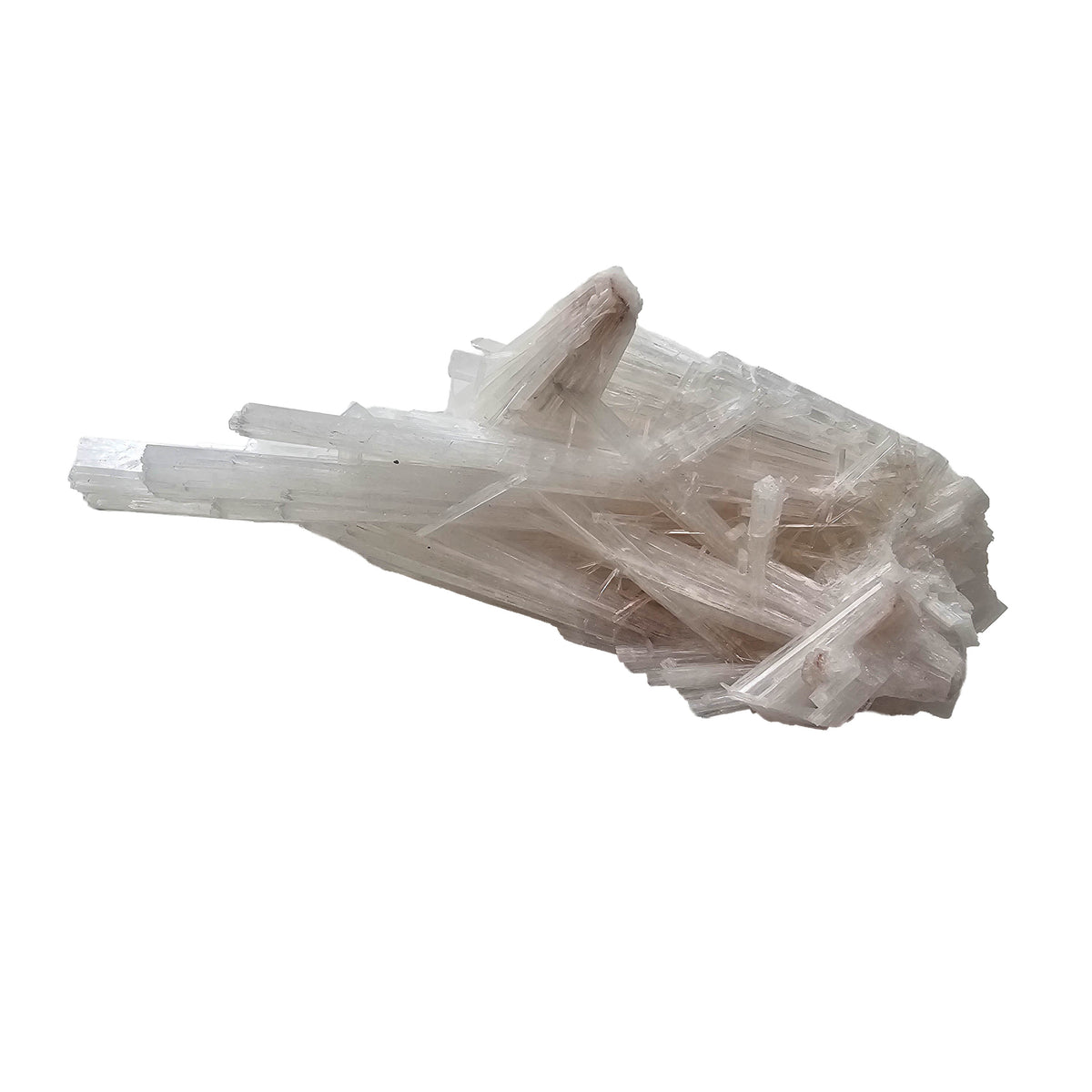
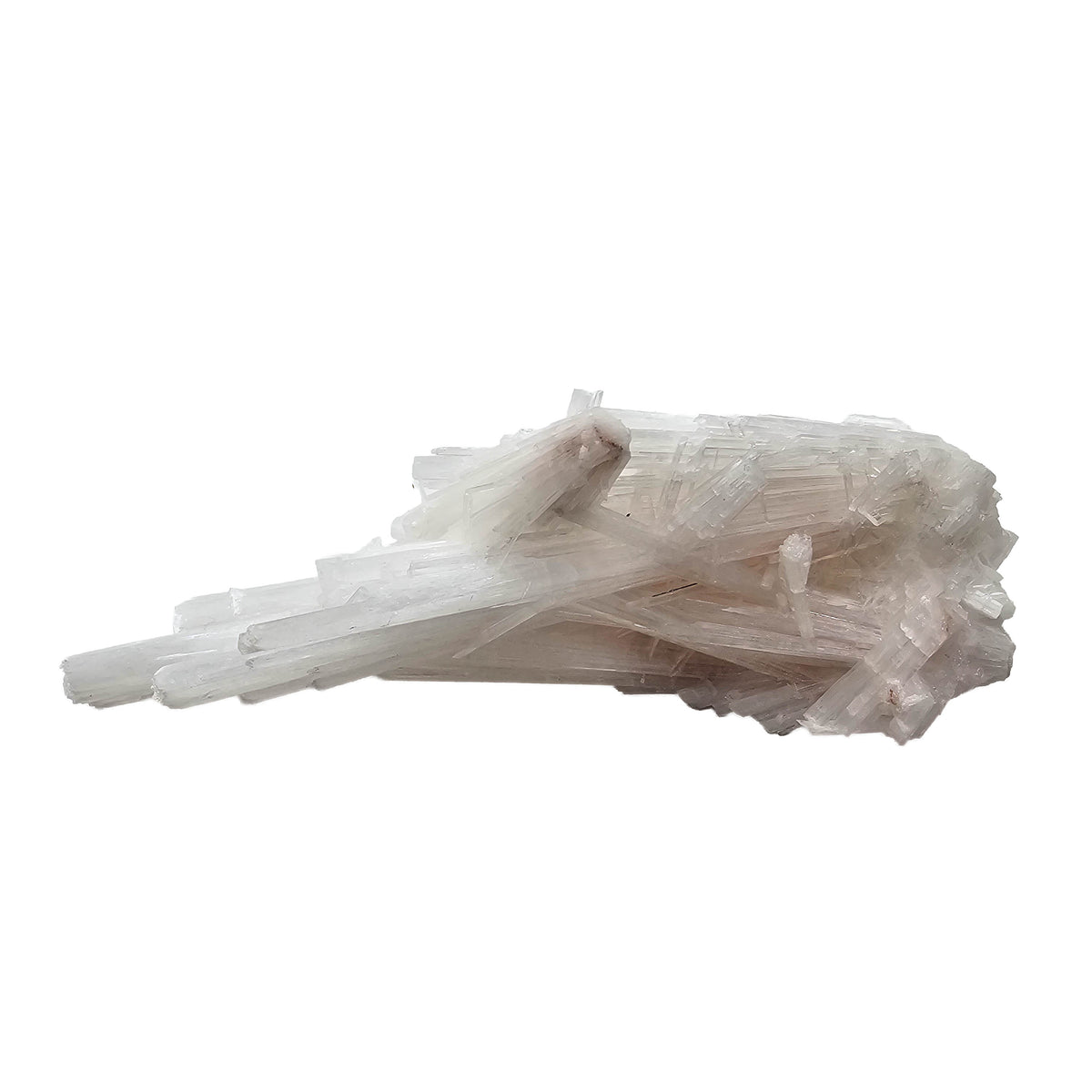
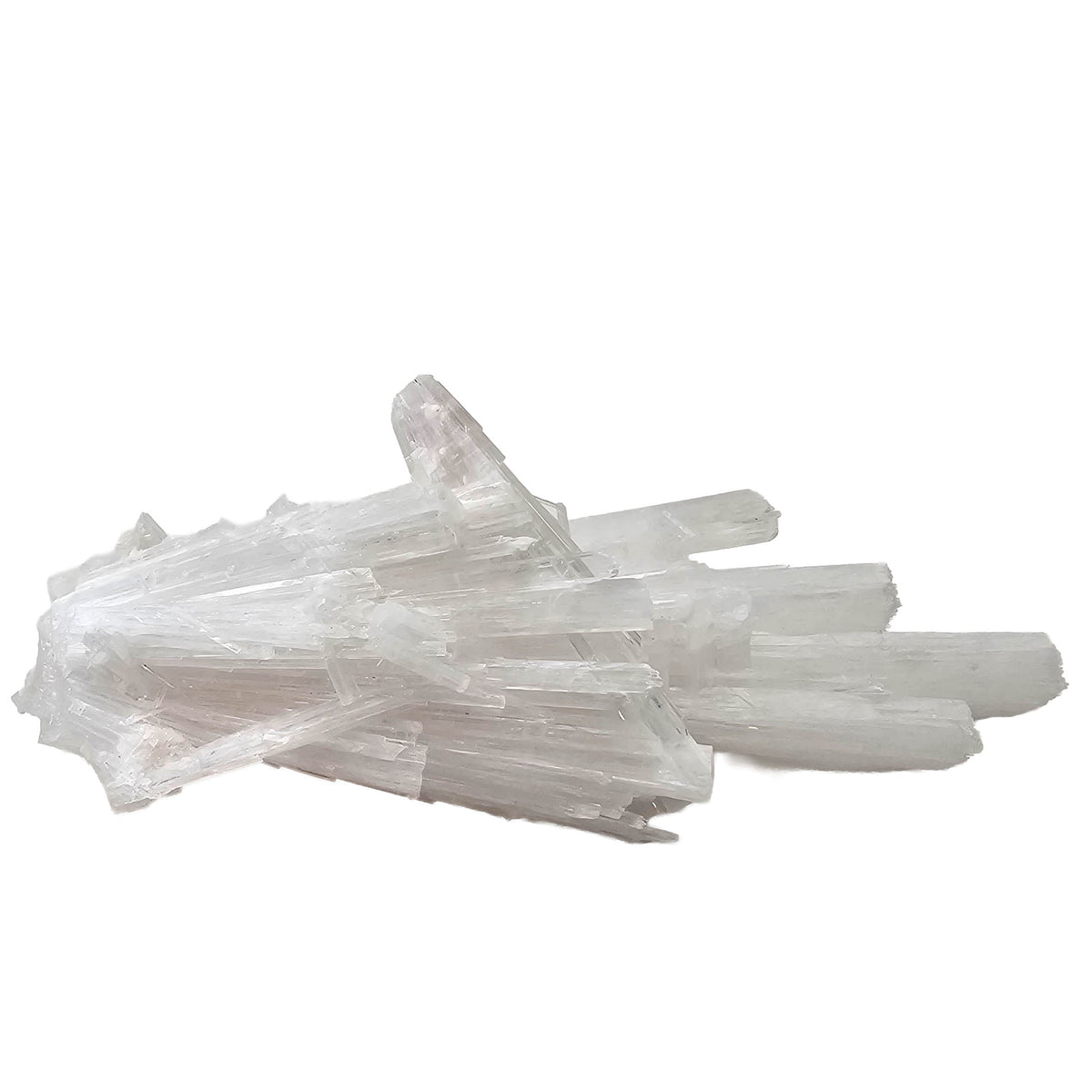
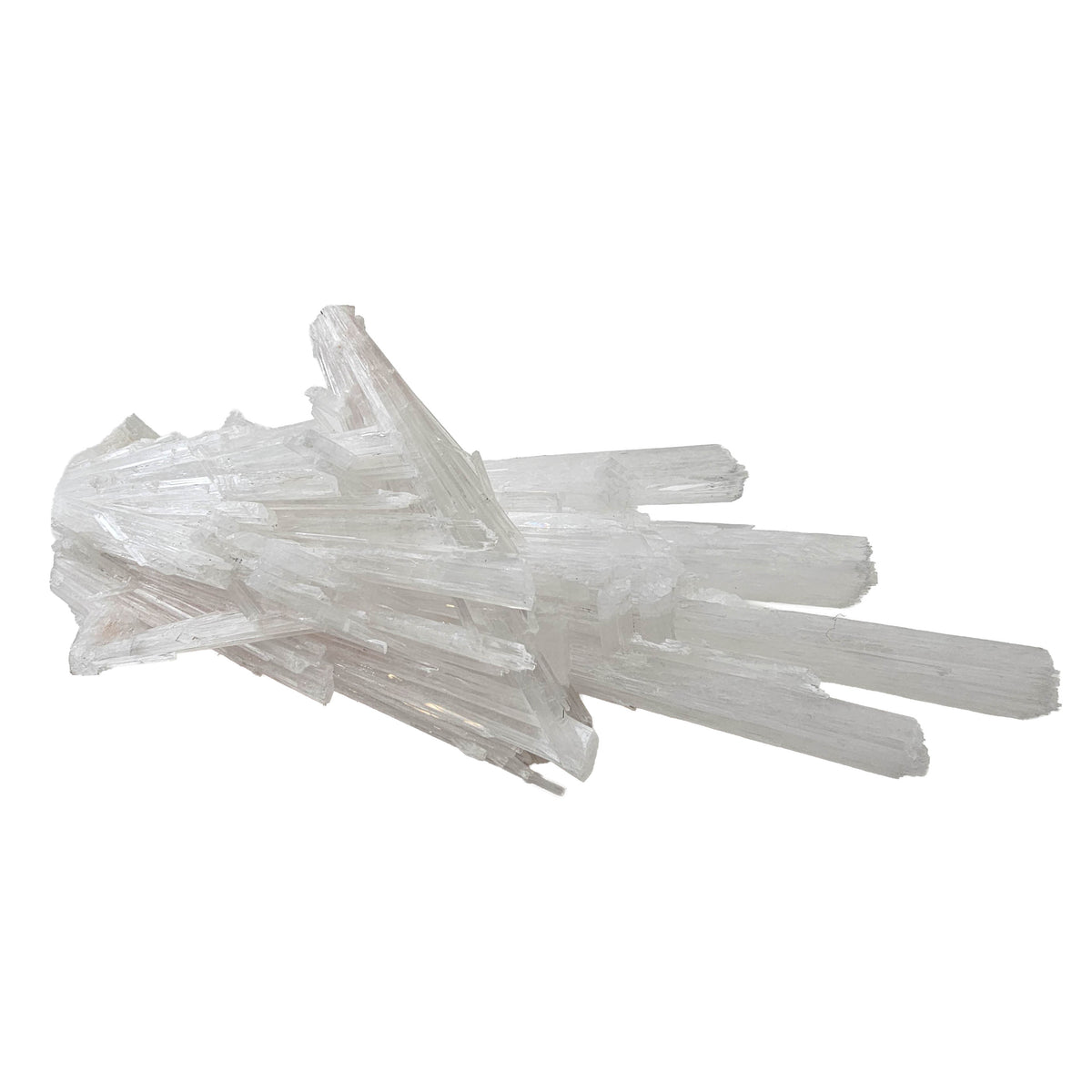
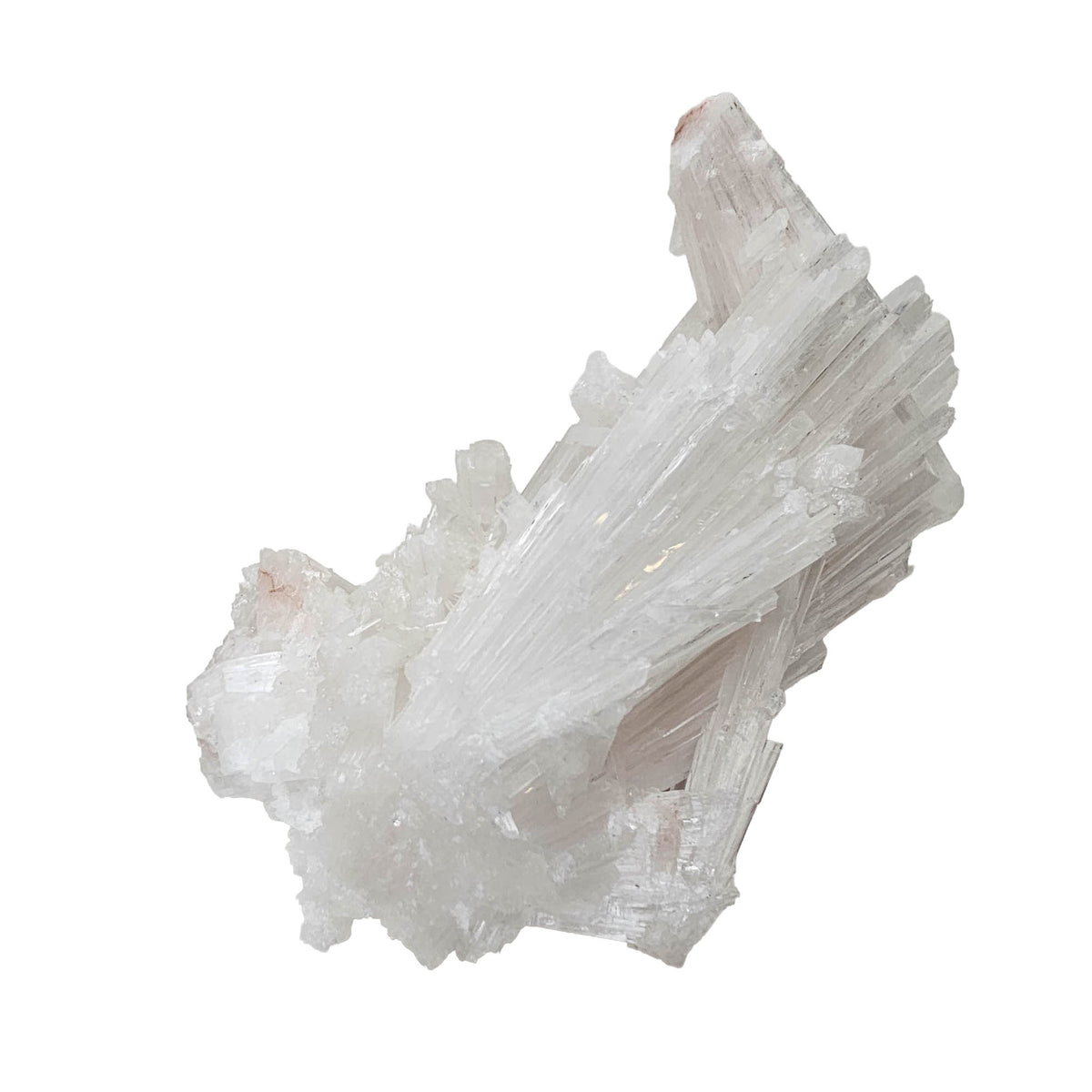
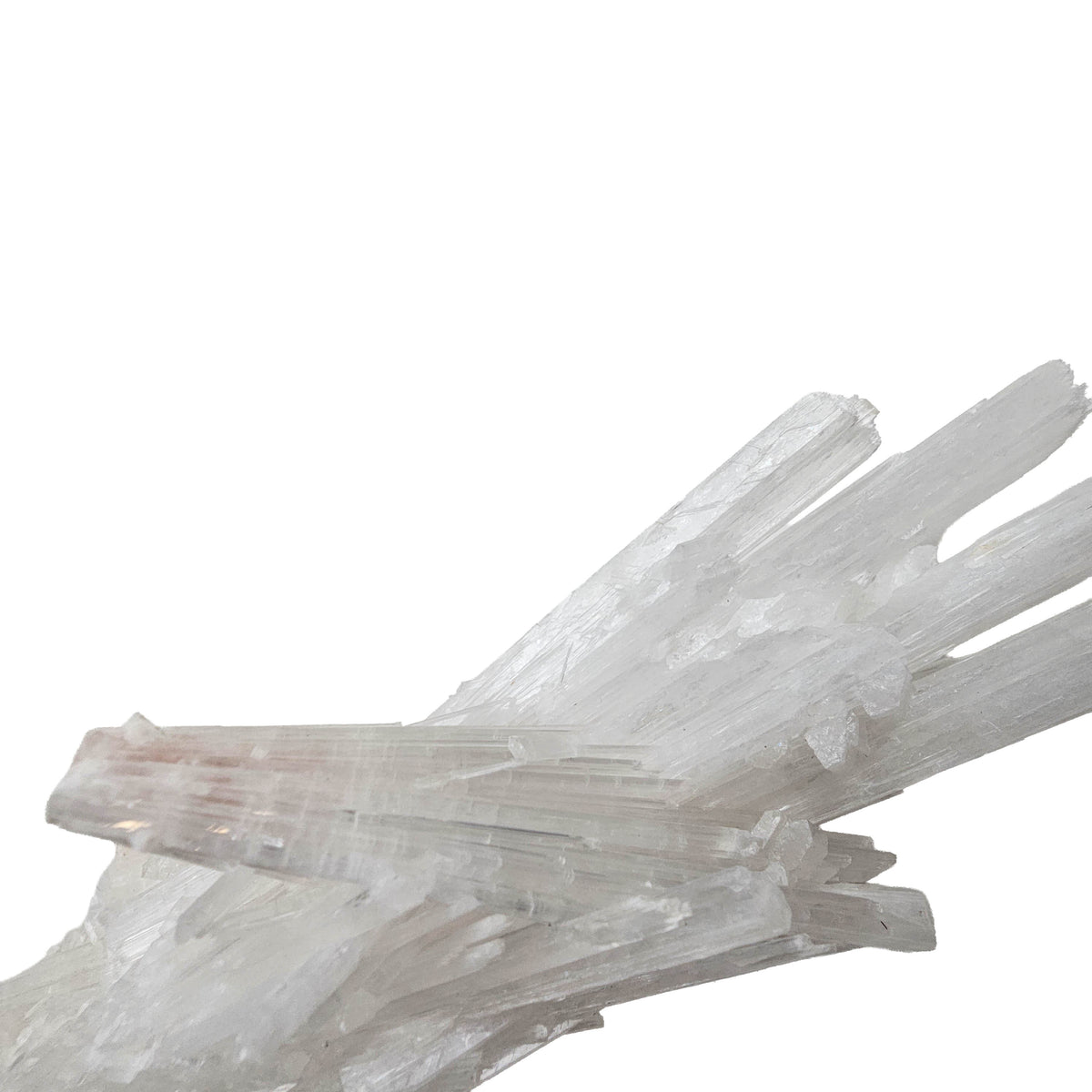
Description: This one of a kind Scolecite mineral specimen from India features a loose, radiating cluster of long white to translucent prismatic crystals with fine vertical striations and a soft pearly to silky luster. It is a one of a kind scolecite specimen from the Nashik area of Maharashtra, India.
Scolecite is best known for its bursts of delicate needles, but it also grows as massive fibrous masses: solid, cohesive lumps or blocks that lack the distinct elongated crystals of its prismatic form. Those fibrous masses make ideal carving material, and once polished they show a beautiful silky lustre as light runs along the length of the fibres. Scolecite is a calcium aluminium silicate zeolite, CaAl₂Si₃O₁₀·3H₂O. The crystals overlap and cross through the specimen in several directions, with a few larger blades standing out from the main cluster and smaller needle-like growths filling the spaces between them. Its pale white coloration, layered crystal structure, and naturally delicate terminations give the piece a crisp, airy appearance while still showing plenty of texture and depth.
In crystal healing traditions, scolecite is associated with the Third Eye and Crown chakras, and many people keep it nearby during meditation.
Chemical Composition: CaAl₂Si₃O₁₀·3H₂O
Quantity: 1pc
With this product, you will get the actual stone in the photograph.