






Specifications
Description
Mined from: Mindouli District, Pool Department, Republic of the Congo
Description: Congo's dioptase has a long history in European collections. The mineral was first noted from "Gabon" in 1874. In 1890, crystals brought back by the explorer Thollon from the Mindouli mine, between Bouenza and Brazzaville, went on display at the Paris natural history museum, where they were said to rival the classic dioptase of Siberia.
An early-1900s study of Mindouli found dioptase in limestone veins, calcite veinlets and sandstone. The finest crystals came from geode-like nodules in red clay, many collected from a stream the miners called the "ruisseau aux dioptases", the dioptase creek.
Dioptase is a hydrated copper silicate. It forms near the surface, where weathering copper ores release copper that combines with silica, and the copper gives it its intense green colour.
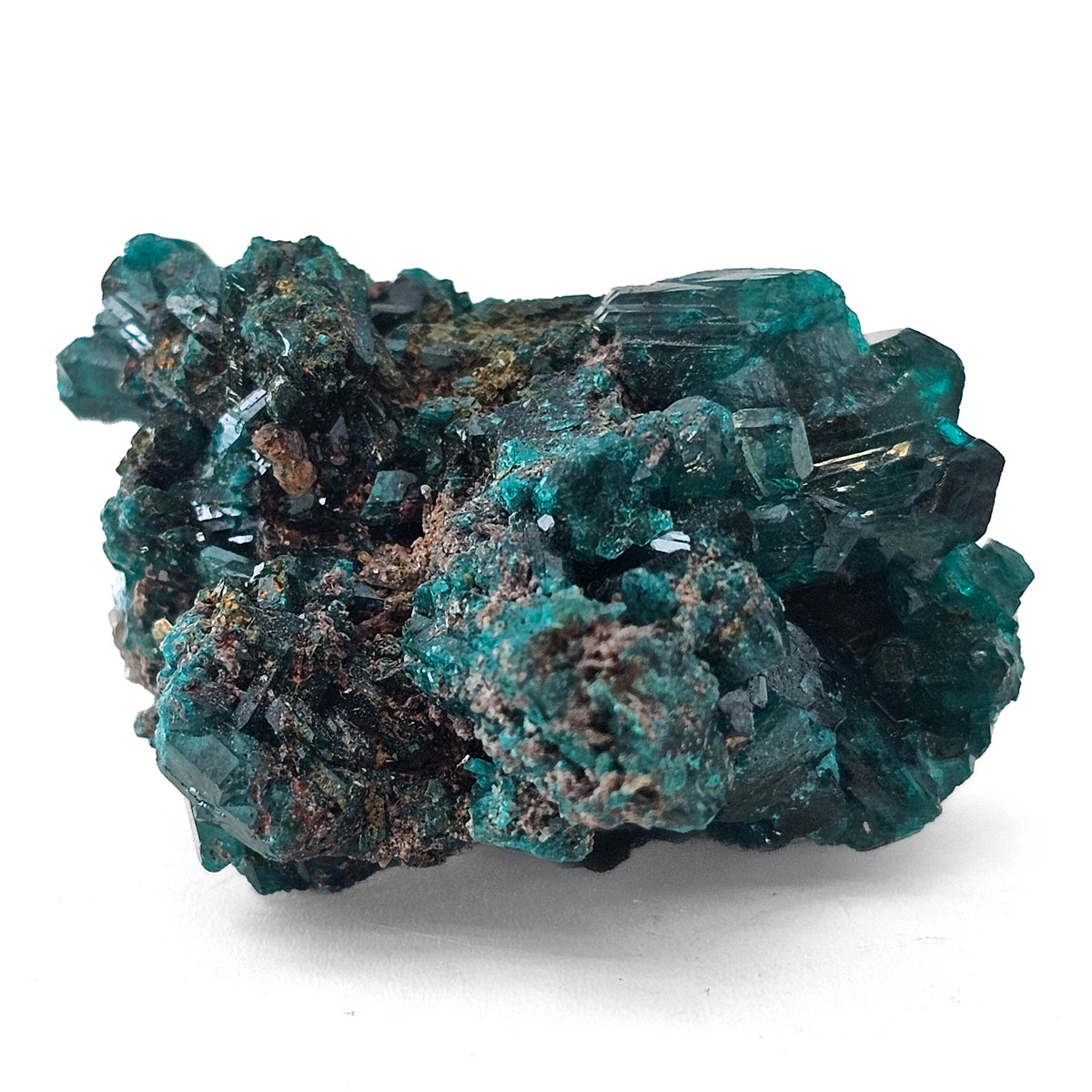
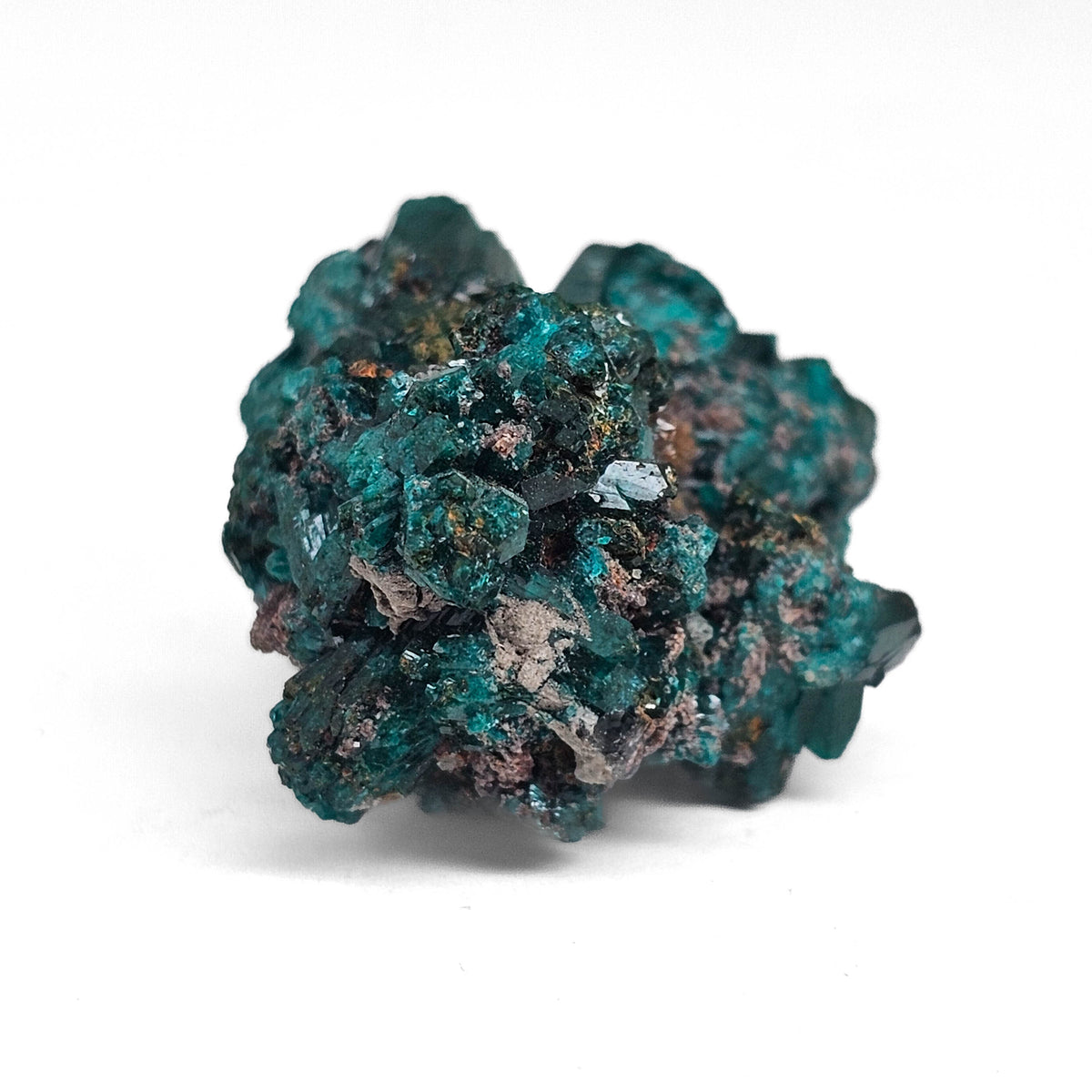
This Dioptase specimen from Congo has the kind of color that makes the species instantly recognizable. The crystals are a deep blue-green to emerald-teal, with a glassy luster and sharp faces that catch light from nearly every angle. This piece has strong texture as well, with densely packed crystal growth over a darker earthy matrix, giving it both sparkle and depth instead of looking flat or overly uniform. It is the sort of specimen that reads as rich and vivid even from across the room.
Dioptase is often associated with emotional release, honesty, and the idea of clearing out what has become heavy or stagnant. Many people are drawn to it for its intense heart-centered symbolism, but unlike softer-looking stones, dioptase carries that meaning with a lot of force. It tends to appeal to those who want a stone that feels vivid, direct, and alive rather than merely gentle.
With this product, you will get the actual stone in the photograph.
Chemical Composition: CuSiO3·H2O