




Specifications
Description
Locality: Renéville Mine, Kindamba District, Pool Department, Republic of the Congo
Description: Congo's dioptase has a long history in European collections. The mineral was first noted from "Gabon" in 1874. In 1890, crystals brought back by the explorer Thollon from the Mindouli mine, between Bouenza and Brazzaville, went on display at the Paris natural history museum, where they were said to rival the classic dioptase of Siberia.
Renéville, in the Kindamba District of the Pool Department of the Republic of the Congo, takes its name from René Petit-Jean, who directed the first mining work there for the Compagnie du Djoué around 1913. Its copper and lead ores are also the type locality of a rare mineral, fornacite.
Dioptase is a hydrated copper silicate. It forms near the surface, where weathering copper ores release copper that combines with silica, and the copper gives it its intense green colour.
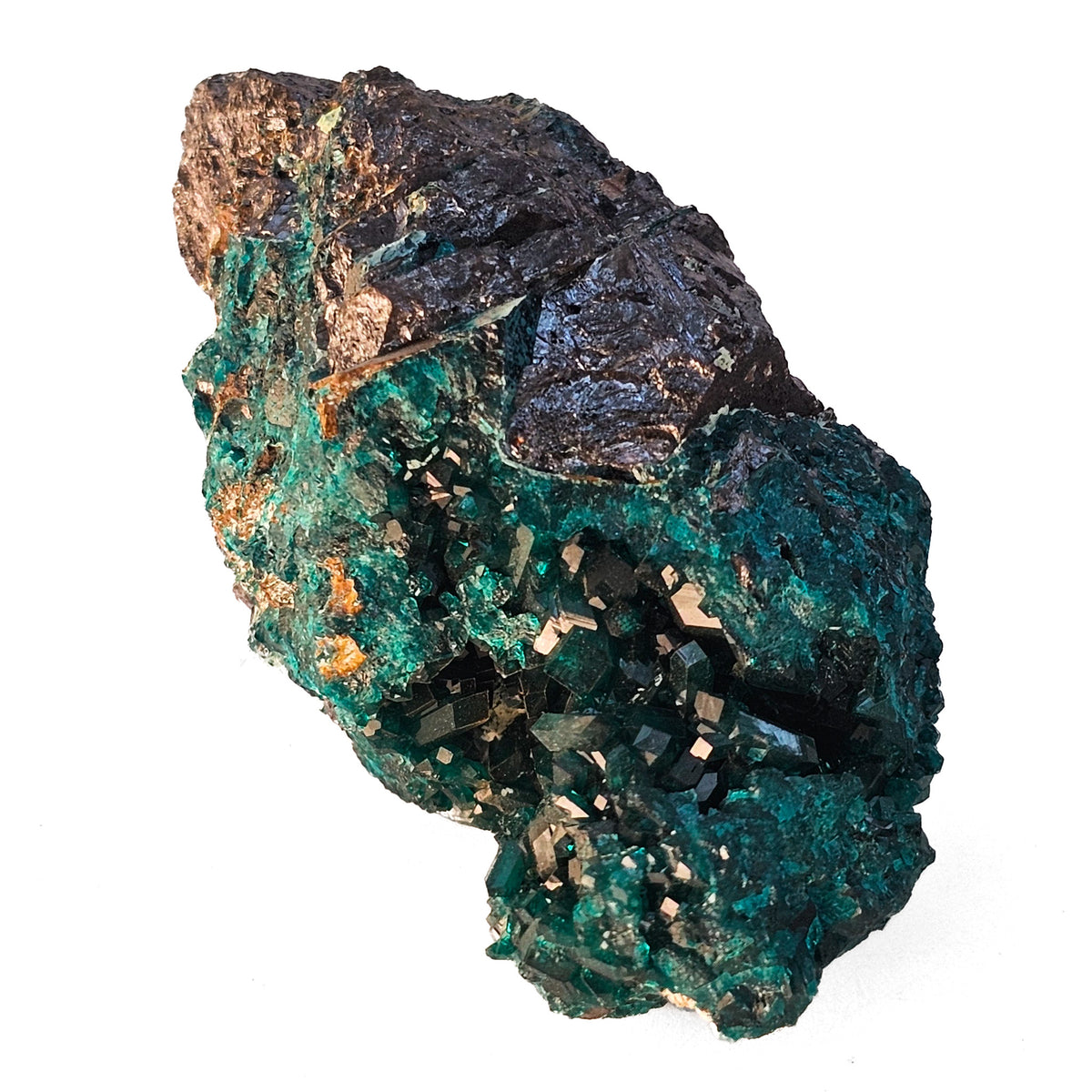
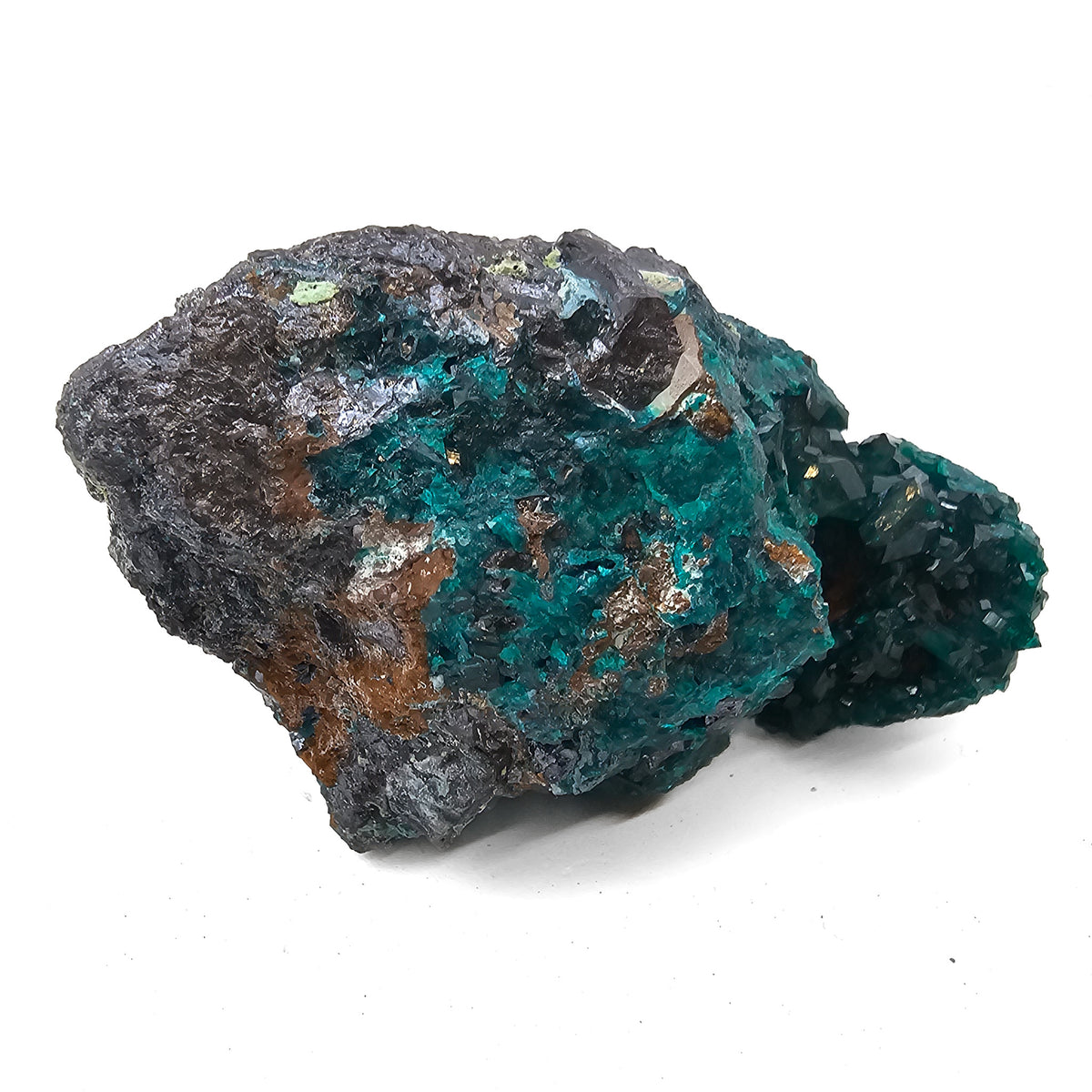
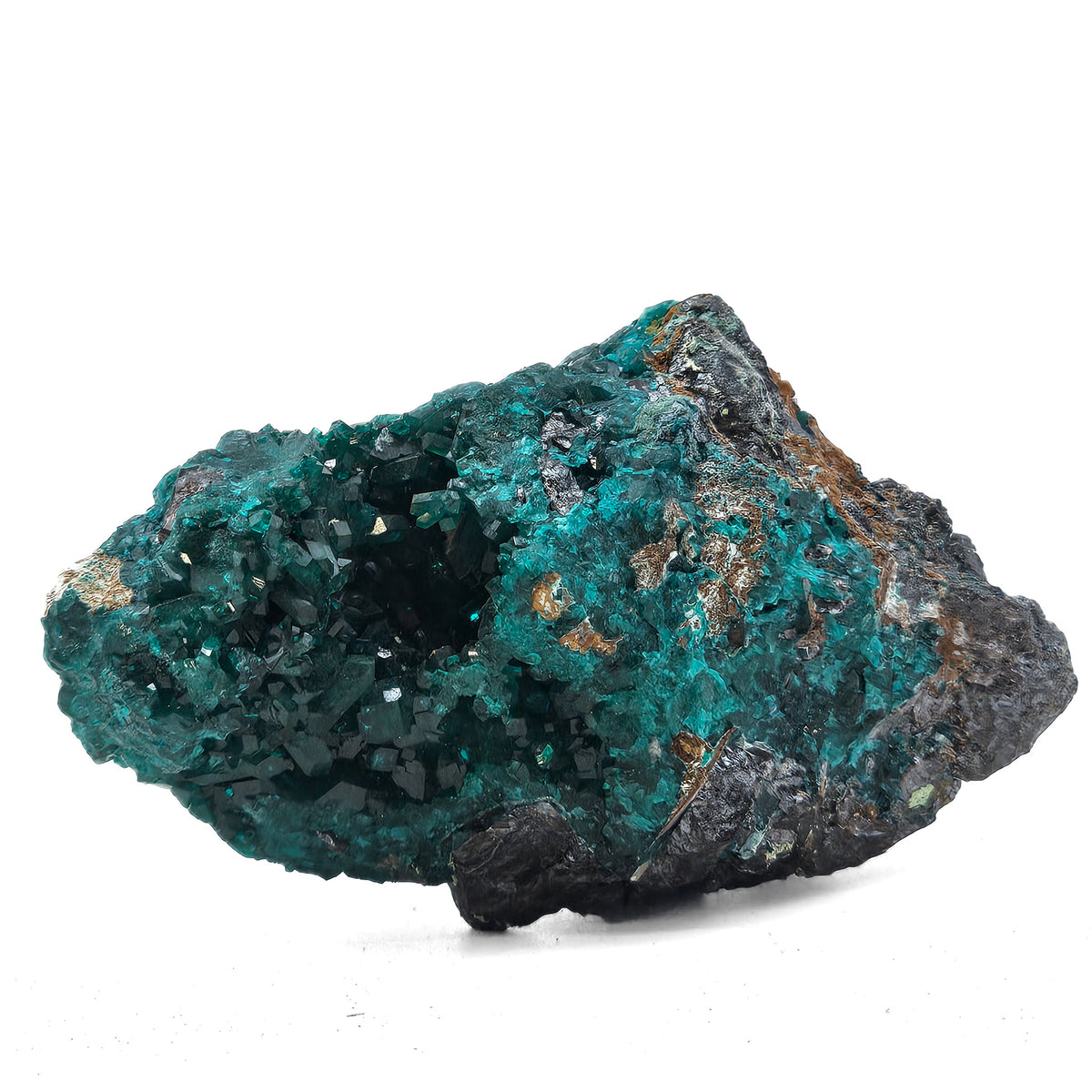
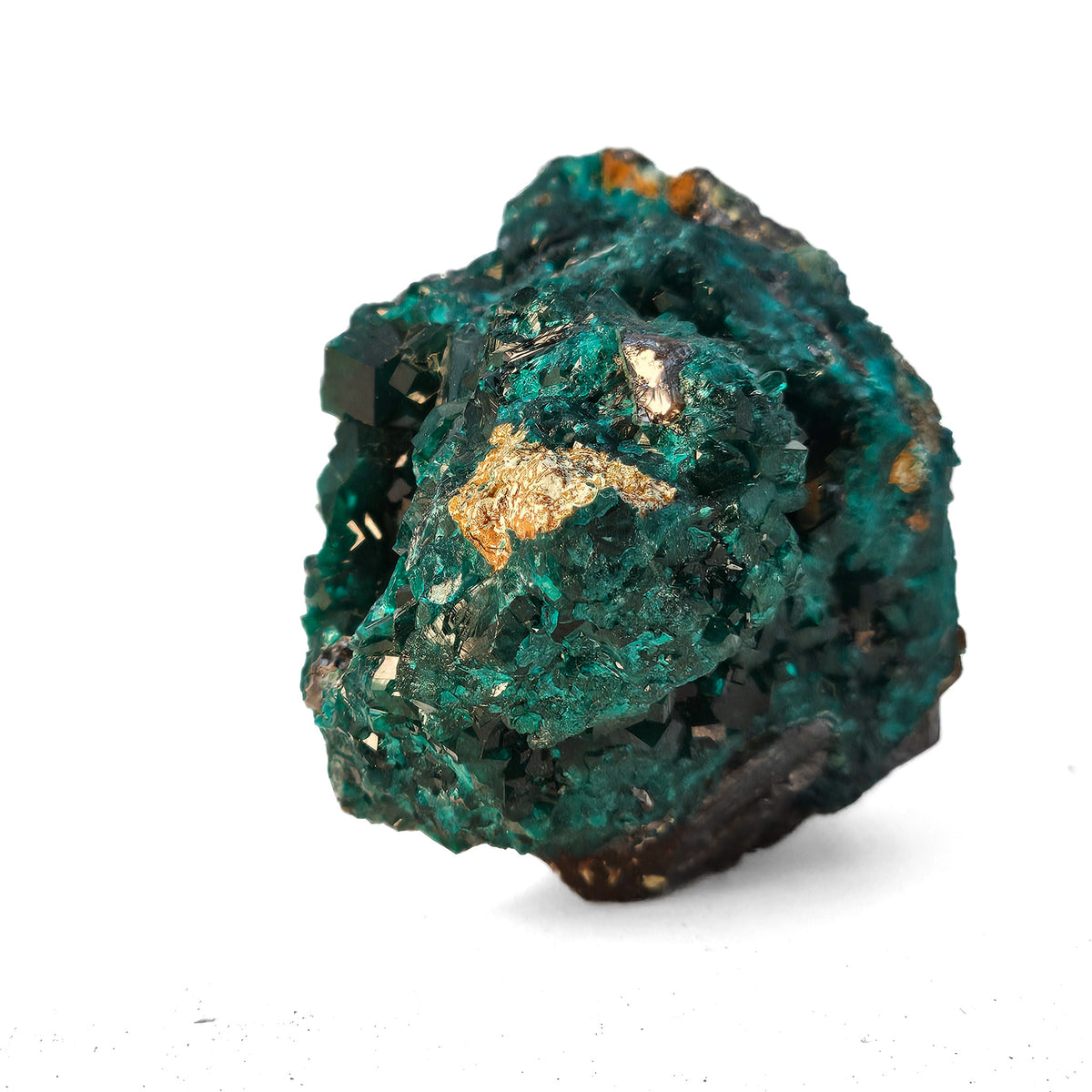
This one of a kind dioptase specimen has a more rugged, pocket-style look than the cleaner Congo plate examples, with deep blue-green crystal growth set into a darker, iron-rich matrix. Instead of a flat presentation, this piece has depth and contour, with crystals tucked into recesses and rising along uneven surfaces, giving it a more natural “straight from the pocket” character. The faces that are exposed show a strong vitreous luster, and the darker matrix makes the saturated dioptase stand out even more. There are also contrasting earthy tones and oxidation colors across the host rock, which add visual complexity and make the specimen feel substantial and geologically expressive.
Many people are drawn to dioptase for its association with release, emotional honesty, and clearing out old weight that no longer serves a purpose. It is often chosen by those who are trying to move forward with greater clarity. Because it combines vivid color with a strong, grounded matrix presence, it is often seen as a stone of both intensity and steadiness, something that encourages openness without losing strength.
Chemical Composition: CuSiO3·H2O
With this product, you will get the actual stone in the photograph.