






Science: Crystal & Formation
- Formula
- Pb5(VO4)3Cl
- Family
- Phosphates
- Crystal System
- Cubic, Trigonal, Hexagonal
- Habit
- Prismatic
- Named After
- Named for its vanadium content.
- Locality
- Morocco
More Specs
Description
Locality: Mibladen Mining District, Morocco
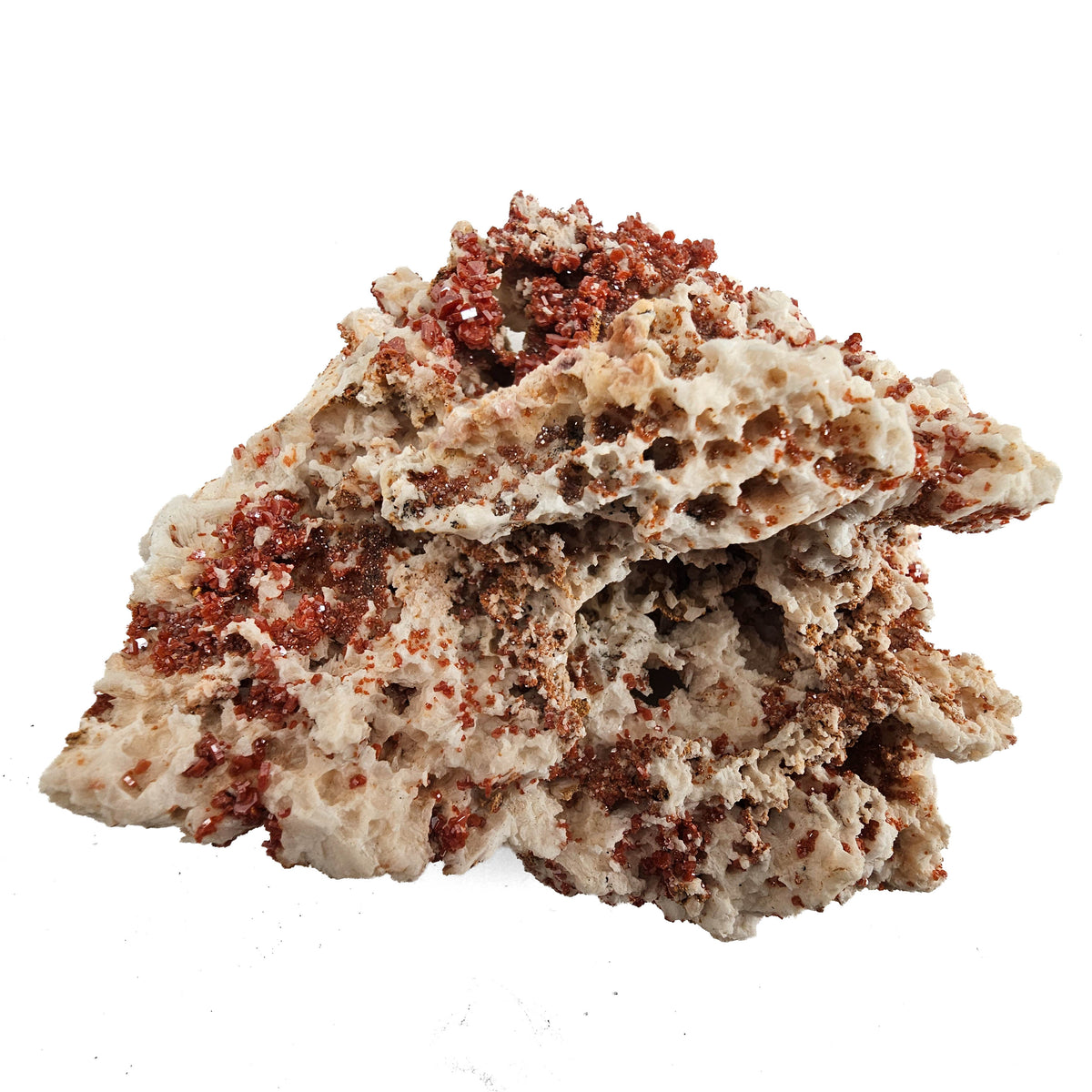
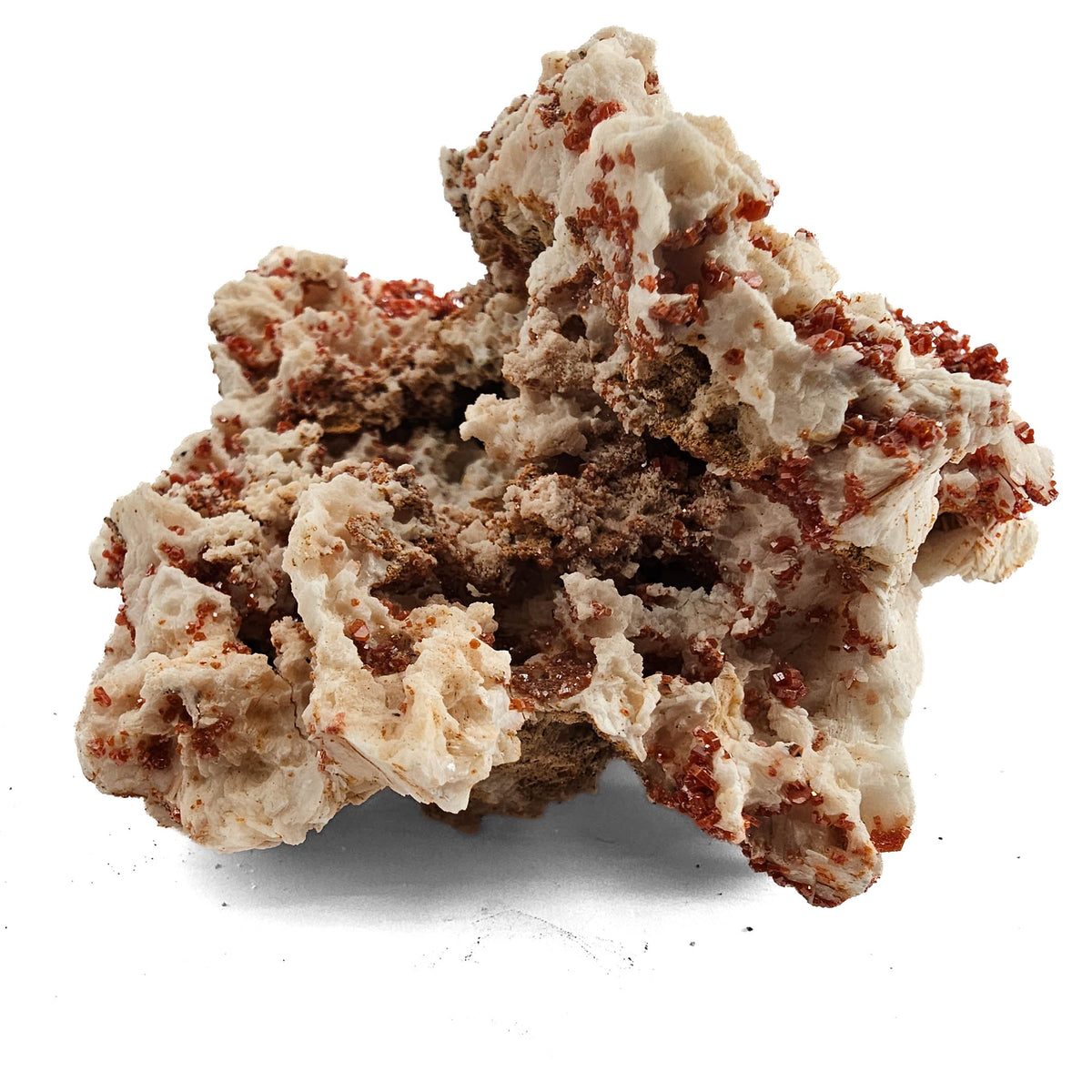
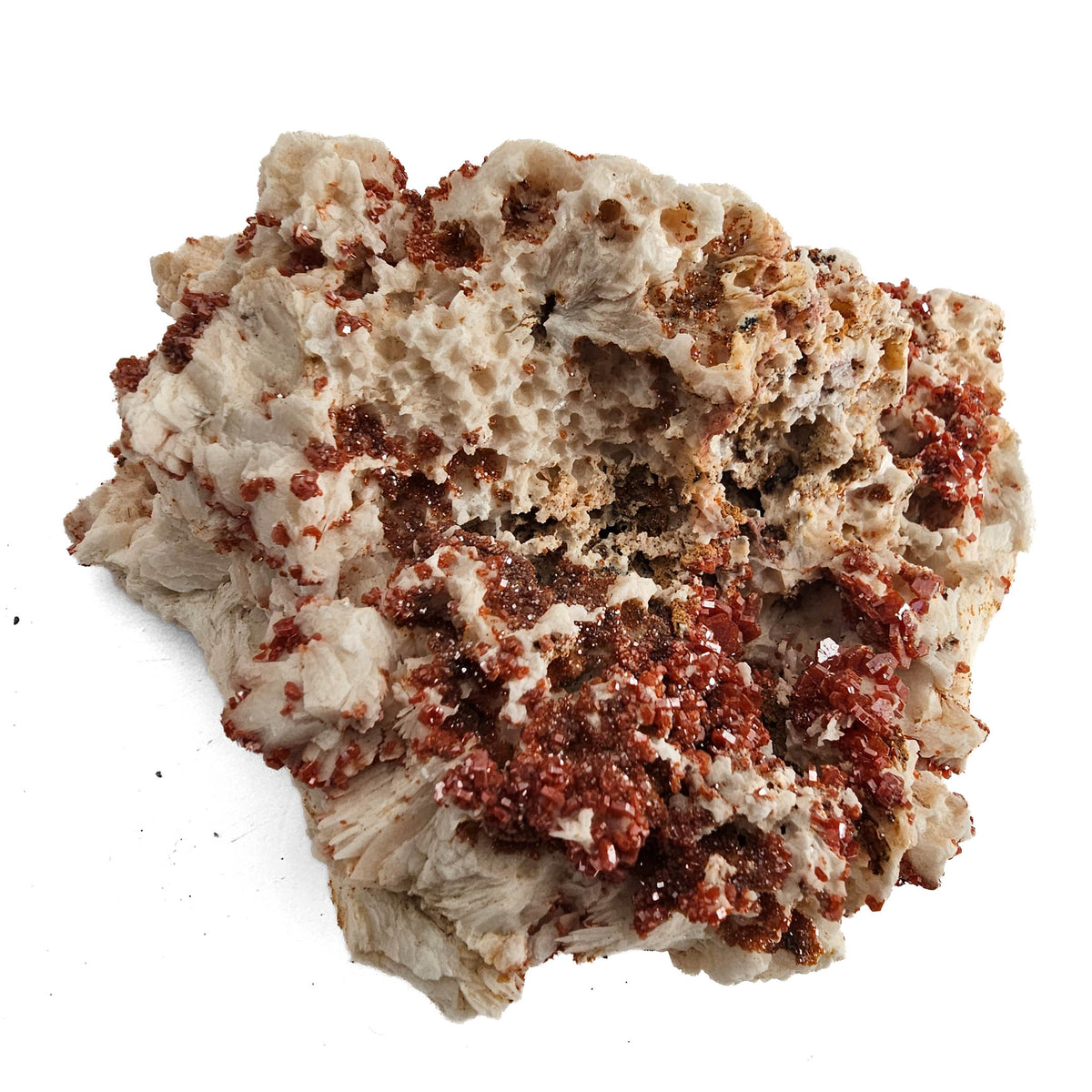
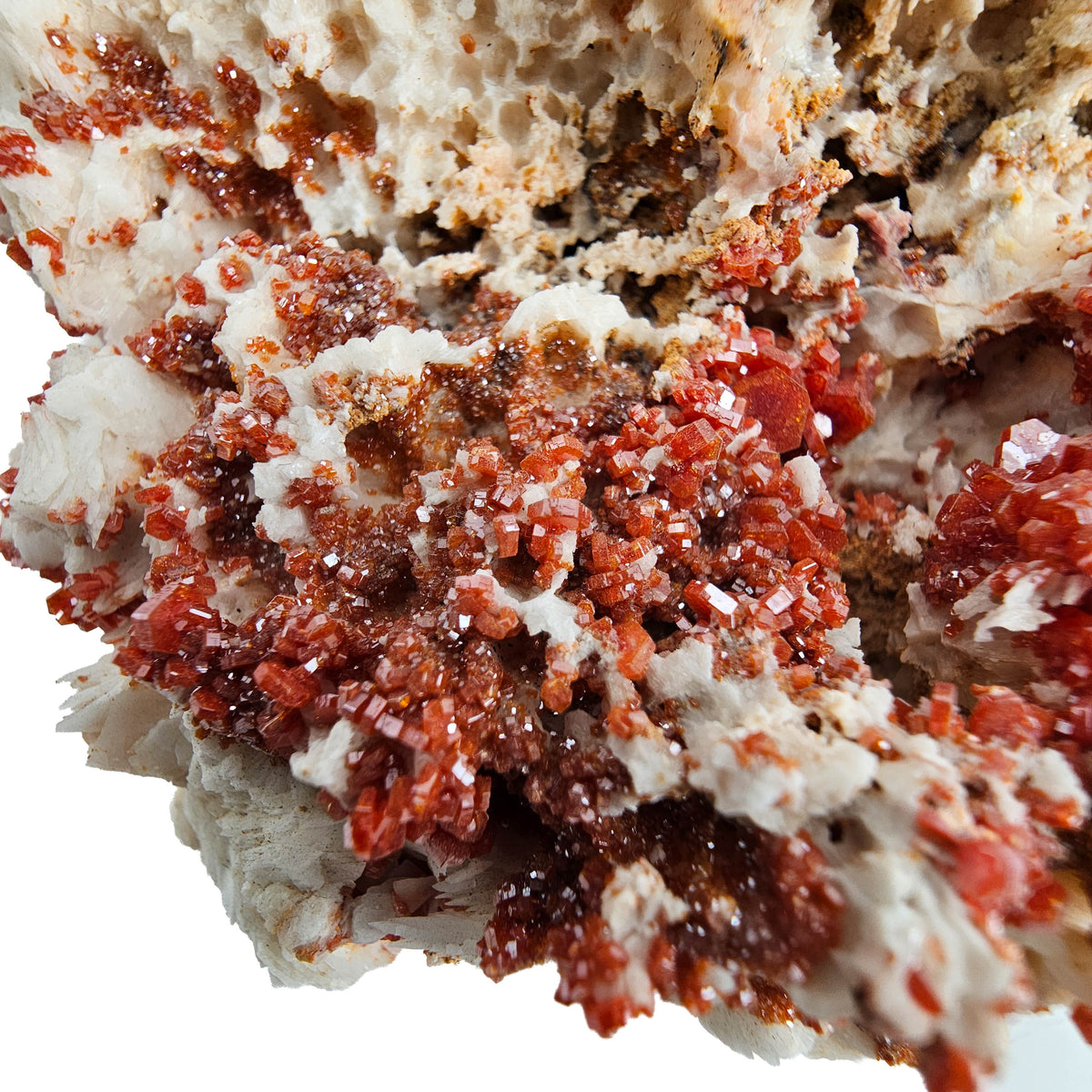
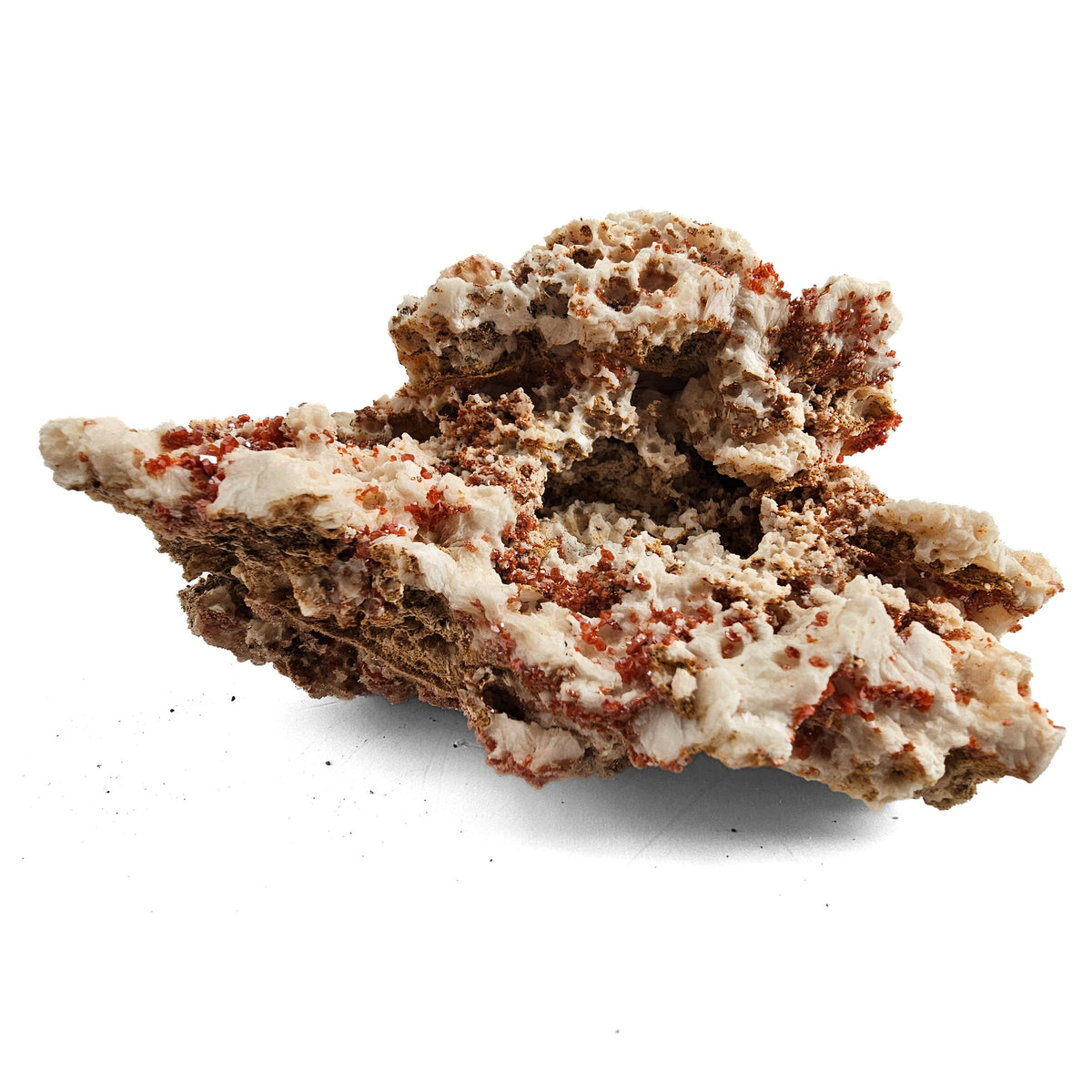
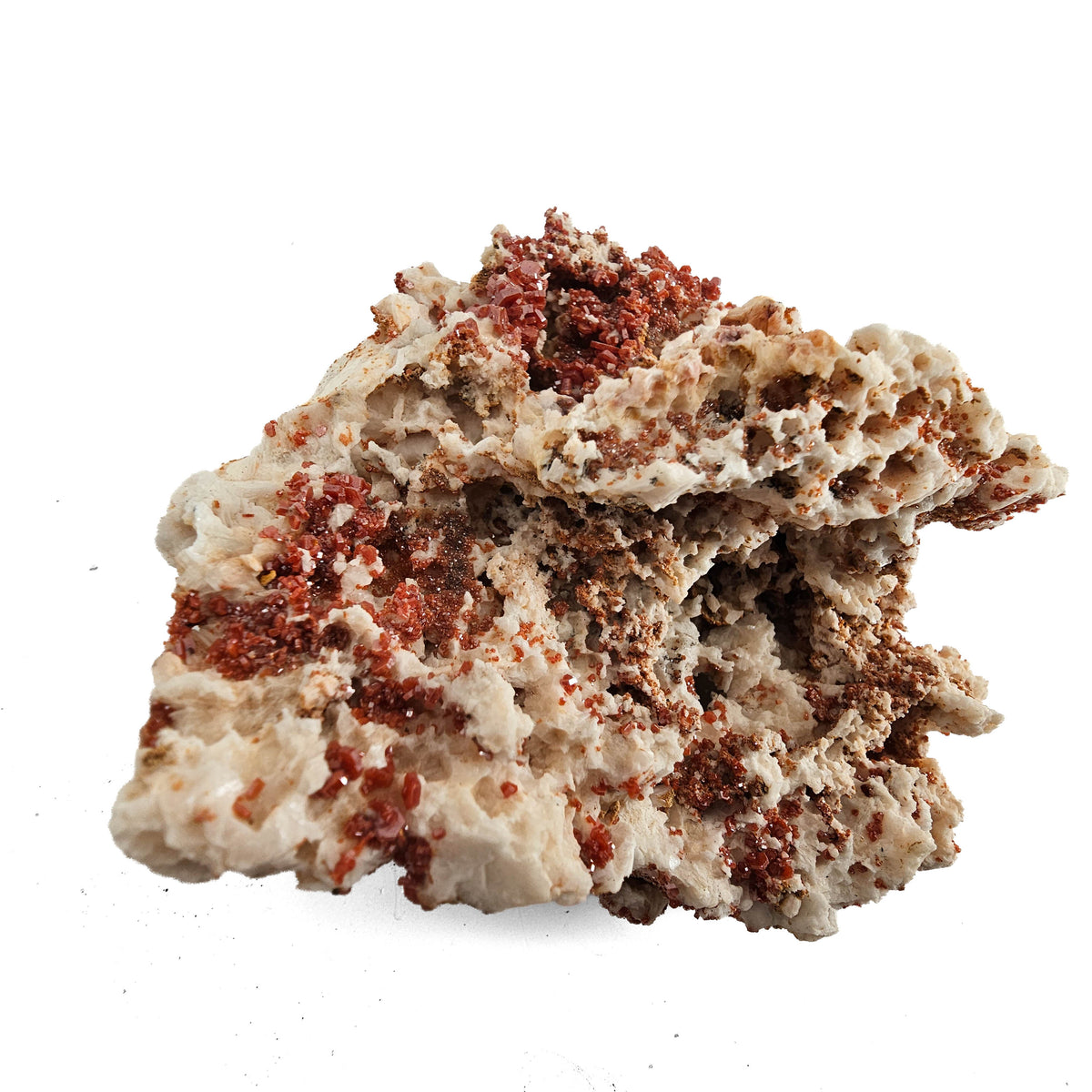
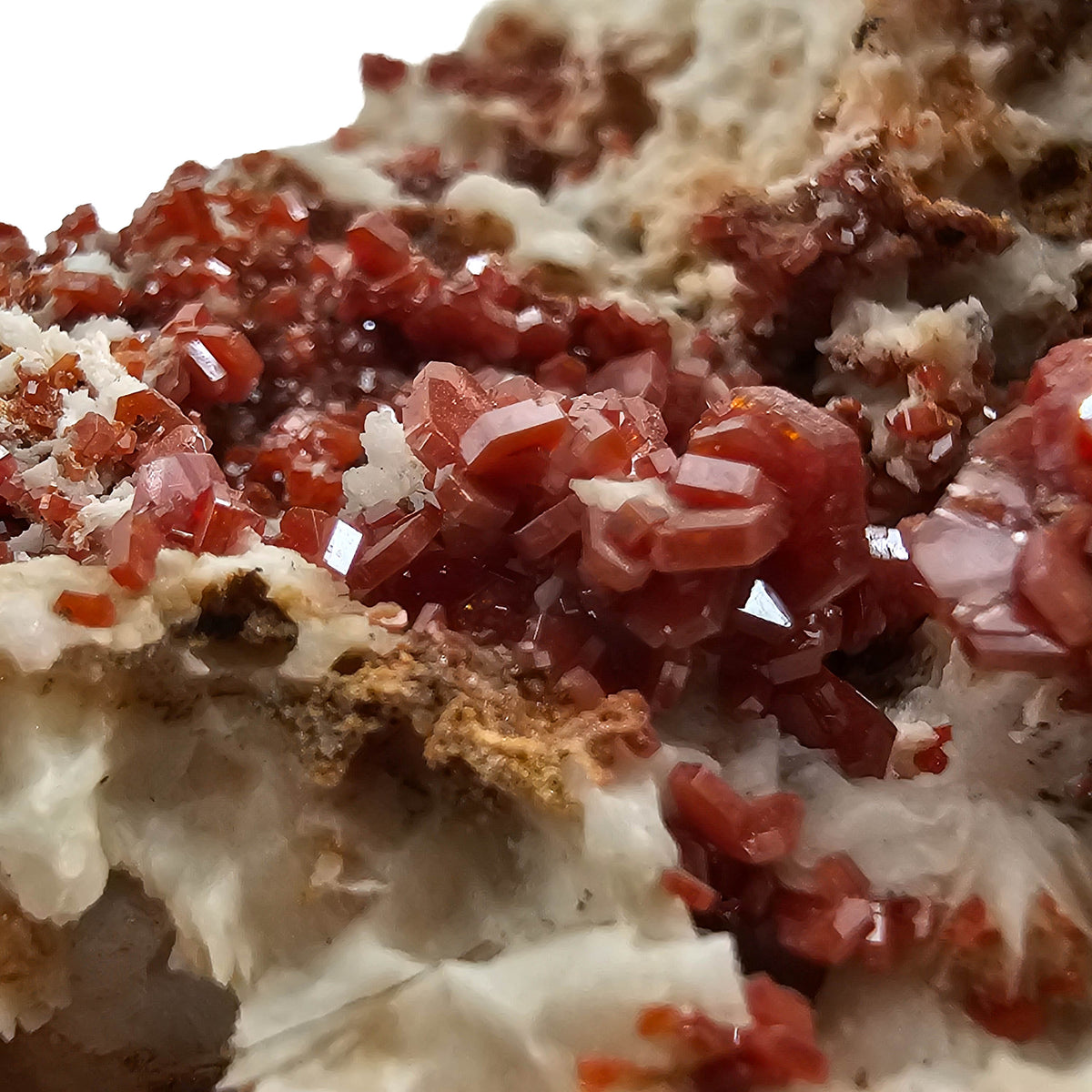
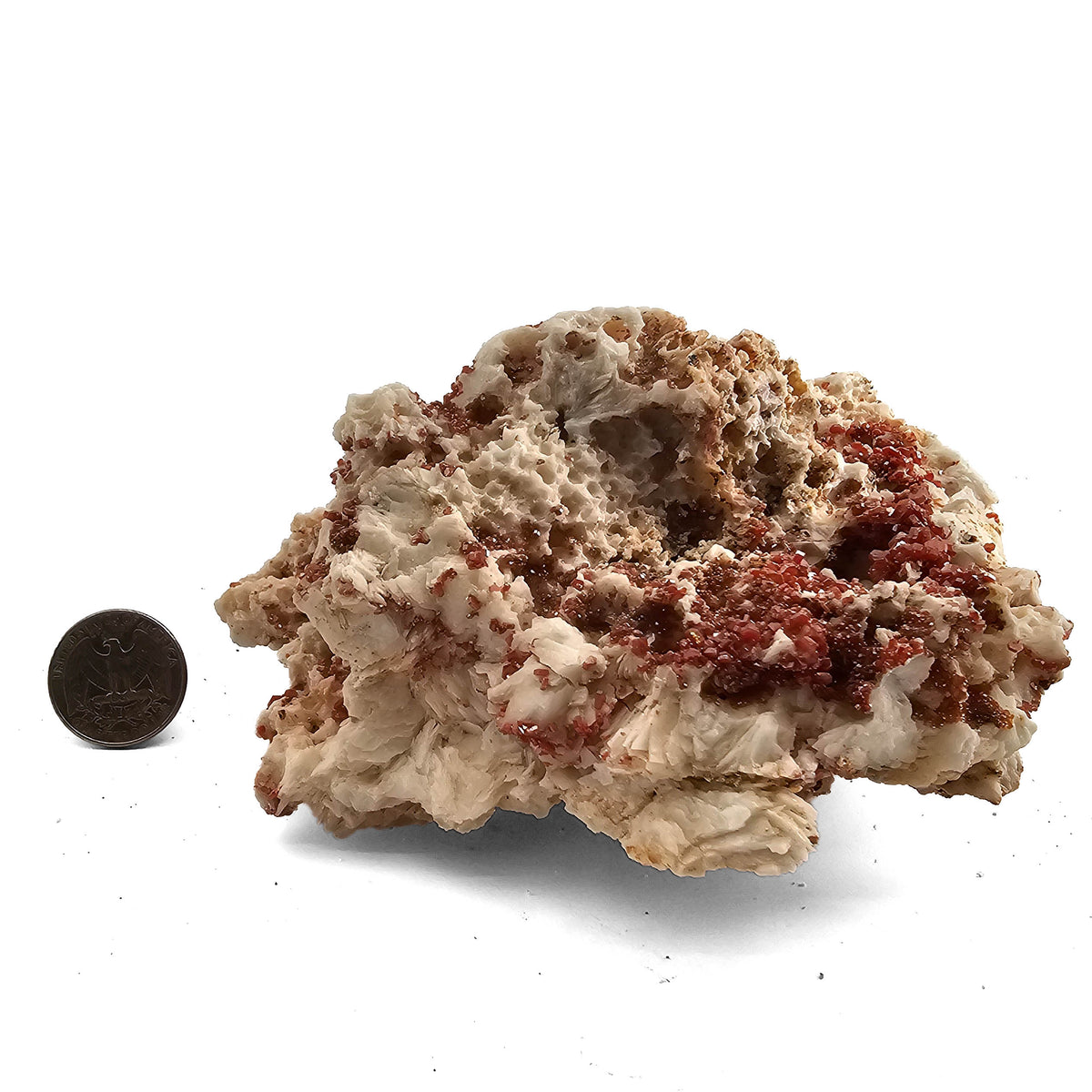
Description: This one-of-a-kind vanadinite specimen carries bright red to reddish-orange crystals scattered heavily across a pale cream to white matrix. Most are small hexagonal and blocky prisms, with denser glossy clusters of stronger colour, while the rough, porous matrix shows natural cavities, layered texture and tan to brown staining, so the contrast holds from several angles.
It comes from the Mibladen mining district near Midelt, in Morocco's Upper Moulouya area between the Middle and High Atlas. The lead ores there sit in carbonate rocks, and where groundwater weathered the galena near the surface, lead combined with vanadium and chlorine to grow these vanadinite crystals.
Vanadinite is a lead chlorovanadate, Pb₅(VO₄)₃Cl, and a member of the apatite group.
Vanadinite is named for its vanadium. Andrés Manuel del Río first found the element in 1801 in a Mexican lead ore later identified as vanadinite, and Nils Gabriel Sefström rediscovered it in 1830 and named it after Vanadís, a name of the Norse goddess Freyja.
Chemical Composition: Pb₅(VO₄)₃Cl
Approximate size of 1 piece: 13.3 x 9.9 cm (5.2 x 3.9 in)
Quantity: 1pc
With this product, you will get the actual stone in the photograph.