


By Adam Kelliher
The short answer: most fossils beginners find are shells and pieces of sea animals: brachiopods, clams, snails, crinoid stems, horn corals, bryozoans, trilobites, ammonites, belemnites and sea urchins. Start by asking what shape it is and whether it's symmetrical, and you'll narrow most finds down in a minute.[1]
This is a quick field guide to the ten groups you're most likely to meet, with a link to our full explainer for each.
Shells with two halves
- Brachiopods. Two shells that look like a clam's but aren't. Each shell is symmetrical down its own middle, like your face. They're filter feeders with a different body inside.[1] See Brachiopods vs Clams.
- Bivalves (clams, oysters, scallops). Two shells that are usually mirror images of each other, like your left and right hands.[1]

Coiled and pointed shells
- Gastropods (snails). Usually a single coiled shell.[1]
- Ammonites. Flat coiled shells divided into chambers. The wavy suture lines where the chamber walls met the shell show when the outer shell has worn away.[1] See What Is an Ammonite?.
- Belemnites. Bullet-shaped internal shells of squid-like animals. Both ammonites and belemnites died out at the end of the Cretaceous.[1] See Belemnites Explained.
Stems, cups and lace
- Crinoids. Relatives of sea urchins and sea stars that lived on stalks. Most finds are "columnals", pieces of the stalk. The head and the root-like holdfast are found much less often.[1] See Crinoids Explained.
- Horn corals. Solitary rugose corals, shaped like a small horn with a cup at the wide end. Rugose corals died out at the end of the Permian.[1] See Horn Corals and Petoskey Stones.
- Bryozoans. Colonial animals that built lacy, branching or net-like skeletons. In the Paleozoic their remains piled up into whole beds of limestone.[1]

Bugs and urchins
- Trilobites. Marine arthropods with a head, a segmented body and a tail. Many had large compound eyes with lenses you can see by eye. They died out at the end of the Permian.[1] See Trilobites Explained.
- Sea urchins (echinoids). Echinoderms, related to crinoids and sea stars.[1] See Fossil Sea Urchins Explained.
Tips for any find
- Note where you found it and what kind of rock it was in. Most of these groups lived in the sea, so they turn up in limestones and shales.
- Check whether the shell is whole or broken, and look at both sides.
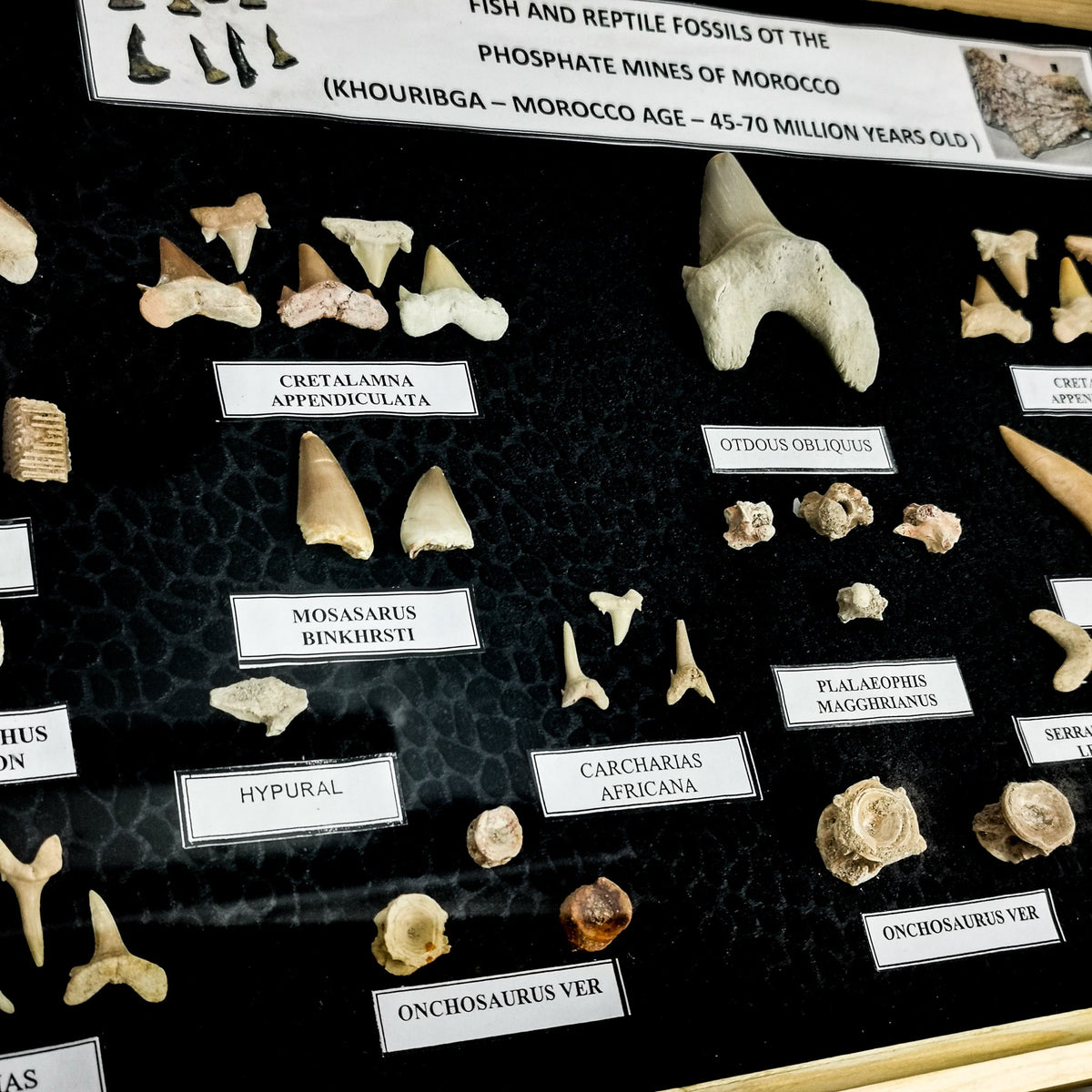
- Fossil shark teeth are another common find. See How to Read a Fossil Shark Tooth.
- If a find looks too perfect, read Real or Fake Fossil? 6 Ways to Check.
A labelled set is the fastest way to learn the shapes. Have a look at fossil sets and all fossils.
See what's new: browse our newest arrivals for the latest pieces added to the shop.
Sources
- Paleontological Research Institution, Earth@Home: Quick Guide to Common Fossils.