


By Adam Kelliher
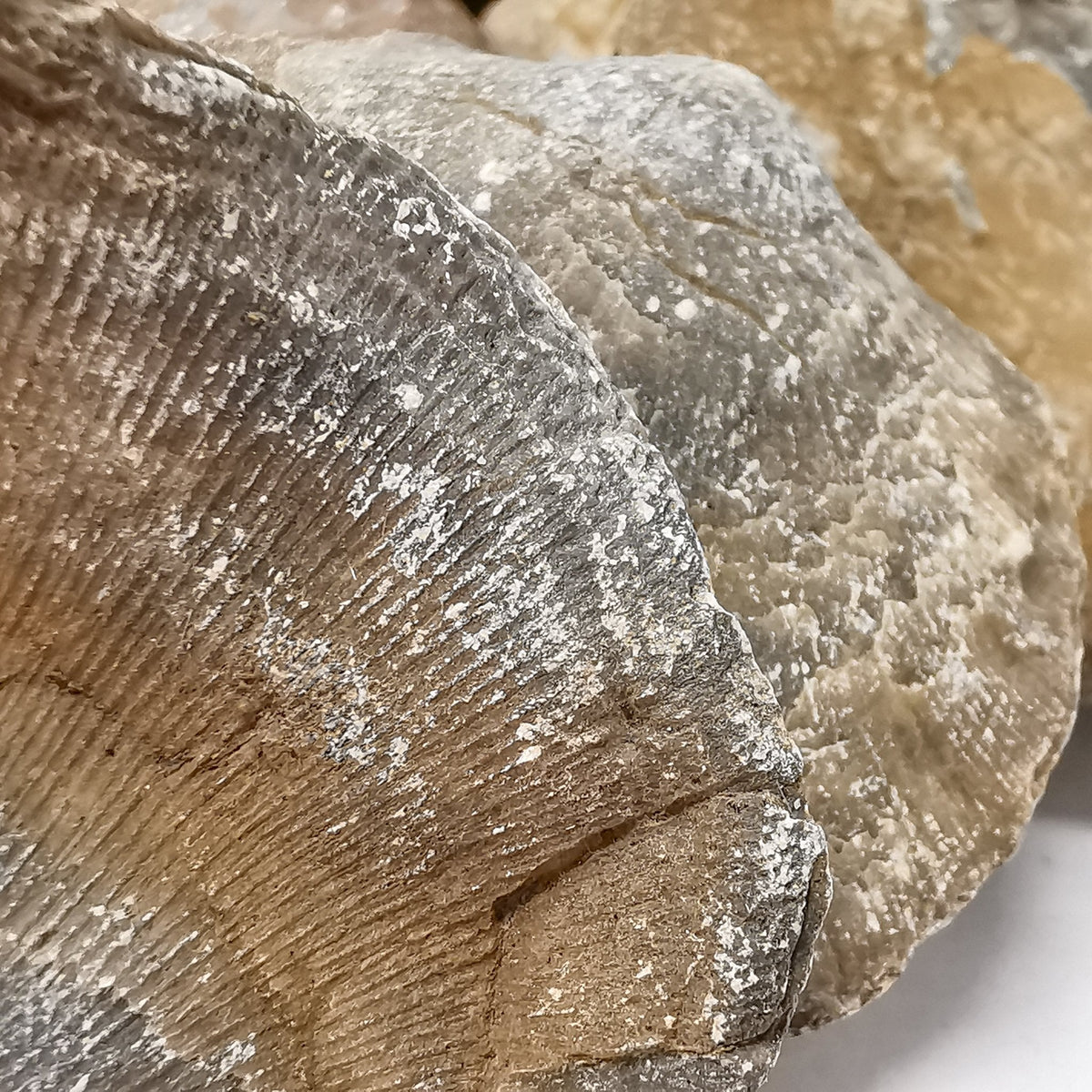
Half the "fossil clams" people bring into the shop aren't clams. They're brachiopods. Easy mistake. They look alike, but they're about as related as a bat and a butterfly.
What brachiopods are
Brachiopods are marine animals that look like clams at first glance but differ in anatomy and aren't closely related to molluscs. They're lophophorates, related to bryozoans and phoronids. About 300 species are still alive, mostly in cold polar water or the deep sea, which is why most people have never seen one.[1]

Their big era
In the Paleozoic, brachiopods were extremely abundant and even helped build ancient reefs. About 250 million years ago the end-Permian extinction knocked them back hard, and they never recovered their old numbers.[1] That's why Paleozoic rocks are full of them.
Quick ID at the counter
- Brachiopod: the two shells are different from each other, but each one is symmetrical left to right. Draw a line from the hinge to the opening and the halves mirror.
- Clam: the two shells usually mirror each other, but each one on its own is lopsided.
Treat this as a rule of thumb, not a hard rule. It works on most specimens you'll pick up, but some odd species break it.
Try it yourself with a Moroccan brachiopod, one of our Illinois brachiopods and a fossil clam side by side.
See what's new: browse our newest arrivals for the latest pieces added to the shop.
Sources
- University of California Museum of Paleontology. Introduction to the Brachiopoda.