


By Adam Kelliher
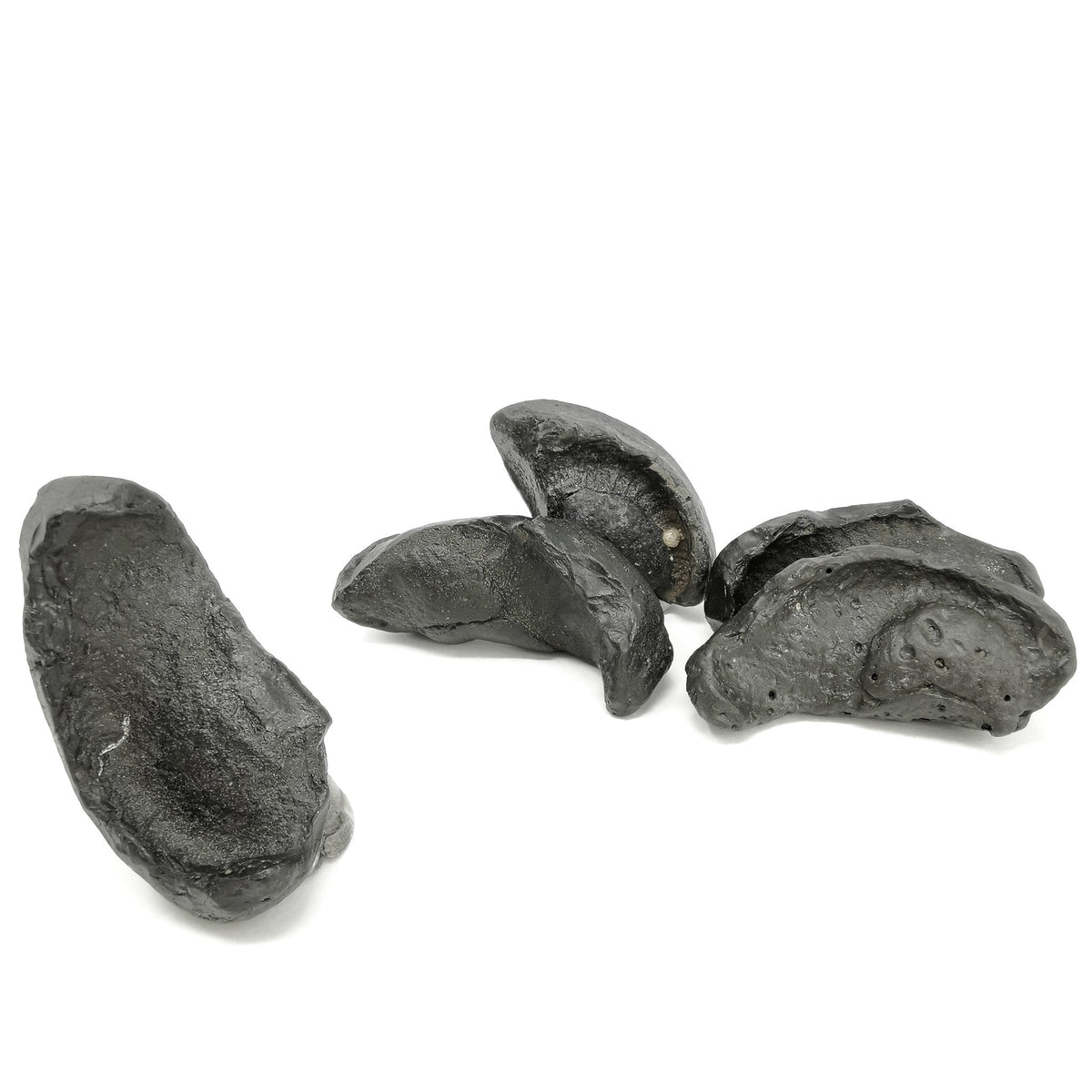
A whale ear bone is one of the strangest things in the fossil trays. It's heavy, it's curled like a shell, and people often guess it's a rock or a clam. It's one of the toughest bones a whale has.
What it is
The piece is the tympanic bulla, part of the whale's ear. Florida Museum's glossary of vertebrate fossils covers it, and these bones are thick, dense and hard.[1][3]

Why they're so common
Two reasons. The bone is unusually dense, so it survives when lighter skull bones break up. And it's only loosely attached to the skull, so it often separates from a carcass and ends up in bone beds on its own.[3][4]
What scientists learn from them
Researchers study fossil whale ears to trace how underwater hearing evolved, and how the size of the bulla scales with body size.[2][4]
Our fossil whale ear bones from Florida make a great "guess what this is" piece. Pair one with a fossil sperm whale tooth for a small whale display.
See what's new: browse our newest arrivals for the latest pieces added to the shop.
Sources
- Florida Museum. Glossary of Terms, Florida Vertebrate Fossils.
- Carnegie Museum of Natural History. How Whales Hear.
- Mace Brown Museum of Natural History, College of Charleston. Holy Bullae, Batman!
- What are the limits on whale ear bone size? Non-isometric scaling of the cetacean bulla (PubMed Central).