


By Adam Kelliher
When someone asks for a real dinosaur bone they can afford, there's a good chance it came from the Hell Creek Formation. It's one of the most famous dinosaur rock units in the world, and for good reason.
What Hell Creek is
The Hell Creek Formation is a rock unit in Montana and the Dakotas laid down at the very end of the Cretaceous. The Smithsonian's exhibition on "the last American dinosaurs" is built around it, with Triceratops and the duck-billed Edmontosaurus among the stars, roughly 66 to 68 million years ago.[1] UC Berkeley's Museum of Paleontology has worked there for decades.[2]

Why it matters
Because it runs right up to the extinction, Hell Creek is one of the places scientists look to understand the world the dinosaurs lived in just before the end.[1][2]
What you're buying
Most bone on the market is fragments, not complete bones, and it often can't be pinned to one exact bone of the skeleton. In the US, digging or collecting vertebrate fossils such as dinosaur bone on Bureau of Land Management land takes a research permit, and anything collected stays public property.[3] On privately owned land, the fossils belong to the landowner.[4] That's why dinosaur bone on the legal market comes from private land. Ask for locality information on anything you buy.

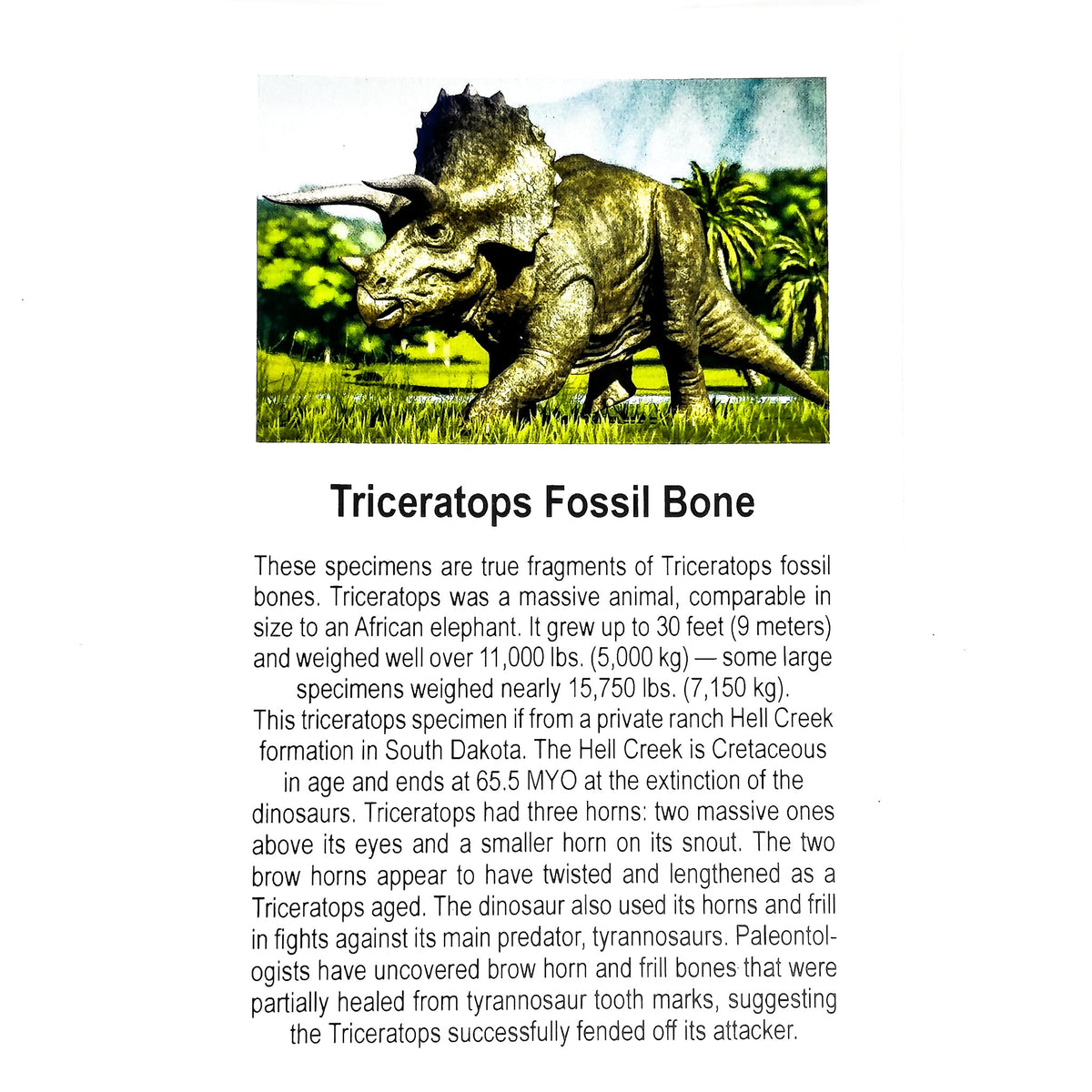
We have Triceratops bone and hadrosaur bone from Hell Creek in South Dakota.
See what's new: browse our newest arrivals for the latest pieces added to the shop.
Sources
- Smithsonian Institution. The Last American Dinosaurs: Discovering a Lost World (fact sheet).
- University of California Museum of Paleontology. Hell Creek Formation, Montana.
- Bureau of Land Management. Can I collect fossils?
- Bureau of Land Management. H-8270-1, General Procedural Guidance for Paleontological Resource Management.