


By Adam Kelliher
Mammoth or mastodon? It comes up at least once a week in the shop. They were both big, hairy-ish, tusked and Ice Age, so I get it. But they're not that closely related, and the teeth make it easy.
The teeth
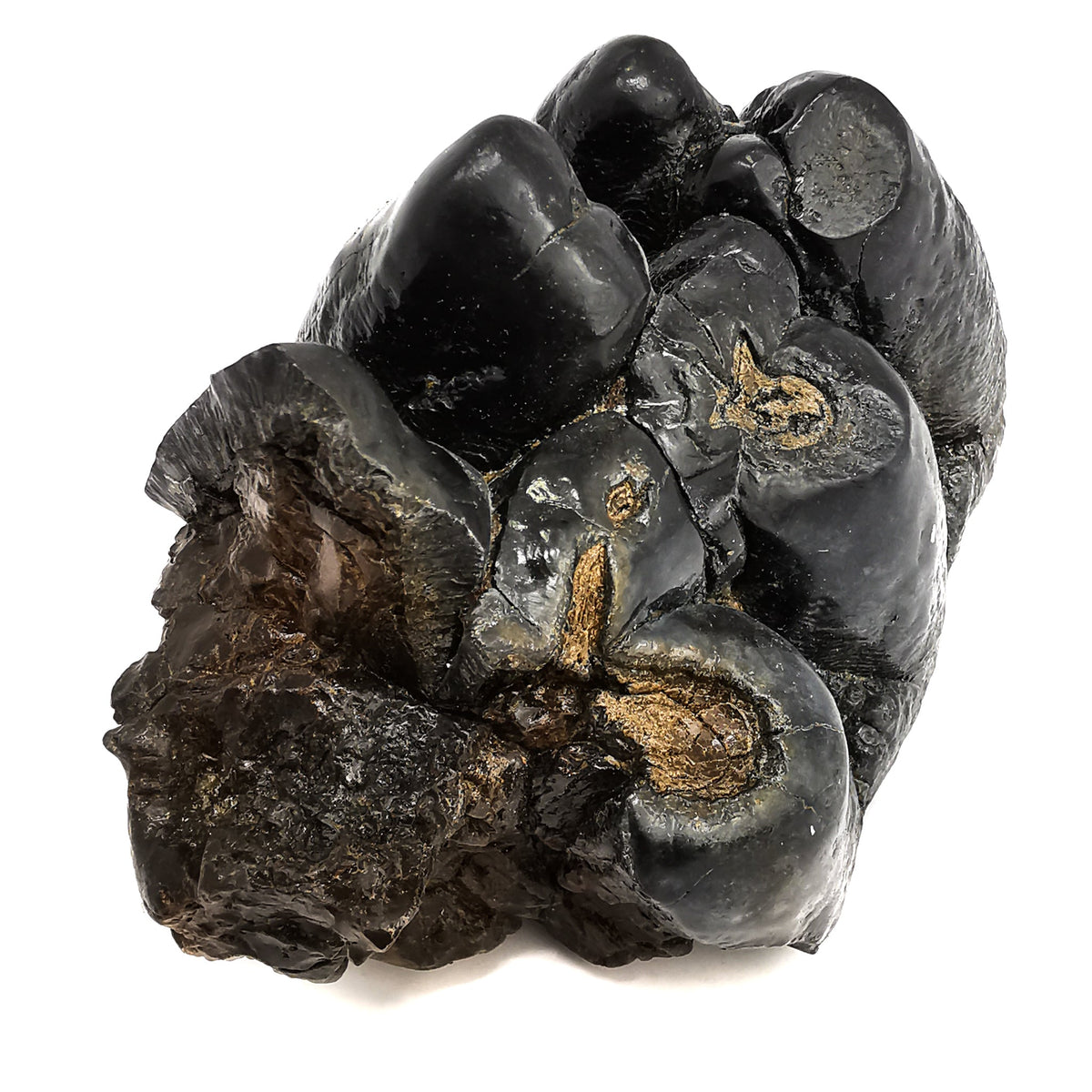
Mastodon molars have cone-shaped cusps for crushing twigs and woody browse. The name literally means "nipple tooth," after those bumps. Mammoth molars are flat and ridged, built for grinding grass, like a modern elephant's.[1][2]

Different diets, different places
Mastodons were mostly browsers in forest and woodland, eating things like spruce twigs and shrubs. Mammoths grazed grassland and steppe.[2][3]
Other clues
- Tusks: mastodon tusks are shorter and straighter. Mammoth tusks are longer and curve, sometimes crossing.[1][2]
- Head: mammoths had a domed knob on top of the skull. Mastodons had flatter heads.[1]
- Build: mastodons were shorter and stockier.[2]
Family tree
The Illinois State Museum notes mammoths are close relatives of modern elephants, while mastodons are only distantly related.[3]

We have a partial mastodon tooth from Florida and affordable mammoth bone shards from the North Sea in the fossil collection.
See what's new: browse our newest arrivals for the latest pieces added to the shop.
Sources
- American Museum of Natural History. Mammoth or Mastodon: What's the Difference?
- U.S. National Park Service. Mastodon or Mammoth?
- Illinois State Museum. Mammoth Versus Mastodon.