




Specifications
Description
Locality: Huanzala Mine, Huallanca District, Bolognesi Province, Ancash, Peru
Pyrite is iron disulfide, FeS2, the most abundant and widespread sulfide mineral. Its name comes from the Greek for fire, because sparks can be struck from it. It is pale brass-yellow with a bright metallic lustre, hard for a sulfide at 6 to 6.5 on the Mohs scale, and grows as cubes, pyritohedra, octahedra and combinations of these.
Tetrahedrite is named for its typical tetrahedral crystals. It is flint-grey to iron-black with a metallic, often splendent lustre and a black to brown streak. It forms in hydrothermal veins and contact metamorphic deposits of low to medium temperature, with chalcopyrite, galena, sphalerite and pyrite.
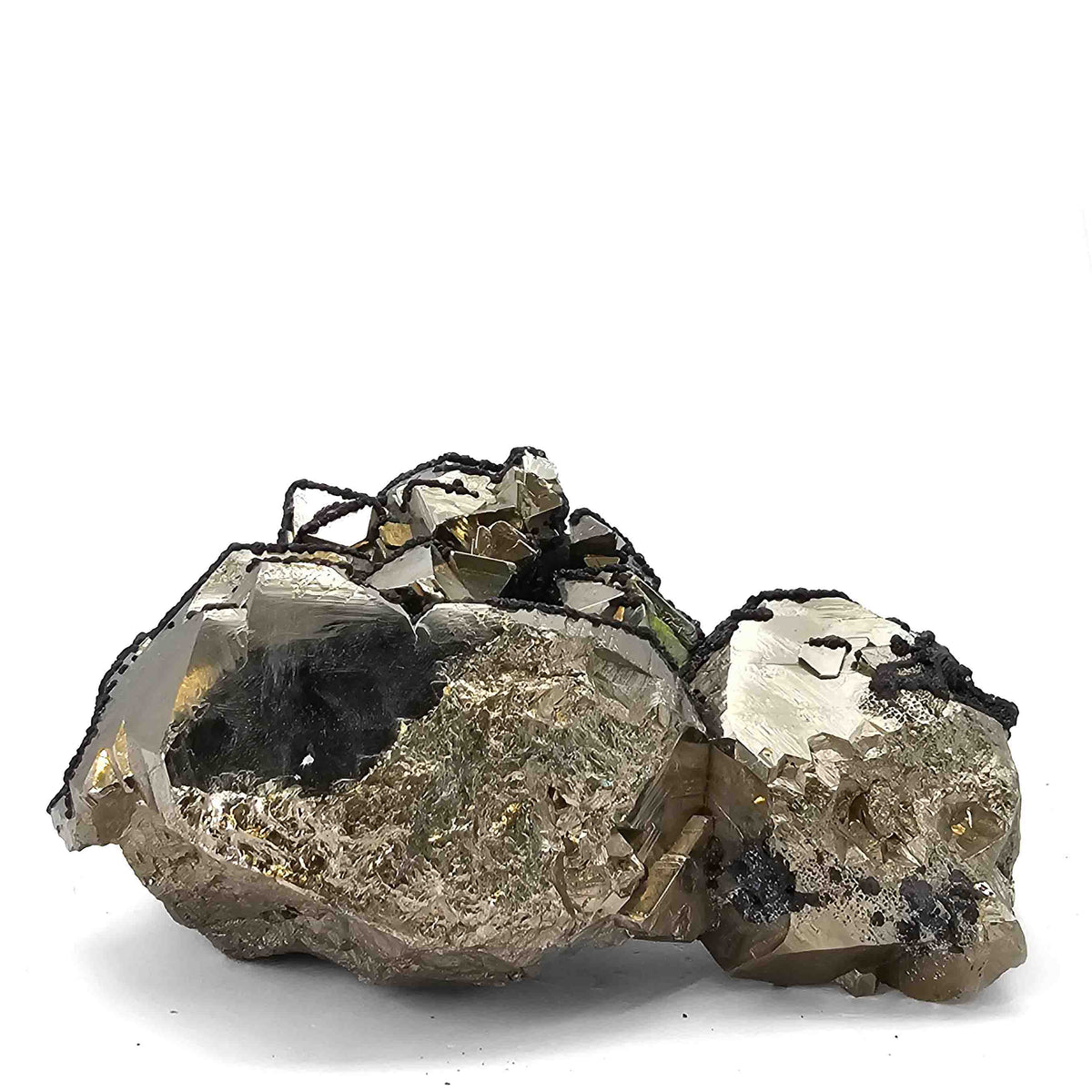
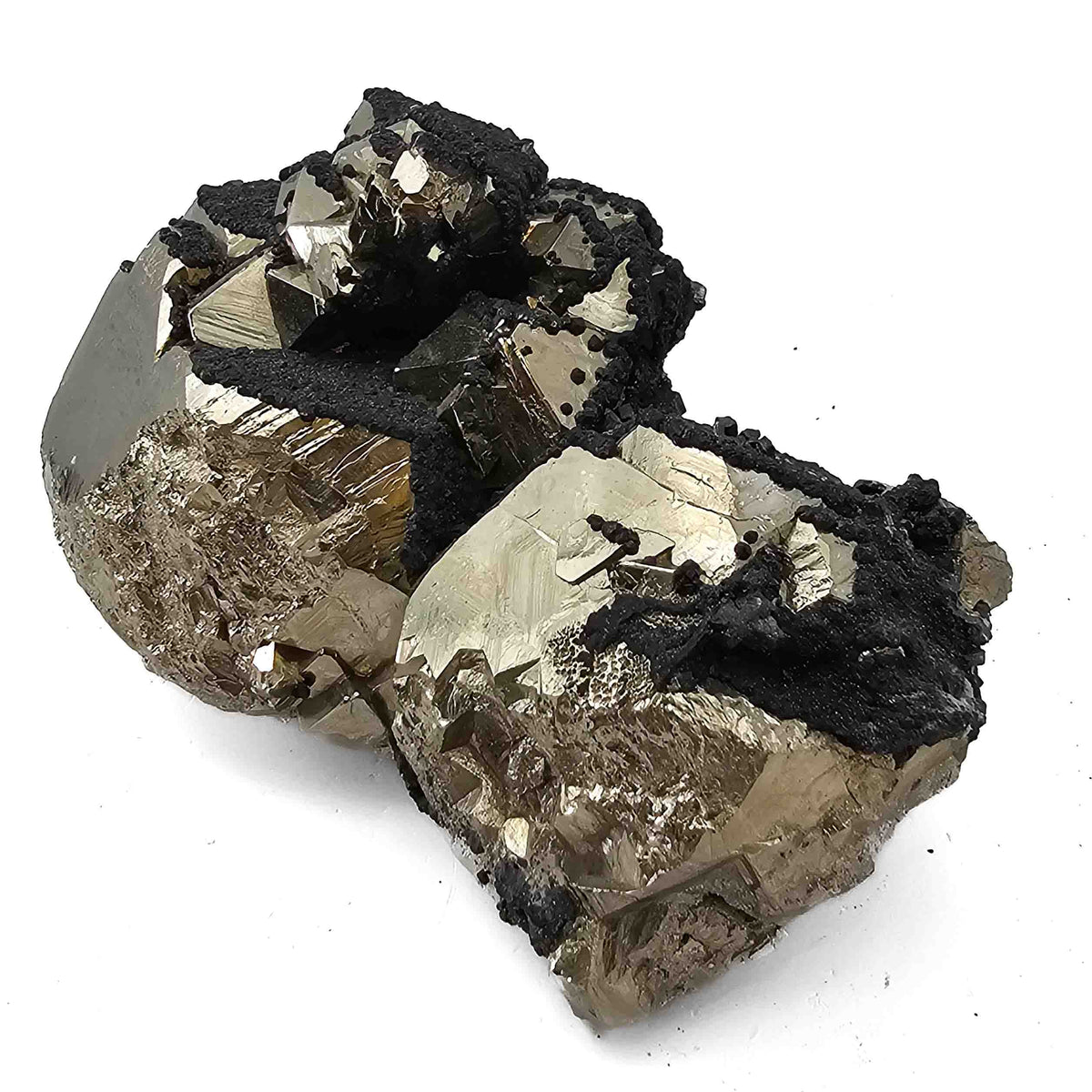
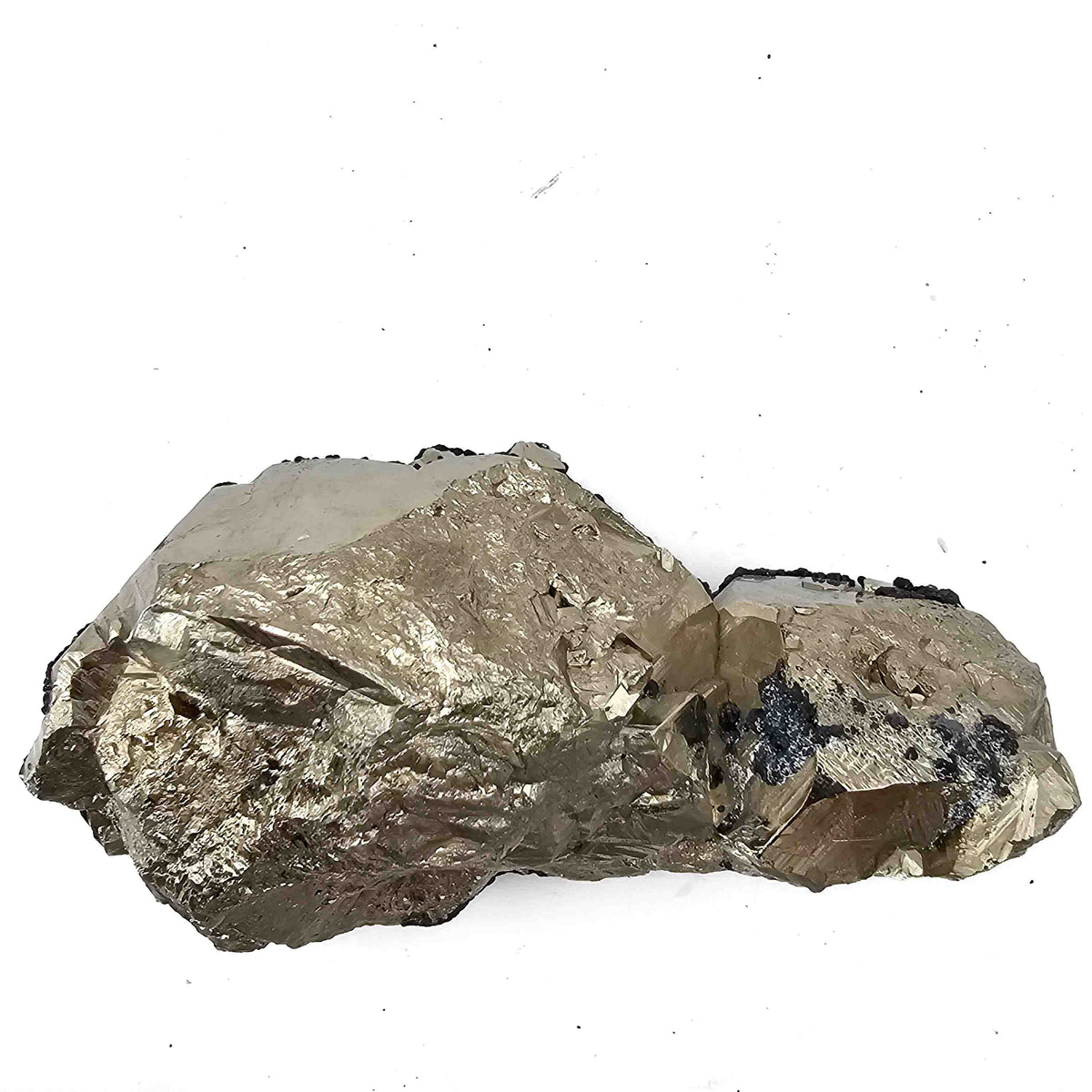
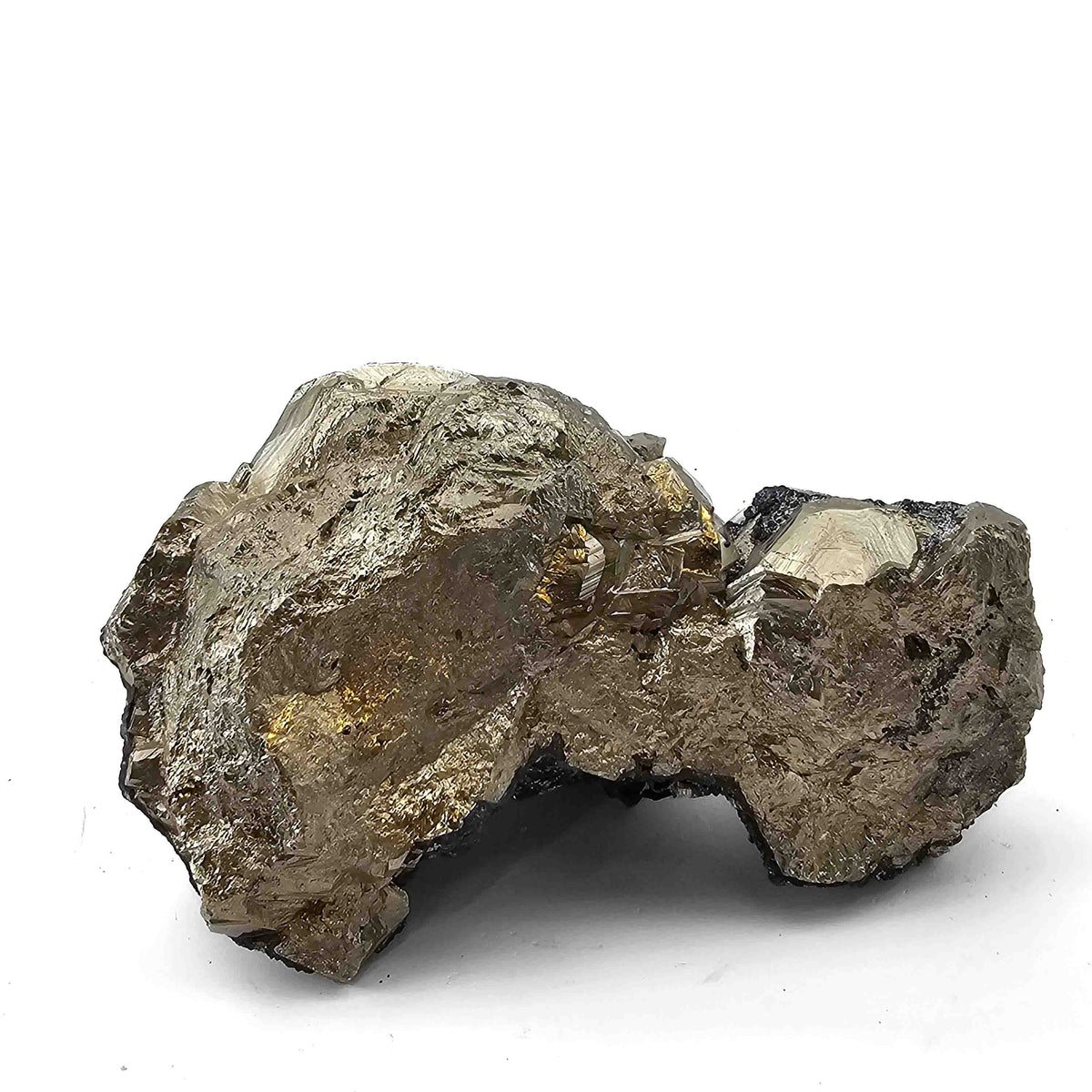
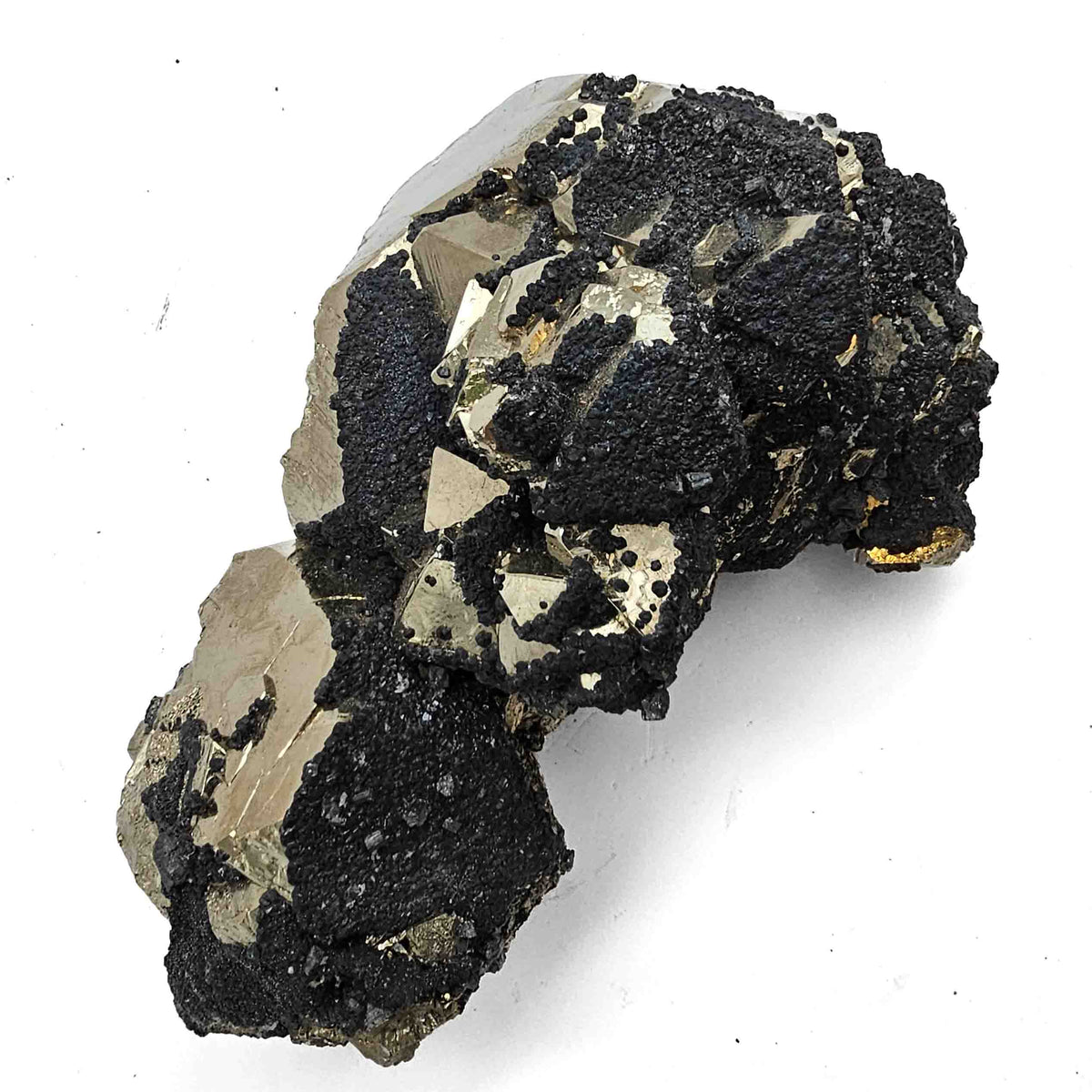
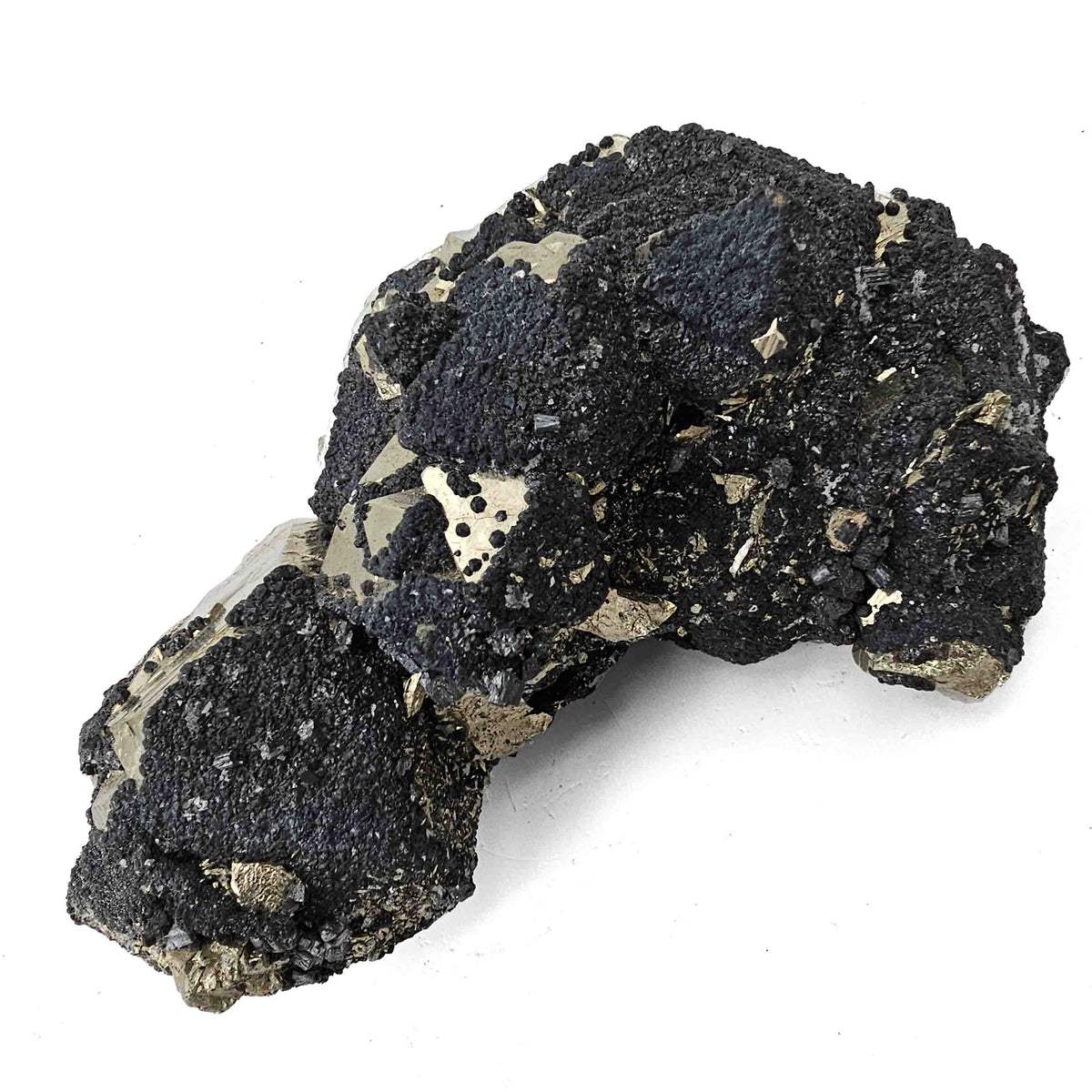
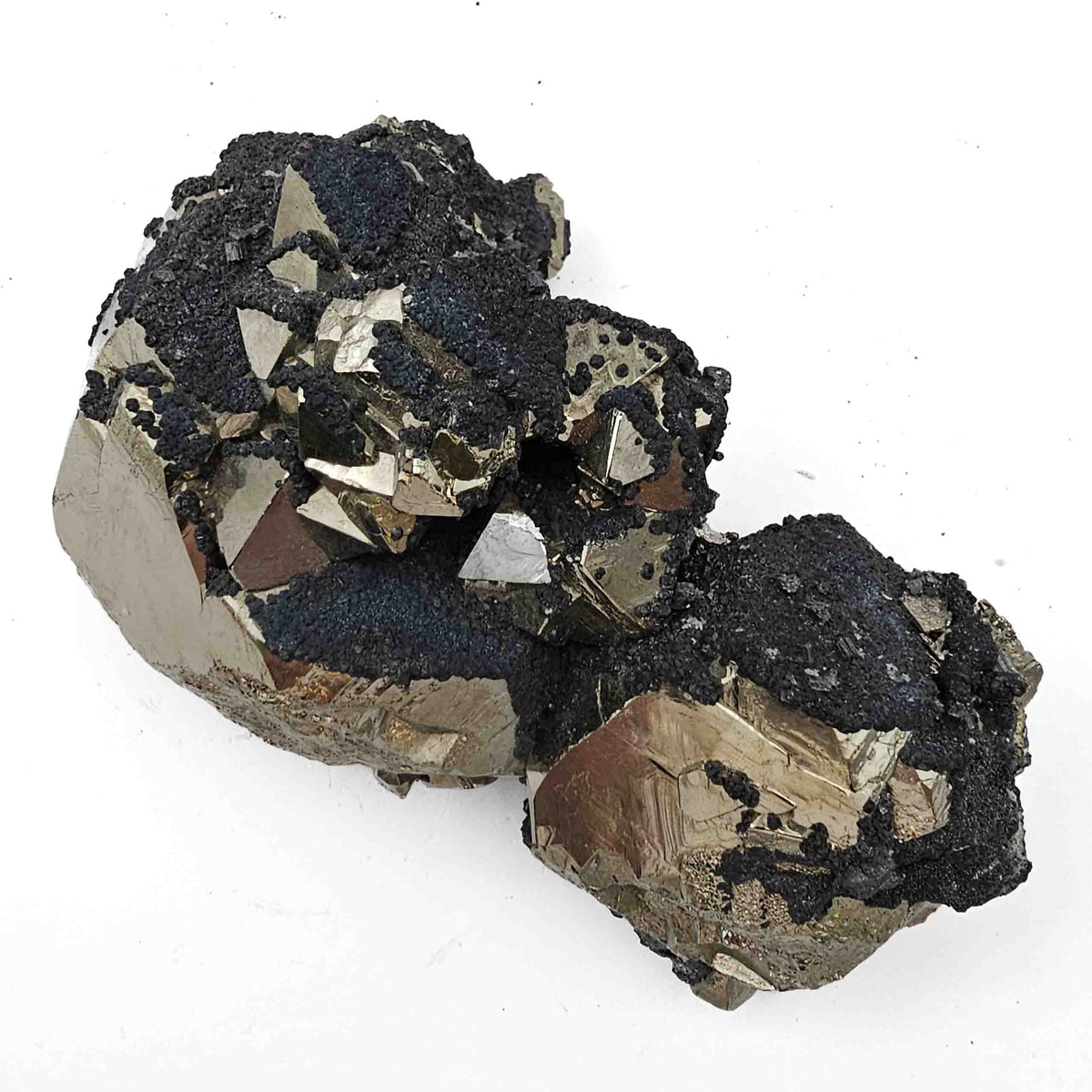
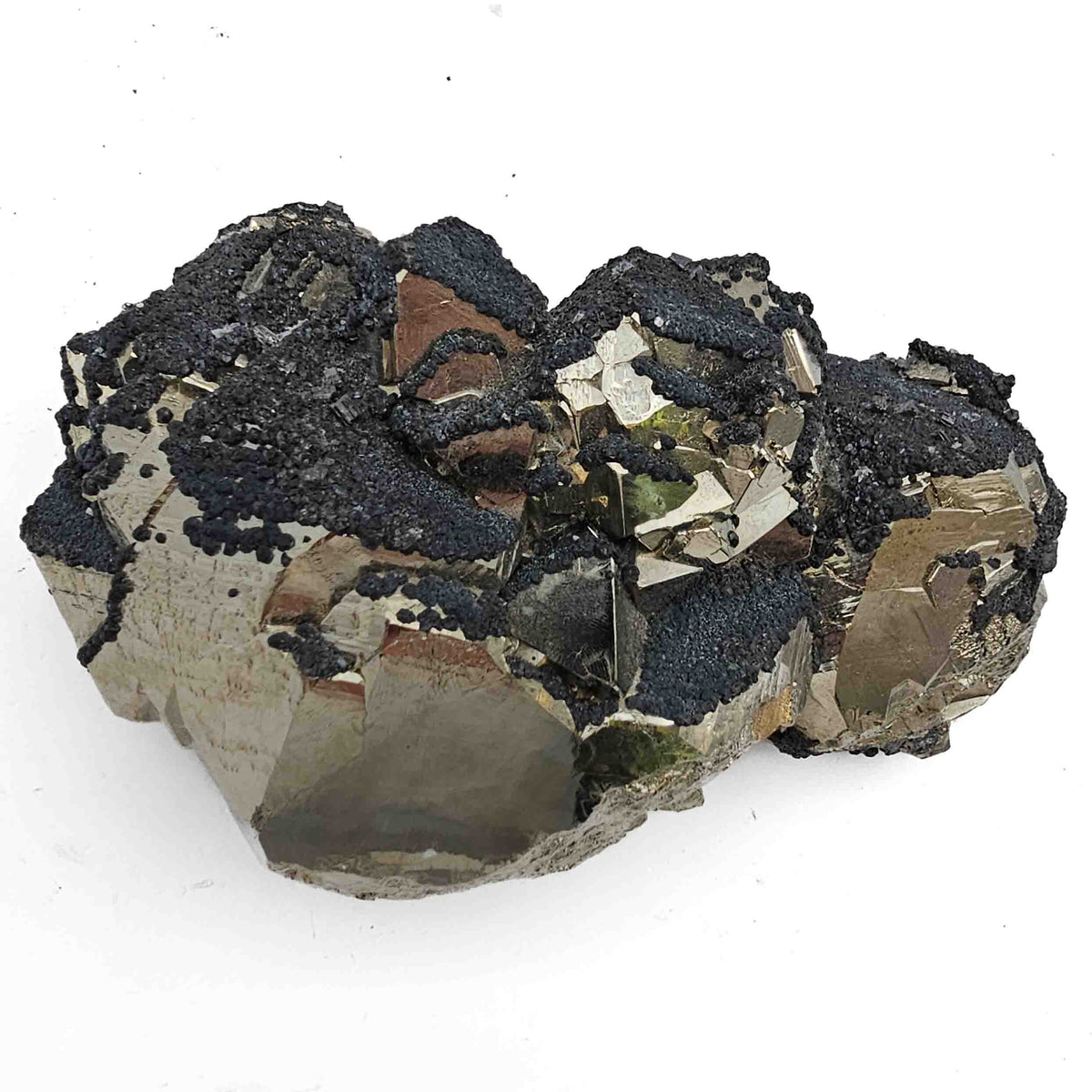
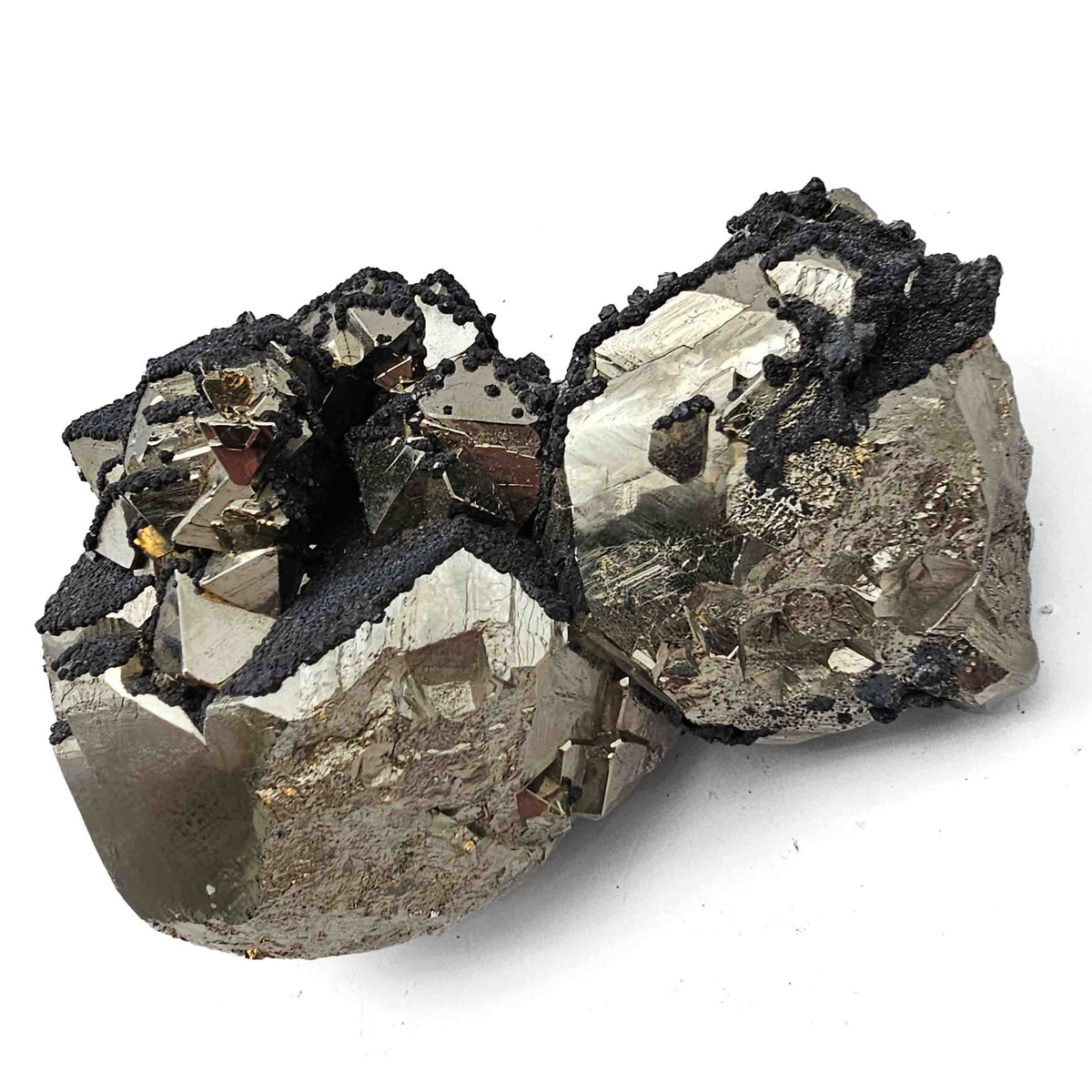
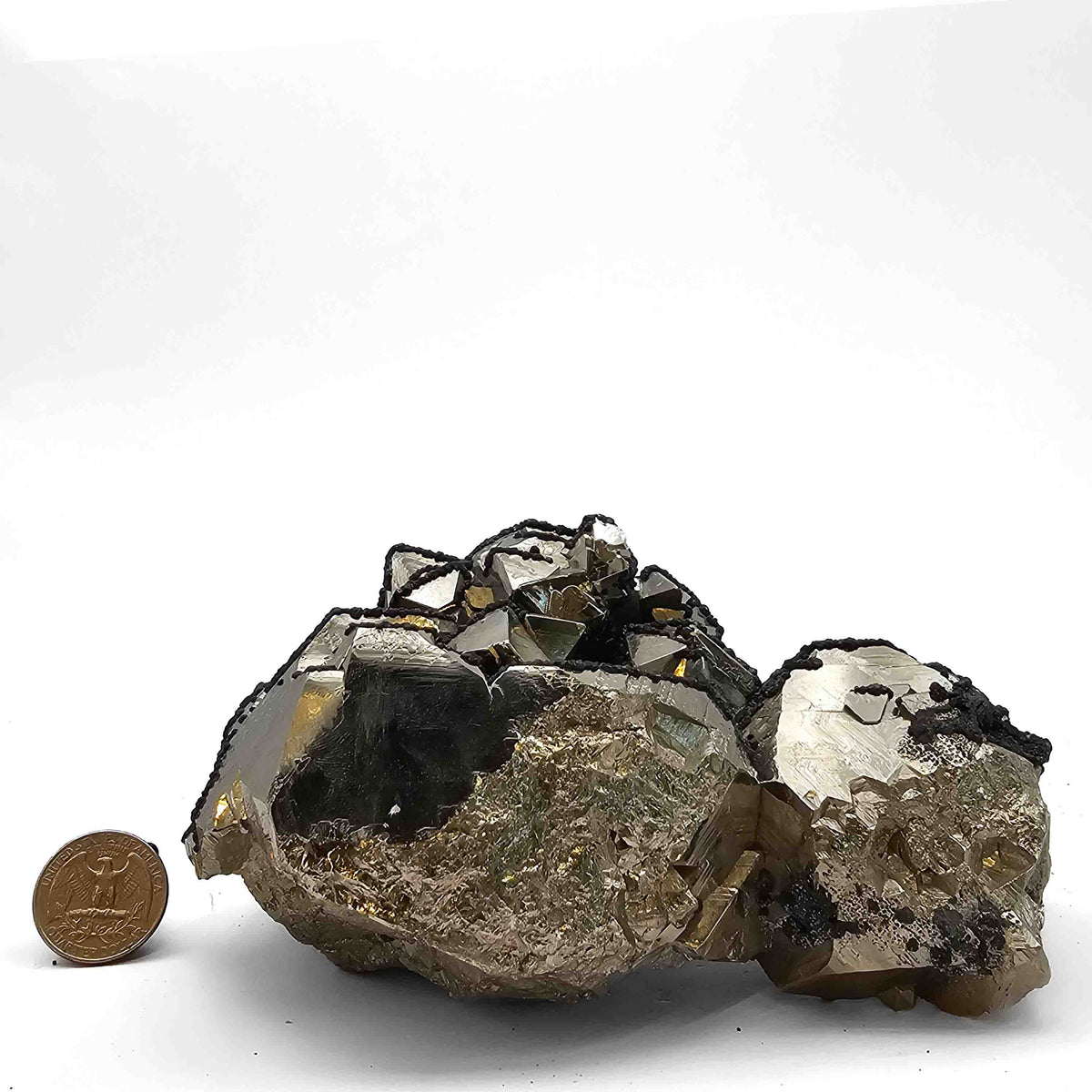
This one of a kind Pyrite with Tetrahedrite specimen from Peru features bright metallic Pyrite crystals partially coated and accented by fine black crystalline Tetrahedrite. The Pyrite displays sharp, reflective brassy-gold crystal faces, while the dark Tetrahedrite forms dense druzy to granular coatings across the surface, creating a dramatic contrast in colour, texture, and lustre. The combination of mirror-like Pyrite and black crystalline sulfide growth gives the specimen a bold, sculptural display presence.
Pyrite is an iron sulfide mineral, commonly known as “fool’s gold,” and has been admired for centuries for its metallic shine and geometric crystal forms. Tetrahedrite is a copper antimony sulfide mineral that often forms in hydrothermal ore deposits alongside Pyrite, Quartz, Galena, Sphalerite, and other metallic minerals. Peru is one of the world’s classic sources for sulfide mineral specimens, with many mines producing highly collectible Pyrite combinations known for strong crystal form, metallic lustre, and striking mineral contrast.
In crystal traditions, pyrite is associated with confidence and willpower, and tetrahedrite with grounding and focus.
Pyrite: FeS2, Mohs 6-6.5.
Quantity: 1pc
With this product, you will get the actual stone in the photograph.