


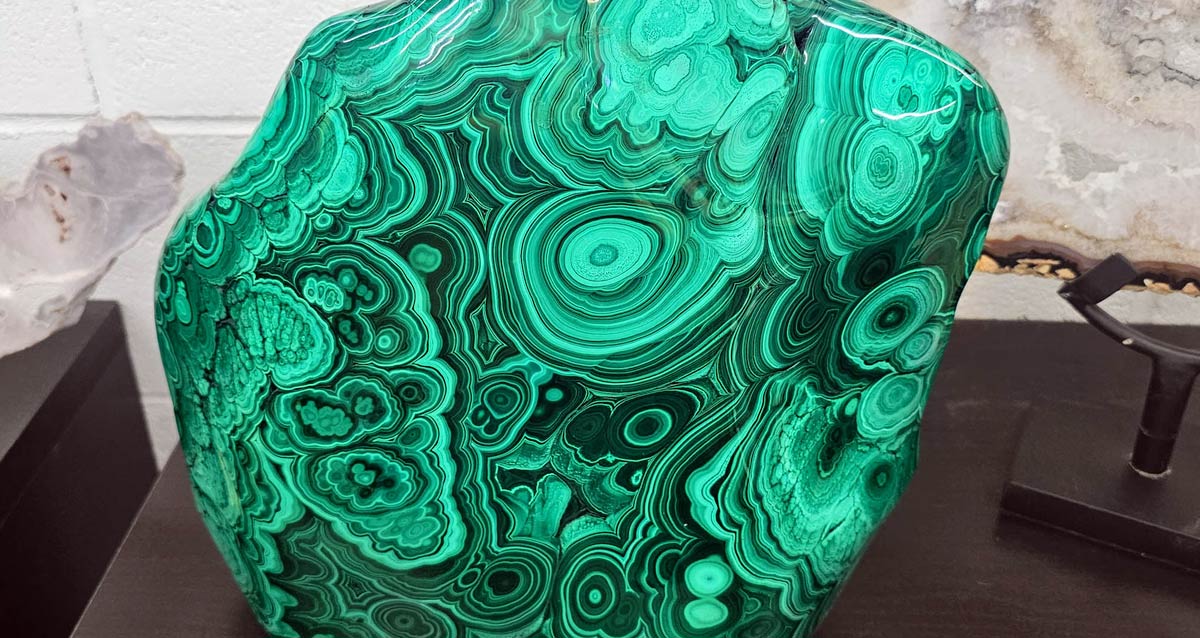

Some copper in British Columbia did not arrive as a neat quartz vein, a glittering sulphide seam, or a tidy orebody waiting politely for a prospector.
Some of it grew inside volcanic rock.
That sounds strange if you imagine copper only as a metal mined from big deposits or as green staining on old rock surfaces. But in parts of British Columbia, especially in basaltic volcanic rocks like the Karmutsen Formation on Vancouver Island, copper can occur in a more unusual way. It may appear as native copper, meaning actual metallic copper, or as copper minerals associated with altered basalt, fractures, amygdules, and low-grade metamorphic minerals.
This is not just a mining story. It is also a collector story, a rockhound story, and a good lesson in how volcanic rock changes after it forms.
Basalt is not dead once it cools. It cracks, reacts, fills with minerals, gets buried, gets heated, gets soaked by fluids, and sometimes becomes a chemical sponge. Under the right conditions, copper can move through that system and redeposit as native copper, bornite, chalcopyrite, malachite, or other copper-bearing minerals.
The result is one of the better hidden stories in B.C. geology:
Some basalts can grow metal.
What Is Native Copper?
Native copper is copper in its elemental metallic form.
That means it is not copper locked inside another mineral like chalcopyrite, bornite, or chalcocite. It is actual copper: metallic, reddish-orange when fresh, often brown or dark when oxidized, and capable of developing green or blue secondary minerals when weathered.
This makes native copper different from common copper minerals:
|
Material |
What it is |
|
Native copper |
Elemental metallic copper |
|
Chalcopyrite |
Copper-iron sulphide |
|
Bornite |
Copper-iron sulphide, often iridescent when tarnished |
|
Chalcocite |
Copper sulphide |
|
Malachite |
Green copper carbonate |
|
Azurite |
Blue copper carbonate |
|
Cuprite |
Red copper oxide |
|
Copper staining |
Surface colour from weathered copper minerals |
This matters because people often see green staining and assume they have copper metal. Sometimes they do. Usually they have copper minerals or copper weathering products.
Native copper is the metal itself.
Why Basalt Is a Good Host Rock
Basalt is a dark volcanic rock formed from relatively iron- and magnesium-rich lava. It is common in oceanic crust, volcanic plateaus, rift zones, and large lava-flow provinces.
Fresh basalt may look plain, but chemically it is not boring. It contains iron, magnesium, calcium, sodium, titanium, and trace amounts of other elements, including copper. It also forms in ways that create excellent plumbing.
When basalt erupts and cools, it can develop:
-
fractures
-
flow tops
-
flow breccias
-
gas bubbles
-
pipe amygdules
-
pillow structures
-
glassy volcanic fragments
-
porous zones between flows
-
chilled margins
-
zones where water can move
Those openings matter. They give later fluids somewhere to go.
A perfectly solid block of basalt is not very useful for mineral growth. A cracked, vesicular, brecciated, altered basalt flow is a different story. It has pathways, surfaces, cavities, and chemical instability. That is exactly the kind of environment where secondary minerals can form.
Vesicles and Amygdules: The Little Cavities That Matter

When lava erupts, gas can come out of the melt and leave bubbles behind. If those holes remain empty, they are called vesicles.
Later, fluids can move through the rock and fill those cavities with minerals. Once filled, those mineral-filled bubbles are called amygdules.
This is why some basalts are full of little round or stretched mineral spots. Those spots may be filled with quartz, calcite, epidote, chlorite, zeolites, prehnite, pumpellyite, or copper minerals.
In northern Vancouver Island’s Karmutsen Formation, B.C. Geological Survey mapping describes basalt flows that are commonly massive and amygdaloidal. The amygdule fillings include quartz, epidote, chlorite, carbonate, and zeolite, with rare amethystine quartz reported as well. Native copper and chalcopyrite have also been observed in the Karmutsen Formation in that region.
That is the key. These are not just decorative spots in lava. They are evidence of gas, cooling, fluid movement, and later mineral growth.
A basalt flow can be a mineral trap long after the eruption is over.
The Karmutsen Formation: Vancouver Island’s Basalt Foundation
To understand native copper in B.C. basalt, you need to understand the Karmutsen Formation.
The Karmutsen Formation is one of the major geological units of Vancouver Island. It is part of the larger Wrangellia oceanic plateau, a huge Triassic flood-basalt province exposed from Vancouver Island through Yukon and Alaska.
This was not a small local eruption. Wrangellia flood basalts extend roughly 2300 kilometres through northwestern North America, and on Vancouver Island the Karmutsen Formation preserves a thick volcanic sequence that includes submarine pillow basalt, pillow breccia, hyaloclastite, and subaerial basalt flows.
In plain language: much of Vancouver Island sits on the remains of a gigantic ancient volcanic plateau that formed in the ocean before it became part of western North America.
That is a much bigger story than “there is basalt on the island.”
The Karmutsen records a volcanic environment where lava erupted under water, broke apart into pillow structures and glassy fragments, then later built upward into subaerial lava flows. Those rocks were eventually buried, altered, intruded, faulted, and incorporated into the geology of the Canadian Cordillera.
This history gave the basalt plenty of chances to crack, react, and grow secondary minerals.
Pillow Lava, Breccia, and Broken Basalt
Not all basalt flows look the same.
When basalt erupts under water, it often forms pillow lava. These are rounded, bulbous masses created as hot lava hits cold water and chills quickly on the outside while still flowing inside.
If the pillows break apart, the rock can become pillow breccia. If volcanic glass and debris are created by rapid chilling and fragmentation, the result may include hyaloclastite.
These textures matter because broken volcanic rock has more surface area and more fluid pathways than a clean massive flow. Water can move through cracks, between fragments, along chilled margins, and through porous flow tops.
That means submarine basalt is not just visually interesting. It is chemically available.
Later fluids can alter volcanic glass, fill spaces with zeolites and other secondary minerals, and move metals through the rock. The more broken, vesicular, or fractured the basalt is, the more opportunity there is for mineral growth.
This is one reason basalt-hosted copper is plausible in the Karmutsen environment. The host rock had both chemistry and plumbing.
When Basalt Gets Gently Cooked
The next piece is low-grade metamorphism.
Metamorphism does not always mean dramatic gneiss, marble, or garnet schist. Sometimes it means basalt gets buried and heated just enough to develop new minerals without completely losing its original volcanic texture.
This is common in older volcanic piles. The rock may still look like basalt, but its original minerals have partly changed.
Low-grade metamorphism and alteration in basalt can produce minerals such as:
These minerals are not random. They are part of a low-temperature to moderate-temperature alteration world where basalt reacts with fluids.
In the Karmutsen Formation, the altered volcanic rocks are known for zeolite and prehnite-pumpellyite style mineral assemblages. Nixon’s northern Vancouver Island mapping notes widespread prehnite-pumpellyite grade assemblages farther west in the Mahatta Creek area, and describes Karmutsen vein minerals including quartz, epidote, chlorite, carbonate, zeolites, pyrite, chalcopyrite, and native copper.
This is the environment where the copper story starts to make sense.

How Copper Moves Through Basalt
Copper does not need to begin as a beautiful metallic bleb.
In a basaltic volcanic pile, copper may be present in small amounts throughout the rock. That copper can be mobilized later by hot fluids, especially during burial, alteration, and low-grade metamorphism.
The basic process looks like this:
-
Basalt erupts and cools.
-
Gas bubbles, fractures, flow tops, and breccias create openings.
-
The volcanic pile is buried and altered.
-
Warm fluids move through the rock.
-
Those fluids leach copper from the basalt or from earlier copper-bearing minerals.
-
Copper redeposits where chemistry changes.
-
Native copper or copper minerals form in fractures, amygdules, veins, or altered zones.
This is the important shift: native copper in basalt is not necessarily “metal frozen straight out of lava.” In many basalt-hosted systems, copper is better understood as something moved and concentrated by later fluids.
The White River copper deposit in Yukon gives a useful comparison. It is hosted by Upper Triassic basaltic volcanic rocks of the Nikolai Greenstone, another Wrangellia-related volcanic unit. Sinclair’s report argues that native copper and copper sulphides there formed during low-grade metamorphism, with heated fluids moving through fractures, leaching copper from basalt, and redepositing it higher in the volcanic pile.
That does not prove every detail of every Karmutsen occurrence. But it gives a strong process model for how basalt-hosted copper systems can work.
Native Copper and Hematite
Native copper is often associated with red, oxidized basalt or hematitic zones in basaltic successions.
Hematite is an iron oxide. It gives many rocks a reddish, maroon, or purplish colour. In basalt flows, hematite can form during oxidation of iron-bearing minerals. This can happen during cooling, degassing, alteration, or later fluid-related reactions, depending on the setting.
In Karmutsen exposures on northern Vancouver Island, the basalt is described as dark greenish grey, purplish grey, and maroon, with hematitic basaltic lava flows. That matters because red and green basalt colours often record different oxidation and alteration conditions.
Copper chemistry is sensitive to oxidation-reduction conditions. In one part of a system, copper may travel in solution or exist in sulphides. In another, it may precipitate as native copper or different copper minerals.
This is why basalt-hosted copper deposits can be patchy. The metal does not appear evenly throughout every lava flow. It concentrates where fluid pathways, cavities, reactive minerals, and chemical traps line up.
Why Amygdules Can Hold Copper Minerals
Amygdules make excellent mineral traps because they are cavities with surfaces.
When mineral-bearing fluids pass through basalt, those fluids can deposit minerals into open spaces. A gas bubble that began as an empty hole can later become a little sealed pocket of quartz, calcite, epidote, zeolite, or copper-bearing minerals.
This is why amygdaloidal basalt can be so interesting to collectors. It preserves both the volcanic beginning and the later alteration history.
In B.C., Karmutsen amygdules are commonly filled with minerals such as quartz, epidote, chlorite, carbonate, and zeolite. In related Wrangellia basalt successions in Alaska, amygdules may contain epidote, quartz, chlorite, prehnite-pumpellyite, calcite, and in rare local cases native copper or bornite.
That comparison is useful because it shows the broader Wrangellia pattern: thick Triassic basalt piles, low-grade alteration, amygdules, and local copper mineralization.
For a collector, the takeaway is simple:
The holes in basalt are often where the later mineral story lives.
Native Copper Is Not the Same as Copper Staining
This distinction matters in a rock shop, in the field, and in any honest article about copper rocks.
A basalt with green staining is not automatically native copper. Green usually means copper has weathered into secondary minerals such as malachite or related copper alteration products. Blue may suggest azurite. Peacock colours may indicate tarnished bornite or chalcopyrite, though surface colour alone can mislead.
Native copper itself is metallic. When fresh, it has a coppery reddish-orange colour. When weathered, it may look brown, dull, dark, or coated. It may be surrounded by green or blue secondary minerals, but the metal is still the metal.
Here is the practical distinction:
|
What you see |
Possible meaning |
|
Metallic reddish-orange blebs |
Possible native copper |
|
Green coating or stain |
Malachite or copper weathering products |
|
Blue coating |
Azurite or other copper minerals |
|
Brassy yellow metallic grains |
Chalcopyrite or pyrite, depending on properties |
|
Iridescent purple-blue tarnish |
Often bornite or tarnished copper sulphides |
|
Red earthy mineral |
Hematite or cuprite, depending on context |
|
Black metallic grains |
Magnetite, chalcocite, tenorite, or other opaque minerals |
The point is not to make identification impossible. The point is to avoid lazy naming.
Copper-bearing basalt can contain several copper phases, plus iron oxides, secondary carbonates, sulphides, and alteration minerals. Colour is a clue. It is not a verdict.
Why This Matters for Vancouver Island
Vancouver Island’s Karmutsen basalt is not just background rock. It is one of the island’s geological foundations.
The Karmutsen Formation sits below the Quatsino limestone and later volcanic and intrusive units. In northern Vancouver Island, this stratigraphy is tied into a much larger mineralized region that includes Island Copper and other porphyry, epithermal, and hydrothermal systems. Nixon’s mapping in the Quatsino–Port McNeill area places the Karmutsen Formation in that broader regional framework with overlying Quatsino, Parson Bay, Bonanza, and Island Plutonic Suite rocks.
Native copper in the Karmutsen is not the same thing as Island Copper-style porphyry mineralization. They are different scales and different styles of mineralization. But they are part of the same larger lesson: Vancouver Island’s geology is highly volcanic, intrusive, altered, and mineralized.
That is why the island produces so many interesting rocks.
It is not random.
A Basalt Flow Is a Chemical System
The simplest mistake people make is treating rock as a static object.
A basalt flow is not just “lava that hardened.” It is a chemical system with a history.
It starts as molten rock.
It cools.
It cracks.
It traps gas bubbles.
It may erupt underwater and form pillows.
It may break into breccia.
It may be buried under more flows.
It may react with seawater or groundwater.
It may be heated during burial.
It may be cut by intrusions.
It may be fractured by faults.
It may be altered by hydrothermal fluids.
It may grow secondary minerals millions of years after it first formed.
Native copper is one possible product of that long chemical history.
That is a better way to think about it than imagining copper as something simply “inside” the rock from the beginning. Sometimes the copper was there in trace amounts, moved later, and then became visible only after fluids concentrated it.
The visible mineral is often the final chapter, not the first one.

Why Copper in Basalt Can Be Patchy
If basalt-hosted copper depends on cavities, fractures, fluids, and chemical traps, then it should be uneven.
That is exactly what we should expect.
One flow may have good amygdules. Another may be massive and tight. One zone may be fractured. Another may not. One area may have oxidized conditions. Another may have reducing conditions. One part of the volcanic pile may have fluid pathways; another may be sealed.
This is why copper showings in basalt can be local and inconsistent.
It also explains why a collector may find one interesting copper-bearing piece and then struggle to find more nearby. Mineralization may follow a specific fracture, flow top, amygdule-rich horizon, breccia zone, or altered pocket rather than a broad obvious vein.
In basalt, the good stuff may hide in the architecture of the flow.
What Collectors Should Look For
This article is not a collecting guide, and it should not be treated as permission to access claims, mines, roadcuts, parks, private land, or restricted areas. But from a rock-identification perspective, copper-bearing basalt has some recognizable features.
Useful clues include:
-
amygdaloidal basalt
-
green or blue copper staining
-
reddish or maroon hematitic basalt
-
epidote-rich green alteration
-
quartz, calcite, or zeolite-filled cavities
-
metallic blebs or grains
-
fractures with mineral coatings
-
basalt near known copper showings
-
old volcanic units in mapped geological areas
The more clues that line up, the more plausible the interpretation becomes.
But again, do not name the rock too early. A green stain may be copper. It may not be. A metallic grain may be native copper. It may be bornite, chalcopyrite, pyrite, magnetite, or something else.
A good collector observes first and names second.
Why This Is Not the Michigan Copper Story
When people think of native copper in basalt, Michigan’s Keweenaw Peninsula often comes to mind. That region is famous for large native copper deposits and spectacular specimens.
British Columbia’s Karmutsen native copper story should not be oversold as the same thing.
The better comparison is conceptual, not commercial.
Both involve basaltic volcanic rocks, amygdules, fractures, fluid movement, and native copper. But B.C. is not known for producing native copper specimens on the same scale as the classic Lake Superior district.
That is fine. The B.C. story does not need to be inflated.
Its value is in explaining a local geological process: volcanic rock can host metallic copper because the rock’s chemistry, texture, and alteration history allowed copper to move and redeposit.
That is interesting enough without pretending Vancouver Island is the next Keweenaw.
Copper has a much longer human story than its B.C. basalt story. If you want to see how people went from hammering native copper to smelting and refining it, read A Brief History of Copper Discovery and Refining.
The Lapidary Angle
Copper-bearing basalt can be visually appealing, but it is not automatically good lapidary material.
Some pieces may polish well if the basalt is solid, fine-grained, and not too fractured. Amygdaloidal basalt can be attractive when the cavities are filled with contrasting minerals. Epidote, quartz, calcite, chlorite, zeolite, and copper staining can all create visual interest.
But there are practical problems:
-
basalt may undercut around softer amygdule fillings
-
fractures can open during cutting
-
copper minerals may smear, oxidize, or behave differently than the host rock
-
weathered material may crumble
-
zeolites and calcite may be softer than the basalt
-
native copper can drag under some cutting or polishing conditions
So yes, copper-bearing basalt can be collectible or cuttable. But each piece has to be judged by texture, stability, hardness contrast, and polish response.
A geological specimen is not automatically a lapidary stone.
Native Copper as a Teaching Mineral
Native copper in basalt is useful because it teaches several ideas at once.
It teaches that volcanic rocks can keep changing after eruption.
It teaches that gas bubbles can become mineral pockets.
It teaches that fluids move metals.
It teaches that low-grade metamorphism can create new minerals without destroying the original rock.
It teaches that copper minerals come in several forms, not just one.
It teaches that a plain-looking basalt can have a long chemical history.
That makes native copper in B.C. basalt a better article topic than a simple “where to find copper” guide. The real value is understanding how the rock system works.
Final Answer: Why Some B.C. Basalts Grow Metal
Native copper in British Columbia basalt is not magic, and it is not random.
It is the result of basaltic volcanic rocks with the right combination of chemistry, texture, cavities, fractures, fluids, and later alteration. In the Karmutsen Formation of Vancouver Island, native copper and chalcopyrite have been observed in altered basaltic rocks that also contain amygdules, zeolites, quartz, epidote, chlorite, carbonate, and low-grade metamorphic mineral assemblages.
The broader Wrangellia story makes the setting even more interesting. Vancouver Island’s Karmutsen basalt is part of a huge Triassic oceanic plateau that once formed far out in the ocean and later became welded onto western North America.
So some B.C. copper did not simply arrive as a tidy vein.
Some of it moved through old volcanic rock, found cavities and fractures, reacted with changing chemical conditions, and grew where the basalt gave it room.
That is the real story:
Basalt can be more than lava. It can become plumbing, chemistry, and eventually, a place where metal grows.
Related Reads
- Why Are There So Many Agates in the Okanagan?
- Dallasite: Vancouver Island’s Volcanic Mosaic Stone
- Cool Rocks to Notice While Hiking in British Columbia
- How Geologists Know Where to Look for Minerals in British Columbia
- Vancouver Island Geology Guide: Lava, Fossils, Coal, Copper, and the Edge of a Continent