





Specifications
Description
Locality: Shigar Valley, Skardu District, Gilgit-Baltistan, Pakistan
Description: This aquamarine comes from the Shigar Valley in Baltistan, in the high Karakoram of northern Pakistan. The valley lies about 32 km northeast of Skardu, and its gem-bearing pegmatite dikes are exposed at high altitude along the Shigar and Braldu rivers, much of it reachable only by jeep track. Gemmologists at GIA describe northern Pakistan as an increasingly important source of aquamarine, with the Shigar, Hunza and Braldu valleys among the main areas.
Geologists from the University of Peshawar mapped these pegmatites as part of the Karakoram Axial Batholith, intruded into the metamorphic rocks of the Karakoram Metamorphic Complex where the Karakoram plate meets the Kohistan-Ladakh island arc. The gems grow in pockets in the coarse-grained zones of the dikes. Black schorl tourmaline turns up almost everywhere in the valley, alongside topaz, green fluorite, garnet, morganite and quartz.
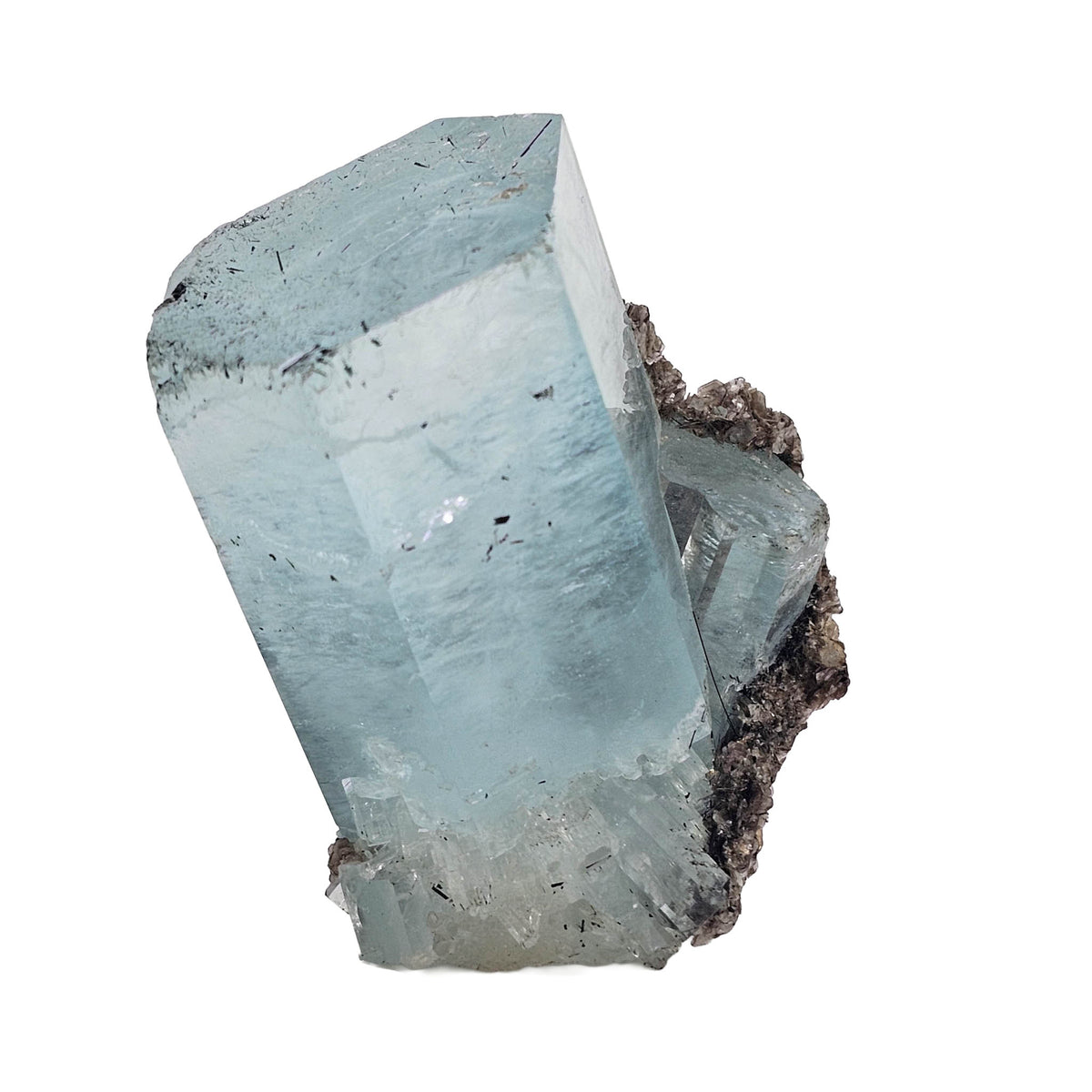
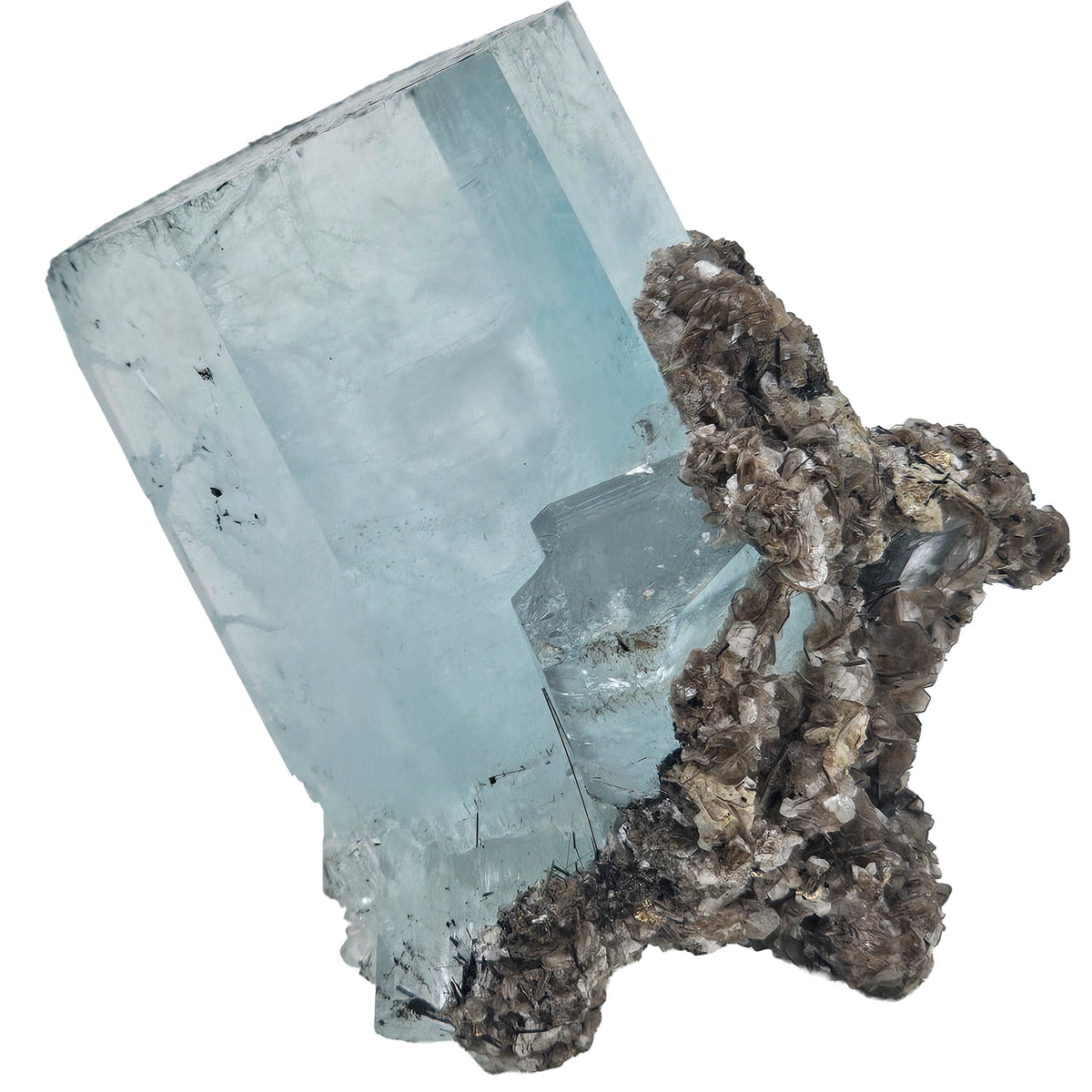
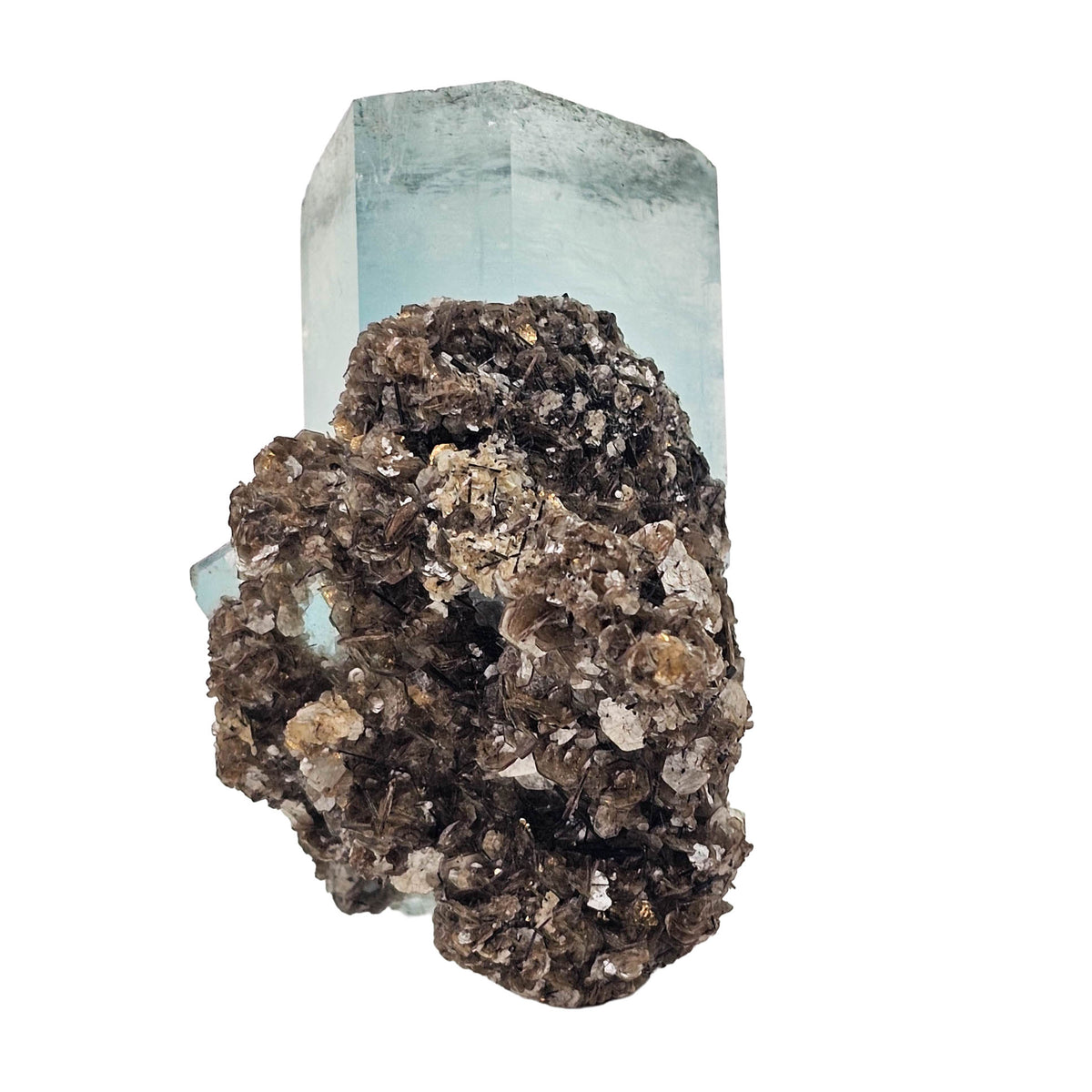
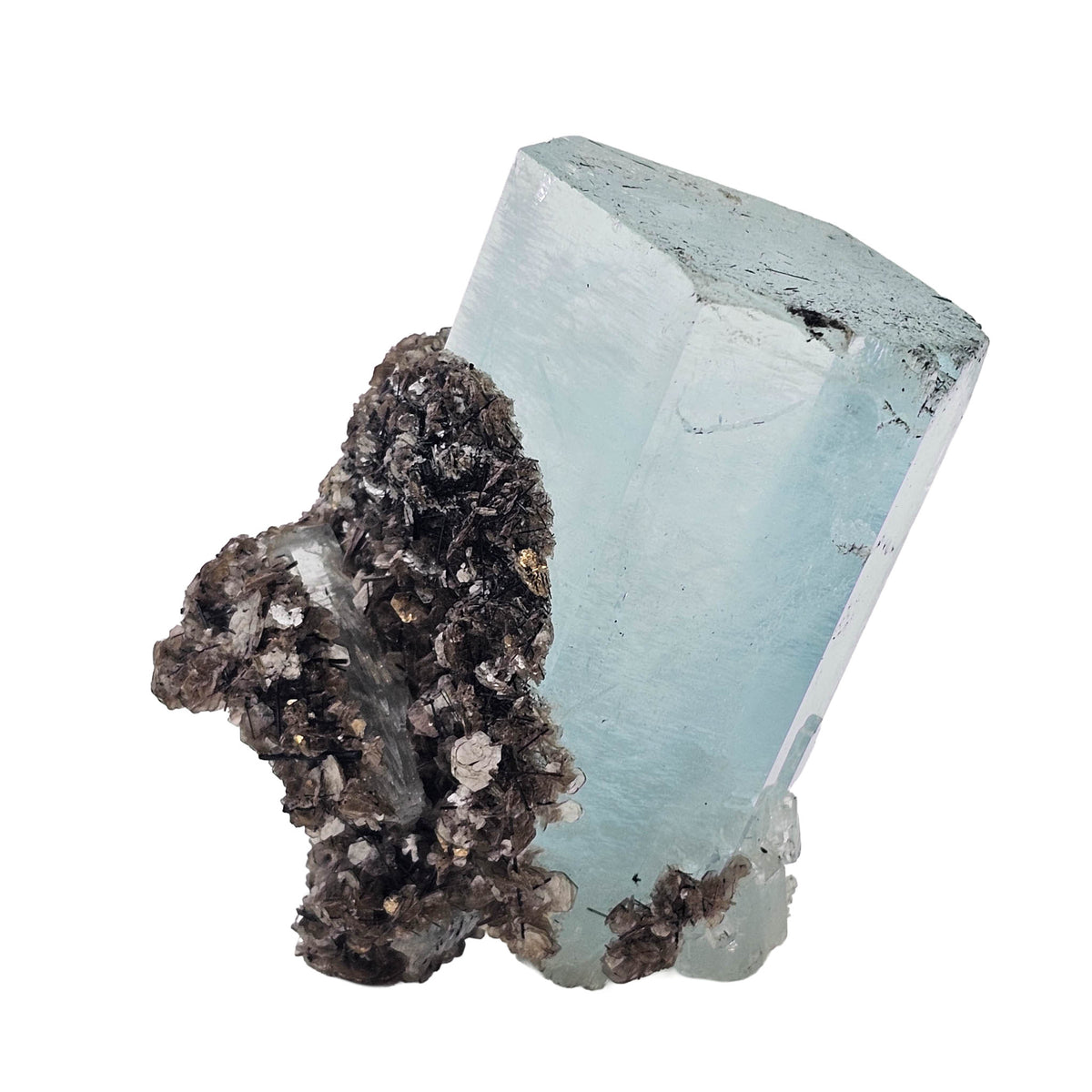
This aquamarine specimen is a more defined and higher-grade example, featuring a thick, well-formed hexagonal prism with a flat termination. The color is a clean, pale blue with good transparency, allowing light to pass through the crystal and highlight internal zoning and faint veils. The crystal sits naturally on a contrasting matrix of brown mica (likely muscovite), with smaller secondary aquamarine growths attached at the base. The combination of sharp geometry and textured matrix gives the piece strong visual balance.
Aquamarine is a variety of beryl that forms in granitic pegmatites, where slow cooling allows large, well-structured crystals to develop. The Shigar Valley is known for producing some of the world’s best aquamarine specimens, often associated with mica and quartz. The blue coloration comes from trace iron within the crystal structure, and the clean faces and termination seen here indicate stable growth conditions with minimal disturbance during formation.
Aquamarine is commonly associated with clarity, communication, and a steady, level mindset. Pieces like this tend to attract people who appreciate structure, balance, and naturally formed geometric crystals.
Chemical Composition: Be3Al2Si6O18
Quantity: 1pc
With this product, you will get the actual stone in the photograph.