







Specifications
Description
Locality: Mistelgau, Landkreis Bayreuth, Upper Franconia, Bavaria, Germany
Era: Toarcian, Early Jurassic (the Belemnite Battlefield bed at the top of the Posidonienschiefer, where it meets the Jurensismergel)
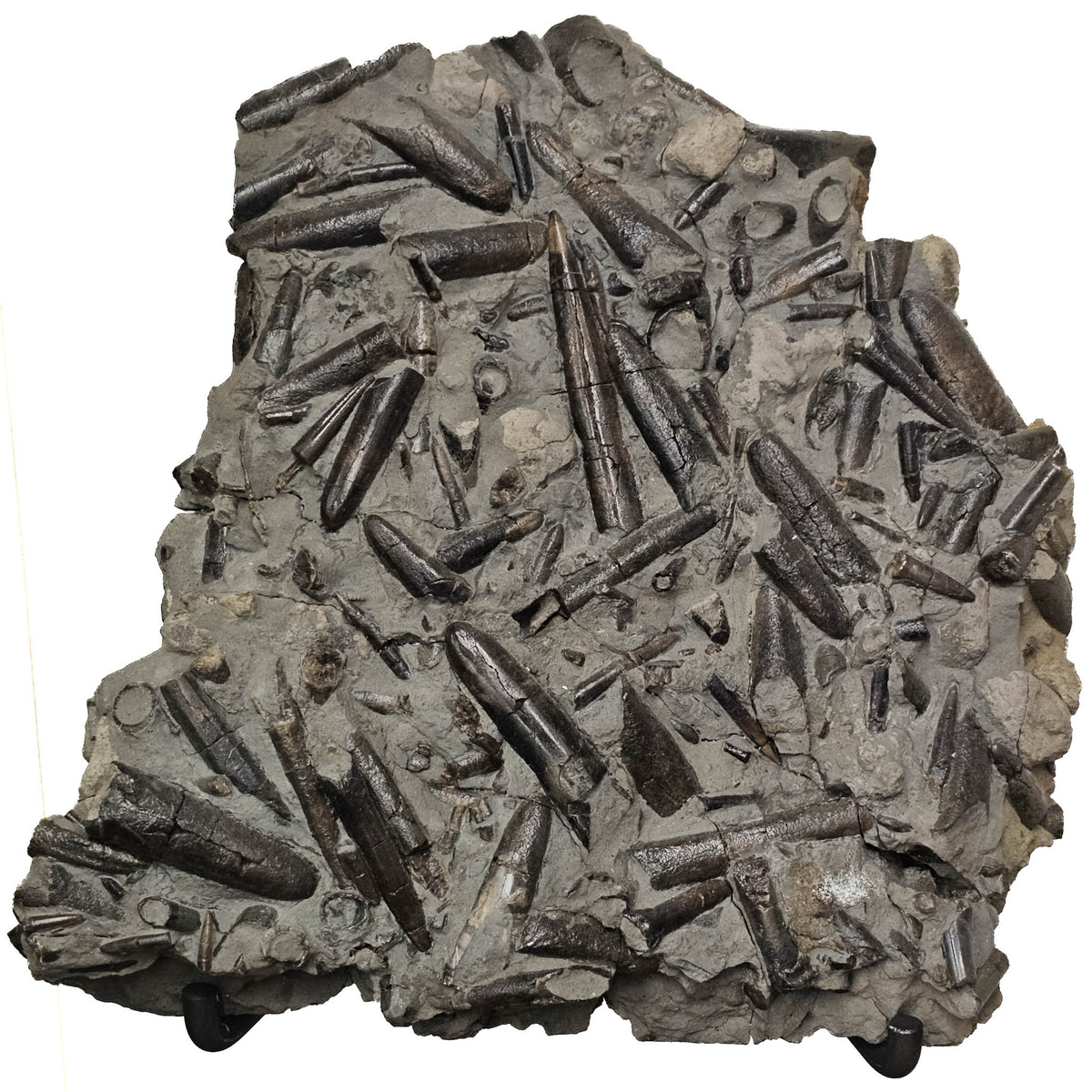
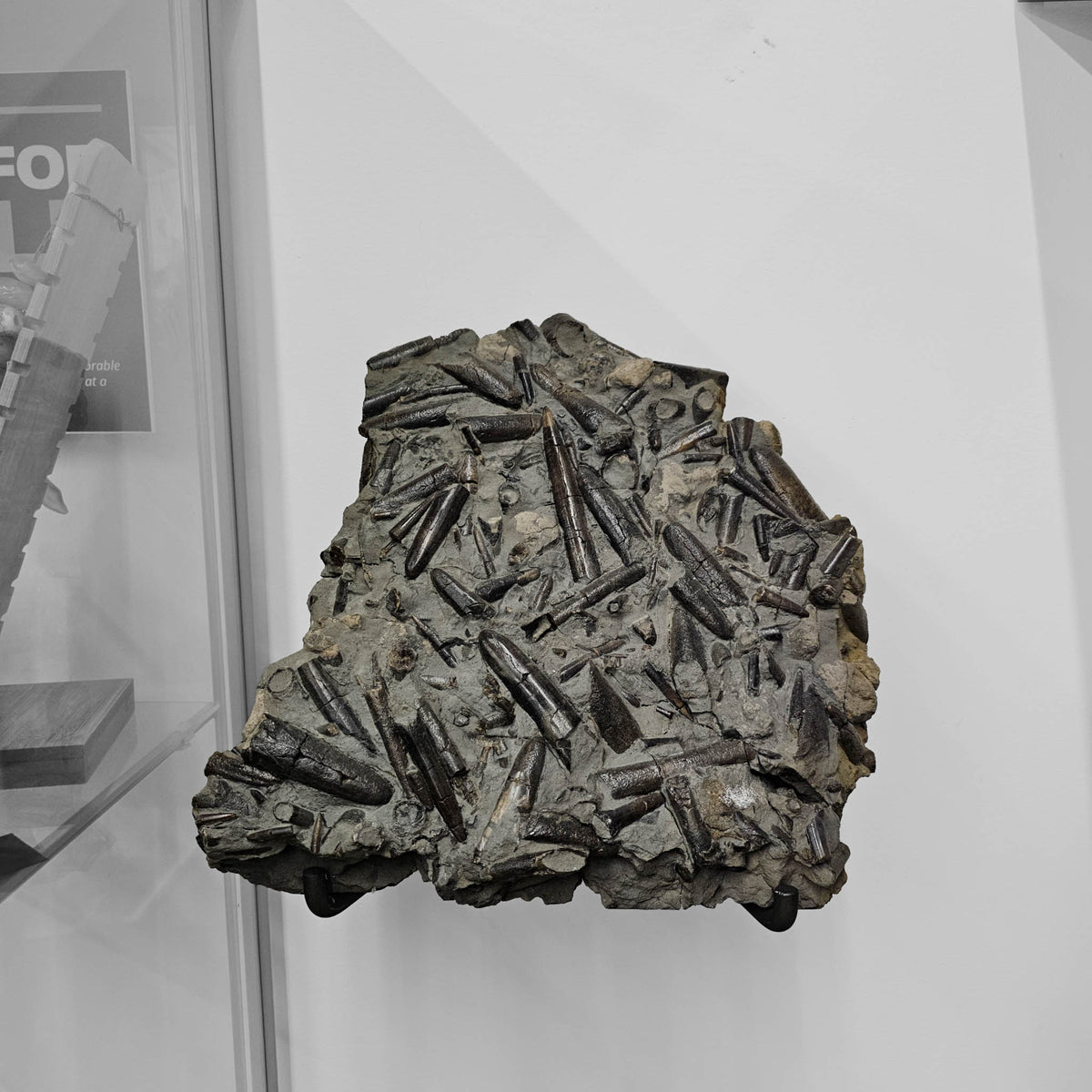
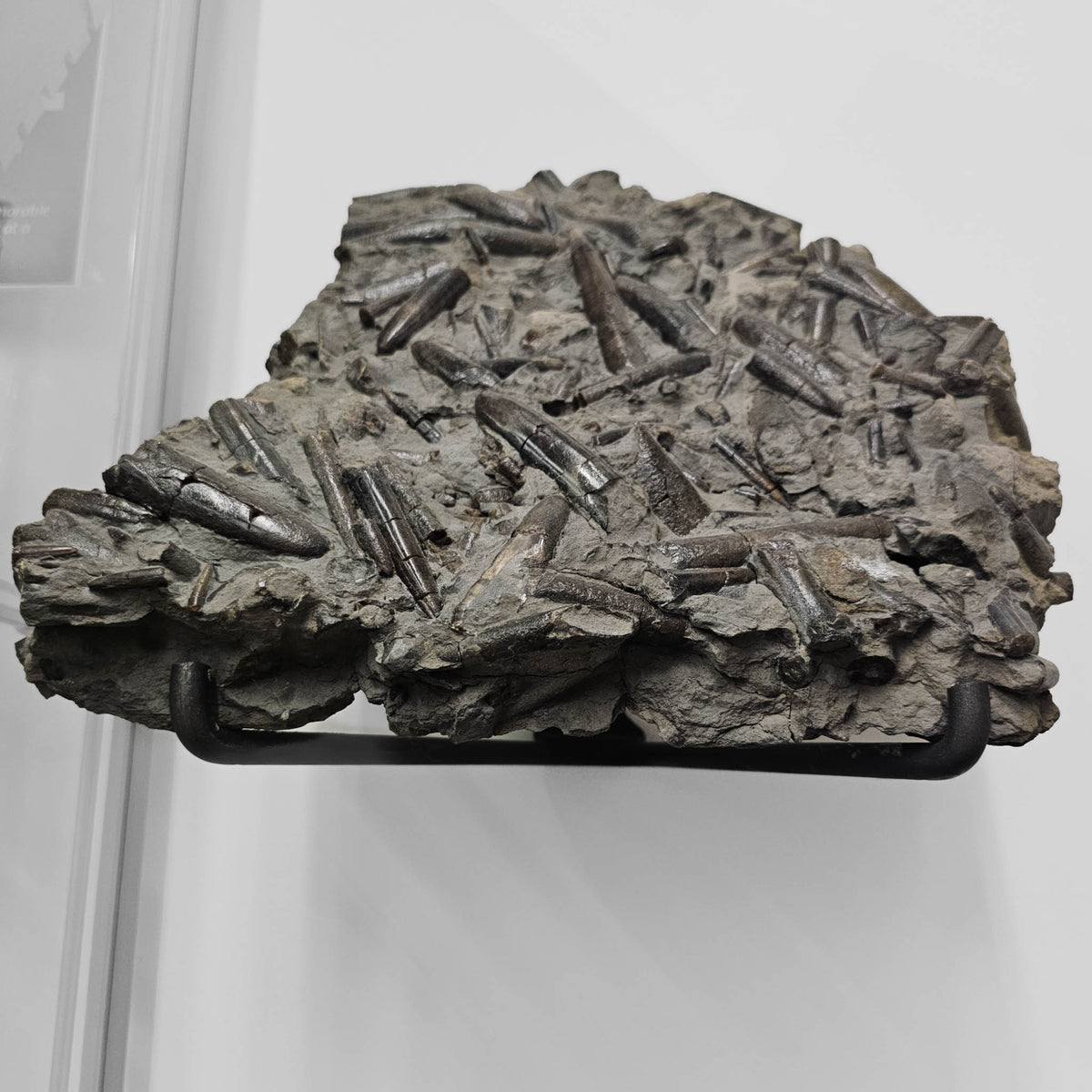
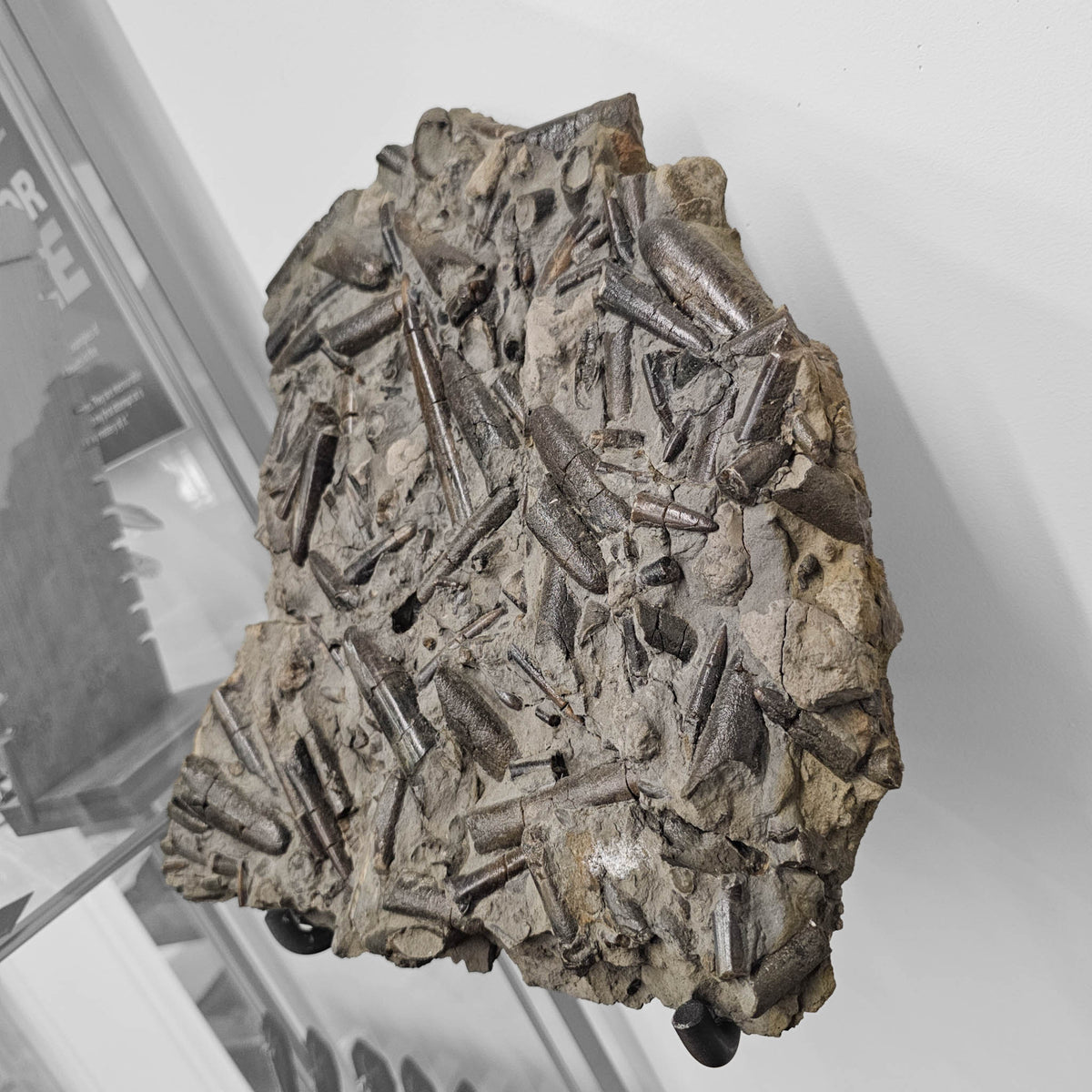
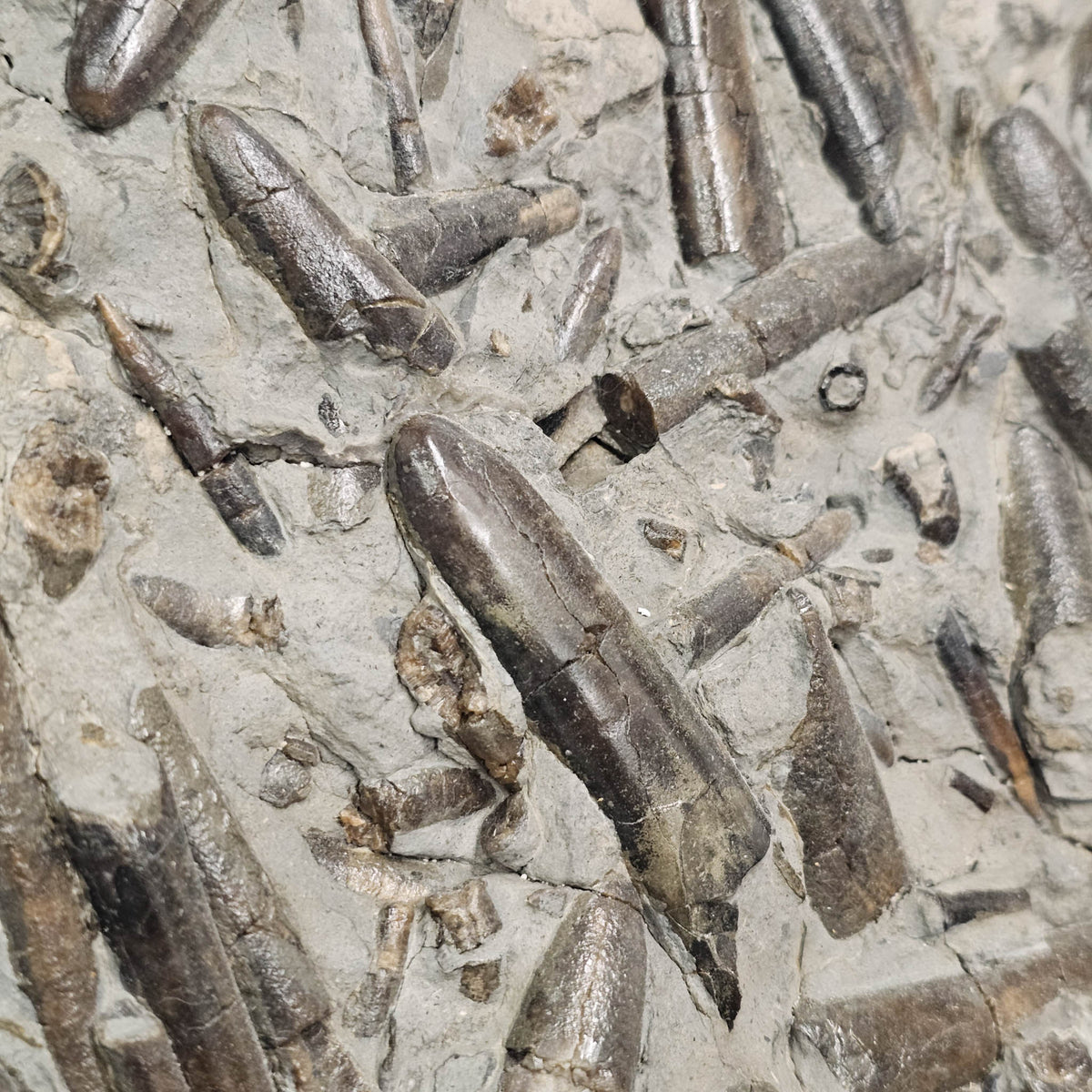
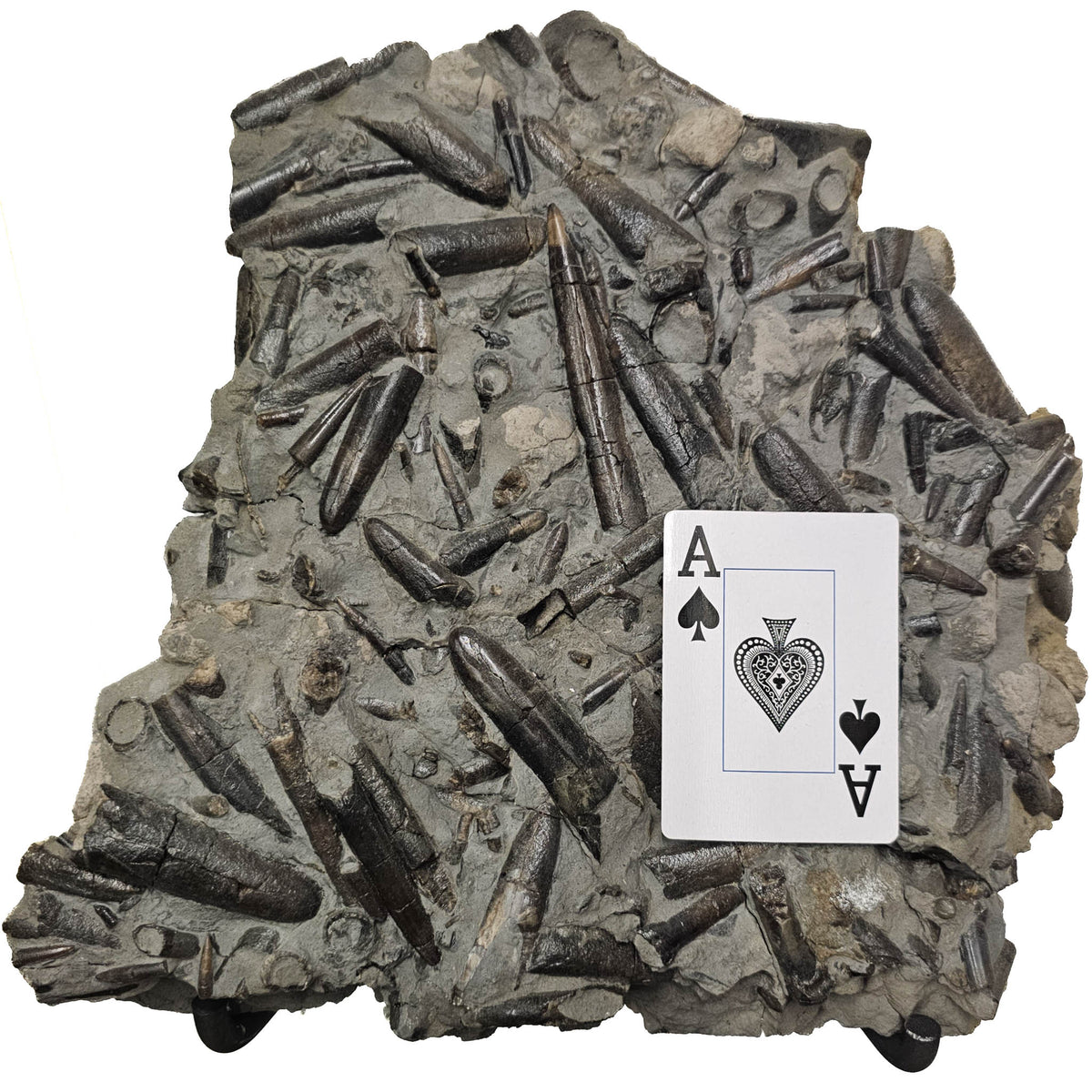
Description: This one-of-a-kind mortality plate is a slab of the Belemnite Battlefield at Mistelgau, near Bayreuth, crowded with the rostra of Dactyloteuthis belemnites: D. irregularis, D. incurvata and D. wrighti. Belemnites were extinct squid-like cephalopods, and the bullet-shaped rostra packed into this plate are the solid internal guards that sat at the rear of the animal's body.
The Belemnite Battlefield is a thin, condensed bank of marly limestone, only a few centimetres thick, that caps the Posidonienschiefer (Posidonia Shale) Formation and marks its contact with the overlying Jurensismergel. Beneath it lie the bituminous, finely laminated marls of the Posidonienschiefer, laid down on an oxygen-poor sea floor where the lack of burrowers and scavengers left fossils exceptionally well preserved. Most of the rostra in the bank belong to the genus Dactyloteuthis, whose type species, D. irregularis, has its type horizon in the Jurensismergel of Franconia.
How so many belemnites came to rest in a single layer is still debated. The Bavarian State Office for the Environment lists current concentration of the shells, a mass die-off from oxygen loss after an algal bloom, and methane release among the proposed causes. Clay was dug at the Mistelgau pit for brick-making until 2005, and the former pit is now protected as Bavarian geotope no. 94, ranked among the most important fossil sites in Europe.
Identifying features: straight, cylindrical to cylindriconical belemnite rostra of mixed sizes, densely packed at varied angles in dark grey marly limestone.
In German folk tradition, belemnite rostra are called Donnerkeil, meaning thunderbolt.
Approximate size: 29.0 x 26.0 cm (11.5 x 10.25 in)
Quantity: 1pc
With this product, you will get the actual stone in the photograph. We do what we can to buy good quality products and price them honestly. The rocks may differ from the photos, but we hope we do them justice.